Yet again many of us are asking ourselves, is Prime Minister Scott Morrison thoroughly ill-intentioned, or merely driven by blindly arrogant stupidity and incompetence?
That we are forced to ask this question almost daily is in itself a serious indictment of the man, regardless of the answer.
Of course, he could quite easily be both.
Many of us who heard Morrison’s apology to Brittany Higgins in Parliament earlier this week were alarmed when he named the alleged victim of an alleged rape which is due to go to trial in June.
The PM’s apology has been described by a leading defence barrister as without foundation, as the allegations have not yet been tested. There is now considerable doubt that, as a consequence of Morrison’s apology, a jury can be struck in the ACT where the trial is due to be held.
Scott Morrison has interfered with the progress of a criminal trial while ostensibly apologising to the alleged victim who is seeking justice through that legal process. He has imperilled Ms Higgins one chance to seek justice, under the guise of publicly declaring his regret for her situation. And he has done it all under parliamentary privilege. Incompetence?
In the ACT the charge cannot be heard in a judge-alone trial, but must be heard before a jury. The accused’s lawyers are now seeking a stay on the criminal proceedings, on the grounds that Morrison has prejudiced their client’s case. If they are successful the trial could be delayed, or aborted indefinitely.
An arrogant, stupid and unfortunate mistake made by an incompetent politician?
Or a calculated, self-interested outcome in the guise of a message of concern and regret?
That Morrison was unaware of the possible consequences of naming Ms Higgins in his speech is not a credible explanation. He has frequently, in parliament, declined to comment on certain situations because they are before the courts, so we know he is conscious of the sub judice prohibition and to suggest otherwise is ludicrous. It’s also barely credible that those involved in the preparation of the speech were unaware of its potential to derail the trial.
Nobody knows what the trial might reveal. What we do know is that none of it will be good for Morrison. His stated knowledge of the alleged rape of Ms Higgins remains contested. Accusations of a cover-up by senior advisors and government ministers remain alive. The recent revelation of Deputy Prime Minister Barnaby Joyce’s text to Ms Higgins in which he describes Scott as a liar and a hypocrite, again brings into question the veracity of the PM’s account of when he was told of the alleged rape.
There are many reasons to argue that the sabotaging of the June trial is advantageous to the Prime Minister, not least because it will bring his questionable role in the events back into public focus, whether they are relevant to the trial or not.
It’s time to stop explaining Morrison’s actions as merely “incompetent.” The “incompetence” excuse serves only to conceal the depth of his self-interest, and the lengths to which he will go to protect himself and further his own concerns. He is a thoroughly ill-intentioned man with enormous power, who will do anything he needs to do to retain that power.
“Incompetent” comes nowhere near describing the dark heart of this man, indeed, that descriptor only works to soften and humanise his psychopathy. He is at heart dangerously ill-intentioned. He may well be incompetent with it, but to underestimate his potential for destruction by dismissing it as incompetence is foolish.
His efforts to sabotage this rape trial should alarm all women, and the men who are our allies. We are nothing to this man. His contempt for us is so boundless that he will even use an apology to derail the possibility of justice, because it’s in his interests to do so.
I went to St Michael’s Collegiate School in Hobart, at a very different time from Grace Tame. Grace’s story and in particular the references to the school, have stirred memories I thought no longer had the power to move me. I want first to acknowledge Grace’s experiences and her steadfast telling of them, and have it noted here that the recounting of her story by a woman can sometimes break through the defences of those of us who have survived, and in turn free our voices.
When I was at St Michael’s, or Collegiate as we called it, the school was run by the Community of the Sisters of the Church, a group of Anglican nuns. I was sent there not because my family was particularly interested in high Anglican ideology, but because it was a school with a strong reputation for educating girls and apart from that, I needed to be got out of home and it was a boarding school. My story is also one of childhood sexual abuse, not by a teacher but my stepfather.
We lived in the small east coast village of St Marys, where my stepfather was the local doctor. He was also a lay preacher in the Methodist church where he played the organ on Sundays. He was a much-liked, even revered figure in the community. Many years later, in one of the confounding synchronicities life can occasionally present, I met Gwynneth, who was a nurse at the small hospital in St Mary’s when my stepfather worked there. We established that Gwynneth knew me when I was a child. She visited our house for dinner, though I do not remember these occasions. What was I Iike I asked her, as this was the period when the rapes had just begun and I have no memory of myself. You were quiet, she said. Shy. If I’d known what was happening I would have stolen you.
What was he like, I asked her. We thought he was a very good doctor, she told me. He let us do things nurses weren’t supposed to do. He encouraged us.
I hated her for a moment for speaking well of him.
St Michael’s was for me a sanctuary, a refuge from a home where there was no peace to be found, no respite from fear, a house of life-threatening violence and unpredictable adult fury. At St Michael’s I slept safely in the knowledge that I would not be disturbed either by the sounds of heavy footsteps thudding down the hallway and my mother’s screams, or my stepfather pulling back my bedcovers to slip in beside me. At the dining table at St Michael’s I was permitted to leave food I could not eat. I was allowed to like and dislike. The only times I knew fear were when I received the fortnightly notes from my stepfather telling me which day he would visit to take me out for a drive. Then it would start again, the cold in my belly, the wakeful nights, until the visit was over and I knew there’d be respite until the next time. It felt like happiness, after it was over. The euphoric relief, I thought it was happiness and this misunderstanding distorted my perception of how things should be between people for a long time.
This situation continued for some five years. In my fifteenth year, something gave way in me. I had for many months imagined how it would be to tell someone of my secret life. I knew whom I would choose. Her name was Sister Elizabeth May. At this time the nuns wore full black habits with white wimples, we saw neither their hair nor their ankles and their waists were bound with wooden rosaries. I never found them intimidating, though I expect it would be quite difficult to intimidate a girl who knew as much as I did about the terrible things that can be done by adults.
I experienced only kindness from these women. Though they knew nothing of my story, my distress expressed itself in sleep-walking, nightmares, and a complete inability to learn, though obviously I was not stupid. Children aren’t stupid, despite what some adults may think. The only thing I could do with any confidence was play the piano, which I had been learning since I was five from, confusingly, my stepfather who proved to be an excellent teacher. Sister Elizabeth May used to sit with me of an evening when I was practising. She sat near the piano, knitting black mittens for the winter. She suffered terribly from chilblains. I’m quite sure she knew something was badly awry.
One evening I said, what happens if you forgive someone seventy times seven and they still do something wrong? Who are you forgiving, she asked. So I told her. Everything.
And was believed.
Which in itself was quite remarkable for the times, which were before these things were spoken of. Before mandatory reporting, so Elizabeth May did not have to go to the police with my story. Instead she went to Sister Jessica, the headmistress, a formidable figure we girls did not know well. I was called to her office. Elizabeth May came with me. I cannot remember Jessica’s questions, I remember only her gentleness and how much I wanted her to take me on her lap. She didn’t, of course, but she did stroke my hair and pray for us all.
Later, I learned that the sisters took their dilemma, and what a dilemma it was at that time, with no framework of regulations within which they could seek guidance, to the Dean of Hobart, Michael Webber. The Dean was a frequent visitor to the school, we knew him well. Between the three of them they formed a plan to confront my stepfather and mother. Yes, my mother knew of all this from the start. But that’s another story. They decided to brief a lawyer who also attended the confrontation. I have no idea what passed between the four of them, but I do know that not one of them ever questioned the veracity of my story.
I was believed.
On the day of the confrontation it was decided I would be sent to spend the afternoon with one of the secular teachers who had a house in the school grounds. They wanted me safe and out of the way. I spent the day in terror. I was afraid he’d find me. I was afraid he’d kill my mother if he couldn’t find me.
I was afraid of breathing.
I can’t remember anything of that day apart from the feelings. At some point, Elizabeth May fetched me from the house and took me to see Jessica. Together they told me my stepfather had admitted the truth. I would not have to go home again, they said. I would not have to endure anymore. I remember the relief. I remember I cried because I didn’t have a home. I remember I feared he would kill my mother and my baby sisters because of what I’d done.
Many years later they told me they’d given him an ultimatum. Either he gave the nuns charge of me, or they’d report him to the police. Of course, my parents agreed to relinquish me.
In retrospect, this seems a remarkably sophisticated way to deal with a situation that was bizarre for its time, not in the sense that it didn’t happen often, because I am sure it did, but because nobody ever did much about it, especially not the churches. I don’t know if they made the right decision or not, or even how to gauge that. I only know they loved me when I was lost and alone, and full of terror.
And so St Michael’s Collegiate School became my home, the Sisters of the Church my guardians. In the holidays, other girls would invite me to stay with them. Nobody knew why I couldn’t go home, and I invented a story of parents travelling overseas. Sometimes I didn’t want to go to friends’ homes because I couldn’t reciprocate, and then the nuns would let me stay at school. They took me out with them on picnics and trips up Mount Wellington. I had a record player, books, and a lot of pianos all to myself. At night, Elizabeth May or Jessica would bring me warm milk and sit with me until I fell asleep. I was free to roam all over the school and the boarding house and I was, for brief intervals, happy.
Grace Tame, with her fierce courage and her shining spirit, freed in me these vivid remembrances, and for that I am deeply grateful. Today, for the first time in many years I’ve cried for my Jennifer, and her plight at that time in our life.
This is what we can do for one another, those of us who survive.
I believe the nuns saved my life. I believe they taught me truths I would never have known, were it not for their influence. If I could speak to her I would tell Elizabeth May that I still play the piano. I would tell her of my granddaughter, Mabel Jane, who is the child most like me, and whose young life is full of promise and safety and love. I would tell Jessica I have learnt that our children and their children can heal us in ways we could never have anticipated.
I would tell them that though once I was without both family and home, through their love and care they gave me the chance to grow into a woman who could make for herself her own home and family, and live in profound contentment. This, I would tell them, is what you gave to me, and to Mabel Jane, and I will be grateful for this all of my days.
On Saturday in Melbourne a motley mob of protestors gathered in the streets to protest Victoria’s new pandemic laws. In a chilling performance of intimidation, protestors carried a mock gallows through Melbourne streets complete with three nooses, while calling for the death by hanging of Victorian Premier, Dan Andrews.
Image 1: Washington DC, USA. January 6th 2021.
Image 2: Melbourne, Australia. Today.
If you’re not gravely concerned by this then you’re part of the problem.
The mob was compromised of anti vaxxers, QAnon believers, neo Nazis, Trump supporters, and religious zealots. What unites this disparate group is a common desire to live free of all government intervention. Co-incidentally (or not) over the same few days Prime Minister Scott Morrison, in a striking performance (even for him) of dog whistling consistently referred to Australians being sick of governments seeking to control them particularly after the last couple of years of lockdowns. His message was designed to feed the protestors’ grievances, and let them know they have his support.
Morrison has a history of decades long and intimate connection with leading Australian QAnon supporters, Tim Stewart and his wife Lynelle. The Stewarts stayed at Kirribilli House, and Mrs Stewart was employed there as a companion for Morrison’s wife, Jenny. This arrangement has now ceased, after considerable public scrutiny
When the leader of your country harbours right wing extremists in his home, it is hardly surprising that you see gallows and nooses in your streets.
Death threats were also made against three Victorian cross benchers who are working with Labor to streamline the proposed laws.
There has been a deafening silence from almost all politicians and media across the board on this weaponisation of menace, marking yet another dark turn in Australian politics. We now live in a country where the political class conspicuously do not condemn death threats against politicians. It appears that both major parties are dependent on right wing extremists for votes, and neither party is willing to risk alienating them by condemning their behaviour.
David Davis – who is seeking to become the state member for the electorate of Kew – addressing the shameful rally in Melbourne, including people who wish to harm current mps that he works alongside. Where is @MatthewGuyMP – Davis’ leader? https://t.co/T6H58ZlpOl
That nobody condemns this behaviour indicates that the extremists, in and outside of federal parliament, are currently in control of the narrative. When you dare not condemn death threats and imagery because they originate from your voter base, you are compromised probably beyond redemption, and you are not in control.
— White Rose Society (Australia) (@WhiteRoseSocAU) November 14, 2021
Please take a moment to consider that death threats and nooses in the street are apparently so unremarkable in Australia that mainstream media and politicians, including the ALP, see no need to condemn them.
Consider as well what would ensue if anyone other than white men and their white consorts carried a gallows through Melbourne streets calling for the death by hanging of politicians.
The protests continue. On Monday night, a more substantial gallows appeared in the city, this time towed by a four-wheel drive. An effigy of Daniel Andrews was produced, and protestors attempted to hang it from the gallows noose, as they screamed “Kill Dan Andrews!” “Hang Dan Andrews” and “Freedom.”
Those of us who are both horrified and frightened by this appalling downturn are trying desperately to retain some semblance of decency and trust in our politics. We are doing this with no support and assistance from our politicians and our media. That these scenes go unremarked by both should alarm everyone. It’s almost as if this political violence and incitement has become normalised in Australia without us even noticing, and here we are.
It is shocking but sadly not surprising that Scott Morrison apparently supports death threats against a Labor Premier. The standard you walk past. But what is most profoundly shocking is that there has been no condemnation from the ALP of these threats against one of their own.
So can we assume if someone drives a mock gallows with an effigy of Morrison hanging from a noose through the streets of Canberra, there will be no repercussions? Or perhaps Peter Dutton? Anyone can do now this with impunity, we assume? Any group can gather around Parliament House shouting “Kill Scott Morrison, hang Peter Dutton” and there will be no repercussions?
Because this is where we are at now in Australia. Because these are our values.
In Ray Bradbury’s 1953 book Farenheit 431, Captain Beatty states that, ‘A book is a loaded gun in the house next door. Burn it, Take the shot from the weapon. Breach one man’s mind. Who knows what might be the target of the well-read man’. In this dystopian novel, Beatty is justifying the burning of books.
The burning of books is intended to control knowledge, to prevent free thinking, to make sure everyone thinks the same and an affront to liberalism. Book burning is a political issue, Similarly, the 21st equivalent is Internet Censorship, which, in a political context, has became a hot topic since the propagation of mistruths became so visible during the Trump Presidency.
There are myriad reasons politicians want to interfere with the distribution of knowledge, not least of which is to avoid scrutiny. But, the most frightening, as highlighted in Farenheit 451 and Orwell’s ‘Nineteen-Eighty-Four’, is the need for complete control of ideology-what we think.
Texas has become the latest State to ban Critical Race Theory from being taught in schools, joining several others that have banned it or thinking of doing so. While Critical Race Theory was conceptualised over 40 years ago it has become a target for politicians as racial tensions have grown, arguably since the murder of George Floyd, and continue to be at flash point across America. Some states have also banned Project 1619 from being taught in schools becoming another target of revisionist conservatives.
There is little doubt that both Critical Race Theory and Project 1619 are ‘in your face’ accounts of the history of slavery and racism in the United States that started with the first slave ship arriving on the shores of Virginia in 1619. Critical Race Theory describes the social construction of racism and how it’s relationship to power, civil rights, advantage and disadvantage. What gets conservatives jumpy is that at the heart of Critical Race Theory is its attack on white supremacism. Critical Theory , in general, is a scholarly approach to research, well understood and accepted in universities around the world. It is less liked by the institutions and ideologies that are scrutinised by it because Critical Theory attempts to unearth who are the beneficiaries of the actions of others, and the institutions in which they reside, who are the disadvantaged and what are the real social, political and economic effects. Institutions are not great fans of Critical Theory because it investigates truth to power.
We should be very concerned about political interference of this type when it comes to school curricula. It is a blatant attempt by conservatives to control what people think and, if not to exactly revise history, to control and suppress it. Along with the events at Capitol Hill, the normalisation of lie telling in the media, legislation to suppress the vote, and divisiveness of American politics, and the widening gap between the haves and the have nots, we should be concerned with the threat to democracy. We may be observing the death of another republic.
And we should be concerned, as well as watchful, here in Australia about the control of knowledge and information. There is a slow but steady shift to the right in democracies across the globe. This shift reflects people’s propensity to seek simple solutions to complex problems that populist right wing politics provides, underpinned by authoritarianism-tell us what to do. Simple explanations such as, it ‘their fault’ (xenophobia and racism) make it easy for the masses to shift responsibility and to stop being curious as we are fed misinformation that helps us explain our world. We are not immune from this in Australia. It simmers just below the surface.
Stewart is a psychologist with a special interest in how people adapt and also learn. He’s written widely in these areas. He continues to consult, and annoy people who misuse power.Twitter: @stewarthase
This post is written by #ThisIsNotJournalism, a social media account that looks at the reporting of mainstream Australian media, particularly on stories relating to politics at both state and federal levels They are constantly dismayed at what they see.
Can we please talk about a significant issue currently affecting Australia? The Prime Minister is a member of a cult and its influence is pervading our society. No, this time I am not going to talk about Prosperity Theory and how evident it was during JobKeeper and the “snap-back” to the incredibly generous $44 per day, now that most businesses are on their feet and Gerry received a squillion dollar bonus. This is about women and why improving the lot of 51% of our population is diametrically opposed to the religious beliefs of Mr Morrison and a disproportionate number of his inner circle.
Firstly, let me be clear. I am an atheist but 100% respect the right of others under law to have faith. It is also imperative to note that Mr Morrison has stated he does not consider the Bible to be a “policy handbook”
Mr Morrison has often spoken about how important his faith is to him and his family. Who could forget his belief in miracles acceptance speech? Miracles are a central tenet of Pentecostal belief and his religion, in fact, is central to who he is. He has frequently spoken about how he prays for us, whether during the Covid pandemic (when he seemed to compare himself to Moses), the droughts or floods. There are also fairly regular calls for the blessings of God.
I suspect that most of us have a vague understanding of the core beliefs of Pentecostalism, as perhaps we do of fundamental Judaism or Islam (Pentecostals are not fundamentalist Christians BTW). Vague understandings can be dangerous as often they are tinged with bias both conscious and unconscious. Let’s look at a few of the actual beliefs and why I feel they matter in relation to the advancement of women in Australia.
Firstly, let’s consider the fact that, by nature, Pentecostal Christians are socially conservative. They tend to view issues like abortion, same sex attraction and single parenthood as something to be frowned upon at the very least as their belief is what was considered normal during the times of the New Testament should still apply today.
That anyone could believe we should have the same standards today as we had 2000 years ago is tough for me to accept but this obviously should be seen as a significant concern for the women of Australia if you’re viewing it through a prism that recognises that massive steps are not only required but are being demanded both here and around the world. It’s interesting to note that Mr Morrison himself abstained from the #SSM vote.
Next is Pietism, or the belief that someone’s personal relationship with God guides their life path. This is entirely at odds with strong legislation designed to promote women above where they find themselves today, often due to policies that amount to structural disadvantage. Matters such as abortion or addressing the significant problems around provision of greater childcare as well as methods of equalising superannuation opportunities (rather suggesting women withdraw theirs to escape domestic violence) could well be hamstrung by such strong, and many would consider archaic beliefs.
It’s little surprise that, at least financially, women are proportionately worse off post-lockdown than men. Despite the rhetoric around job figures, close examination of the facts show that average earnings per participant in the workforce per hour have decreased and that many of the industries most affected are more likely to be staffed by females. The recent debate around and gutting of the proposed changes to IR law was also seen by many a demonstrably damaging to female workers over men.
Finally, Evangelical Christians adhere strictly to certain passages of the Bible including Ephesians 5:21-25, which calls for a woman to submit herself to her husband’s will “as she would to God”. Unfortunately, there are many cases where this has resulted in both sexual and physical violence within the household.
Again, I reference the LNP policy of women accessing their superannuation to escape domestic violence situations and the apparent lack of support for both social services for the many women caught up in such situations but also the lack of action in provisions for domestic violence leave in the workplace.
Interestingly, the Church seems to have a similar underrepresentation of women in the ranks of the hierarchy as does the LNP
In the 2016 Census, 1.1% of Australians identified as Pentecostal. There are now several in Cabinet meaning there is a massive over-representation of people whose belief system includes the above examples. If, like the Prime Minister, their religion defines who they are, these views are simply not in line with broader Australia. Neither are they about to progress equality and equity for women in this country.
You can have as many women in the Cabinet as you like and even a Prime Minister for women but unless they passionately believe that we need to see real change, it’s simply not going to eventuate under the Morrison government.
There was a time, not so long ago, where mainstream journalists not only turned a blind eye to sexual misconduct in Canberra, in some cases they actually enabled it or were directly involved. This has partly contributed to the “Toxic Culture” we are now hearing about within the walls of power. Will their reticence to discuss religion also have an equally negative effect on the women of Australia?
I have a question. ‘When the barometer is dropping, and it is about to pour with rain and possibly flood, does one ant make the decision to quit the nest, to jump ship, with all its valuables and invade my kitchen and then tell the others, or do all the ants simultaneously?’ I guess, either way, the aim is survival: as base an instinct as it is possible to have.
So it was that I started thinking about the disingenuousness of politicians and how they use it to survive when there is trouble on the horizon, when it is time for them to serve their needs and their needs only. I think it is their disingenuousness that is at the heart of our disgust of politicians.
It’s not just a matter of trust but the way in which they will do what they need to do without any consistency of values or morality. It is the pure pragmatism that wears us down. We expect our leaders to stand for something, but we find the emperor is naked because we discover that they stand for nothing, other than their own short term political aims.
It is like the person who runs down a cyclist with their car and drives away because no-one saw the accident and the cyclist is left in agony on the side of the road. Expediency, knowing that you can get away with your transgression.
As an exemplar, Mathias Cormann comes to mind, but I could use any number of other examples including the cover ups, lies and deceit surrounding rape and other sexual assaults in our supposed seat of democracy, our Peoples’ House. When it comes to cynicism, however, Mathias Cormann, takes the cake. As you know he recently become the Secretary General designate of the OCED thanks to a taxpayer funded effort that I am sure he will repay from his exorbitant salary. There was considerable opposition from some quarters due to his rather obvious problems with action over climate change.
In his inaugural speech to parliament on August 15th 2007 Cormann said,
‘Climate change is a challenge we are facing as a global community’.
It is notable that ‘man made’ doesn’t feature in this comment. It wouldn’t come as a surprise to see that he went on to espouse the Howard Government’s emission trading scheme and offsets for trade exposed industries, policies designed to protect big business, the big polluters. He went on to protect his constituency of Western Australia by claiming our contribution to reducing the effects of climate change could be in the form of exporting clean energy in the form of gas and uranium, clearly looking after the interests of the coal and gas industry.
Cormann helped cripple Australia’s effort at attacking climate change as a member of the Abbott government by destroying the Clean Energy Finance Commission. He and Joe Hockey in a media release said:
‘The Government does not believe it is appropriate to keep borrowing money to underwrite a $10 billion taxpayer-funded bank that cherry-picks investments in direct competition with the private sector’
And with that Cormann tried to abolish the CEFC but were prevented by the Senate. So, instead they set impossible return targets for the agency.
Prior to that Cormann opposed the Gillard Government’s price on carbon by saying that, ‘the push to put a price on carbon on the basis that it would help reduce global greenhouse gas emissions is a very expensive hoax’. Carbon pricing has been promoted as one of the centrepieces, along with a green recovery, of an urgent climate plan proposed by non-other than the IMF.
I wonder what his response to the IMF might be now. As part of his campaigning for the OECD job, Cormann said that he would provide leadership towards achieving net zero emissions by 2050: a target that a government in which he was Finance Minister has consistently refused to sign up to.
What is so infuriating in all this, and it is a common model when it comes to analysing the real values and morals of our current crop of politicians, is that toeing the party line and staying silent (the conspiracy of silence) is the modus operandi of the day. Bugger conscience, just do what’s expedient to stay in the job. And say what’s necessary to get the next one.
So, we come to the misogyny, the sexual assaults, the white male supremacy rule of Our House. It’s all about expediency while truth goes begging. It is the silence that is so deafening, making you wonder what the values of our politicians might be. If they have any.
The inaction says it all.
Back to ants. So, is this a trait of all politicians or does the predilection of one, the leader, drive the rest? Almost a rhetorical question.
The following information was reported by Channel Nine news on the evening of Friday March 26, and has so far escaped the attention it deserves.
As Scott Morrison looks to shift the culture within parliament house, beginning with a meeting with Brittany Higgins, it seems the PM is being undermined by one of his own MPs. @jekearsley#AusPol#9Newspic.twitter.com/BfsoYbglw9
Prime Minister Scott Morrison states in this interview that when Brittany Higgins expressed her intention to resign from the office of Michaelia Cash in January 2021, she was offered the opportunity to speak with him before her allegations of rape by a senior staffer in Parliament House were aired in the media.
“At the time just before she departed she was offered the opportunity to come and speak with me with Minister Cash,” he says.
The Higgins story broke on February 15 2021. Morrison has steadfastly denied that he knew anything about the alleged rape of Ms Higgins until that day.
Ms Higgins left Cash’s office on February 5 2021, ten days before the story broke.
Why would the Prime Minister offer to meet with Ms Higgins prior to her departure from Cash’s office, if, as he has maintained for the last two months and stated several times in Parliament, he knew nothing about the alleged rape until it was aired in the media?
Facing intense questioning on the involvement of his department and himself, Morrison instructed Secretary Phil Gaetjens to conduct an inquiry into when the PMO knew about the alleged rape, and who had been informed. This inquiry has since been halted, though Morrison did not notify Parliament of its cessation, leading the House to believe it was still underway.
Senator Cash has denied that she knew the “full details” of the allegations until Ms Higgins indicated her intention to resign at the end of January.
Why would Cash consider accompanying Ms Higgins to a proposed meeting with the Prime Minister if Cash believed Morrison knew nothing about the alleged rape and indeed, had only just found out herself?
Ms Higgins, by the way, says she was never informed of this invitation from the Prime Minister.
It’s not clear if Cash was ever informed, either.
Morrison has gone to extraordinary lengths to convince Parliament and the general public that he was ignorant of the rape allegations until the story appeared in the media on February 15. He claims his office was unaware until February 12.
In one sentence, the Prime Minister has done irrevocable damage to this narrative. He has also exposed the unreliability of all other accounts that have been tailored to support his own, accounts from ministers, senators, senior public servants and staffers.
Morrison’s one sentence has the power to bring the entire dysfunctional edifice crashing down, if the press gallery will follow it up.
If the Prime Minister didn’t know, why would he extend an offer to meet with Ms Higgins in January?
If the Prime Minister did know, he’s been lying to Parliament and the public.
On Monday, March 22, Peter van Onselen, working with Channel Ten News and The Project, broke a story provided to him by a whistle blower that revealed more of the culture surrounding workplace sexual activity in Parliament House, Canberra.
The story concerns a Liberal staffer masturbating on the desk of his female boss, videoing his performance and sharing it with his friends, including the whistle blower who was at one time in a relationship with him. The whistle blower claims that male sex workers were/are brought into the House for a former and a current MP. The so-called prayer room is allegedly used for sexual assignations.
Naturally, the story holds considerable interest for the public at a time when we have over the last few weeks learned of the alleged rape of Ms Brittany Higgins by a senior staffer in Parliament House; the alleged rape of a sixteen-year-old girl by Attorney General Christian Porter when he was seventeen; the sexual harassment of several other women by the same Liberal staffer, and a myriad of other sordid revelations of sexual harassment, assault, assorted sleaze and cover-ups perpetrated by Liberal MPs, Senators and staffers. The list of those involved in some way is too lengthy to unpack here, but includes such Liberal luminaries as Eric Abetz, Alan Tudge, Michaelia Cash, Linda Reynolds, Marise Payne, Andrew Laming, and Prime Minister Scott Morrison, as well as senior public servants and staffers in the Office of Prime Minister and Cabinet, and the Department of Finance.
Today, Saturday March 27, the Sydney Morning Heraldpublished an article by Chip le Grand, currently chief reporter at The Age, late of the Australian where he worked for twenty-five years. In this piece, le Grand names van Onselen’s whistle blower.
This practice is known as “doxxing,” that is, revealing information about someone who has chosen to remain anonymous, that can lead to their identification. It’s a dangerous practice that can result in serious harassment of the doxxed individual, sometimes to the point of death threats. It entirely contravenes the ethics and practice of journalistic principles with regard to whistle blowers.
The doxxing of a Project and Channel 10 source by the SMH is a startling turn in Australian journalism. It sends a powerful signal to would-be whistle blowers that there are journalists who cannot be trusted to respect your role as a source, and the reasons for your anonymity. It is a long way from journalists’ traditional protection of their sources.
Indeed, can we be confident that such protection exists any longer in Australian mainstream media after today?
The whistle blower was not doxxed by van Onselen, but, alarmingly, by another media outlet altogether, bringing into question the capacity of well-intentioned journalists to protect their sources at all.
What does this mean for investigative programs such as Four Corners, for example? How can any journalist guarantee the safety of a source, if their colleagues are willing to dishonour the traditional commitment to protecting them?
Le Grand has attempted to argue that the whistle blower is not, in fact, a whistle blower. Let us look at the definition of whistle blower. A person who informs on a person or organization regarded as engaging in an unlawful or immoral activity, is a whistle blower. It isn’t complicated.
I don’t know if ejaculating on your female boss’s desk is illegal, but I’m going to stick my neck out here and call it as immoral. Likewise, the provision of sex workers to the Parliament House workplace for assignations in the prayer room may not be illegal, but I don’t think I’m entirely prudish to consider it immoral. What the whistle blower has done is to disclose workplace practices that are entirely unacceptable, and reveal to an appalled public yet another level of abuse in an inherently abusive culture.
That there are, apparently, no boundaries to the gratification of male desire in Parliament House, whether that desire is for sex, and/or power, demonstrates just how abusive that environment is.
In return for this disclosure to the public, in our interests, the whistle blower has today been doxxed by Chip le Grand, who has described his disclosures as a “hit job” against the government. Le Grand also does a good job of maligning the whistle blower in an attempt to discredit him.
It is not a huge stretch to speculate that le Grand and the Sydney Morning Herald under the chairmanship of former Liberal treasurer, Peter Costello, are acting in the interests of a besieged LNP government, and not the public.
Regardless of your personal opinion of the man, there can be no doubt that he acted in the public interest in taking his story, with videos and texts as proof, to van Onselen. Whatever his other motives are, and is there one among us without complex motives for much of what we do, he acted in the public interest, which is all that need concern us as citizens struggling to deal with the outrages visited upon us by a government entirely bereft of all morality.
Warning: discusses rape, child sexual abuse, and sexual assault.
It is damnably difficult to single out any aspect of Prime Minister Scott Morrison’s response to allegations that his attorney general, Christian Porter, anally raped sixteen year-old Kate in 1988, as particularly heinous. All his responses have been appalling.
However, for mine, Morrison reached a nadir (bearing in mind the matter has not run its course, there is still plenty of opportunity for him to go lower) when he declared that Christian Porter is “an innocent man under the law.”
Morrison made this declaration while simultaneously boasting that he has not read the statement left by Kate, in which she details the offences Porter allegedly committed against her.
Apparently, not a single member of the Morrison government has read the detailed allegations against Christian Porter. Not one.
This sorry state of affairs will be familiar to many survivors of sexual abuse and rape, both in childhood and as adults. Many of us have known similar injustice, when our words have been ignored or denigrated, while the word of the man who assaulted us is unquestioningly accepted. To find ourselves witnessing this yet again at the highest levels of government, is a bitter and re-traumatising experience that inevitably evokes profoundly disturbing memories and emotions.
I learned early that nothing I said would be believed. Over time, I told several adults what was being done to me by my stepfather, who was a doctor. Perhaps I’m wrong and someone did believe me, however, nobody helped me. It wasn’t until I was fifteen and the rapes had been a regular occurrence for five years that I finally found someone who heard me, and took action.
I have no idea how I managed to keep on telling people. I have no idea either, how I managed to keep silent.
My matter never went to police, and so according to Prime Minister Morrison’s very personal interpretation of the law, my stepfather went to his grave “an innocent man under the law.”
Morrison aims to confuse the presumption of innocence with his declaration of innocence, and his base will more than likely unquestioningly accept this spin. Christian Porter, like any other accused person, is entitled to the presumption of innocence. He remains, and will always remain, an alleged rapist entitled to the presumption of innocence. He cannot, however, be declared innocent, particularly by those who have not even read the allegations made against him.
As far as I’m aware, a Prime Minister does not yet in this country have the power to declare accused criminals innocent or guilty.
Of course Morrison, in declaring Porter innocent, is also declaring his alleged victim Kate to be a liar, or delusional. Without reading her statement. This is not an unusual situation for victims of rape, csa, and sexual assault to find ourselves in. On top of the physical, emotional, psychological, mental and spiritual damage we sustain through the assaults, we all too often must then face the disbelief and contempt of people unable to deal with our stories. There is the original violence done to us, and then there is the secondary violence done to us by those, like the Prime Minister, who will not listen.
Morrison has told every survivor this week that he will not listen. He’s told every survivor that we will not be heard and we will not be believed. He has told every rapist who doesn’t face court that he’s an “innocent man.” The prime Minister has done untold damage to survivors, and set us back decades as a society.
In refusing to have an inquiry into the rape allegations against Porter, and his suitability to hold high office, Morrison is giving permission to every workplace to behave in a similar fashion. Morrison is in the process of undermining all the hard-won workplace processes and procedures specifically designed to deal with situations such as this one. It is sufficient, Morrison is telling us, for the accused to say “It didn’t happen.” From then on he is an “innocent man.”
Imagine if your kids' school principal received a detailed allegation that a senior teacher had raped a child, he didn't read it but just obtained the teacher's denial and then said it's all good he's innocent the matter is closed, he can keep teaching your kids.
However, this has not always been Morrison’s attitude to survivors. There was a time, not long ago, that the Prime Minister told us that women “should be believed.” Watch the video below. It is extraordinary that Morrison has swung so violently to the other extreme, as a consequence of his attorney general, Christian Porter, being the subject of rape allegations.
Prime Minister Scott Morrison today declared that he considers alleged rapist and federal Attorney General Christian Porter to be “an innocent man under our law.”
PM rules out seeking advice from solicitor general on whether @cporterwa is a fit and proper person to hold his post. “He is a fine Attorney General. He is an innocent man.”
Christian Porter has not undergone any investigation under “our law.” Police have never interviewed him. By no stretch of the imagination can Morrison claim the Attorney General has been found to be an “innocent man” under “our law,” when the senior law maker has not engaged with the law at all on the matter of his alleged anal rape of Kate, in 1988.
NSW Police found that there was insufficient admissible evidence to pursue the case against Porter. That is, please note, admissible evidence.
Morrison claims he has not read the alleged victim’s statement. He does not know what Porter is alleged to have done, outside of a “briefing” from his staff. He claims he did not read the statement because he was not in the same place as the statement. Yes. You read that correctly. He did not read the statement because it was not in the same place as him.
Morrison saying he was not in the same place as those documents (so didn't/couldn't read) sounds a bit out of time – modern technology and all that?
Indeed, it appears Morrison has taken no legal advice at all (that he is willing to reveal) on how he should proceed with an allegation of violent anal rape, made against his Attorney General by a woman who took her own life. Morrison appears to be relying solely on Porter’s claim that “it never happened.”
Now, today, despite his wilful ignorance of the allegations, despite having sought no legal advice, he has declared Porter to be “an innocent man,” presumably because Porter says “it didn’t happen.” I can find no other explanation for the Prime Minister arriving at this conclusion.
And there it is. The declaration of innocence based solely on the accused man's denial. Tell us again who will be believed, Prime Minister. https://t.co/ODslPlPLeU
It says if we don’t get a complaint of rape or sexual assault to court, and the majority of us do not, the alleged rapist is an “innocent man.”
It says that men who rape us will be perfectly safe if we die during the act or subsequent to it.
It says that Porter’s alleged victim, Kate, must have been lying or mad.
It says that any woman who is unable to get a case to court is lying.
It says that men, following the example set by the Prime Minister of this country, do not need to bother acquainting themselves with our stories before they decide the alleged perpetrator is “innocent.”
It says that Scott Morrison has set women back decades with his “exoneration” today of an alleged rapist, based on nothing more than the alleged rapist’s denial.
It says that if Morrison exonerates Porter, he exonerates every alleged rapist who is not dealt with by the courts.
It says that as of today, everything just got a whole lot more difficult and traumatic for women attempting to find justice after being raped or sexually assaulted.
It tells rapists, all you have to do is say “it never happened.”
It says, women, everything is stacked against you getting the criminal offence against you to court, and if you don’t, as most of us won’t, you’re a liar & your attacker is an “innocent man according to our law.”
In about 0.73% of cases of rape, the rapist is convicted. So you can see why 99.07% of the debate is focused on the “risk” of false rape reports.
I’m writing to you at this moment in time because of the recent media frenzy about sexual abuse in the snake pit that is Federal Parliament. However, the issues currently headlining all our various forms of media is a daily, yes daily, problem in our supposedly egalitarian, good onya mate society.
What I’d also like to say, in support of my fellow writer Dr Jennifer Wilson, is that males writing about sexual abuse (in all its forms) is about the same as asking hungry fox to provide advice on how to build a fox proof henhouse. So, a few notes from a bloke to other blokes.
The most important thing you (as a man) need to recognise is that when it comes to rape, sexual assault, abuse and harassment of women, misogyny and exclusion is that you don’t understand. You don’t get it. If you get that you don’t get it, there is the possibility that we might understand, or at least as closely as we can.
One of the reasons we don’t get it is because it is not in our best interests. We’ve been taught from birth, that women are goods and chattels, second class citizens, handmaidens, someone who will serve our needs, whether it is in the house or the workplace: even the street. We get this from our families, from the major religions that teach, through text written by old men in caves, and from ourselves.
Fellow blokes, it’s about power. To be brief, there are three types of power when it comes to the sexual, physical, verbal, symbolic abuse of women.
The first type of power is exercised by those men who are socialised as above, and never come to question what they are doing. Sounds apologetic (to women who are reading this) but it is perpetuated because it is in our best interests. We are selfish. Glass ceilings, the ‘tea lady phenomenon’, assuming male superiority in all things, and ‘she was asking for it’ rather than accepting that men need to control their impulses, are just a few examples of how we exert power.
Then there are men in positions of power who think that they can get away with anything they want. Mind you, they do this with all aspects of their lives, not just with the appropriation of women. Note the word appropriation. It means ownership. They assume that it is their god (and I mean god) given right to take.
The third type of power is what I call impotent power. These are men who have appallingly low egos or sense of self. They want to take control of women, to appropriate because it makes them feel better about themselves. This is the bulk of female abusers of all types.
And to be clear, blokes, it is not just overt violent power that underpins rape, and physical and sexual assault.
One women a week, on average is murdered in Australia by her partner or former partner is murdered in Australia One in 5 women have experienced sexual violence, 1 in 3 physical violence, and one in six women have experienced stalking since the age of 15.
It is also the subtle ways in which we (yes you) downplay women, denigrate them, portray them as less equal, diminish them, and appropriate them. And don’t just point the finger at Prime Minister Scott Morrison and friends, the Labor Party or Barnaby Joyce and his mates. It is alive and well in your local golf club, bowls club, in football clubs, on the cricket field and on all forms of social media.
Let me try an analogy to get my point about power across. Imagine getting into the ring with a really skilful boxer or martial arts exponent. It starts with a lot of shuffling around the ring, a bit of feinting, and the occasional jab to the ribs-taunting you. This results in you being exhausted in about a minute. You’re starting to feel a bit helpless because you can’t lay a hand on him. Then the big punches start. Not enough to knock you out but enough to start you bleeding, close your eyes, make your breathing difficult to catch because of broken ribs. He just keeps jabbing away. There are rest breaks between rounds, and some respite as he dances around. But he keeps on coming back. You are totally helpless and your power is completely taken away.
This doesn’t nearly cover the way in which women’s power is taken from them in rape, in sexual and physical assault and in their appropriation because, often, women’s power is taken away forever. After the boxing match, you can recuperate. Women are frequently scarred forever.
Another analogy may help. I work with a lot of returned service personnel who have PTSD and other problems. They remind me most of women who have been abused because they too have had their personal power seized from them by fear, being overwhelmed and, most of all, helpless in the face of what is happening. Their power has been stripped away.
To fix this problem needs leadership. From us blokes. It would be great if it came from our male Federal Parliamentarians but it looks like we may as well piss into a force 10 gale. So, it’s up to us.
Speak up and, better, fucking stop it!
Stewart is a psychologist with a special interest in how people adapt and also learn. He’s written widely in these areas. He continues to consult, and annoy people who misuse power.Twitter: @stewarthase
The toxic sludge that has surrounded recent events in our Federal Government raises some important questions. Not least of all is whether it actually represents our culture, our norms, our attitudes, our values or is it just what happens when people become powerful: as Lord Acton put it, ‘Power tends to corrupt and absolute power corrupts absolutely’. However, in the end, do we get the government that we deserve?
It is disturbing to think that the toxic sludge we have seen recently is a reflection of who we are as a nation. Hugh Mackay, arguably one of the best thinking commentators on what it means to be Australian, has already suggested, in ‘Australia Reimagined’, that we are not what we like to think we are. It is common psychological knowledge that our view of ourselves as individuals is an illusion in the same way that Mackay sees our collective view. We think of ourselves in a much rosier light than is really the case, except for a proportion of people who, sadly, have self-esteem problems and see themselves much more darkly. In either case, the self-appraisal is faulty. But importantly and unwittingly, most of the time, we are drawn to those who most reflect our innermost values.
So, the appalling dialogue from Ministers, including the PM, that attempts to minimise the abuse of women, the misdirection by attacking innocents, obfuscation to avoid responsibility, the lies, the protection of alleged offenders, the racism inherent in the way refugees are treated, peddling misinformation, the ‘one coffee a day’ pay increase for the poor while parliamentarians have their snout in the trough for a $181 day meal allowance, and as Mackay points out, the avoidance of the big ticket issues such as our love of a carbon based economy, the 16% of Australian kids that don’t have decent food, and the growing gap between the rich and the poor. The need for accountability list is huge.
Is this who we are? Well, if you hang around enough golf and bowls clubs, listen to the chatter at church, attend enough dinner parties, mix with the common folk, you don’t have to scratch the surface too much to see the values mention above bubble up. Not everyone, of course, but enough to make you realise that around half the population voted for the current Government. And let’s not forget the hoards who kneel at the feet of our right-wing commentators on TV, radio and the written press.
It it’s not who we are, then we are being inappropriately represented. Absolute power means that the Government is running its own agenda. It that is the case then we, the people, should be speaking truth to power. There should be marches in the street. But there is silence except for a few. So, perhaps this is who we are, who we aspire to be. And that, is sad.
Stewart is a psychologist with a special interest in how people adapt and also learn. He’s written widely in these areas. He continues to consult, and annoy people who misuse power.Twitter: @stewarthase
In his press conference today, Prime Minister Scott Morrison was asked about allegations pertaining to the anal rape of a child, allegedly perpetrated by one of his current cabinet ministers in 1988.
Mr Morrison replied:
“We have a rule of law in this country and it’s appropriate that these things were referred to the federal police – they have been…the police are the ones who do that, and the police have had this matter referred to them…”
Let us interrogate the Prime Minister’s statement.
The Australian Federal Police have no authority to investigate an alleged crime of sexual assault that was allegedly committed in NSW. The Prime Minister must know this. If he doesn’t, he should perhaps seek advice from his Attorney General, Christian Porter, who would certainly be aware of this.
Either mistakenly or deliberately the Prime Minister is not observing the “rule of law” in referring the allegations to the Federal Police. He should have referred them to the NSW Police. He should still refer them to the NSW Police if he is interested in respecting the rule of law and intends to continue to claim he is abiding by that rule. Morrison has done nothing by referring the matter to the AFP other than provide a smokescreen, and some breathing space for himself and the alleged rapist in his cabinet.
It does beggar belief that in the current climate, the Prime Minister would not inform himself of a fact as basic as this. Of course, it’s only about rape, a matter that so conspicuously fails to exercise his concern (he didn’t know about the alleged rape of Ms Higgins for two years, though practically everyone around him did) that one is reminded of the infamous comment by George Pell on hearing allegations of child sexual abuse by former priest, Gerald Ridsdale. It was, Pell observed, “a sad story and it isn’t of much interest to me.”
Mr Morrison went on to claim that he had conducted a “discussion” with the “individual” (cabinet minister) involved, who vehemently rejected the allegations.
No surprises there.
“At this stage,” the Prime Minister pompously concluded,” there are no matters that require my immediate attention.”
In other words the Prime Minister is prepared to accept the alleged rapist’s denial, and is satisfied with having referred the matter to a police agency that cannot do anything at all about it.
I don’t know what the rules are about the Prime Minister speaking with the alleged offender on the matter after he has referred allegations to police, let alone announcing his denial to the country, but I’m sure somebody does.
We just watched the Prime Minister tell the entire country that he didn't think a well documented and credible allegation of a serious, brutal rape, allegedly perpetrated by one of his most senior ministers was serious enough to stand the minister aside, while it's investigated.
But wait, there’s more. When asked if he had read the detailed accounts of the alleged rape written by the victim, who has since taken her life, and sent to him and other politicians by a group of her friends and colleagues, Morrison said he’d “been briefed” on their content.
In other words, the Prime Minister did not consider it worth his time to read the victim’s account of her alleged rape, and correspondence that supports her claims, but he is prepared to speak with the alleged perpetrator and accept his assurances of innocence, which he then relays to the country.
The implication that the Prime Minister accepts his denial is supported by his refusal to stand the man aside from his cabinet position while police review the matter.
Oh wait. Police will not review the matter because Morrison sent the allegations to the wrong police & has shown no interest in sending them to the right ones.
We will shortly be able to identify the alleged rapist as Morrison sends out one cabinet minister after another to face the media. Just observe who doesn’t appear.
On another note, veteran journalist Paul Bongiorno observed this morning that legal circles in Canberra are buzzing after Attorney-General Christian Porter failed to appear at the historic swearing-in of newest High Court member, Jacqueline Gleeson. Apparently the AG had appointments in Perth.
Legal circles are buzzing in Canberra by the fact the Attorney General @cporterwa was a no show at the swearing in of the newest member of the High Court.Jacqueline Gleeson is the daughter of former Chief Justice Murray Gleeson. His office says the A-G had appointments in Perth.
What the Prime Minister has achieved today is to send yet another message to women (in case we missed a million others) that in Australia, a perpetrator has more credibility than his victim. Not only that, a perpetrator will be listened to while his female victim will not, at least by the Prime Minister who unfortunately sets the tone. And what a tone it is.
The Prime Minister and his government, our legislators, are currently protecting an alleged rapist. Our most senior legislators are seemingly unaware of the requirements of the very laws they make, and are sworn to uphold.
Despite their knowledge that police will not investigate because the complainant is dead, government ministers and some journalists continue to claim that the matter must be left to the police.
All of them are wrong, according to police.
So when the likes of @Birmo says govt should leave it to police to investigate, they say so knowing police CANNOT investigate. That’s the point friends of the complainant who wrote to PM made. & why they want an independent investigation to maintain public confidence in Cabinet.
Morrison said that he has referred the allegations to police.
Simon Birmingham, Minister for Trade, Tourism and Investment, yesterday said the accused minister will not be stood aside, and that the matter should be left to police.
(It is puzzling that Birmingham is commenting on this. It would seem to be more appropriately the job of senior lawmaker Attorney-General Christian Porter, who has thus far remained silent.)
On ABC Insiders program this morning, Australian Financial Review journalist Phil Coorey repeated the government line. “This is for the coppers,” he stated, “and it should be for the coppers first and foremost.”
This seems at first blush to be wilful ignorance, gross carelessness, the peddling of misinformation, or an attempt to yet again create and control a narrative that best favours the government.
The accused minister has not come forward to defend himself against the allegations. It is not credible that anyone who is innocent would want to continue public life with accusations such as these left unaddressed, and yet, that appears to be the case.
It is also only a matter of time until the suspect is named. There appears to be no legal requirement to suppress his name, particularly as there will be no trial. He can also be named under parliamentary privilege. It is undoubtedly in the public interest for his name to be released, and were he anyone other than a Liberal cabinet minister, he would not probably not be protected by anonymity. Footballers, for example, are stood aside while allegations of sexual assault are investigated, and they are named. Not so much cabinet ministers, it appears.
It is also remarkable that the accused minister appears to be happy for his cabinet colleagues to be tainted by the rape allegations. As long as we do not know who the minister is, there are around sixteen possibilities in the cabinet. Every time a cabinet minister opens his mouth we can legitimately ask, are you the alleged child rapist? This can’t help but have a destabilising effect on the government, as its already tenuous legitimacy is further eroded by the presence of an anonymous alleged rapist in its highest ranks.
As the complainant is deceased, there won't be a criminal prosecution. However, there remains a grave allegation against a sitting cabinet minister. There is no real choice but for him to step forward and address it. The alternative is a paralysed government.
Then there is the question of national security, a subject close to the hearts of both Morrison, and Home Affairs Minister Peter Dutton, also a cabinet member. In 2017 when Malcolm Turnbull was Prime Minister, he had occasion to warn Christian Porter, prior to making him Attorney-General, that his drinking and his behaviours towards young women were leaving him open to the possibility of compromise, making him a security risk:
“…it is just not acceptable. And he knew that I was considering appointing him attorney general, which of course is the first law officer of the crown, and has a seat on the national security committee, so the risk of compromise is very, very real.”
By the same token, one may conclude that an anonymous cabinet minister who is accused of the brutal anal rape of a child might well be a prime target for blackmail, and is a serious security risk.
Indeed, everyone in the cabinet who is aware of and concealing the alleged rapist’s identity is a security risk, and vulnerable to exploitation.
Is this government even tenable while this matter is “left to the coppers?”
It is alarming that Morrison seems oblivious to the security dangers the situation presents. It’s even more alarming that Morrison seems entirely impervious to the immorality of protecting and hiding an alleged child rapist.
The hideous situation has come to light just days after the government spectacularly failed to cope with the alleged rape of media advisor, Brittany Higgins, in Parliament House just metres from the Prime Minister’s office.
Ms Higgins was left unconscious and half naked by her attacker on Defence Minister Linda Reynolds’ couch. This could have cost Ms Higgins her life, as she was inebriated and unable to care for herself. Security guards “checked on” Ms Higgins through the night, but nobody called for medical assistance. At least thirty people, including ministers, the Speaker of the House, the President of the Senate and the Prime Minister’s Office most senior staff knew about this “serious incident,” and none of them informed the Prime Minister until two years later.
The Morrison government is a sewer. It is steeped in allegations of rape and sexual assault of the most serious and sickening kind. It is almost certain that Morrison will attempt to brazen out this latest allegation. He will not stand the minister aside, and he will continue to contend that it is a matter for police, in full knowledge that the police cannot pursue criminal charges.
The minister will not be investigated by police. He will not be exonerated. His name will not be cleared. Suspicion will linger over the heads of all male cabinet members, including Scott Morrison, Christian Porter and Peter Dutton.
We should probably assume that being suspected of the anal rape of a child does not necessarily perturb any of them.
While we know not all cabinet ministers are alleged child rapists, we do not know which one is. The Prime Minister is doing everything possible to conceal that knowledge from us.
One of the greatest challenges for a political commentator in recent years has been keeping track of the Morrison government’s lies and obfuscations.
These have escalated considerably in the last couple of weeks, since former media advisor Brittany Higgins revealed she had allegedly been raped in Parliament House by a senior staffer.
Since then, ministers, MPs, Senators, their advisors and staffers have devoted an inordinate amount of their taxpayer-funded time to covering their backsides about who knew what and when. According to estimates by the ABC’s 7.30 program last night, there appear to be thirty or more people with knowledge of the so-called “serious incident” in 2019, with Prime Minister Scott Morrison conspicuously excluded from the circle of knowledge.
The latest government member to speak up is Home Affairs Minister, Peter Dutton. Dutton is, among other things, the minister responsible for the Australian Federal Police, as well having once served as a police officer in the Queensland Police sex offenders’ squad.
You need this background as context for what comes next.
In keeping with the government line that neither the Prime Minister’s Office nor the Prime Minister knew anything about the alleged rape before February 12 2021 and February 15 2021 respectively, Dutton claims he was only informed of the alleged crime by the AFP on February 11 2021, and only because they had been alerted that the matter was about to be revealed by the media.
AFP guidelines require that “politically sensitive” matters such as this alleged crime be reported to the Minister as soon as possible. The AFP first became aware of the allegations on April 4 2019, when informed by Defence Minister, Linda Reynolds. The AFP did not inform Minister Dutton at that time. Indeed, according to Dutton, the AFP did not inform him of this “politically sensitive” incident, despite being required to do so by their guidelines, for another two years.
One might be forgiven for risking the observation that “politically sensitive” and “politically embarrassing” might be interchangeable concepts in this instance.
Amazingly, Dutton also failed to inform the Prime Minister that the excrement was about to hit the ceiling fan, not alerting his office until 24 hours later. The PMO didn’t like to disturb Morrison over the weekend, we know weekends are sacred to him, so they didn’t inform their boss until Monday.
Some reasons why this gratuitous comment from the Minister appears to be an attempt to influence both the AFP and the public:
The AFP, who is investigating this alleged crime, is answerable to Peter Dutton. Their Minister has just signalled through the media that he considers the alleged crime to be not crime at all, but a “he said, she said” affair. In other words, Dutton is telling the AFP how to frame and deal with this alleged crime.
“He said, she said” is one of the most invalidating dismissals possible of allegations of rape and sexual assault. It implies, as it is intended to, the unworthiness of a woman’s word and description of her experience. “He said, she said” intentionally minimises the experience of rape and sexual assault, and explicitly favours the narrative of the alleged perpetrator. It is appalling that a former police officer, who worked with victims, would hold and voice this opinion.
The AFP has not yet questioned the alleged perpetrator. Nobody knows what “he said” because he hasn’t said it yet. Unless of course Minister Dutton has had occasion to speak with the alleged perpetrator and knows his side of the story.
Dutton is also, despicably, dog whistling to the demographic that is his base & the base of the Liberal Party more generally, that women lie about being raped. It’s a “he said, she said” affair, and nobody should take it anymore seriously than that. You’re only actually raped if you’re killed as well.
A woman cannot consent to sex if she is falling down drunk, as Ms Higgins claims she was, and as, apparently, both CCTV footage will confirm and the security guards involved will verify. In his “he said, she said” attempt to control the narrative, because that is exactly what he is trying to do by using this phrase, Dutton is attempting to subvert the power of this evidence, prior to the AFP investigation.
The infamous Steve Bannon, among other things a former advisor to former US President Donald Trump, liked to talk about “flooding the zone with shit.” This is the strategy of saturating the media with disinformation and misinformation, in order to bamboozle both media and the public, to the extent that nobody knows anymore what is real and what is fake.
Make no mistake the Morrison government has adopted this tactic in the Brittany Higgins situation. They are flooding our zone with shit, attempting to confuse and exhaust and gaslight, with the ultimate goal of controlling a complex narrative about power, women, sexual assault, and cover ups.
Over the last few days, no less than five federal government ministers have publicly stated their support for Prime Minister Scott Morrison’s claims that he knew nothing about the 2019 alleged rape committed just metres from his office and reported by former media staffer Brittany Higgins, until February 2021.
Mr Morrison also claims his staff in the Prime Minister’s Office were unaware of the alleged crime.
The Ministers who have supported Morrison’s claims to ignorance are:
Lynda Reynolds, Minister for Defence.
Marise Payne, Minister for Women.
Anne Ruston, Minister for Families and Social Services
Michaelia Cash, Minister for Employment, Skills Small and Family Business
Peter Dutton, Minister for Home Affairs
President of the Senate, Scott Ryan, has admitted being told of a “serious incident” in 2019, and claims he made no further inquiries as to what that incident was.
The Speaker of the House, Tony Smith, has admitted to being told of a “serious incident” in 2019, and claims he made no further inquiries as to what that incident was.
All the above are conspiring to conceal the full circumstances of a serious crime committed in their workplace.
This week, former Liberal Staffer Chelsea Potter claimed she was sexually assaulted when working in the office of Senator Simon Birmingham, Minister for Finance. Birmingham refused to assist her.
Also this week, Ruby O’Rourke claimed that in 2016 she was “continually assaulted by a well-know politician.” Ms O’Rourke says she has named Greg Hunt, Minister for Health and Aged Care, because he knows.
Just to be clear, I name Greg Hunt because he knows.
My point is, when I tried to inform of the problems, I was ignored. In fact, the govt then made me the problem interfering in all efforts to fulfill my obligations as a child health provider.
In November 2020, Four Corners aired a program titled Inside the Canberra Bubble. The Morrison government went to great lengths to try to prevent the program going to air, and then threatened the ABC to the extent that the broadcaster’s Chair, Ita Buttrose, publicly defended the program.
Alan Tudge, Minister for Population, Cities and Urban Infrastructure, who campaigned on family values, was revealed to have had an extra marital affair with staffer, Rachelle Miller, who has now lodged formal complaints of bullying against him, and against Michaelia Cash.
Attorney-General Christian Porter was alleged in the program to have a history of sleazy sexist behaviourtowards women. Porter immediately announced he was taking legal action against Four Corners. However, we have heard nothing further about any such action.
The number of Morrison’s ministers involved in allegations of sexual harassment and the concealment of sexual violence against women in their workplace is astounding.
The message to women working in Parliament House is clear. No minister will support you.
At time of writing Linda Reynolds, who was due to appear at the National Press Club today, has been admitted to hospital. Reynolds was expected to come under intense scrutiny at the Press Club today over her management of the Higgins rape allegations.
You have to admire, at some level, the brass of Paul Fletcher and Josh Frydenberg claiming that the new media code will contribute to more fact-based, rigorous news content. In the background Scomo is nodding his head like one of those little plastic dogs in the back window of a Kingswood. While the ‘code’ is probably the right step forward, let’s not let it gloss over the role of media in shaping public opinion.
The Murdoch empire has over many years provided trillions of dollars of free advertising to the Liberal Party, massaging the editorial stance of every paper Murdoch takes over. It’s impossible not to laugh hysterically at the adverts for Sky News, in which they say that it offers the only truly balanced view, reporting ‘all sides’ as Alan Jones, Peta Credlin, Andrew Bolt, Paul Murray et al stride onto the screen. You wouldn’t buy a used car from any of them.
Mind you, in the interests of balance in this blog, you know what you are going to get when you read the Guardian, the Huffington Post, The Washington Post, the Sydney Morning Herald and the New Daily, for example. Any student of cognitive bias, in which reality is distorted to remain consistent with one’s attitudes, values and beliefs, will tell you that true independence would be a small miracle. As F. Scott Fitzgerald said, ‘The test of a first-rate intelligence is the ability to hold two opposed ideas in the mind at the same time, and still retain the ability to function.’ Not sure many of us do that and is a skill that needs to be taught in school.
The issue of media bias would probably be fine, since it mirrors the predilection of the human brain, were it not for scope. Kevin 07, like a candle in a gale force wind, argued to a Senate inquiry last week that News Ltd has a monopoly in Australia (Murdoch owns 70% of media in Australia and in Queensland, nearly 100%). In exhibit 1, a recent edition of the Daily Telegraph, Kev showed how five pages of text was no more than an opinion piece, rather than news. His view was nicely and ironically reinforced by the Telegraph, which has run a campaign of vilification about Kev not seen since their attacks on Julie Gillard-nothing to do with news and everything to do with suppressing a voice.
And Facebook, as Kev notes, is another demonstration of what can happen when a monolith with too much power can hijack information. One can only marvel at the prescience of George Orwell in ‘Nineteen-Eighty-Four’-a world in which information is manufactured, controlled and meted out at the whim of ‘Big Brother’.
The debate over the code, and Facebook’s demonstration of power, has brought into stark relief the issue of media ownership in this country. We need our Federal government to fix what is a threat to democracy and ensure we have the opportunity to have real news, not just opinion, real facts not manufactured reality, and journalists that can report what is really happening, to speak truth to power when necessary: nay, when essential. Most of us are cynical about politics and the news that surrounds it. So, now is the time to act and put pressure on government to fix this travesty, even as Murdoch signs a deal with Google to transmit even more of his bile.
Stewart is a psychologist with a special interest in how people adapt and also learn. He’s written widely in these areas. He continues to consult, and annoy people who misuse power.Twitter: @stewarthase
Ms Reynolds was promoted to defence minister in the returned LNP government.
The second victim/survivor was attacked in 2020 and understandably feels that had the first alleged crime been better handled, the man would not have been free to rape her, and any other women who might not have come forward.
“I’m very upset about those circumstances and particularly for the young woman who I don’t know who that is, and nor do I need to know who that is, that is a very distressing event.”
Summary:
Journalist: A second woman has been raped. Prime Minister: I don’t need to know who that is.
Imagine for one moment the tremendous privilege Mr Morrison enjoys that allows him to choose not to know.
By any measure this is a bizarre reaction to such news, and one wonders why the Prime Minister felt compelled to let everyone know that he doesn’t know the name of the second victim, and, even more oddly, that he does not need to know.
Our names are a signifier of our humanity. This is why oppressors use numbers, not names, a practice Morrison is more than familiar with after his term as immigration minister. A refusal to know someone’s name is an act of hostility. It says: you are irrelevant to me. It says: you aren’t fully human to me.
When someone is not seen as fully human, anything can be done to them.
Anyone who refuses to know our name should be treated with the utmost caution.
Perhaps Morrison is broadcasting a warning. Don’t tell me, I don’t want to know. Keep it as far away from me as possible. Give me plausible deniability in case I need it. What I don’t know can’t hurt me.
The Prime Minister wants to efface the second survivor, to make her appear insignificant, the crime against her inconsequential. He wants to delegitimise her suffering. He wants to entrench the power imbalance that gifts him the privilege to decide he doesn’t want to know.
Victims are the problem for Mr Morrison. They’re the ones causing him trouble, in his world-view.
Refusing to use someone’s name is a classic dehumanising tactic. Raping a woman is also dehumanizing her. You can’t dehumanise someone just a little bit. Morrison’s dehumanisation of the second woman is no different from the rapist’s. It is expressed in a different way. Dehumanising is an all or nothing process. There’s no such thing as a sliding scale.
Refusing to use someone’s name is also an expression of profound contempt, and a signifier of the disgust in which the deliberately un-named is held. It’s also a decision to deny publicity and notoriety. The decision not to name terrorists is an example of this.
There are no good reasons for deciding, “I don’t need to know their name.”
What has become sickeningly obvious since Ms Higgins went public just a few short days ago is that politics trumps everything, and politics especially trumps rape. It hasn’t been the crime that is the focus, not for politicians and their advisors and with a very few exceptions, not for the media. It’s been the politics. Morrison, in his declaration, did not hesitate to very publicly put his needs before those of the victim. He needs to keep his distance, it’s politics. He’s willing to dehumanise her in order to achieve his goal.
Rape is a crime. Rape is a serious crime. It isn’t a sex scandal. It isn’t consensual bonking in Parliament House. It isn’t a “serious incident.” It is a crime.
Scott Morrison doesn’t want to know the name of the latest victim of this crime. Don’t ask, don’t tell. It’s the vibe.
On February 15, journalist Samantha Maidenbroke the story of the alleged rape of former media advisor Brittany Higgins, by a senior staffer. The assault allegedly took place on the couch in Defence Minister Linda Reynold’s ministerial office in March 2019, and the alleged perpetrator worked for Ms Reynolds, as did Ms Higgins.
Murphy’s argument is that the “only way” to achieve permanent cultural change in a misogynistic Parliament is for women to speak up “when bad things happen,” that is, bad things such as sexual harassment and sexual assault. She writes:
The only way to achieve permanent cultural change in the self-regulated fiefdom that is the political office – a unique professional environment where everything revolves around the needs and the whims of the principal – is for women to speak up when bad things happen.
To find the self-confidence to value their own stories, even if the system doesn’t, and tell them.
For a start, “bad things” don’t just “happen.” They require human agency, in this instance a man who allegedly raped Ms Higgins. If ever there is an occasion in which to be cautious about language, this is it.
Secondly, one of the first things a woman loses when she is sexually assaulted is her “self-confidence” and the ability to value herself and her story. Most information on post-traumatic stress due to sexual assault will note this reaction in many victims.
The system is also responsible for these losses, given the manner in which it regards and treats female victims of male sexual aggression.
As we know, Ms Higgins did “speak up,” to no less an authority than her boss Linda Reynolds. Subsequent events resulted in Ms Higgins believing that if she pursued the alleged rape complaint with the Australian Federal Police, she would lose her job She did not speak up again until two years later, after realising that her struggle to continue working at the site of her trauma was proving untenable for her.
It hasn’t done us a lot of good in terms of prevention. There is little reason to believe that speaking up in politics would be any different from speaking up in any other sphere, in terms of changing a hegemonic culture that is fundamentally hostile to women.
Nonetheless women have done our best. We have spoken up in vast numbers. We have written books. We have made documentaries. We have made movies. We have, in all the ways available to us, spoken up about our rapes, and the sexual violences we have endured.
Nothing we’ve said, none of the tears we’ve cried, none of the rage we’ve expressed, none of our grief for our lost lives, our lost opportunities, our lost childhoods, our broken, savaged, bleeding, violated bodies, none of this speaking up has stopped men raping us, or come anywhere near achieving that goal.
How this monstrous reality escapes the notice of any commentator on the matter is baffling.
Survivors are not an homogenous group. Speaking up may be beneficial for some of us at some time, and nobody should be prevented from finding her voice and using it. However, prescribing speaking up as a responsibility survivors should shoulder in order to change the culture that has so dismally failed to protect us from male savagery, is a bridge too far. Society clearly cannot or will not protect us. We are injured both within and by its systems.
We are then called upon to disclose our trauma in order to change the toxic culture. Obediently, we bare our ravaged hearts and souls and we do it over and over and over and over again. We are praised as courageous, admired as brave. Revisiting our trauma is lauded as a signifier of our strength of character and our resilience and our ability to feel concern for the world, despite our suffering.
And yet, nothing changes. We are still raped. We are still murdered, one of us each week
Speaking up hasn’t stopped any of it, though most of us that do speak up hope with all our hearts we might help save somebody else from suffering as we have, or that our story might let another woman know she is not alone.
Instead, what has happened over time is that an expectation has developed, as expressed in Murphy’s piece, that we should use our trauma if we are to challenge and change a hostile and dangerous culture. What is amiss here is the existence of the expectation.
The implicit and at times explicit demand that women speak up has created a sub genre of tragedy porn, in which those of us who have survived are asked to earn our survival by disclosing our trauma, ostensibly to bring about a cultural change for the greater good. That change does not happen. Regardless of this lack of outcome we are still asked to do the impossible, and we are asked to do it by making our most private and damaged selves available for public consumption.
In reality, the only way to effect cultural change is for men to stop inflicting sexual violence on us. It is that simple and it’s that difficult. How much easier to tell women it’s our job!
It is not the job of a survivor to work out how men can be persuaded to control their violence against us.
Survivors owe nothing and to nobody, and we especially owe nothing to the culture that did not protect us in the first place. If we do speak up, it must be only because we want to and when we want to, and not because it’s our job to effect change.
It is an indicator of the spiritual, psychological and emotional brutality visited unremarked upon women in this culture, that after enduring what is unspeakable, we are called upon to find a way to speak it, in order to change men.
One month ago, Prime Minister Scott Morrison announced that it is his government’s aim to have four million Australians vaccinated by the end of March, with a target to roll out 80,000 COVID-19 vaccinations per week by mid to late February.
First, do the maths & see if you think this is honest.
Then consider for a moment what kind of leader makes a vaccination announcement that is so glaringly untruthful it can’t be rationalised as a careless mistake by even the most committed sycophant.
You might conclude, as I have, that the Prime Minister doesn’t give a toss what he says about the vaccination rollout, as long as he says something.
Two days ago, Mr Morrison told the media that our vaccination program is “on track”having clearly forgotten his January announcement, or else consigned it to his dustbin of announcements without substance that is, by now, surely filled to overflowing.
Strangely, nobody at the press conferences where Mr Morrison has insisted we are “on track” has bothered to refer him to his January claims, or indeed, asked him to define what “on track” actually means, given those claims.
But wait. There’s more. On the ABC Insiders program today it was stated that the vaccination roll out will begin next week. I asked for the source of this claim, because there is no such information on the government health website.
.@InsidersABC There is no information on the https://t.co/KqpaBe9KFl website to substantiate the claim made this morning on your program that vaccination will begin next week. Can you confirm your source for this claim please? Thank you.
As yet I’ve received no reply and I don’t really expect that I will, to be honest.
What I would like to know is why Insiders is apparently gifted with this announcement when the information is not available on the government website, and no politician has confirmed that the Pfizer vaccine has even arrived in the country.
It is mid February. No roll out has been announced. We will not achieve a vaccination rate of 80,000 by the end of this week, and neither will we reach the four million figure pulled out of somebody’s nether regions by the end of March. We are not “on track.” We are very far from “on track.”
On January 25, the Therapeutic Goods Administration approved the Pfizer vaccine, which is expected to cover around 20% of the population. However, as of writing the Pfizer vaccine has not yet arrived in Australia from Europe and some 80,000 -100,000 doses are reportedly expected next week. These will be batch tested before they are rolled out, adding another week to the estimated wait time.
Then there is the AstraZeneca vaccine, to be used for the majority of us. There are 50 million doses in production on shore (or as Mr Morrison likes to call them, “sovereign” doses) while we are importing 3.8 million more. This vaccine has not yet been approved for use by the TGA.
So as of writing, there is, in fact, no vaccine at all in Australia that is ready for use. But don’t worry. We are on track!
On February 4 the PM had the chutzpah to announce that given our “sovereign” production rate, we would begin vaccination before New Zealand, due to start in April. But that isn’t true either, dear readers! New Zealand will start its Pfizer roll out on February 20, 6 days from now, when we may or may not have our vaccine and even if we do, it won’t be ready for use!
Mr Morrison has repeatedly referred us to the government health website for up to date and reliable information on matters to do with COVID-19. However, as mentioned above, you will find no indication on that site of when the vaccination roll out is due to begin.
COVID-19 is definitely not an airborne pathogen. When you have airborne pathogens, like measles for example, the basic reproductive number that we’ve all come to know so well is much higher than what it is for COVID-19 – so, so definitely not an airborne. It’s got- this is a droplet pathogen which means it settles on surfaces. Once it is coughed up or expectorated it tends to- it drops to the ground very quickly. And that’s why hand hygiene and physical distance are our most important measures, and will be our most important measures particularly when we start opening businesses that they that they enable processes that allow us to keep our distance from each other until we have a vaccine or effective treatment.
Failure at a federal level to acknowledge COVID-19 is transmitted through the air has been putting the community at risk…Leading scientists said the virus could be leaking through our border controls because authorities have not put in place precautions that provide the greatest possible protection from airborne transmission.
In short, the federal government’s health website tells us nothing about when we can expect vaccines to be rolled out. It does, however, convey misleading information on the airborne nature of the COVID-19 virus, misinformation that is causing considerable consternation as experts work to address ongoing infections associated with quarantine hotels.
It would seem a futile exercise, to attempt to mislead the community about something like a vaccination roll out. It’s not as if we won’t notice that we aren’t getting the needle. However, this is what Scott Morrison does. He’s entirely focused on the announcement and entirely disinterested in the substance. Unfortunately, no one in the media seems to have charted his vaccine announcements or confronted him about their lack of substance.
While the majority of Mr Morrison’s announcements are not concerned with life-threatening matters and are generally misleading, exasperating, hurtful and deeply disappointing, the COVID-19 situation demands from a leader clarity, straightforwardness and trustworthiness.
None of these requirements are met by Morrison, or any of his ministers.
Morrison must have known, when he made his announcement one month ago, that there was no possibility of vaccinating 80,000 people in February and 4 million by the end of March. He must have known this, and yet he delivered this message to the country anyway. This is not how we need a leader to behave in these circumstances, or any other.
Humans are not particularly adept at accepting difference. I suspect that we are hard wired to at least be wary of others who are not the same as us. In fact, research studies have shown that there is a genetic influence in racism and in other areas such as political attitudes. There may well be an intolerance gene.
An aspect of wisdom or at least being civilised, you’d think, would be the ability to rise above impulse and to bring cognition into play. Sadly, there has been little of this lately. First, we had the unbelievable decision to upgrade Margaret Court’s gong. She received the original for her tennis achievements. Fair enough, she was able to repeatedly smash a tennis ball where she wanted to and made Australia look good on the world stage. But if you’re an observer from anywhere other than the awards committee, you can only conclude that her upgrade was for the homophobic bile she manages to spit out, using her position to influence the more feeble-minded that agree with her. Her rationale: that god’s word is the TV guide for life.
In the same vein, we then witness the leadership, if you want to call it that, at the St George Rugby League Club make the mind-numbing decision to negotiate with Israel Folau to return to Australia to play. Difficult to imagine what kind of logic that went into that idea. Luckily, the fear of losing sponsors and a backlash from fans slayed that dragon, but the fact they even thought about it was breathtaking.
Then we have the Collingwood scandal that exposed systemic racism at the club over many years, and the ugly reality that this is not an isolated case. This weekend, racism was called out again in football in the UK, albeit on social media by lunatic fans. Back here in Oz, Eddie Maguire managed to put his foot in his mouth again as he declared the release of the report on racism at Collingwood to be an historic and proud day.
Given his gaffe over Adam Goodes, does Eddie have a problem with language or is he inherently racist? I think the latter, given he was completely blind to what was happening at his club. The buck stops with him. I’m amazed that they are waiting until the end of the year for him to step down as chairman. Why was he not sacked last week?
We need to be careful to not assume that these high-profile cases are exceptions. They are the tip of the iceberg. I hear racist, homophobic and other slurs around difference at my local golf club and in other places where people mix, on a regular basis. And so do you. We damn the different, no matter what the form. We don’t value diversity, only diversity that makes others more the same as us, in other words, assimilation. We want migrants to be Australians, as long as they cook their authentic national dishes.
Sadly, we are not as civilised as we would like to think ourselves to be. I think we are getting better at calling out prejudice when we see it but we still need much more leadership from politicians and institutions such as those that support the events I’ve described above.
The quip of the week goes to Deborah Devine who talked about her son Dan Levy, the star of Schitt’s Creek, who is gay. She had a message to Dan’s bullies at a school camp when he was a boy: “Live from New York, it’s Saturday Night!” Dan was hosting the prestigious program, a measure of his enormous success.
Stewart is a psychologist with a special interest in how people adapt and also learn. He’s written widely in these areas. He continues to consult, and annoy people who misuse power.Twitter: @stewarthase
This article was written by the founder of #ThisIsNotJournalism, a social media account that looks at the reporting of mainstream Australian media, particularly on stories relating to politics at both state and federal levels They are constantly dismayed at what they see
I’ve just read a piece by CJ Werleman in the Byline Times.
I am angry.
NO!
I am absolutely furious!
The main subject matter is the role of media, particularly the likes of Fox News in the January 6 attack on democracy in the US. Yes, that made me angry but I’m pretty sure most of us see platforming lies and partisan spin as a very great danger to many of the institutions we hold dear. What made me absolutely FUCKING FURIOUS was this:
Werelman quotes James Murdoch in a stinging rebuke of his father’s media empire where, in a joint statement he and wife Kathryn say:
“Many media property owners have as much responsibility for this as the elected officials who know the truth but choose instead to propagate lies. We hope the awful scenes we have all been seeing will finally convince those enablers to repudiate the toxic politics they have promoted once and forever”.
This was reported around the world. Well, around the world with the exclusion of Australia.
Murdoch’s news business, which owns a vast number of regional news papers as well as the major mastheads in most capital cities, did not report on this and, as such, it failed to get the coverage from other outlets that it rightly deserved. In many areas, the daily news agenda is set by Murdoch.
On the one hand, we have Australian politicians openly supporting Trump and his absurd claims of election rigging while, on the other, we have a media organisation withholding a vital international story in order to promote their own agenda.
I’m sorry, this is simply not good enough. It’s time we, you, me and anyone else who believes we have a right to a decent standard of reporting in this country, started calling this rubbish out and calling out those that work in these organisations. If you agree, stay with me. If you don’t, thanks for coming this far.
I have recently established a Twitter account with the aim of identifying poor journalism. I call it #ThisIsJournalism. I wanted @StopLying but instead, ended up with @ StopLyi58491572
My intention had been to highlight bias and misinformation in the lead up to what I believe will be a 2021 election. There is no doubt in the minds of many that media bias plays a significant role in misinforming the electorate and as such, distorting our democracy.
Rather than following, “The usual suspects”, the legion of erudite, passionate and often like-minded #auspol Tweeps, I set about following a very large number of people who actually get published on a daily or weekly basis. I noted some interesting things as I looked through their profiles. Are you aware, for example, that a number of outlets, particularly Sky and some News publications have moved away from calling a significant number of the people who write or speak their content “journalists”?
I was also blocked immediately on following by a few of their accounts including, somewhat ironically, by one with #JournalismIsNotACrime in their profile
O….K.
Journalism is absolutely not a crime. Blatant and misleading propaganda for one side of politics over the other is not journalism and probably should be a crime but at the very least, needs to be called out.
This brought me to a question: What is journalism?
It seems a pretty fundamental question, particularly for those of us who express our dissatisfaction with the standard of journalists and their work so, what better place to start than a peak industry body?
@withMEAA give guidance and provide scrutiny to members. They also only look at published pieces so comments on social media clearly do not classify as journalism. I’m perfectly happy with that.
MEAA Journalist Code of Ethics is as folows:
“Respect for truth and the public’s right to information are fundamental principles of journalism. Journalists search, disclose, record, question, entertain, comment and remember. They inform citizens and animate democracy.”
Interestingly, it goes on… “They scrutinise power, but also exercise it, and should be responsible and accountable.”
This is pretty much the point James Murdoch made in the evisceration of his father and his minions. Yes, the one we didn’t see. It also happens to be one of the areas in which I believe we find journalists fail most frequently. I believe it’s our duty to scrutinise them.
Historically , as early as 1837, the press was deemed the Fourth Estate. Originally, there was the clergy, the nobility and the commoners as the first three estates. Media was seen as the perfect tool to “keep the bastards honest” to steal from the great Don Chipp. Many of the comments I see on Twitter and even conversations in real life, question if that very admirable objective is being achieved. Personally, I believe there are a few outstanding MSM journalists but it’s obvious that the vast majority are either too stretched to explore topics to the extent they should or influenced by ideology/bias be it their own or the publication’s they work for.
Journalist should be the protectors of our fragile democracy. James Murdoch has very clearly identified the consequence of poor journalism. It’s not only their historical role but also what is set out in their Code of Ethics here in Australia.
We, the people of #auspol Twitter need to rise up and become the Fifth Estate, holding the Fourth Estate to account and calling them out when they fail to fulfill their time-honoured duty. I hope you’ll join me in doing so
Remember, #ThisIsJournalism because #JournalismIsNotACrime but crap journalism should be.
Oh, here’s a link to that great Byline Times piece. Get Furious
Good leaders know that what they say influences people. This is particularly true for political leaders because they have followers that share the same biases. We saw this in spades with Trumpism. But politicians can also influence others, the swinging voter: the person in the middle.
Scott Morrison decided this week to model his contempt for Indigenous Australia by criticising the stand by Cricket Australia to drop the term Australia Day in their promotions for the Big Bash League (https://ab.co/3c8Nif1). Then he managed to demonstrate his complete misunderstanding of history by noting that January 26th wasn’t particularly flash for the first fleeters either (https://bit.ly/39TLq7m). Not only missing the point that these first arrivals marked the beginning of genocidal behaviour that, arguably, continues today, but also demonstrating his complete indifference to Indigenous peoples.
And Morrison has form when it comes to his insensitivity, his inbuilt racism. In 2020 he dismissed the notion that there was no slavery in Australia (https://cnn.it/2Y7sIni). Here he conveniently rewrote history. More recently, Morrison spoke out against racism towards Chinese in Australia, wanting to protect the economy but not a word about racism towards our own people (https://www.smh.com.au/politics/federal/the-pm-s-black-spot-on-the-question-of-racism-20200612-p55243.html). Are we indeed, one and free? He also took the Trumpian line that criticised the Black Lives Matter protests in the USA as driven by left wing extremists rather than the victims of institutionalised racism (https://bit.ly/3c6bVt0). But at that time, he was still wanting to appease Trump and the right establishment.
Cricket Australia has shown leadership and, coming from a position of power, set out to influence its followers, to attack the racism that is, unfortunately, alive and well in Australian culture. Scott Morrison lost an opportunity as he did when the Wallabies sang the first verse of the National Anthem in a local Indigenous language before playing Argentina last year. Instead, he chose the easy option, to cower to the right wing in his own party, to follow his baser instincts. Scotty from marketing!
So, is Morrison’s behaviour a lack of leadership, which seems likely given his stance or lack of it on so many issues, or is it a demonstration of his and the right-wing intolerance, insensitivity and racism towards our own Indigenous peoples? Perhaps he is simply appealing to his base and it is all about votes. Whatever the case, history will not be kind to him when it judges his performance. Or is it all three. I suspect it is the latter.
Stewart is a psychologist with a special interest in how people adapt and also learn. He’s written widely in these areas. He continues to consult, and annoy people who misuse power.Twitter: @stewarthase
“In a time of deceit telling the truth is a revolutionary act.” ― George Orwell
The storming of America’s Bastille, the Capitol Building has, finally, forced the debate that we needed to have had years ago. Propaganda, lies, and misinformation have been with us for thousands of years – they are part of the human condition. Print media has long traded on the propensity for humans to need simple solutions to complex issues, to accept whatever reinforces their biases, to be influenced by the influential, to respond to emotions rather than facts or science. Murdoch and others have made the trade in misinformation and artform. The communication tech giants just did what they thought was their job, being vehicles, platforms, for people to communicate. They never gave the consequences a thought.
January the 6th and the threat of major protests across the USA up to the inauguration have created the perfect storm for a sudden gnashing of teeth. Finally, the lines are being drawn, pretty well in accord with the right and left of politics, about what constitutes freedom of speech. Are their conditions in which it is fine to lie, to spread misinformation, distort or ignore the facts, quote questionable ‘science’, to spread hate, and slur others? To create the conditions to overthrow democracy?
Well, Scott Morrison seems to think so by refusing to censor Craig Kelly over his Trumpian behaviour, using the ‘freedom of speech’ argument. Not a whisper from anyone on the right about his mate, George Christianson who, among other things and blind to the irony of it, wants to censor the tech giants for fact checking. Freedom of speech, then, means anything goes-say what you want. The real tragedy is that Facebook have let Kelly and Christianson get away with campaign of disinformation for so long.
Kelly has now used the platform to discredit the wearing of masks by children, calling it child abuse, has prompted the use of hydroxychloroquine in the past and now thinks that Betadine (a topical antiseptic) is the miracle cure. All based on unsubstantiated and even spurious research. What they fully realise is that they are coming from a position of power, and, wanting hope and miracle cures to reduce their anxiety, many will believe what they say. And even act on it.
No doubt that such power massages the politicians’ fragile egos.
The best that even the health Minister, Greg Hunt, can manage is to say that we should listen to the health experts. No censorship of his compatriots or recognition of the misinformation. Just a beige response.
Now we have the acting PM, Michael McCormack legitimising MPs who want to spread lies and disinformation, claiming that facts are contentious, and gracing us with the profound logic that the sky can be grey and blue at the same time because facts are subjective. Presumably he’s a fan of Kellyanne Conway’s thesis on alternate facts.
Not content with that, McCormack has now fuelled a storm by making an astounding comparison between the riots in Washington and the BLM protests.
We have seen the result of the ‘say what you want’ version of free speech in America and how democracy is being tragically undermined. The question is, when will we follow suit? We already saw an inkling of this with Tony Abbot’s unconscionable dismantling of Julia Gillard that went unchecked, and was fuelled by the media of the print and the social kind.
Australia is good at lying to itself. It’s done it for years over racism and misogyny. Are we going to kid ourselves that we are a fair, progressive, intelligent nation while allowing the manipulation of truth, as identified by George Orwell, to run rampant?
How far are we willing to go? Perhaps fostering hate to the point that people feel that it is OK to kill? Allowing the entitled to destroy our democracy, as nearly happened in America over recent weeks?
How far Australia, how far?
Stewart is a psychologist with a special interest in how people adapt and also learn. He’s written widely in these areas. He continues to consult, and annoy people who misuse power.Twitter: @stewarthase
As far as COVID is concerned, Australia is one of the safest places in the world to be. Msunderstood is an Australian vet living in Scotland, where the situation is very different. Here is her powerful account of life in the UK right now.
After graduating from UQ Vet School and spending two years working in the Snowy Mountains, it was time to explore the world. Following several months wearing out my Eurail pass, I found myself in Edinburgh staying with a school friend on a teacher exchange. I instantly fell in love with Edinburgh and decided to seek work in Scotland. A series of locum jobs, some for a week, some for months and others for years, then came marriage, kids, a farm and lots of debt! Many years later, I am divorced, with two teenagers and juggling two jobs. Then fate intervened, and I met my Someone….only one problem….he lives in Australia. So about two years ago I decided once the kids had finished secondary school it would be time to return home and start a new life.
Pre Covid, my Someone and I had managed to see each other several times a year. Then came 2020. As I write this I am in the depths of a Scottish winter, the thermometer barely above freezing for the past week. Again we are in lockdown. For the third time, thanks to the utter mismanagement and corruption of the ‘WestMonster’ government. Official figures show well over 80 000 dead and we are now losing over 1000 daily due to Covid.
We initially went into lockdown in March-stay at home orders were issued and many (including me) were furloughed. We were allowed out to exercise once a day and for essential shopping. It wasn’t much fun, but being allowed to binge watch Netflix without feeling guilty about not working seemed ok for a while. I was called back to work after about 6 weeks, as the surgery had been working on skeleton staff and the vets and nurses were starting to burn out under the strain. Honestly, I was glad to be working again, as it kept the mind occupied and we seemed to be coming out of the first wave.
The death toll was huge and many of us assumed that Boris’ close shave with the virus may have changed his approach. Sadly, as we now know, this assumption proved false. The lockdown was eased when the numbers in London showed the virus was in decline. Unfortunately, the rest of the country was some weeks behind and this opening up too soon proved to be a disaster.
The ‘Great British Summer’ arrived (not summer as any Aussie would know it) and as everyone knows the Brits love their summer holidays abroad. The government encouraged travel, so they went, in their hundreds of thousands. Evidence now show that the main strain identified in Scotland after the summer was from Spain. “The strain from Spain comes mainly on the plane”??
Then the government had a brain wave to aid the hospitality sector-‘Eat out to Help out’ where dining out was subsidised. This was also a great success….at spreading the virus.
By the end of summer the virus in the north of England was out of control, and Manchester and many other areas were put into heightened restrictions. By November, London was in a ‘circuit breaker’ lockdown to try to control the spread again. The bright idea to allow households to mix for 5 days over Christmas was eventually reduced to one day, after pressure from the scientific community. Numbers since then have rocketed and the NHS is at the point of crumbling under the stress.
Although each of the four nations of the UK have taken a slightly different approach and have slightly different fatality rates, the mismanagement of the whole saga has been one of too little, too late, not following the scientific evidence and corruption of the highest order. From the purchasing of PPE, the awarding of contracts to Tory cronies, the billions thrown at a test and trace system that is not fit for purpose, and an app that does not work, the setting up of emergency hospitals with no-one to staff them-every step taken has been wrong footed.
So lockdown again. Yet for the last 10 months there has been no border control. You can still land at Heathrow airport and walk straight through onto a tube and into London. Self quarantine is required if you fly in from non-exempt countries, but it is not policed. There is talk of pre flight testing being required now, but considering we now have the highest infection rate per capita in the world, it seems rather pointless.
But life goes on…for some.
To avoid the mental scars on the staff that followed the first lockdown, the surgery staff have been split into two teams working week about, so that contamination and contact is minimised. Vets had to fight during the first lockdown to be considered ‘key workers’ and are restricted to essential and emergency work only. Interesting that some clients consider clipping nails an essential service!
Children are again off school and I doubt will be back before the summer holidays. In the past 11 months they have had about 15 weeks at school. For my son, that will mean he may go to university having never sat a formal examination.
Since March 2020, I have been to work and to get the groceries. The kids and I have had two day trips away, with a picnic, far from the madding crowds. I have not been for a swim, shopping with my daughter, I have had only two haircuts in the last 11 months, I wear a mask all day, every day at work and will do for the foreseeable future. It feels like being half alive. I realise that I am very fortunate to have a job and so far we have all been healthy, there are so many terribly sad stories to have come out of this crisis.
My plans to return home depend on all the other ‘stranded Aussies’ getting back first. My Someone and I Skype at least twice a day, every day, sometimes for hours when our schedules allow. It is not easy, and every day is a day closer but I am so scared that I will not live to enjoy the life we have planned together.
The response of the Australian government to US President Donald Trump’s incitement of the January 6 attack on the US Congress was, shall we say, muted.
Prime Minister Scott Morrison expressed his “distress” and his hope that order would soon be restored. However, he stopped far short of condemning the President, an extraordinary omission for the leader of a liberal democracy, considering Trump’s goal was to violently overthrow the results of a democratic election and retain his power.
It seems reasonable to expect that the government of a country that regards the US as its closest ally would express considerable alarm at a violent anti-democratic insurrection in which five people died, and yet…
Members of the Morrison government have saved their loudest outrage for Twitter, the social media platform Trump used to incite his followers, and the platform that has finally banned Trump for life. This, it appears, is the great injustice, an affront to “free speech,” and, wait for it, censorship.
Liberal MP Craig Kelly, Nationals backbencher George Christensen, Member for Wentworth, Dave Sharma, Treasurer Josh Frydenberg and acting Prime Minister Michael McCormack are among government members who have condemned the “silencing” of Trump. (Trump has a pressroom in his house & can summon the world corps at any time, but that spoils the narrative so let’s not mention it).
Several MPs have called for the introduction of regulations that will ensure the state has control over the terms of service of private businesses such as social media, a most extraordinary demand from the party of small government, and one made with absolutely no sense of the irony inherent in the demand.
Christensen has started a petition demanding legislation to rein in the big tech overlords. Sharma is calling for a “publicly accountable body” to control who social media companies can and cannot refuse to host on their platforms. Frydenberg says he is “uncomfortable” with Twitter’s decision to dump Donald, leaving this writer to wonder how “uncomfortable” Mr Frydenberg is with the spectacle of Trump’s anti-Semitic foot soldiers wearing shirts declaring that “6 million wasn’t enough.” Mr Frydenberg has remained silent on this outrage.
Michael McCormack (some of you may know him better as the Elvis Impersonator) has this morning doubled down on his assertion that the insurrection at the Capitol last week was no different from Black Lives Matter protests, an assertion that has been strongly repudiated by Indigenous groups and Amnesty International as deeply offensive and flawed.
McCormack went on to state that “violence is violence and we condemn it in all its forms,” except, apparently, when incited by President Trump, whom McCormack has conspicuously failed to condemn.
What actually happened was that Twitter warned the President over several weeks that his content was violating their terms of service. Twitter then placed warning notices on many Trump tweets, while still permitting their visibility. They offered Trump the opportunity to delete his more troubling posts, and he declined. Finally, after weeks of what many perceived as irresponsible tolerance on the part of the social media platform, Twitter banished Trump.
The President received far more warnings and chances than any other user in the history of Twitter.
It is a manipulative leap to equate the breaching of a private company’s terms of service with “censorship.”
As Garry Kasparov remarked on Twitter,
If you want to use state power to control private companies because you don't like the decisions they make, *you* are the greater danger to a free society.
Let’s not forget as well the enthusiasm with which an LNP government, under John Howard, took us along with the US into the invasion of Iraq, claiming as one of their justifications the delivery of democracy to that country. And yet, when democracy is under threat from domestic terrorism inside the US itself, there’s an orchestrated effort on the part of the LNP to distract attention from these momentous events and focus instead on Twitter allegedly “censoring” the leader of that insurrection.
Big tech de-platforming Donald is what they want you to think about, not Donald trying to destroy the US democratic process. Ask yourself why this is.
It is deeply troubling when your government decides the issue is a president being chucked off Twitter, and not a president attempting to violently interfere with the results of an election in an attempt to retain power. In its refusal to condemn Trump, the Australian government leaves us with little alternative but to assume its tacit support of the outgoing US President.
If what you take from the events of the last week is that the outrageous injustice is Twitter banning Donald Trump, you are either complicit or incomprehensibly stupid. Which is the Morrison-led Australian government?
Quarantine has re-opened my eyes to the intense pleasures of domestic life that I just don’t notice during ordinary times. I decided to immerse myself in the beauty of the every day, as a way of making this isolation more meaningful. Food, flowers, the natural world, and most of all, the youngest members of my family who I miss so much.
Yesterday, Friday March 13th, Home Affairs Minister Peter Dutton announced that he’d tested positive for the COVID-19 virus earlier in the day, and was in hospital in Brisbane. Dutton returned from a visit to the US on Sunday, March 8, and attended a cabinet meeting with Prime Minister Scott Morrison and other ministers on Tuesday.
Dutton stated that he woke up on Friday morning with a sore throat and fever, immediately sought testing, immediately received the result, and was immediately hospitalised.
On Thursday,March 12, Senator Derryn Hinch revealed he’d heard a federal minster had tested positive for the virus, and had cancelled all meetings. Hinch is not clairvoyant, one assumes, and the minister in question was either Peter Dutton, or another infected minister who is yet to be named. Mr Dutton claims to have woken up symptomatic on Friday, yet as nobody else has emerged as a contender, it’s reasonable to assume that Hinch’s information on Thursday was in fact about the Home Affairs Minister’s situation.
Whoops. I’m hearing a federal minister has tested positive. Cancelled meetings tomorrow.
This seems to suggest that Mr Dutton is misleading the public about the date his symptoms manifested, given that we can safely assume Mr Hinch is not a prophet. There is little else in this story that we can safely assume to be true.
The deputy Chief Medical Officer, Professor Paul Kelly, advised the Prime Minister that he and other cabinet members present at that meeting do not need to self-isolate or seek testing for the virus, as Dutton was infectious for only 24 hours prior to displaying symptoms.
This is an astounding claim. The World Health Organisation advises that as far as we currently know, people carrying the virus are infectious for between 24 and 48 hours prior to symptoms manifesting.
…we are learning that there are people who can shed COVID-19 virus 24-48 hours prior to symptom onset…
Noteworthy here is a) we are learning and b) shedding can occur 24 -48 hours prior to symptom onset.
The deputy Chief Medical Officer is apparently advising the government in contradiction of the findings of the World Health Organisation, and one has to ask oneself, why?
Morrison has since announced that he and his cabinet will not self-isolate, and will not seek testing. He has based this decision on the deputy CMO’s advice. We are now faced with the bizarre possibility that our most senior government members, according to WHO advice, have been exposed to the virus while interacting with a confirmed case, in a closed room, for several hours, and by their refusal to self-isolate, are prime suspects in its possible transmission.
Apparently the government and the deputy CMO cannot be trusted to properly inform the public on the matter of COVID-19. Quite where the deputy CMO acquired his definitive knowledge on the transmission period for the virus is unclear: nowhere have I been able to find support for his assertion, indeed, the overwhelming impression, trawling through international and domestic reports, is that to date, the period when a carrier is infectious is unclear and still speculative. And yet, the Morrison government has chosen to disregard this global reality, and work on the assumption that they are safe from the possibility of infection. As they are not self-isolating, they are risking transmitting the infection to everyone they come in contact with, including their own families.
We were on the same plane as Peter Dutton so we had to be tested for #COVID19Aus today when we arrived back in the country & now we have been quarantined until our tests are back WTF Why hasn’t @ScottMorrisonMP & others been quarantined & we have? #auspol#coronaviruspic.twitter.com/VIaPfVlK7P
If you are now feeling as if you’ve fallen down the rabbit hole, you are not alone. Far from a government that is strong, proactive and reassuring during a pandemic, we are faced with the possibility of a government that is possibly actively expanding transmission, with the most cavalier disregard for the consequences of its actions. In the general population, ordinary citizens are self-isolating for much less, and being encouraged to do so.
Mr Dutton did not only attend the cabinet meeting. He’s flown on planes, he’s been at the Sunshine Coast, and has interacted with his staff and family. Anybody who has had close contact with him has the absolute right to know when he became symptomatic.
And the deputy Chief Medical Officer needs to publicly address the contradiction between his assertions and the claims of the WHO, as do the health departments that are advising a 24 hour infectious window in apparent disregard of international guidelines.
The reality is we do not know with certainty, which is why a fourteen day isolation period was decided upon in the first place.
Misinformation puts everyone at risk. Demanding full, honest and reliable information on the virus is not “panicking” or “hysteria.” It’s common sense, and it is every single person’s right to know what we are facing. The government needs to do its job, and provide this information immediately, or step away entirely from this situation and allow independent, non-politicised experts to inform us.
UPDATE:
Peter Dutton has just admitted in a radio interview that he became symptomatic on Wednesday, not Friday as he stated in his press release. This means anyone in contact with him on Tuesday must self-isolate.
This morning I received the following email from my sister, Sarah, who lost her home in the Cobargo fires.
I’m speaking to ABC radio tomorrow about how bad the situation is down here.
I haven’t looked but have you written anything about it on your blog?
PLEASE will you write about how people are still living in tents? I heard a story about people with a disabled son, his wheelchair burnt and they are now paying to hire one. I hear of people who are still without power and water. I found another person who was renting and had been evicted because the landlord now needs to live in the house, she has 3 children and is caring for a disabled sister, they have nowhere to go. People who want to go home to their places in the bush can’t go there because the roads aren’t cleared. The organisations down here are giving priority to farmers and their fences and to businesses NOT the homeless.
This area is a place where Coronavirus would take off. We have no running water, no power, no toilets.
I saw on the tele tonight that the government has earmarked $2.4 billion to combat Coronavirus. Surely the best thing to combat disease is to house people?
Please tell everyone,
from Sarah
PS I’m so pissed off!
At the height of the fires, after Prime Minister Scott Morrison was shamed into returning to Australia one day early from his Hawaiian holiday, the PM announced a $2 billion bushfire recovery fund, presumably to assist people like my sister and the people she speaks of in her email. So far, several months after the catastrophe, only 10 per cent of that money has been allocated.
According to this ABC report, from March 2, the very existence of the recovery fund is questionable:
Labor Senator Murray Watt questioned whether the $2 billion fund actually existed, after National Bushfire Recovery Agency deputy coordinator Abigail Bradshaw told the hearing the fund was “notional”.
“So, the Prime Minister’s announcement on the 6th of January, when he was under a lot of pressure, was that he had established a national bushfire recovery fund. But there is no fund, is there, it’s not anywhere within the budget statements?” Senator Watt asked.
So, is there or isn’t there a $2 billion bushfire relief fund? And if there is, why is it taking so long to distribute the funds to people in desperate situations? And if there isn’t, what the hell is the Coalition government playing at?
Winter in the Cobargo area is cold. Nobody wants to be living in a tent. Nobody wants to be without power, heating, and water. What do people struggling to survive the loss of everything actually have to do to see some of this $2 billion, to which they are absolutely entitled?
Morrison and his government have moved on to the COVID-19 crisis, which they no doubt see as an opportunity for them to repair the massive loss of confidence, and the credibility they so thoroughly trashed during the bushfire disaster. We can only hope that monies promised to deal with the pandemic actually exist and, unlike the bushfire fund, are appropriately dispersed in time to have some effect.
In the meantime, the Coalition must answer all the questions surrounding the national bushfire recovery fund, the most urgent being, does it even exist? Because there are people in Cobargo, and I suspect many other fire-affected towns and villages across the country, who are living in tents and see no immediate relief from hardship, despite Morrison’s promises.
Bundjalung National Park December 2019. Image by Jennifer Wilson.
The sickening irony of letting off millions of exploding flames into a city sky already thickened with the smoke of bushfires that have surrounded Sydney for weeks, and then calling it “welcoming in the New Year,” seems entirely lost on Sydney Lord Mayor Clover Moore and NSW Premier Gladys Berejiklian.
According to both women, the fireworks will demonstrate that NSW is a “resilient” state that looks towards the future with hope. “Coming together as a community in times of great trouble” is another justification for persisting with a fiery celebration many other centres, including Canberra, have chosen to abandon. Some because it’s too dangerous, others, like here in northern NSW, because we suffer an unpleasant visceral and emotional reaction to the idea of fireworks at this time. It just does not seem right to celebrate the New Year in this way when people are dying, communities are being left bereft, millions of hectares of country across the state are burning, and untold numbers of animals are frying to death or living in agony.
The symbolism is terrifying. The lack of leaders’ ability to comprehend this symbolism is unnerving.
I agree with the @smh – there's even more reason in times of great trouble to come together, as a community, and look with hope to the future.https://t.co/NqfiyGkF7Z
In fact, cancelling the fireworks would send the powerful message that climate change is irrevocably rearranging our lives and our expectations, and action must be taken by governments right now to address this reality. Indeed, this is a rare and brilliant opportunity to sheet home to negligent authorities the urgency of our situation, something LNP governments both federal and state seem to be slow to grasp.
“Listen, chaps. If you don’t act on climate change and with urgency, fire prevention and management, you won’t be able to have fireworks on New Year’s,” seems an accessible example of cause and effect, even for those practised in denial.
Apparently, cancelling the New Year’s Eve fireworks on Sydney Harbour would cause a loss of some $130 million to Sydney businesses. Perhaps this overnight loss might stimulate those city businesses to demand that politicians face up to the financial impact of climate change and its manifestations, on our economy. I would also love to hear exactly why Sydney businesses must be protected from loss, when across the state, indeed, across the country, individuals, businesses and entire communities are being financially destroyed, even as we watch the fireworks. Increasingly, we read of under-resourced fire brigades, exhausted volunteer firies, and inadequately resourced aerial fighting facilities, yet Sydney businesses are a protected species, indeed, the only protected species in this entire catastrophic state-wide conflagration.
Bushfire experts have questioned why Australian governments have not used powerful firefighting aircraft sitting dormant overseas to battle the blazes ravaging NSW and other states https://t.co/oimEYthjKZ#nswfires
Of course, cancelling the Sydney fireworks would be an acknowledgment of the gravity of our situation, an acknowledgment the Berejiklian and Morrison governments do not want to make. Even the Sydney City Council, usually considerably more aware of the peril we are facing than either government, cannot see the smoke for the fireworks in this instance, and insists on giving priority to marketing and tourism. This is a short-sighted perspective. The impact on tourism of past weeks of air quality readings, at one point the worst in the world, has apparently been omitted from the council’s evaluations. It will be interesting to see how the fireworks are reported internationally.
“Let them watch fireworks!” appears to be the slogan of leaders who think a little bit of bread and circuses will momentarily distract from the catastrophes currently engulfing much of the state. Tomorrow, however, we’ll still be burning with no end in sight, the fireworks forgotten, the fear, anger and sorrow still in our hearts, the failure of our politicians seared on our memories.
For the last few days there has been unrelenting speculation on social media concerning Prime Minister Scott Morrison’s whereabouts. Yesterday evening journalist Samantha Maiden published this piece in The New Daily, confirming he is holidaying in Hawaii. This photo, taken by Australian tourists who ran into the Prime Minister and posted the image on Instagram, accompanied her article. For context, around the same time as this photo was taken & posted on social media, two volunteer firefighters died in bushfires in NSW. Morrison has yet to acknowledge those deaths, or express concerns for the families, co-workers and friends of the two deceased. There are also two firefighters in induced comas, and three injured.
‘Legend’ PM stars in brew Hawaii, as police reduce 10-year-old to tears https://t.co/MOTVFlAdr3
Also yesterday the Australian Financial Reviewposted an editorial in which it was claimed that the Prime Minister’s minders “ordered” the Australian media not to report on his decision to take leave at this time. The reason given for the ban was that the minders and presumably Morrison feared there would be “churlish” commentary from people who thought the PM’s place was in Australia during the bushfire crisis. The AFR apparently ignored this order & reported the holiday some days ago. Other media such as Crikey, and The Guardian published pieces defending Morrison’s “right” to take a holiday without confirming that he had done so.
Never in the history of this country has a Prime Minister taken a holiday in the middle of a natural disaster. For reasons that on the surface appear unfathomable, the majority of the Australian media opted not to question the judgement of the incumbent in choosing to leave at this time. Indeed, they decided to defend his decision. Neither did they question the bizarre secrecy surrounding Morrison’s absence, as I wrote here yesterday.
When the media don’t question incidents that are not normal behaviour for politicians those abnormalities quickly become normalised. The media is all we have to point out abnormalities in political behaviour and when they fail to do that, they are failing at their job and they are failing their audience. Speaking truth to power is their mission, not protecting power from scrutiny. Whether the PM is insufferably arrogant, sociopathically incapable of feeling empathy owing to his religion’s cavalier attitude to lives other than those of its followers, or more incapable of reading a room than any politician in Australia’s history, it’s the media’s job not to maintain its silence about these deficiencies but rather to trumpet them. Morrison’s behaviour in this crisis speaks to his capacity as a leader, & if this is all he’s got, we should be very afraid.
There are occasions when a Prime Minister’s whereabouts ought not to be public knowledge, usually only for a day or so while he or she is on their way to a troop visit that can’t be advertised. Genuine national security is more important than anyone’s right to know. However, in this case, the press were ordered to embargo the information in an attempt to protect Morrison from “churlish” commentary. We might ask, how weak is this man that he has to be protected from adverse commentary?
In October 2019, major media outlets formed the Right to Know Coalition in response to police raids on News Corp journalist Annika Smethurst, and the ABC. The Coalition includes 9, News Corp, the ABC, SBS, The Guardian and journalist’s union MEAA. The Coalition’s mission is to protect the “health of democracy” by ensuring that members of the public have the right to know and are informed about the conduct of those in power. The Coalition sought the public’s support in the stand it has taken against government resistance to scrutiny. I have steadfastly supported this Coalition and its aims. However, this last week would seem to suggest that the Coalition is rather selective about what it considers is in the public interest, appearing to have come down strongly on the side of protecting the Prime Minister from scrutiny. They’ve used the argument that he has a right to have a holiday, while apparently obeying the PMO directive to not actually confirm he’s on a holiday.
Hardly transparent. We do have a right to know how the PM is conducting himself in a time of national crisis. I would like to see any argument the Right to Know Coalition can produce that proves otherwise.
UPDATE: The Prime Minister has now released this statement on the deaths of the firefighters:
He put out a separate statement before this one. Two statements. one about his leave, one about the deaths This is part of it. pic.twitter.com/eoHMBsurDB
We awoke this morning to another day in which Prime Minister Scott Morrison’s whereabouts are unknown to the public, with his staff declining to enlighten us.
This isn’t the first time an Australian PM has gone missing: in 1967 Harold Holt went swimming and has never been heard of since. It’s unlikely Morrison has met the same fate, but we live in times when all things seem possible, generally not in a good way.
The secrecy surrounding the PM’s location is bizarre. Leaving the country in the midst of a national emergency with bushfires out of control and soaring temperatures threatening to elevate the danger to another level altogether is, in itself, an odd choice of timing. Shrouding his destination and the length of his absence in mystery only adds to the sense that we are in the hands of a very peculiar individual indeed. The man is already copping serious condemnation for clearing off, why conceal his destination as well?
I’m trying hard to think of any other world leader who has simply disappeared from his country at any time, let alone when that country is in the crisis we’re currently experiencing. We’ve never had a PM who buggered off when there was a national disaster. They’ve all had their flaws, some of them major, but nobody ever buggered off and left the country rudderless and burning.
Rumours have placed Morrison in Hawaii, enjoying a summer break with his family. More rumours suggest Hawaii was merely a stop over in a much longer journey to New York, where his Pentecostal mentor, Hillsong’s Brian Houston, has just opened a church in a multi-million dollar property recently acquired by Hillsong in Manhattan. I couldn’t possibly comment. Well, actually, I could.
Many of us have been a bit slack about taking seriously Morrison’s commitment to his Pentecostal cult. Their beliefs are so wildly beyond anything any rational or even mildly irrational being can endorse, we’re inclined to laugh them off. This is a big mistake. Emeritus Professor in the History of Religious Thought at the University of Queensland, Philip Almond, has explained five aspects of Pentecostalism that we need to familiarise ourselves with if we are to understand where Morrison’s faith will take us. Here you are.
There is also this piece in The Monthly by James Boyce titled The Devil and Scott Morrison which is a longer read, worth undertaking if you want to know how the PM’s religious beliefs influence his politics, particularly his attitude to deadly, rampaging bushfires and apocalyptic heat, as well as beliefs on poverty and god’s preference for the wealthy.
During the Victorian Black Saturday bushfires in February 2009 Morrison, then an ambitious young Liberal MP, attacked Victoria’s Police Chief Christine Nixon for going out to dinner while her state was in crisis. He found her decision shocking, and not one a senior figure in public life should have made. However, not only has Morrison now buggered off in this current crisis, he’s gone overseas with no forwarding address giving no indication of how long he’ll be gone. Every criticism he made of Nixon must now be applied to him, tenfold.
‘A bad judgment call’: Scott Morrison’s holiday flies in face of Black Saturday attacks Scott Morrison was that MP’s name and he did not hold back when condemning her actions when asked on the ABC’s Q&A program in April 2010. https://t.co/NcEAwwxEaF
In Morrison’s absence Emergency Leaders for Climate Action, a group that includes no fewer than 29 former emergences services chiefs, has announced it is prepared to take over if the government remains “missing in action”on the matter of future planning for emergencies similar or worse to the one we are currently experiencing. Group spokesperson Greg Mullins is the former NSW Fires and Rescue Commissioner. These are serious people with decades of experience. Mullins is still on the front line fighting fires.
There is, the group states, a “leadership vacuum” in Canberra and they will go ahead with planning for future emergencies whether Morrison is involved or not. I cannot remember a precedent for this in Australia or anywhere else, except when there’s a military coup. Essentially, the experts are declaring that the government is not functioning in these matters, and they are stepping in to take on responsibilities the government has declined to shoulder.
Watch now as ex-fire and emergency chiefs announce an emergency bushfire summit, even if the Prime Minister refuses to join them. https://t.co/NZF2ZKEmiJ
In May 2019, newly-elected Prime Minister Scott Morrison removed responsibility for the Immigration portfolio from Home Affairs Minister, Peter Dutton, and gave it to David Coleman. The portfolio, renamed Immigration, Citizenship and Multicultural Affairs, remains under the umbrella of Home Affairs, and Dutton is the senior Minister.
In the matter of the family from Biloela, currently incarcerated on Christmas Island waiting for the court to decide their fate this week, Minister Coleman has had little or nothing to say even though he is directly responsible. All commentary has been handled by Dutton, despite Coleman having the same ministerial powers, and the same legal right to exercise the ministerial discretion that would allow the family to stay.
(A quick recap if you’ve been out of touch lately. Minister Dutton attempted to secretly deport Priya, Nadesalingam and their Australian-born children Kopika and Tharunicaa under cover of darkness last week. An urgent injunction forced their plane, en route to Sri Lanka, to land in Darwin, from where they were transferred to Christmas Island.)
Ministerial discretion is a legal option that allows a minister to grant visas even if the court has declared the applicants are not refugees. It also permits the minister to intervene in the matter of, for example, European au pairs arriving in Australia on a Sunday afternoon with the wrong visa, ensuring the au pairs are released from immigration detention and sped on their way to employers with the clout to get Dutton out on a weekend.
Minister Coleman is well aware of the dangers that await the family in Sri Lanka, as this tweet from four months ago confirms:
It appears that Coleman has been gagged by Dutton, preventing him from publicly commenting on the current situation despite the fact that calls to Dutton’s office regarding the family are being diverted to Coleman’s office.
Coleman is also copping considerable ridicule on social media, with people referring to him as “OfDutton” and suggesting that he is “Under his eye.” It does seem as if Coleman is being forced to handle the brunt of public displeasure, while being temporary stripped of all ministerial authority and capacity to respond or act.
No doubt if this entire situation goes pear-shaped, Coleman will be held responsible for that as well, leaving Dutton with plausible deniability.
A report in The Guardian suggests tension between Coleman and Dutton, with the former “committed” to ensuring the family are permitted to stay in their community, as opposed to his senior minister’s hardline approach that will see them refouled to Sri Lanka:
Multiple sources have indicated to the Guardian that the immigration minister, David Coleman, is inclined – one source said “committed” – towards allowing the family to stay, but that he has been consistently overruled by the senior minister in the department, the home affairs minister, Peter Dutton, who is adamant the family has extinguished its appeal avenues and must, by law, leave the country.
An annual employment census has ranked Home Affairs as the worst agency for staff engagement across the Australian public service. Thousands of public servants have expressed their wish to work elsewhere.
Almost 40% of those surveyed have applied for other jobs.
36% want to leave the department in the next six months.
Harassment, bullying, poor communication and substandard leadership are cited as some of the causes of employee discontent. It could well be that Coleman is a high profile victim of just such behaviour from his master.
It seems that the Home Affairs department is in something of a turmoil, which begs the question, how can this mega department satisfactorily carry out its multitude of duties, including overseeing every Australian intelligence agency and the AFP, when struggling with internal chaos and discord between its two Ministers?
That Home Affairs is such a toxic workplace should be a cause for serious concern and urgent action.
Peter Dutton has questions to answer. But don’t hold your breath. He’s a protected species and likely more powerful than the Prime Minister himself.
Yesterday, Cardinal George Pell lost his appeal against his conviction of child sexual abuse.
Children, when allowed to develop without debilitating trauma, often have an innate sense of fairness, together with a belief and the expectation that justice must be and will be made to prevail.
When you’ve been sexually abused in your childhood, this trust in the order of things is one of the first things to crumble. The disintegration continues into adulthood as you see that your abuser faces no consequences for their crimes against you, while your life is a daily struggle with traumatic stress that leaves no part of your body and mind untouched.
You often experience this loss of trust as feelings of angry hopelessness, despair even, disillusionment and bitter disappointment. Though of course you the child can articulate none of this, it’s inchoate, and black.
You might also as an adult speak of these things in the third person, when you manage to speak of them at all, because that creates some small distance from a chaos that might otherwise engulf you. The I, while recommended as a means of owning one’s life experiences and a step to empowerment, can be a bridge too far when dealing with experiences you don’t actually want to own. I use I sparingly, when I feel strong. It is empowering. I wish I could do it more often. For the moment, switching between the two persons is the best I can do.
I could not bear to hope that Pell would lose his appeal. I could not bear to deal with the blow of yet again witnessing a powerful man, backed by other powerful men and their female consorts, backed by the power of institutions and two former prime ministers, get away with it. So I prepared myself for his, their, win. That meant in the main trying not to think about it and when that didn’t work, steeling myself, calling up all my resources, so that I wouldn’t be entirely undone by yet another set of traumatic injustices over which I had no control. It meant forbidding myself expectations of anything other than our loss and their win.
When I heard the judges’ decision I was home alone. An involuntary and guttural cry, not dissimilar to the primitive roar a woman often makes in the last stages of birth, was my first reaction. It had happened. He’d lost. The institutions had lost. The powerful men and their consorts had lost. Two former prime ministers had lost. Survivors had won.
This was an unfamiliar relief, and it swept through me warm and strong. I didn’t have to deal with watching survivors lose again. You lose so much when you’re sexually abused, your losses are incalculable, this motif of crippling loss continues throughout your life and for many of us there comes a time when it is one loss too many, and we are done. A win over patriarchal power is rare and it is overwhelming. It makes you tremble, and it makes you fear that there will be consequences. How dare you defeat them?
The Pell verdict is just. It is an enormous victory yet at the same time, it changes little for individual survivors. Our childhoods remain stolen. For many of us, our potential remains curbed. Our daily struggles with the symptoms of post-traumatic stress continue. The fight for redress, in itself so horribly damaging and wickedly protracted by the guilty institutions, goes on. This is a turbulent time for survivors. As glad as we might be to see Pell fall, it is a tortuous victory when our histories, triggered by the circumstances, engulf us.
Despite my emotional and mental turmoil I am immensely grateful for this verdict. It gives me some small hope that things are changing, that abusers, no matter how powerful, can be made accountable for crimes against children. That the powerful enablers are not able to silence us, no matter how much effort they devote to achieving that end. My abuser is long dead, and I will never know the satisfaction of seeing him publicly disgraced and imprisoned. My gratitude today is to J, the man who made this possible, the man who steadfastly confronted power with truth and in so doing gave me, and many others, this extraordinary chance to vicariously experience justice.
Things have been just dandy for women in the last forty eight hours, with broadcaster Alan Jones declaring that Prime Minister Scott Morrison should give New Zealand Prime Minister Jacinta Ardern a few backhands to shut her up, and then stuff a sock down her throat.
Jones was supported by Treasurer Josh Frydenberg, who mildly reprimanded him for his boy talk, before going on to declare that Jones is a “mainstay of our media.”
The Foundation’s contact point is the NSW branch of Right to Life, and we can presume that the robocalls were paid for by this anti choice organisation.
I will transcribe Joyce’s message:
[The NSW Abortion Bill] prohibits giving critical care to babies born alive following abortion and this will be given to any other baby born alive prematurely.
In other words, every other premature baby will be given critical care, except those born alive following an abortion who will be either left to die, or slaughtered by the medical professionals in attendance.
[The Bill] allows sex selective abortions. It legalises abortion for any reason up until the day of birth.
No, the Bill does not “allow sex selective abortions.” No, the Bill does not legalise abortion for any reason up to the day of birth.
Barnaby Joyce is a liar.
We have now heard that the Shooters Fishers & Farmers Party will refuse to work with the NSW government “ever again,” according to its leader Robert Borsak, if the Abortion Bill is passed.
Given the events of the last twenty four hours, a woman could be forgiven for thinking she’s been teleported to a southern state in the USA, where governments and their evangelical supporters routinely use our bodies as battlegrounds.
There is little more dangerous to women than a cabal of white, privileged, powerful men in politics and media who believe they have the right to control our bodies. What is needed is an equally powerful cabal of white, privileged, powerful men in politics and media who will vocally support us in our fight for bodily autonomy. So far, I hear very few men of influence doing that.
When the Treasurer of Australia describes a misogynist, violent scroat as a “media mainstay,” I have little hope.
Prime Minister Morrison sings and claps enthusiastically at a Pentecostal mass, Horizon Church, Sydney (Screenshot via YouTube)
PRIME MINISTER Scott Morrison made two noteworthy acknowledgements of his religious faith during the recent election campaign.
The first was when he invited the media to film him and his wife at prayer in their Horizon Pentecostal Church in South Sydney.
The second was his moment of triumph on election night when he claimed his victory was a “miracle”.
SBS News
✔@SBSNews
Scott Morrison has said, ‘I’ve always believed in miracles’ as he led the Coalition to victory #auspol
Morrison jubilantly testified before the assembled Liberal crowd, “I have always believed in miracles”, while his wife, Jenny, could be seen behind him affirming his sentiment.
The word “miracle” could be explained as a metaphor commonly used to describe an entirely unexpected and highly beneficial event, however, for a Pentecostal Christian, a miracle is not metaphorical but literal. Pentecostals believe God works miracles in the present. It is a tenet of the faith that God will show himself to the faithful in concrete ways, in the here and now.
The Prime Minister was undoubtedly using the term literally and in the context of his faith. His victory was framed as sacred, one that had nothing to do with a profane and profoundly dishonest campaign. Neither, in the narrative of miracles, was his win assisted by the morally corrupt tactics of Clive Palmer and the support of the racist Pauline Hanson. It was God’s miracle, bestowed upon the PM as a reward for his faith and his financial donations to his church.
The Pentecostals exhort:
“Speak your faith and start seeing miracles.”
Or as one of the founders of the Prosperity Theology favoured by Morrison’s church, Charles Fillmore, expressed it in 1936, rewriting the 23rd Psalm to better suit his purpose:
In three marginal Queensland seats retained by the Government – Forde, Leichhardt, and Bonner – the number of Pentecostal Christians – and remember Scott Morrison’s a Pentecostal – is between 50 and 80 per cent higher than the state average. These are not seats affected by the proposed Adani coal mine. In the bell-weather New South Wales seat of Lindsay, the number of Pentecostals is more than 50 per cent higher than the State average.
While it’s not yet feasible to suggest religion was a major player overall in the election outcome, it should certainly be acknowledged as a growing influence in our politics. Morrison’s victory will be seen by Pentecostals globally, as well as locally, as a victory for their faith and a validation of their beliefs. It’s also reasonable to assume it will encourage a membership surge in Pentecostal churches. His victory can certainly be taken as proof of his much-mocked slogan, “If you have a go, you get a go”.
One of the more alarming tenets of the Prime Minister’s faith is that God has chosen some of us to be saved, and some of us to be consigned to hell. Only the born again can aspire to salvation. You can only be “saved” by Jesus. The rewards for seeking and receiving salvation are, in Pentecostal theology, materially expressed, thus material success is a signifier of God’s favour. Those not blessed with material success are held to be responsible for their own plight. Perceived failures of the individual are held to cause poverty — and structural inequality is not considered to play any part.
Belief in the Pentecostal God leads to financial success, however, while there are many wealthy people who do not share the Pentecostal faith, their wealth will do them no good in the after-life because they lack belief. This apparent contradiction in Pentecostal theology is a mystery to this writer. How the non-believing wealthy attain their wealth remains unexplained.
None of this religiosity augurs well for poor and disadvantaged Australians, asylum seekers and refugees. When your Prime Minister believes you are disadvantaged because God has given up on you, he’s hardly likely to go out of his way to ensure you’re taken care of. Indeed, your Prime Minister needs the poor and disadvantaged as symbols of the godlessness against which he and his fellow believers may measure their success.
It makes sense to such a man to give more to the deserving rich and he will take from the undeserving poor in order to be able to do that.
‘The elation in the big business community over the election result comes down to the expectation that they can now more easily exert their influence over policy; keeping wages and corporate taxes lower.’
In the tortuous Pentecostal prosperity theology, God is not love, God is financial success. If you aren’t prosperous, it’s because you’ve failed to adequately affirm yourself as prosperous. “Speak it into being,” the Church exhorts — because positive affirmation is your duty, required of you by God.
The toxic masculinity of neoliberalism meets the toxic masculinity of evangelical religion. Scott Morrison is the poster boy for both. Indeed, he is a new global Messiah of prosperity theology. This dark marriage of religion and capitalism is founded on exclusivity, exceptionalism and entitlement, quite contrary, one might argue, to every exhortation expressed by Jesus in his mission to spread love and equality. It’s a marriage that holds great appeal for those among us who vote for their individual benefit while ignoring the inconvenient reality that we live in a society.
That spiritual blessings are only legitimate when materially expressed is something of an inversion of the traditional Christian message. It is, however, Scott Morrison’s message — and it’s a message that should cause us deep concern.
But wait, there’s more. Not only is Morrison compelled by his faith (and personal neoliberal predilection) to regard the disadvantaged as undeserving and responsible for their own misfortune, he is also obliged to believe they will be consigned to everlasting punishment for their wickedness. Everlasting punishment in this instance consists of eternal torment, in a lake that burns with fire and brimstone.
We believe in the everlasting punishment of the wicked (in the sense of eternal torment) who wilfully reject and despise the love of God manifested in the great sacrifice of his only Son on the cross for their salvation (Matthew 25:46; 13:49-50; Luke 12:47-48; Romans 6:23; 2 Thessalonians 1:8-9; Revelation 20:11-15). We believe that the devil and his angels and whoever is not found written in the book of life shall be consigned to everlasting punishment in the lake which burns with fire and brimstone, which is the second death (Revelation 19:20; 20:10-15).
Such beliefs sound grotesquely fantastical and it is difficult to believe any adult of sound mind can embrace them. This leads us to the serious consideration of whether or not Morrison is capable of properly carrying out his obligations as leader of this country.
A prime minister must lead his government in a style of governance that benefits all Australians. Morrison’s core beliefs are the antithesis of liberal democracy. If you are not of Morrison’s faith, your Prime Minister believes you will endure eternal damnation in a lake of fire and brimstone. This is a literal belief — it is not a metaphor. Morrison is governing for Pentecostals. He is not and cannot govern for those who do not share his faith, and remain true to that faith.
If you look at what Morrison is required by his religion to believe it is starkly clear that he is unfit to lead this country. He is obviously prepared to compromise his religious beliefs enough to present himself as an “ordinary man” — if we assume “ordinary men” do not believe their fellow humans are condemned to an afterlife of torment in a lake of fire and brimstone. His church is willing to permit these compromises, no doubt for their perceived greater good.
Morrison is the first Pentecostal world leader, and there can be no doubt of the significance of this for the global cult. However, Morrison cannot, given the rules of his cult, serve two masters — and he has been elected to serve Australians.
This article was first published in Independent Australia on July 30 2019 Medical professionals (from left) Dr Katie Allen, Dr Fiona Martin, Dr David Gillespie and Dr Andrew Laming all voted in favour of repealing the Medevac Bill (Images via Liberal Party and National Party websites)
When a bill to repeal the Medevac legislation passed the lower house last week, four medical professionals, who are also Coalition MPs, were among those who voted in favour of discarding the current legislation.
The current Migration Amendment (Urgent Medical Treatment) Bill 2018(Medevac Bill), passed last year, takes decisions about the evacuation of seriously ill asylum seekers and refugees on Manus Island and Nauru out of the hands of politicians and bureaucrats. Instead, two independent medical practitioners are required to assess the need or otherwise for temporary medical evacuation to Australia for treatment.
Member for Lyne Dr David Gillespie, Member for Higgins Dr Katie Allen, Member for Bowman Dr Andrew Laming and Member for Reid Dr Fiona Martin MP voted for these medical decisions to be returned to politicians and bureaucrats, rather than remain with their own professional colleagues.
In case you missed the significance of that, four medical professionals, including a paediatrician (Allen) and a psychologist (Martin), voted to give the power to assess the medical conditions of seriously ill adults and children to non-medical professionals.
BREAKING: The #Medevac law has been crucial for 96 refugees to be medically evacuated from offshore detention. The Medevac repeal has just passed the House & we call on all Senators to block Medevac’s repeal in Nov. #SaveMedevachttps://www.sbs.com.au/news/wicked-thing-centre-alliance-mp-blasts-government-over-medevac-repeal-bid …
This is a staggering example of the power of ideology and self-interest to usurp professional ethics. In what universe, one might ponder, is it ever ethically acceptable to remove the task of assessment of seriously ill patients from medical professionals and give it to non-medical actors?
How does any doctor worth the title ever justify the abandonment of seriously ill patients – your own or anyone else’s – to decisions made by people who have absolutely no medical qualifications?
One would expect medical professionals to be outraged and highly offended by such a proposition, but no. The four doctors in the Morrison Government are voting for precisely that.
In 2006, the Australian Medical Association (AMA) adopted the World Medical Association’s Declaration of Geneva.
As examples, the WMA consistently condemns governments and others who threaten to compromise professional autonomy and clinical independence, as well as those who undermine the role of medical neutrality and fail to protect healthcare workers in areas of armed conflict.
At first blush, it appears that Drs Gillespie, Martin, Allen and Laming are members of a government that ‘threatens to compromise professional autonomy and clinical independence’, as well as a government that ‘undermines medical neutrality’.
The Morrison Government appears to compromise this independence, autonomy and medical neutrality by repealing legislation that puts the responsibility for medical decisions in the hands of medical practitioners and, instead, gives that responsibility to non-medical actors.
It is within the power of these four doctors to behave ethically towards seriously ill people in offshore detention. All four have chosen not to do this.
Not only are the four doctors members of such a government, but they are each actively voting against the ‘autonomy and clinical independence’ of medical professionals, and for the return of medical decisions about seriously ill patients and their need for evacuation, to non-medical actors.
It is difficult to imagine such a situation occurring in Australia. Imagine the outrage if a public servant or a politician had the final say on whether or not you or I were ill enough to require evacuation to another hospital where the procedure we needed to save our lives was available. However, because the people concerned attempted to come to Australia by boat to seek asylum, they are not considered by Drs Allen, Gillespie, Martin and Laming as worthy of the same treatment as any other human being.
I SOLEMNLY PLEDGE to dedicate my life to the service of humanity;
THE HEALTH AND WELL-BEING OF MY PATIENT will be my first consideration;
I WILL RESPECT the autonomy and dignity of my patient;
I WILL MAINTAIN the utmost respect for human life;
I WILL NOT PERMIT considerations of age, disease or disability, creed, ethnic origin, gender, nationality, political affiliation, race, sexual orientation, social standing or any other factor to intervene between my duty and my patient;
Perhaps all four doctors, if challenged, would make the sophist argument that the asylum seekers and refugees are not their patients, therefore they have no obligation to behave ethically towards them or to ensure, when it is in their power to do so, that those patients are treated with the concern, dignity and respect they deserve as human beings.
It is within the power of these four doctors to behave ethically towards seriously ill people in offshore detention. All four have chosen not to do this. This is quite difficult to absorb. Four medical professionals in government have the power to positively affect the well being of seriously ill adults and children, and they have chosen instead to put them at further risk. They have made this choice out of self-interest and loyalty to ideology.
Medical ethics apparently mean nothing to these four doctors.
These same four doctors are part of a government that has permitted a tiny child in immigration detention in Melbourne to suffer unimaginable pain and distress, by denying her dental treatment and depriving her of the sunlight she needs. Two-year-old Tharunicaa’s mouth had been swollen from infection for months, with her new teeth emerging visibly rotten and broken. Her mother had to chew her child’s food before feeding it to her.
The family have been in detention since March last year after being seized in a dawn raid by from their Biloela home by Home Affairs Minister Peter Dutton’s Border Force paramilitary when their bridging visa allegedly expired. The child and her sister have suffered severe vitamin deficiencies since being imprisoned.
Dr Fiona Martin is a child psychologist. She specialises in learning, developmental and behavioural difficulties in children.
It beggars belief that these two highly qualified doctors can vote to abandon the health of children in offshore detention to decisions made by politicians and bureaucrats.
It beggars belief that these two women can remain silent on the plight of a tiny child who has suffered so horribly as a consequence of gross neglect and severe abuse, by the Government to which they belong.
The President of the AMA is Dr Tony Bartone. It would be interesting to hear Dr Bartone’s take on the conduct of the four doctors. On the face of it, it’s tempting to conclude that not one of them should continue to be a registered practitioner.
ABC The Drum
✔@ABCthedrum
“This is a shameful period in Australia’s history- we will look back on this and say ‘why was this allowed to go on for so long?” @drkerrynphelps says the Govt’s plan to repeal medevac is “a petty & vengeful act” & they should focus on ending offshore detention #TheDrum
In April 2018, Sun-Herald journalist Annika Smethurst reported that The Australian Signals Directorate(whose somewhat disturbing motto is, Reveal their secrets. Protect our own)was seeking expanded powers to spy on Australian citizens without their knowledge.
Home Affairs Minister Peter Dutton dismissed Smethurst’s report as nonsense, while in an apparent contradiction of his Minister’s assessment department head, Mike Pezzullo, immediately referred the “nonsensical” report to the Australian Federal Police for investigation.
On June 4, 2019, some fourteen months after Pezzullo referred the matter to police, the AFP conducted a raid on Smethurst’s home, armed with warrants to seize her phone and computer. The raid is described as “brutish” by news.com.aupolitical editor, Malcolm Farr, who also demands that whoever ordered it should be held to account.
Interestingly, the raid was on the journalist’s home, and not the offices of the Sun-Herald. Perhaps raiding the offices of the media company that worked so hard to re-elect the LNP government is a bridge too far at this time?
The AFP confirmed the raid in the following statement:
“The Australian Federal Police (AFP) can confirm it has executed a search warrant at a residence in the ACT suburb of Kingston today.
“The matter relates to an investigation into the alleged unauthorised disclosure of national security information that was referred to the AFP.
“Police will allege the unauthorised disclosure of these specific documents undermines Australia’s national security.
That the AFP took fourteen months to act on a matter of national security after a complaint from the head of the Home Affairs department, ought to give us pause for speculation as to its motivations.
That the raid took place only a couple of weeks after the Morrison government gained re-election, having apparently been staved off for fourteen months despite the enormity of the threat to national security, should also give us pause for thought.
While the outrage subsequently expressed by many journalists at this sequence of events is entirely valid, the irony of such outrage ought not to be lost on those outside the profession who have watched with deepening alarm as the LNP government, with the full co-operation of the Labor opposition, has rushed increasingly draconian surveillance legislation through the parliament, largely unremarked upon by many in the fourth estate. Indeed, escalating government surveillance of citizens has frequently been justified by Smethurst’s employer, News Corp Australia,under the over-arching banner of “national security.”
Where, one wonders, have these outraged journalists been during the passage of this recent legislation, particularly the foreign interference bill passed in June 2108with amendments by Labor that do little to protect journalists from imprisonment, and nothing at all to protect whistle-blowers?
What, one wonders, did journalists imagine the government was going to do with the 2018 legislation? Apply it to everyone other than themselves?
That so many journalists are outraged and shocked by the Smethurst raid confirms what many of us have long suspected – they are too close to power, believe themselves to be untouchable, and are disinclined to give much consideration to the ways in which extreme and unnecessary legislation can affect those not of their profession, including the whistle blowers they depend on as their sources.
In March 2018 the United Nations Human Rights Council expressed astonishment at the Turnbull government’s “anti-democratic slide,” citing “mounting evidence of regressive measures” being pursued by the government. As an example, the then proposed laws to keep government information secret, and punish whistle-blowers, is highlighted. Those proposed laws, with their threats to journalism and its sources, were actualised in June 2018. As noted on Twitter, no media outlet bothered to cover the UN report.
#WithoutTwitter I wouldn’t know the UN released a report last week noting Australia’s ‘astonishing’ anti-democratic slide under the Turnbull Govt. I wouldn’t know this because no mainstream media has reported it – which kinda proves the UN’s point 🤔 #auspol
Does the industry deserve our sympathy when laws they’ve largely ignored are turned against them?
Let’s not forget as well that several media outlets, including Fairfax, actively collaborated with the LNP government to dox a Centrelink clientwho dared to publicly criticise that department. The woman involved did not threaten our national security. She simply went public about her treatment at the hands of a government agency. Media outlets showed no compunction in publishing personal information released to them by then Human Services Minister, Alan Tudge. Echoing Malcolm Farr’s reaction to the Smethurst raid, this doxxing was a brutish intervention for which neither Tudge nor the compliant media was ever held to account.
Does the industry deserve our sympathy when the government finally turns its weapons on them?
News Corp Australia, widely regarded as the propaganda arm of the LNP,yesterday issued a thundering statement defending the public’s “right to know,” an attitude that is conspicuously absent from the great majority of News Corps output, unless it concerns the public’s right to know about hapless individuals who fall foul of that organisation, women they don’t like, and welfare recipients. For the Murdoch press to take a stand against governmental surveillance is a notable occurrence.
“The Australian public’s right to know information about government laws that could impact their lives is of fundamental importance in our society.
“This raid demonstrates a dangerous act of intimidation towards those committed to telling uncomfortable truths. The raid was outrageous and heavy handed.
“News Corp Australia has expressed the most serious concerns about the willingness of governments to undermine the Australian public’s right to know about important decisions Governments are making that can and will impact ordinary Australian citizens.
“What’s gone on this morning sends clear and dangerous signals to journalists and newsrooms across Australia. This will chill public interest reporting.”
It cannot and should not be denied that the AFP raid on a journalist’s home following a complaint made by the head of Home Affairs is a deeply concerning turn of events. That News Corps Australia is the victim of the intervention is proof that contrary to popular belief, irony is not dead. Having worked so hard to ensure the Morrison government’s victory on May 18, 2019, it must be rather galling to find oneself the subject of an AFP onslaught. However, the AFP was considerate in focusing its primary attention on the journalist’s home, and not the organisation’s offices.
Many in the media might take this opportunity to quietly contemplate much of the public’s reaction to this assault on journalistic freedom. We have laughed. We have mocked. We have said, with one voice, it serves you right. Why did you think you’d be exempt, we’ve asked. We’ve said, you’ve consistently let us down in our expectation that you will do your job of speaking truth to power, and now we don’t care if power comes after you.
In a country in which the media is doing its job, citizens will defend the fourth estate. In Australia, citizens do not generally tend to view the media as our allies. That our first reaction is to guffaw at the AFP raid on a News Corp journalist says everything about the parlous state of relations between much of our media and its consumers. There are a very few notable exceptions. Not enough, sadly, to rescue the reputation of the profession as a whole and ensure our support in its hour of need.
I was prescient, it’s not a skill peculiar to survivors of childhood sexual abuse but it is one many of us acquire as an aid to survival.
In this instance, I said to my dear person on Monday afternoon, what’s happened with Pell? Shouldn’t we be hearing about it by now and less than twenty-four hours later, we heard that a jury had found him guilty of sexual offences against children.
Almost immediately, the parade of aggrieved, disappointed, distressed, shocked, disbelieving, sad, angry Catholics and other Pell supporters began moving like a sullen, offended beast across the media, in unedifying protest at the guilty verdict. Their contempt for the twelve women and men who arrived at this decision was palpable. Despite the complainant’s evidence and demeanour being inaccessible to the public, despite the jurors having made a decision informed by evidence denied to any other commentators, the parade of righteous outrage clearly considered itself superior in knowledge and judgement to just about anybody else.
Like many other survivors, I am used to though not at ease with the involuntary emotional, psychological and physical reactions provoked in me whenever there is public discussion of the sexual abuse of children. These reactions can vary, according to what is being discussed and how, whether I have been able to prepare myself or am taken unawares, and whether or not I’m in safe surroundings when I have to deal with their intrusion. I’m pretty good most of the time. I recognise what’s happening and can implement my self-soothing rituals until the distress eases. But today, I have been utterly, utterly undone.
It didn’t take me long to understand why today is different. It wasn’t hearing the details of Pell’s crimes, hard as they are to bear. For us survivors, these are not simply upsetting descriptions of vile acts. They are vile acts many of us have lived through, in my case, for five years. It wasn’t listening to the heart-rending statement of the living victim, and it wasn’t grief for the victim who is now dead, though the impact of both enormous sorrows had me sitting on the lid of the toilet with my head in my hands, howling.
No, what has brought me to my knees this morning is the reaction of people such as Miranda Devine, Andrew Bolt, and Father Frank Brennan who are perhaps the most prominent of those I think of as The Deniers. Both Devine and Bolt strenuously and stridently defend Pell, denying any guilt on his part and expressing their implacable disbelief of the survivor’s narrative. In their story the survivor is a liar and Pell is a noble man wrongly accused, martyr to a witch-hunt perpetrated against his church by non-believers. Their assessment appears to be based on little more than the notion that Pell is, in their terms, a good man whom they respect, and their unshakeable belief in the infallibility of their own judgement.
Brennan is more subtle, and considerably more labrythine as befits a Jesuit, however his unspoken message is equally clear: the allegations are highly improbable, the circumstances unbelievable. This Prince of the Church is the victim of a terrible zeitgeist, the survivor a liar or, sadly for all concerned, a fantasist in need of treatment.
I’ve been unable to read these commentaries without experiencing the return of what I can only describe as the soul ache of being disbelieved. This is the complete powerlessness of being disbelieved. It is the hopelessness and despair of being disbelieved. It is the realisation that nobody is going to help you, because they don’t believe you. It is the understanding that your perpetrator has won everything because they believe him, and not you. These are things you think when you are fifteen years old, and you’ve been thinking them, or variations of them, since you were ten. It gets so you hardly believe yourself. You hardly believe these things are being done to your body because everyone else says they aren’t.
If you are very lucky, and I was, somebody does eventually believe you and you are taken away and it stops. And then you spend the rest of your life, even when you’re the grandmother of babies you would die for, reminding yourself that you didn’t lie, you aren’t a liar, you told the truth and you are, remarkably, living a life.
That life, however, is never entirely free of what was done to you. You learn how to manage the psychological, emotional and physical quirks that sometimes cause you to hide in your bedroom, snarl at people who care for you, drink too much, withdraw into silence, cry, ache, shiver, and, if someone has taught you how, hold with tender love the child inside who is still fearful, uncertain, untrusting, and alone.
While I won’t ever say the disbelief is as bad as the abuse, it is, for me, second on my list of wounds I cannot heal, wounds that I live with, wounds that in the main lie dormant until something or someone picks the scabs off and they start bleeding again.
This time, Bolt, Devine and Brennan have torn the scabs off my wounds. I know I’m not alone in this. I know there are many, many survivors right now reliving their own dark time of being disbelieved, because of what Bolt, Devine and Brennan have just done to us. I hope that everyone of us can remember that this too will pass. That while Bolt, Devine and Brennan may have caused us an anguish we do not ever deserve to feel, this is a temporary situation. We’ve got this far. They are less than nothing in the scheme of things. We have survived far worse than they can inflict on us and while their disregard and contempt for us mimics what we knew when we were young, it is only a pale, pale shadow, and we will prevail.
If you are reading this and you are suffering today, I send you love and strength and hope, from my bedroom where I’m holed up until this dark time passes.
Liam Neeson is not an actor in whom I have the slightest interest. So spending the last couple of days discussing his actions has felt a little odd.
Out and about promoting his new film, a revenge saga, Neeson used a story from his own past as an example of the desire for revenge, and how irrational and primitive it can be.
Forty years ago, a close friend of his was raped. Neeson asked her if the perpetrator was a black man. The answer was in the affirmative. He offers no explanation as to why he asked that question.
For about a week Neeson cruised areas frequented by black men, hoping to provoke someone into a fight that would give him the opportunity to inflict serious harm. He wasn’t seeking the perpetrator. He admits that at the time he thought any “black bastard” would do.
Fortunately, he did not fully act out his revenge fantasy, realised his behaviour was irrational and dangerous, and sought help.
Confronted about the perceived racist nature of his fantasy, Neeson stated that he would have gone after any group that resembled the perpetrator: this rapist happened to be black. He expressed shame, disgust and regret for his fantasy and his acting out, however, he did not agree that either were racist.
His disclosure of this fantasy is puzzling. It isn’t hard to foresee the path down which such a confession will inevitably lead and it has, with global calls for a boycott of Neeson and his films, and quite likely the loss of future employment. Neeson has now been marked as an unrepentant racist, lacking the consciousness to recognise what he is, and what he did.
Going after a group as a surrogate for going after an individual perpetrator is a savage act, as Neeson acknowledged. It’s been pointed out that going after black men feeds into the racist belief that they are “all the same,” and had the rapist been white, Neeson wouldn’t have gone out looking for just any white man because white men are not perceived as “all the same,” at least, not by other white men. People of other ethnicities have been known to observe the white people all look the same. However, it’s not likely that Neeson would have told himself that any “white bastard” will do: he would have needed some identifying characteristics that he didn’t feel he needed in his pursuit of black men.
In his explanation Neeson stated that he would have gone after “Scots, Irish, Lithuanians, Chinese” implying that he didn’t care about the race of the rapist, his primary driver was revenge, and this rapist happened to be black.
It is the nature of a revenge fantasy that it be peopled by characters who most closely resemble the perpetrator. It makes no psychological and emotional sense that Neeson would construct a fantasy centred around a man who bore no resemblance at all to the description he had of the rapist. This is not to make an argument against Neeson’s alleged racism, about which I know nothing outside of this situation. It is to say there are many factors at work here, and it is wise to consider all of them, whether you believe Neeson to be a racist or not.
Post traumatic triggers and revenge fantasies.
Survivors of sexual assault, as adults or children or both, are familiar with the triggering experience that occurs involuntarily when something or someone triggers traumatic memories of the abuse. A powerful trigger is a reminder of the body of the abuser. You may remember the colour of an abuser’s skin, or hair, his breathing, the sound of his voice, his hands, his shape and size. You may encounter someone whose physical characteristics resemble those of the perpetrator, and you may find yourself immediately in a highly distressed state, a state that overwhelms you before you have consciously registered those similarities.
For example, two women told me yesterday that they had been stalked and abused by men of Asian appearance. Both women disclosed an ongoing fear of men of Asian appearance, and difficulties in managing their distress when encountering them. These women are not racists because they have these feelings. They are experiencing a “normal” post traumatic stress symptom when confronted with a trigger.
While there is obviously a world of difference between Neeson’s situation and the situation of a survivor of sexual abuse, there is one similarity. The revenge fantasy requires characters who most closely resemble a perpetrator. The trigger response requires encounters with situations and/or people who most closely resemble the perpetrator. Men of every ethnicity on earth rape women. That is an horrific sentence to write.
Therefore, a revenge fantasy, be it created by an enraged male such as Neeson, or a raped woman, is going to feature characters who most closely resemble the perpetrators and that will be white men, black men, men of Asian appearance, men of Middle Eastern appearance, Chinese men, Mongolian men, Vietnamese men, Indian men, Sri Lankan men, need I go on?
Perhaps if the universal propensity of men to rape women is addressed, men such as Neeson will no longer be able to be racist about it.
The uses of fantasy
Next, we come to the uses of fantasy, and the frankly terrifying idea of policing the fantasies of others.
The therapeutic value of fantasy is well known. It offers a safe outlet for powerful feelings that otherwise have no expression. It relieves the suppression of feelings that can have negative physical, mental, emotional and psychological effects on an individual, and people around them. It can be immensely satisfying to fantasise misfortune and worse upon someone who has done you damage. In the ordinary course of events the fantasy runs its course and the fantasist moves on, released from crippling negative emotion. Neeson took his fantasy into the real world when he went looking for black men. It’s not unusual for people to do this, and still stop before they actually commit harm.
Neeson has copped a lot of judgmental criticism for having the fantasy he had, a fantasy deemed to be racist. His mistake was not in having the fantasy, which might well have helped to prevent him actually harming someone, but in admitting to it. Revenge fantasies are seldom pleasant. That’s their nature. The majority of us would not emerge from a scrutiny of our darker impulses particularly well, I am confident of that. Indeed, Neeson showed considerable courage, or some might say utter foolhardiness, in publicly confessing his fantasy of revenge.
I would like to raise here the horror of policing Neeson’s or anyone else’s fantasies, judging them unacceptable and condemning their creator. I’m casting serious doubt on the mind set of people who have done and continue to do that. You disapprove of somebody’s fantasies? You think they should censor themselves in their own minds? You want to tell other people how they should fantasise and about what? You want control over another human’s fantasies? Really?
You are one scary motherfucker and I hope you never attain political office.
Fantasies are the one medium in which we can be at our very worst, without harming anyone. Writers, artists, filmmakers transpose fantasies into creative product we all consume. That last horror movie that so thrilled you? Read Aristotle on catharsis.
Whatever Neeson’s intentions, and I have no idea what they were, they seem entirely self-destructive if the consequences are any measure, the outcome of his revelation is a global fire storm of condemnation, contempt, judgement, and nauseating self-righteousness. Really, he should have kept his mouth shut and made a movie with the material.
We are creatures of the dark as well as the light. Neeson admitted his darkness. Sadly, the consequences of that admission will not encourage anyone else to do the same.
In 2006, British contractor Nick Stride was hired to work on the refurbishment of a palace under construction for Russia’s First Deputy Prime Minister, Igor Shuvalov, on his estate outside Moscow. The project included the construction of a luxurious greenhouse known as the “Wintergarden,” and the cost of the refurbishment is thought to be in excess of $140 million.
Shuvalov is widely regarded as one of the more “liberal” of President Putin’s close associates, a “counterpoint” to the hardliners dominant in the Kremlin. He is credited with strengthening business relations between the US and Russia, improving the problematic reputation of Russia’s international commerce, and is thought to enjoy a good relationship with Putin.
Using the pseudonym “Lucas,” Stride blew the whistle on Shuvalov’s complex web of financial manipulations, including dubious transactions and avoidance of customs tax on materials imported to refurbish the estate and construct the greenhouse. “Lucas” provided relevant documents to journalist and author, Michael Weiss, including copies of invoices. The labyrinthine details of Shuvalov’s financial arrangements for the refurbishment of his estate can be seen here in a marvellously complex account written by Weiss for Foreign Policy, an account for which Stride was the source.
In 2010, Nick Stride and his family were threatened with “severe consequences” should they ever attempt to leave Russia, because of his extensive knowledge of Shuvalov’s business dealings. Fearing for their lives, the family escaped Russia and fled to Britain. However, believing they were still far too vulnerable to Russian retribution, Stride brought his family to Australia, where they requested political asylum.
A Refugee Review Tribunal Assessor found the danger they feared to be real, yet despite this assessment, their plea for asylum was rejected in 2012. Successive immigration ministers have refused to intervene to prevent the family’s deportation. Stride and his children will be deported to Britain, while his wife and their mother, Ludmila Kovateva, will be sent by Immigration Minister David Coleman to Russia. Ludmila faces almost certain execution in her home country, as retaliation by Shuvalov for her husband’s exposure of his financial affairs to US media.
On Thursday 17 January, Michael Weiss posted several tweets, appealing for Australian legal assistance for the Stride family, and revealing Nick, with his permission, as his source, “Lucas.”
Also Using Twitter to bring the Stride family’s perilous situation to public global notice is financier and economist Bill Browder, perhaps best known for his successful lobbying of the US government to pass into law the Magnitsky Act, legislation that authorises the US government to sanction human rights offenders, freezing their assets and denying them entry to the country. Browder is also the author of “Red Notice,”an account of Browder’s own experience of falling foul of Putin, his deportation from Russia and his relationship with Magnitsky who was both his lawyer and his friend.
There’s a very ugly situation brewing in Australia. A whistleblower who exposed Russian deputy prime minister Shuvalov’s unimaginable wealth is about about to be deported from Australia and his Russian wife will be sent back to Russia to her potential death. Getting more info now https://t.co/rQm8jspgMo
The only coverage of the Stride family’s situation by Australian media this writer has been able to find appears to be this piece in the West Australian dated March, 2018. That isn’t to say coverage doesn’t exist and any links will be appreciated. This is a story of immense interest, given the current global political situation, and it’s inexplicable why the mainstream media aren’t all over it.
The people going into bat for the Stride family against the intransigent Australian Immigration Minister know of what they speak. Weiss is an authority on Russia, and specifically, its propaganda. Browder conducted a highly successful financial career in Russia before being deported. He has also testified to the US Senate Judiciary Committee on Russia’s alleged interference in the 2016 US Presidential election. Their concern for Nick Stride, Ludmila Kovateva and their children is palpable. And yet, the Australian Immigration Minister, undoubtedly supported by Home Affairs Minister, Peter Dutton, continue to refuse asylum to this family.
Why is this so?
And why are the mainstream media apparently uninterested in the family’s fate?
In the early hours of Wednesday morning, January 17 2019, the body of 21-year-old Palestinian student Aiia Maasarwe was found next to a Bundoora shopping centre in Melbourne.
Police described her murder as “horrendous as you could get,” and refused to release further details out of respect for Ms Maasarwe, her family and friends.
Later that day, Senator Derryn Hinch posted a tweet that contained a most horrific detail, allegedly leaked to him by a “police contact.” I will not repost his tweet.
Hinch’s tweet provoked an immediate and furious backlash on social media. He responded to this reaction by doubling down, and insisting that “the stark details were included to warn women in the area what this monster, still on the loose, is capable of.”
He followed this up with:
To all the do-gooder tweeters attacking me for telling the gruesome truth about the Bundoora rape/murder. This brute is still out there. My tweet was for the memory of Jill Meagher and Eurydice Dixon.
Hinch’s posts are deeply unsettling from a number of angles. There is the legal question of publishing details of a crime, and how that may influence subsequent prosecution. His account is also unsubstantiated: we only know that he’s been told some details of the crime by an anonymous someone else. For reasons that are not immediately apparent to me, Hinch believes himself worthy of our trust on these matters.
@HumanHeadline You are wrong to include graphic details. Why? Respect for the victim. Respect for family. Fuelling sick fantasies. The real possibility of causing psychological distress to the vulnerable. Think man.
Most important of all is what it must do to Ms Maasarwe’s family to see that the extreme harms inflicted on their beloved are the subject of a politician’s self-seeking tweet, dashed off in seconds, posted on a global social media platform only hours after her death. One moment spent imagining my own child ‘s suffering and death being co-opted in this way is entirely unbearable. The Maasarwe family, and friends, have to live this. It is monstrous to inflict further anguish on them by detailing the torment Aiia suffered in the form of a tweet. To do this under the pretence of protecting women, and further, to claim it honours the memory of two other brutally murdered women, is beyond belief.
Yet, this is what Hinch did, and he has continued to defend his indefensible actions.
There’s also the effects of his posts on his accidental readers, many of whom, like myself, simply opened our Twitter feed to be confronted by horrific descriptions that I, and many other women I’ve engaged with today, have been unable to erase from our minds.
The details of the attack on Ms Maasarwe will eventually become public, in court transcripts and media coverage. It will be my choice whether to read these or not. Senator Hinch denied women this choice by posting the information on social media and I, and many others, feel violated by his act.
Twitter is not the platform on which to reveal terrifying details police have decided to withhold. This was not an act of noble truth-telling by a courageous man whose only desire was to inform women so that we might better protect ourselves. Indeed, Hinch has demonstrated yet one more way men can provoke terror in women, by detailing the torment another man has inflicted via a platform where such information carries no trigger warning, and cannot be anticipated or avoided.
All he’s achieved is triggering me and a multitude of other women re our past assaults. A major apology and deletion of that tweet is required @HumanHeadline
It is not Senator Hinch’s role to decide for women that we need to be confronted by gratuitous descriptions in order to grasp the danger we are in. We are far from unaware. We understand that if police describe a woman’s murder as “horrendous as you can get” they mean what they say. Many women live on a continuum of fear, from mild apprehension to full-blown terror, pretty much every day of our lives. We can decode “horrendous as you can get.” We do not require men such as Hinch to do this for us, and in so doing, erode what little control we have over how we can best manage our lives in a world where we are at constant risk. Hinch seems to be on a grandiose, messiah-like mission to force women to face the details he decides are necessary for us to know.
In itself, this attitude absolutely violates our right to decide what we can and cannot admit into our lives. It is a dreadful thing to do to women who have already survived male violation, and denial of our autonomy.
What Hinch actually succeeded in doing was to make himself the centre of the story, not the women who were murdered, not their families and not their friends. We have become somewhat inured to politicians’ despicable behaviours over the last years. We don’t expect much decency. However, this action taken by Senator Hinch is up there with some of the worst political behaviours on record.
And the story becomes about yet another hubristic entitled white man and not about Aiia Maasarwe. My heart bleeds for her friends and family.
Women who survive sexual assault as adults, and/or children, and the terrifying powerlessness of being overwhelmed by male violence, are, at the very least, entitled to decide how much we can afford to know about the suffering inflicted on other victims. This is the reason for trigger warnings: to give us the opportunity to decide if we want to take the risk of having our own trauma reignited by the details of the violence wrought on another. We can say no to such information. We are not obliged to absorb the details of horror. We’ve lived horror, and we’ve earned the right to choose not to allow details such as those published by Hinch into our lives. We well know what some men are capable of. We do not forget. We certainly do not need another man to forcibly remind us.
Hinch has been reported to Twitter by numerous tweeps. Many of us have asked him to delete his post. He has steadfastly refused to do this.
It would be appropriate for his political colleagues to school Hinch on his despicable behaviour. However, I doubt any of them will bother. Yet again, it is up to us to express our disgust and contempt for the hideous actions of an elected representative.
In December 2017, following sexual harassment scandals in Hollywood and Westminster, a report into the sexual harassment complaints process in the Australian Federal Parliament concluded that procedures for staffers in this workplace are “incomprehensibly and woefully inadequate.”
The parliamentary policy, controlled by the Department of Finance…does not specifically address sexual harassment as defined by the Sex Discrimination Act (which clearly defines sexual harassment as unwelcome contact of a sexual nature), give examples of behaviour that would constitute unlawful sexual harassment, and, perhaps most egregiously, it does not clearly spell out an employee’s options for pursuing a sexual harassment claim and relevant time limits. The appropriate legal avenue is to make an individual complaint to the Australian Human Rights Commission, but a six-month time limit applies….
Furthermore:
“Where a complaint is substantiated, Finance has no capacity to take disciplinary action against either a Senator or Member or a MOP (S) Act employee.”
At the time of writing, Prime Minister Malcolm Turnbull and Opposition Leader Bill Shorten have remained woefully and incomprehensibly silent about the sexual slurs against Senator Sarah Hanson-Young made by Senator David Leyonhjelm, both in the Senate and later on the Sky News program Outsiders, a whine-fest of woeful and incomprehensible proportions with entirely comprehensible audience numbers of a mere few thousand, hosted by two of the most sadly inadequate men in media, Rowan Dean and Ross Cameron. Cameron is also a former Liberal politician, given shelter by the Sky News network retirement home for failed conservatives.
Sky News, Dean and Cameron have since apologised to Hanson-Young who has instigated legal action. Leyonhjelm, libertarian and defender of free speech but only when it suits him, has not.
Turnbull and Shorten are the leaders of the parliamentary workplace. Leyonhjelm’s verbal sexual abuse of Hanson-Young occurred in that workplace, as well as later in the media. The Senator attempted to use Hanson-Young’s assumed sexual life as a weapon against her. In other words he slut-shamed her, in the Senate and later the media, in the time-honoured manner of misogynistic old men who have never resolved their desire for women with their simultaneous hatred of us.
It was one of the more sickening episodes to come out of a parliament that daily emits a multitude of sickening events.
The silence from Turnbull and Shorten is deafening. Indeed, it is a betrayal of every woman in that workplace, as well as those of us outside of it. No woman is required to suffer sexual slurs when she goes to her job.
Sexual slurs are at the beginning of a continuum that ends with our rape and our murder. There is no workplace occasion, absolutely none, in which it is acceptable to comment on a woman’s sexual life and choices.
Turnbull and Shorten, quick to don the White Ribbon, quick to avail themselves of the photo opportunity and publicity surrounding the ghastly murder of Melbourne comedian Eurydice Dixon, are complicity silent when a female senator’s sexual life is used in the Senate as a weapon.
Lack of respect, Turnbull famously trumpeted, is where violence against women begins. If you respect women, he claims, you will not harass and abuse us. Lack of respect is the beginning of all violence against us, according to the Prime Minister who said on September 25, 2015:
Let me say this to you: disrespecting women does not always result in violence against women. But all violence against women begins with disrespecting women,”
Turnbull’s silence on the sexual harassment of Hanson Young in the Senate indicates utter lack of respect for women, if not contempt. Shorten’s silence indicates the same. The silence of both leaders goes a long way to explaining why the Australian Parliament has some of the most inadequate workplace sexual harassment policies in the western world. Because they don’t give a damn about women. They don’t give a damn.
I am an ambitious person, but I am not ambitious in the sense that I want jobs only for the sake of them… I am here to do things I think are worthwhile. I am always careful that the political positions I take are consistent with good policy. I would not want to be prime minister of Australia at any price. Malcolm Turnbull
A couple of days ago in The Weekend Australian, Home Affairs Minister Peter Dutton made an appeal for Australians to “guard against compassion” in the matter of refugees and asylum seekers held in offshore detention. I’ve written about this in some depth here at Independent Australia.
Yesterday, we heard from various members of the LNP that Prime Minister Malcolm Turnbull is a shining example of the virtues of coming from tough beginnings, working hard and making a lot of money. This was in response to an advertisement authorised by the ALP, questioning how much the Prime Minister will personally gain from tax cuts his party introduced that benefit the so-called “big end of town.” According to the ABC report:
The ads state the Prime Minister has “millions invested in funds which hold shares in dozens of big businesses which would benefit from the tax cut”.
Labor also released analysis of Mr Turnbull’s financial interests register, showing he indirectly owns shares in 32 companies worth over $50 million.
“Who exactly is he looking after?” the ads asks.
Predictably the LNP, supported by friendly media, have worked as hard as Turnbull to confect outrage at the “personal nature” of the ALP ad. This reaction is enormously funny for several reasons,not least that just last week Turnbull personally attacked Labor’s Tanya Plibersek, and yes, irony is dead, buried and cremated:
Prime minister Malcolm Turnbull has been labelled a snob, after attacking Labor's Tanya Plibersek as a phony battler living in a millionaire household. @Riley7News#7Newspic.twitter.com/Rxxk3jWzEF
“They want to attack me having a quid,” he told reporters in Canberra.
“They want to attack me and Lucy for working hard, investing, having a go, making money, paying plenty of tax, giving back to the community.”
The rags to riches Turnbull fairly tale is just that. Here’s a couple of facts:
By the time Turnbull was in Year 10 and a long-term boarder at Sydney Grammar, his father Bruce was doing well enough to purchase a luxurious three-bedroom apartment in Point Piper, not far from Malcolm’s current dwelling.
Aged 28, with a couple of Sydney property deals already under his belt and his marriage into the wealthy Hughes family, Turnbull was left some $2 million according to reports, by his father.
There were undoubtedly a few tough years when Malcolm was small, but Bruce navigated them past those hardships well before Malcolm finished school. The reality is, Turnbull had the kind of good fortune most of us can only dream of, and he is the beneficiary of inherited wealth.
The ALP ad asks the question, how does a multi-millionaire Prime Minister justify introducing tax cuts that benefit him personally, as well as benefiting his multi-millionaire peers at the expense of ordinary Australians? This is not a “personal” question. It is a question any one of us is perfectly entitled to ask.
Let’s not forget as well, that in the 2016 election campaign Turnbull donated $1.75 million to the struggling LNP, who went on to win government by a margin of one seat in the House of Representatives. That donation could well have made the difference between winning and losing, we will likely never know. However, the question that has never been adequately addressed by the media is, is it good for our democracy that a wealthy Prime Minister can pay for his party to survive, and to retain his job?
A Prime Minister who used his personal wealth to keep his party afloat so that he could keep his job cannot at the same time claim his financial affairs are private. When a man has so much wealth he can buy himself the PM’s job, that is not a personal matter. It is entirely political. When that man, now in government, passes legislation that benefits him personally, that is also not a private matter. It is entirely political.
It is beyond me how any journalist can argue otherwise.
Opponents point out that there are wealthy men and women in the ALP ranks. This entirely misses the point. There’s nothing inherently wrong with having money. As far as I’m aware, the ALP are not promoting tax cuts that benefit themselves and their wealthy peers, while cutting penalty rates for ordinary workers, and defunding vital services to subsides those tax cuts. We don’t know the details yet, but they have to be paid for somehow. The Guardian’s Greg Jericho addresses this fundamental question here.
As far as I am aware, ALP policy is a better deal for all (other than refugees, and that’s another story) not exorbitant privilege for the 1%.
Oh, and it appears that Turnbull did indeed have a price. It was $1.75 million.
For as long as I can remember I’ve been completely disinterested in the private lives of notable creatives. I rarely read magazine accounts of the writer in her study, the artist in his studio, of the non-working lives of actors, directors, screenwriters, musicians et al. I’ve long adored the works of Leonard Cohen, for example, but I will not read his biography. I’m in awe of the narrative and imaginative powers of Hilary Mantel and I don’t have one fig of interest in any aspects of her personal life. I’ve never wanted to meet authors or attend writers’ festivals, though I’ve done both.
For me, knowledge of or engagement with a work’s creator interferes with my own imaginative and intellectual process. For me, the author was dead long before I ever encountered Roland Barthes. For me, “a text’s unity lies not in its origins (the author) but in its destination” (the reader).
I don’t know how to explain this lack of interest. I wonder if I ought to be ashamed to confess it. My gratitude, my admiration and my love for artists who enrich my world is inspired entirely by their creations which are complete in themselves, arriving in my life like jewels. Thank you, I think, for giving this to the world in all its complexity. I do not need or want to know anything else about you, other than that you have produced this work.
I think the first time this distance became impossible to maintain was in 1992, when Woody Allen was first of accused of sexually molesting his daughter, Dylan. I’d enjoyed an ambivalent relationship with Allen’s work: smart, funny, irritating, neurotic, mediocre, astonishingly good, boring, enchanting. After I learned of the accusations and became unwillingly aware of the proceedings that resulted, I could not watch an Allen movie without experiencing intrusive and unwelcome thoughts about its director. This knowledge of Allen’s alleged behaviour created in me a caution, a wariness, a holding back from engagement with his work that was extremely uncomfortable, to the degree that I could no longer enjoy his movies. I could no longer behave as if the author was dead: the author’s life had so vividly inserted itself into my world that ignoring it was impossible.
The work hadn’t changed. The talent and the fraught psycho-sexual ambiguities remained. But the text’s unities acquired a different destination: an audience altered by confronting information about its author. I didn’t find myself analysing the movies in the light of this new information, looking for clues in scripts and scenes. I simply experienced a powerful visceral retreat, a retreat I fought tooth and nail to resist because I didn’t want to lose my relationship with Allen’s body of work. I wanted the familiar partition between the private life and the work but try as I might, I could not maintain the distance.
The personal behaviour of the artist does not, in my opinion, affect the quality of his or her work. Great films remain great, great books remain unforgettable, great paintings are not altered for the worse by their creator’s offences. But once those offences are known, the works or the performance can’t be experienced with the same freedom, the freedom from knowledge and consideration of the artist’s private life.
It is not the works that change, it is their audience. The names of the creators have taken on new layers of meaning: where once Woody Allen signified a particular style of film making, now his name signifies that andsexual offences against his daughter. Kevin Spacey’s name signified a talented, mesmerising actor, now it signifies that and the man who raped and sexually molested those over whom he wielded power. As with Allan, I can’t watch Spacey perform anymore without that new knowledge of him intruding, yet his performance is still as superb as it was before I knew. I have changed as an audience, a reader, and it is knowledge of the artist’s life that has changed me.
Perhaps it is the desire of a child, to want to engage with works of art as if they exist independent of all human crimes and misdemeanours. There is a sense of loss of innocence upon realising that one may no longer enjoy freedom from knowledge. On the other hand, the freedom was an illusion all along, easier to maintain when scandals did not rupture the present, but were lodged safely in the distant past, or entirely hidden from public view.
I catch myself hoping, please let there not be anybody else whose work I love. Please, don’t make me have to lose anymore books and poems and plays and films and paintings to the knowledge of the human crimes and failings of their creators.
And last, but far from least, what about the victims? How can I laud Allen, or Spacey, or Dorothy Hewitt, after hearing the heart-wrenching accounts of those who’ve been so misused by them?
For me, the answer to the question that is the title of this piece is that once I would have steadfastly insisted that the work is separate from its creator, and that in its separateness lies its strength and beauty. Now I understand that there are circumstances that make such separation impossible, and this is not because the work is any the less, but because I as audience am changed by the knowledge of those circumstances. The change is not for the better.
At the same time there is an even bigger change underway, signified by the #MeToo movement that has led to the outing of so many notable creators accused of sexual offences against those over whom they have power and control. Beside this upheaval, my complaints are insignificant. Nevertheless, I sense we are going to have to find a way to acknowledge the disgust and anger we feel at those offenders, without discarding the creative work they produce. I have at this point no idea how this can be done.
It doesn’t come as any surprise to discover that “Australian arts luminaries,” among them journalist, screenwriter, novelist and passionate Labor supporter Bob Ellis, allegedly sexually assaulted the young daughters of playwright Dorothy Hewitt. That this disclosure does not surprise (though it certainly horrifies) is in itself a cause for anger and sorrow.
That the assaults took place in the girls’ home and apparently with the acquiescence of both their mother and their father, adds another dimension of horror to a story that is sickeningly familiar in every demographic, and every time and place.
When such atrocities are disclosed, a common reaction is that we should let the courts decide who is telling the truth, and remember that everyone is entitled to the presumption of innocence. In this case, some of the alleged perpetrators are dead, including Bob Ellis, and some are still living.
In an ideal world, if the law and the courts dealt at all fairly with victims of sexual assault, I’d agree that we should, if possible, leave the courts to determine innocence or guilt. But the justice system does not fairly deal with victims of this crime, as this article by Jane Gilmour explains. Rape victims who do report to police often describe the criminal justice system as “retraumatising.”
When the alleged perpetrators are dead, there’s no possibility of legal redress. However, this doesn’t mean we can’t decide who we believe. For example, I find the stories of Rozanne and Kate Lilley credible. I don’t find the suggestion that they’ve made the whole thing up in the least bit credible. Therefore, I exercise my right to decide whom to trust, and I trust the Lilley sisters.
The sisters have already become targets for social media trolls. They are “claiming to be victims,” it’s alleged. Well, no, they aren’t. They are simply telling their story. That story reveals hideous abuse and exploitation of two girls aged 13 and 15, by a group of celebrated and creative people who ought to have known better, and ought to have cared. They ought to have cared. And they didn’t. They wanted sex with children. So they had sex with children. Their creative accomplishments did not entitle them to have sex with children. The “bohemian” lifestyle they lived did not entitle them to have sex with children.
Yesterday I read on social media the opinion that because Ellis is dead, the sisters should have kept quiet. What this said to me is that to some people, living women matter so very, very much less than dead men. Since when does a man’s (or woman’s) notability entitle him or her to have their crimes and misdemeanours concealed by their victims?Since when must victims of notable people keep quiet, simply because the alleged perpetrator is notable?
I don’t know what these disclosures will do the legacy of Bob Ellis and feminist icon Dorothy Hewitt. Of far more concern to me is the wellbeing of Kate and Rozanne Lilley. Speaking out about sexual assault is an ordeal for anyone. That ordeal is inevitably compounded when the alleged perpetrators are public figures, or figures admired and respected in the community.
It’s something of a cop-out, I’d suggest, to respond to the sisters’ account of Ellis’s sexual predations with clichés about justice and the courts. We can decide if the story is credible without direction from a justice system that all too often miserably fails victims of sexual crimes. We can trust our own judgement and furthermore, we should have the courage to trust our own judgement. And having trusted ourselves, we can then decide how disclosure of alleged abhorrent sexual behaviour affects our feelings about the work of Kevin Spacey, Woody Allen, Bob Ellis, Morgan Freeman, Dorothy Hewitt, Junot Diaz and the rest of the lengthening list of creative stars who stand so accused.
It says a great deal about our society and nothing much good, that women attending clinics and hospitals providing abortions are subject to harassment and intimidation by so-called “pro lifers,” to the degree that it has become necessary for the NSW parliament to pass legislation that criminalises such behaviour and threatens jail time for anyone apprehended engaging in it.
The NSW parliament yesterday passed laws to impose 150-metre “safe access zones” around these clinics and hospitals. Pro lifers may no longer position themselves at the entrances to medical facilities, forcing women to run the gauntlet of abuse, threats, disturbing images, and the risk of being photographed by protestors.
It is with dismay and disbelief that we learned that the current NSW Minister for Women, Tanya Davies, and the former Minister for Women and sex discrimination commissioner, now NSW Minister for Family and Community Services, Prue Goward, both opposed the bill.
Davies, a devout Christian, justified her extraordinary stand by claiming that the pro lifers are “sidewalk counsellors” who offer women options they may not be aware of and that may cause them to change their minds about a termination. Women are, after this “counselling,” able to make a “truly informed decision” as Davies believes they were not prior to the unsolicited sidewalk interventions.
“Sidewalk counsellors” is an oxymoron if ever I heard one. Counselling is a profession practised in private, in safe spaces, by trained and accredited women and men whose goal ought not to be persuading the client to the counsellor’s point of view. I don’t know why representatives of that profession haven’t yet confronted Davies about her slur on their expertise.
I can’t imagine any circumstance in which I would take kindly to a self-proclaimed “counsellor” bailing me up in the street and imposing his or her opinions on me. Were I on my way to a surgical procedure that might be fraught for me, or simply attending the clinic for some other kind of treatment and advice, I’d be even less inclined to respond well to such a vile intrusion on my privacy.
Davies has lost whatever credibility she had as Minister for Women. She is pushing her own religious agenda. She is not acting in the interests of women. She needs to get out of that portfolio.
Prue Goward came at the issue from the free speech angle. Pro life protestors are being denied their right to free speech by the new legislation, Goward claims, despite the fact that we have no right to free speech in this country outside of an implied freedom of political communication enshrined in our Constitution. Goward puts the fairytale of free speech before the wellbeing of women. It doesn’t matter how abusive, harassing and intimidating pro lifers might be, “free speech” is at greater risk, she claims.
Behaviour that would be unacceptable in just about any other situation must be protected, over and above the wellbeing of women making their way into a medical facility.
Goward’s justification make no sense and has no legs, and one wonders how she keeps a straight face when, dripping with faux sincerity, she avows in parliament her commitment not to women’s health and safety, but to freedom of speech.
Pro lifers have not lost the assumed privilege of free speech. They may protest all they like outside the safe access zone. They have not been silenced. Speech is restricted in all kinds of spaces. There’s nothing unusual about areas where speech may not be indulged without incurring penalties or expulsion, yet the only one that apparently disturbs Goward is the space outside hospitals and clinics that offer terminations.
Goward and Davies are an absolute disgrace, and should not be allowed anywhere near decisions affecting women. Readers familiar with the HBO series The Handmaids Tale will understand immediately why I call them Aunt Lydias, in reference to the brutal cohort of women who ensure that the wishes of the murderous patriarchy are fulfilled by subjugated handmaids. Both Goward and Davies are hopelessly out of touch with the concerns and needs of women. That they both hold portfolios that so specifically affect women is deeply worrying. They must go.
Thanks to No Place for Sheep for letting me share this experience. Apologies in advance for all the people who will nod and say,’ Well what’s new’. But I think we need to keep shouting this sort of experience as often as we can and support each other when we do. Let me explain…….
Men just don’t get it
This blog is not about the appalling behaviour of Donald Trump and the way he unashamedly treats women as if they were just lumps of meat. It is about the failure of just ordinary Australian men, in this case, senior members of a volunteer, not for profit organisation, to understand what sexual harassment means to women and the effect it has on victims. It is also about a failure of leadership when even ordinary, not even great, leadership would make a profound difference. And, to indulge myself perhaps, it is about what can happen when you become an advocate for victims in a tribe that has no empathy with the victims: when you become a pariah.
I must have thought we had come a long way since the Australian Sexual Discrimination Act of 1984 that defined sexual harassment and determined that it was unlawful in certain circumstances. That idea has been shattered, despite the Australian Human Rights Commission making it clear that they know that there is still a major problem with sexual harassment, discrimination and abuse, here in the ‘lucky country’.
The shattering of my illusion began a few months ago when I took on a relatively senior role (voluntary) in a large voluntary, not-for-profit organisation. A program leader told me she had submitted a written complaint of quite nasty sexual harassment, some 12-months previously, to the senior leadership team and had no response since other than being fobbed off by the organisation’s legal officer. Given my role, I rode like Don Quixote into the fray. I need to point out that I am used to this, having been a psychologist for more years than I like to say, and familiar with advocating for victims, enlightening perpetrators and dealing with the darker side of organisations. I have seen the effects on victims of harassment and abuse.
This latter fact I repeated several times in my communications with the senior leadership but with no acknowledgment that they agreed. Instead, I was threatened with being sued because I had suggested that not responding to the complaint was a failure of leadership. I was told I was angry, to not forward my correspondence to the victims and generally shut down. Whistleblowers might be aware of similar problems. My role has become untenable.
This, of course is nothing, compared to effect of all this on the victims of this sexual harassment. They are angry, disappointed and, most importantly, disempowered. After all this time, now 15-months, there has been no apology from the perpetrator (who still holds a senior position in the organisation) and no apology from the ‘boss’ of the organisation to whom the complaint was made. This latter issue seems to be the most important to the women because of the lack of recognition, the pushing of the issue under the table, ignorance of what the sexual harassment meant. The writer of the complaint has been subject to gossip, been snubbed and suffered negative comments from other volunteers, one a member of the senior leadership team. So the harassment continues. Needless to say, the senior decision-makers are all men.
We received all the usual obfuscations, untruths and avoidance that is common in organisations, and it seems with increasing frequency in these days where not accepting accountability is the norm. That policy was followed (no it wasn’t), a brief but impotent acknowledgement from the wrong person providing the ‘sop’ that it wouldn’t be allowed to happen again. And the threats to me and my becoming an outsider. No doubt I had let the blokes down.
I don’t think that these men are evil people. They and the organisation do great things. They are no more evil than the blokes down the pub, golf club and around the bar-b-q that make racist and sexist comments as a matter of course. But I am past being an apologist for us. That we have to have legislation to stop sexual harassment, to ask people to behave with respect towards women is deplorable in itself.
What is clear to me is that men just don’t get it. They don’t understand how women feel and the impact on them when they are sexually harassed and, I suspect, this might be extrapolated to sexual abuse. And when they are offered the opportunity to learn, to acknowledge clear wrong doing, be given expert advice about what sexual harassment means, when it is clear that people are experiencing significant emotional distress, they don’t act. They shuffle away and protect their mates. A massive moral and leadership failure. Leaders stand up when it matters.
I’d like to think that this is an isolated case, but I know it’s not. At a cultural level we have a long way to go. The attitude that ‘boys will be boys’, ‘he’s just being naughty’, that making unwanted sexual comments to women is just ‘messing around’, and that women need to get a sense of humour when they find jokes that sexually denigrate women, still exists. And sometimes, as I found, some women in powerful positions think this too. I suspect it is just too hard.
I’ve heard debates about the role of men in standing up for women in these sorts of situations. That we need to get our act together, rather than advocate. That women need to stand up for themselves and they don’t need men to do it for them. Not being a woman, it is hard for me to take a stand on this. And I live in a grey world rather than one of opposites.
Would I advocate again in the same situation? You bet I would. Am I still angry? Yes, I am, and disappointed too, at a time in my life when my cynical self should take control and shrug my shoulders. Am I going to find more windmills to attack with my trusty lance? You bet and even more so after this appalling event.
Dr Stewart Hase is a registered psychologist and has a doctorate in organisational behaviour as well as a BA, Diploma of Psychology, and a Master of Arts (Hons) in psychology. Stewart blogs at stewarthase.blogspot.com
In the last few days, women have been thrown under more buses than usual by members of the Turnbull government, making something of a mockery of the Prime Minister’s desire to make Parliament House a more woman-friendly workplace, and demonstrating yet again that other women can trash you as easily as can a man.
The following story should finally put paid to the risible argument that the LNP would be a better government if only there were more female MPs. Rubbish. It’s the ideology, stupid, not the biology.
Senator Michaelia Cash, former Minister for Women, now representing the new Minister, Kelly O’Dwyer, in the Senate, lost her head and threatened to expose alleged rumours about the sexual lives of young women in Opposition Leader Bill Shorten’s office, when asked seemingly innocuous questions in senate estimates about the movement of staff in her own office. You can see the entire unedifying episode here, if by any chance you’ve thus far missed out.
Cash threatened to “expose” young women staffers, based on nothing more than “rumours” if she was questioned any further about her new Chief of Staff. It has since emerged that her new female CoS has been transferred from Trade Minister Steve Ciobo’s office, a demotion, as Cash is a junior minister.
The women in Shorten’s office are understandably outraged by Cash’s murky innuendoes. And it is quite startling that a Minister for Women should single out young women to use as a threat in an effort to avoid scrutiny of her own staffing arrangements.
In effect, Cash used the female staffers as political weapons. She didn’t threaten to expose Shorten, or any men rumoured to engage in office affairs. She focused right in on the young women, whom she implied were sluts.
Parliament House is not a workplace that looks out for women as a priority. For example, there is no specific procedure for addressing complaints of sexual harassment. This 2017 investigation revealed procedures in place for dealing with these complaints are woefully inadequate, even described by the investigators as “shocking” and below Human Rights Commission standards.
Yes. This is our parliament. The heart of our nation. The home of our legislators. No adequate procedures for making complaints of sexual harassment. I kid you not.
Next, we woke up this Sunday morning to the news that Barnaby Joyce has decided he may not be the father of his lover’s baby after all, but being a decent bloke, he’ll love the boy and raise him as his own regardless. And he won’t do a paternity test. Journalists, Joyce claimed, are entirely at fault for not asking him when the story broke if he is the father.
Joyce is lying. I know of at least two journalists who did ask this question, Sharri Markson of Newscorpse, and Leigh Sales on the ABC’s 7.30 Report. Joyce enthusiastically avowed his responsibility for the baby boy, and the reasons for his current disavowal remain unclear.
It’s quite something, to tell the Australian nation that your partner’s baby may not be yours. If you want to seriously damage a woman, there’s little more effective than implying she is such a slut she doesn’t know who her baby’s father might be. That’s she’s misled you into thinking the child is yours, and now you’re such a great guy, you’re going to stand by her anyway. And yet, if you are such a great guy, wouldn’t you just shut up and carry on, and not expose your partner and the baby to such awfulness?
It’s the enduring patriarchal myth: that women will lie about our babies’ fathers. The primary purpose of heterosexual marriage is to ensure a man knows the children are his. There is likely no greater transgression than a woman being uncertain of her child’s father. Joyce has dumped Ms Campion right in it. All that remains is for him to pin a red “S” on her shirt.
Yet again, we’ve seen played out in our politics this week the damaging myths of female sexuality, myths that position us primarily as sexual objects. No matter that a staffer in Shorten’s office may have three degrees and a fine brain, be first class at her job and work like a dog. She’s useful to Michaelia Cash only as a sexual object. In other words, she’s a slut.
In the LNP government, women’s bodies remain battlegrounds, for other women as well as men.
And spare a thought for women working in parliament house without even the protection of proper process, when they are sexually harassed.
Two days before former Deputy Prime Minister Barnaby Joyce resigned last week, Prime Minister Malcolm Turnbull referred allegations that Joyce had breached ministerial standards to Martin Parkinson, Secretary of the Department of Prime Minister and Cabinet, for investigation on the following grounds:
The Ministerial Code of Conduct Section 2.23 states:
Ministers’ close relatives and partners are not to be appointed to positions in their ministerial or electorate offices, and must not be employed in the offices of other members of the Executive Government without the Prime Minister’s express approval. A close relative or partner of a Minister is not to be appointed to any position in an agency in the Minister’s own portfolio if the appointment is subject to the agreement of the Minister or Cabinet.
Turnbull suffered considerable angst as he attempted to redefine “relationship” in a manner that would not include an ongoing sexual affair and pregnancy, thus exonerating Joyce from the allegation of breaching ministerial standards because he wasn’t in a “partnership” with Ms Campion at the time of her employment.
Turnbull’s definitions were in stark contrast to those of Centrelink that govern the rest of the population, as I unpack here.
Turnbull’s motives for referring the matter to Parkinson are as yet unclear. We might speculate that increasing public ridicule forced his hand. Perhaps there was a deal with Joyce: you resign, mate, and I’ll see the investigation is dropped. Requesting an investigation created the appearance of a much-needed distance between Joyce and the Liberals. Please feel free to come up with your own explanation, however, what has very quickly become apparent is that the investigation was never genuine.
No sooner did Joyce resign from the DPM position, than Parkinson wrote to Turnbull, stating that in view of Joyce’s resignation nothing was to be gained by pursuing his investigation, and the matter is now closed.
If the matter was worthy of investigation whilst Joyce was PM, it is worthy of investigation after his resignation. The allegations concern the period when he was a minister, and the fact that he is no longer a minister does not negate the seriousness of the allegations. Presumably, were we to extrapolate this insane reasoning to other situations, someone who embezzled funds from their employer no longer needs to be held to account if they leave that workplace. A priest who assaults children need not be held to account by his church if he leaves that church.
While ministerial standards are not laws, the principle is the same.
Had Joyce been found to be in breach of the standards, next in the line of fire would be Senator Matt Canavan, who employed Campion when it was determined by Joyce’s Chief of Staff, Di Hallam, that Campion had to get out of her lover’s office. Then we turn to Turnbull himself, who, having denied all knowledge of the nomadic Ms Campion’s employment history, a denial contested by other accounts of the debacle, breached his own standards by not giving the express approval to her various employments, as required by the Code.
All in all there was little to be gained, as Parkinson points out, in pursuing the investigation, and a great deal, as Parkinson does not point out, to be lost.
The Practice of Goodness is my blog for stories, poems, fragments, personal life, imaginative speculations, and anything that isn't politics and commentary.




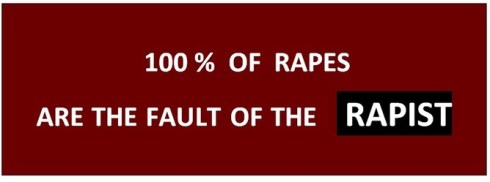
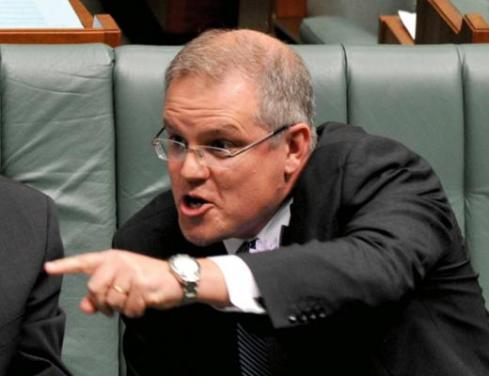
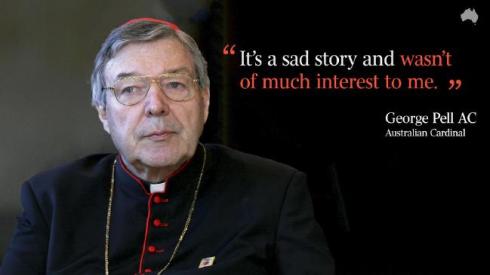


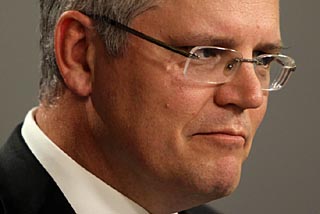



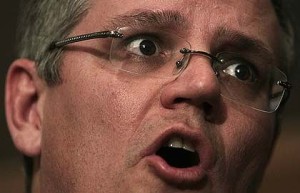
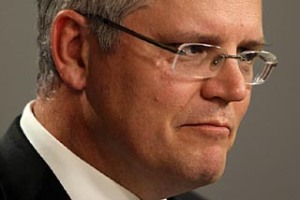

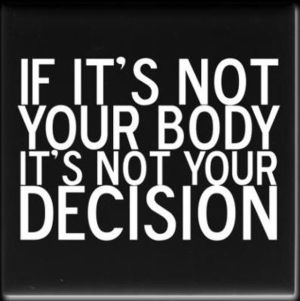


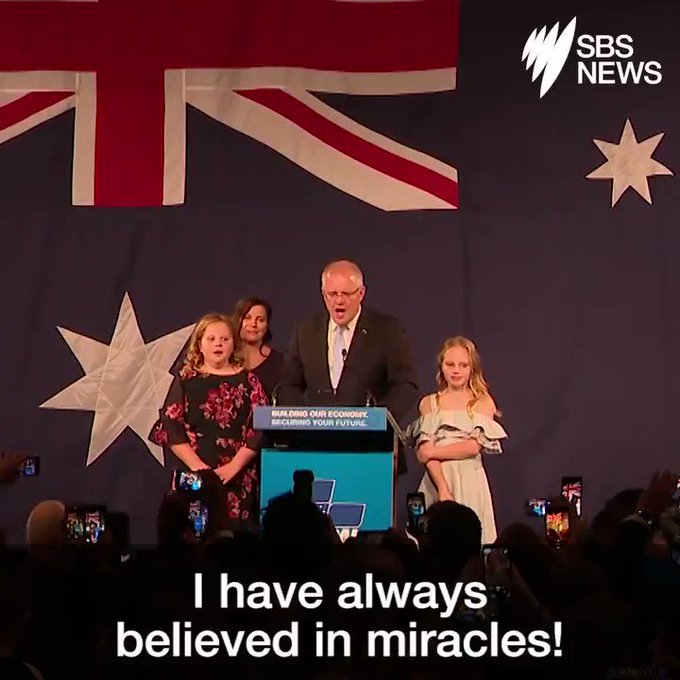




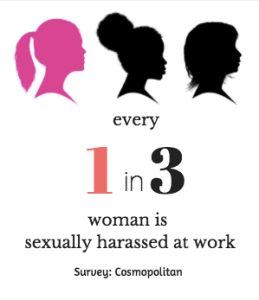
 Guest post by Dr Stewart Hase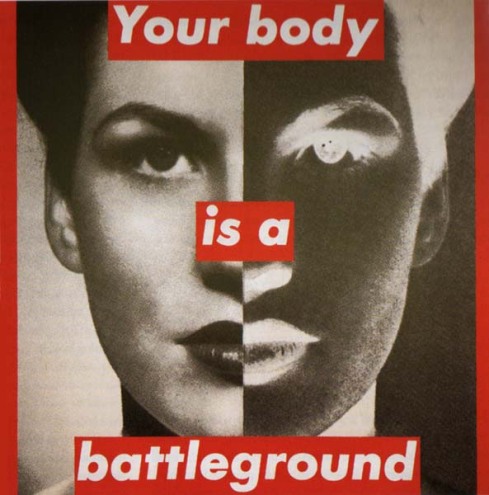
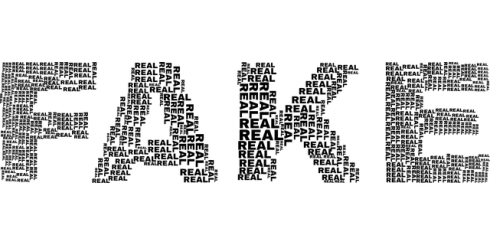






 No Place For Sheep
Recent Comments