“Art is dangerous. Art is not chaste” Robert Crumb and the anti child abuse campaigner

20 Aug

The recent Sunday Telegraph campaign against graphic artist Robert Crumb’s proposed participation in an exhibition at the Sydney Opera House, used the opinions of anti child abuse campaigner Hetty Johnson to infer that Crumb’s work is complicit in creating communities that are unsafe for children and should be banned.

The Tele apparently faxed Ms Johnson (who had previously never heard of the artist) a few copies of Crumb’s cartoons, leading her to decide that: ”the Sydney Opera House is endorsing the depraved thought processes of this very warped human being. These cartoons are not funny or artistic – they are just crude and perverted images emanating from what is clearly a sick mind.”

Crumb cancelled his trip, giving reasons in this open letter to the Sydney Morning Herald.

Anti child abuse campaigners like Ms Johnson have an important role to play in any community. Children must not be abused. We must do everything we can to address child abuse of every kind wherever we find it, because we are cruel and inhuman if we don’t.

But it’s a symptom of psychosis to mistake illusion for reality. Campaigners such as Ms Johnson are striving to impose a psychotic world view when they campaign against images such as those produced by Crumb, and closer to home, Bill Henson. Such campaigners necessarily view the world around them through the eyes of those who are sexually aroused by children. They seek in images of all kinds what they imagine paedophiles desire. They assume these images will provoke undesirable action in their viewers. They have no basis for these assumptions. They have no evidence. They simply object.

After working for many years with survivors of childhood sexual assault, I can attest that one can eventually see suspicious behaviour everywhere, in the most innocent of gestures, and on reaching that point a sensible practitioner knows it’s time to take a break. Yes, there are adults who abuse children. No, it’s not everybody. Yes there are images that paedophiles seek out and exchange. No, they are not every image in art or advertising that feature children.

These efforts by campaigners to colonise the public gaze have nothing whatsoever to do with preventing child abuse. Children are overwhelmingly sexually abused by people they know, frequently close family members. They are not necessarily abused by sexually crazed admirers of Robert Crumb and Bill Henson, or even by those sad human beings who earn their livelihood designing “sexy” underwear for little girls, and the even sadder mothers who buy it for them.

Here, I have to say that I don’t find the linked advertisements guilty of “sexualizing” the young models. I believe we need a conversation about what is and isn’t sexy and to whom, because it seems to me that campaigners are adopting a definition of “sexy” that is not necessarily shared by the whole community.

I find these images of the girls silly and sad. There’s not one thing that’s “sexy”about them. They are degrading not because they sexualize, but because they commodify. The young girls’ beauty is not sexualized, it is ruthlessly co-opted and exploited to sell product. The girls are dehumanized because of this, as are we all to varying degrees by the capitalist society in which we live.

It’s also worthy of note that these campaigners cannot, apparently, achieve their goals without perpetuating and trafficking in the “offensive” images. So on websites such as that belonging to Melinda Tankard Reist you will find links to purported “evidence” of the “sexualization” of young girls, sometimes tantalizingly prefaced by comments such as “if you can bear to look.” Unless you are willing to take Reist’s word for it, you have to open the links.

Without public outrage, these campaigners will cease to exist. They have everything invested in encouraging the viewing and sharing of the images they condemn. The question must be asked, are they too engaged in the process of commodification and exploitation of the child models? Is this the underlying reason why they are unable to address these matters as corporate and consumer issues?

What campaigners such as Hetty Johnson and Tankard Reist are actually engaged in are diversionary tactics. In blaming the art they do not understand for creating a climate in which the so-called “sexualization” of children is promoted and nurtured, they are distracting attention from the real culprits: corporations and consumers. Human beings have long been reduced to the status of a commodity in the interests of profit. Greed, not paedophilia underpins the increasing  sexualization of children. The personal worth of adults has long been measured by their exchange value: it was only a matter of time before this extended itself to the imposition on children of  impoverished and crude adult notions of what is “sexy,” designed purely to extend the profitability of human exploitation and commodification.
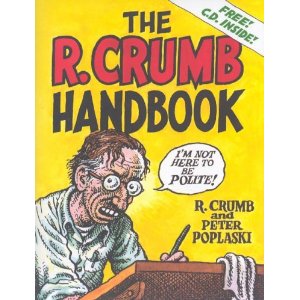
Back to Robert Crumb. Crumb’s work is a fine example of the power of catharsis. The artist owns himself as “weird,” highly anxious and neurotic, and possessing a vividly boisterous sexual imagination. These characteristics imbue his work with powerful feeling, and viewing Crumb’s images is often a disturbing experience.

But remember: “Art is dangerous,” Picasso claimed. “Art is never chaste. Where it is chaste, it is not art.”

The artist’s job is often to expose to the rest of us what we might not want to see or acknowledge as human. The best artists won’t flinch in their task of expressing what we would most like to deny about humanity. Those who are too afraid to rise to the artist’s challenge will demand censorship. They will clamour for the silencing of the artist’s imagination because, they claim, there is an inherent link between the imagination, and the acting out of imaginative visions. In other words, they take Picasso’s claim that art is dangerous far too literally.

Art is dangerous to the closed mind. Art can take us to emotional experiences and spiritual realisations that are not always easy and comfortable. But art will not turn us into paedophiles. The horrifying photographic images of sexually exploited and tormented children passed around a paedophile ring are not art.

While the artist may be expressing a personal vision, the fact that others can identify with and appreciate the artwork transforms the personal into the universal. Finding imaginative ways in which to safely express the darker and more dangerous emotions is the cathartic experience, and the cathartic experience is one that can enable a safe release of unconscious conflicts in the viewer as well as the artist. This is the power of art, and I include in the category of “art” all mediums of expression. Dark and dangerous emotions are human. They demand acknowledgement and safe expression. Art offers safe emotional release, both in its making and its appreciation.

This is the experience campaigners such as Johnson and Tankard-Reist wish to deny us. Trapped in a spiral of denial, they need to universalize their positions in order to feel validated. They need us all to agree with their critical judgements. They demand that we all adopt the paedophile’s gaze, and interpret the art that surrounds us, whatever its form, through that lens. They do not discriminate, their responses are formulaic and tiresome: if it is weird and sick to them, it has to be weird and sick to everyone, and the weird and sick must be silenced and denied.

What currently passes for “sexy” in our culture seems to me to be highly unsubtle, crude and largely uninteresting. Yet these campaigners have somehow managed to turn this one-dimensional representation of human sexuality into a cultural threat of nuclear proportions, especially for our children. Artists such as Crumb and Henson, of all people, have been caught up in this manufactured threat.

Campaigners themselves insist on reproducing many of the very images they decry, because, they claim, people must see them in order to be able to protest them. Outrage is their weapon of choice, and they must create enough of it to bring about their censorship goals.

Yet all they ever achieve is a band-aid solution. They do not address the underlying issues. They do not go deeply into the immorality of the increasing commodification of the human. They do not address a global economy that survives only as long as we all consume as much as is possible for as long as we are alive, making the construction of new markets an absolute necessity, even when that market is children and childhood. They do not address the complicity and collusion of mothers and caregivers in the sexualization and commodification of children and childhood. They do attack art, in all its forms, because that is easy.

The conflation of the “sexualization” of children and paedophilia with the perceived dangers of art needs to be challenged and resisted whenever it rears its hydra-head. The real role of anti child abuse campaigners is to work for educative and economic services that will help protect children, and that will offer accessible services for adults recovering from the frequently life long aftermath of childhood abuse.

There is no place for these campaigners as arbiters in the world of art. They have proved over and over again that their perspective is warped and one-dimensional, and that censorship is their only response to expressions of the human that they do not understand.

Sad news for the ABC

19 Aug

It’s a shocking and sorrowful morning today for the families and for ABC staff, with news of the loss of veteran journalist Paul Lockyer, cameraman John Bean, and pilot Gary Ticehurst in a helicopter crash in a remote part of South Australia last night.

As a long-time ABC audience, our household sends condolences, and our very best thoughts and wishes to everyone affected by the loss of three fine professionals and family members.


Who needs anger management classes? Credit Card Craig!

17 Aug

The federal member for Dobell, Craig Thompson, allegedly behaved very badly towards a female member of the Salvation Army at a rally on the Central Coast on Saturday night. The rally, organized to express displeasure with poker machine reform, was moderated by Louise Duff.

Apparently Thompson, also known as “Credit Card Craig”  for reasons I’ll go into in a minute, became excessively exercised when he felt that the moderator did not give him an equal opportunity to address a question. He confronted Ms Duff, threatened to finish her career, threatened to name her in the Parliament, and told her she was a “disgrace.”

So closely did he insert himself into her personal space, and so violently did he shout at her that her cheeks were covered in his spittle, and she had to wipe them clean with her handkerchief.

There were many witnesses. Thompson later rang Ms Duff and apologised.

It’s safe to assume that anyone who gets right in your face, threatens you, and covers you in spittle, is spinning out of control and should be carefully watched.

Thompson’s seat is very marginal. Should a by-election result in him losing the seat, the government will collapse and we’ll have a general election.

Prior to entering Parliament, Thompson was the head of the Health Services Union. In 2005 he allegedly authorized payment for prostitutes’ services with his union credit card. These services were not for him, but his “mates.” Thompson incurred heavy legal bills when he attempted to sue the Sydney Morning Herald for defamation after they published this story. When he dropped his defamation action, the ALP bailed him out to the tune of some $90,000, saving him from bankruptcy, presumably because MP’s can’t be bankrupts as well. Financially, that is. There’s no law says they can’t be morally bankrupt and keep their seats.

Thompson has since claimed that the signature on the credit card authorization is not his, but a forgery. This claim has been discredited by a forensic expert who says the signature is almost certainly Thompson’s. People are also asking why, if his signature has been forged, hasn’t Thompson complained to the fraud squad?

Craig Thompson is probably the biggest threat the Gillard government has to contend with at the moment. He’s the one factor that could bring them undone faster than you can say by-election. If I were the PM I’d be getting him to a psychologist pronto and paying the bills. A bit of cognitive behavioural therapy, intense anger management training, meditation, heck, even drugs. Send him on leave with depression. Have him diagnosed with a bi polar disorder. Anything to render him ineffectual and harmless, because a man who’s walking round covering the face of a Salvation Army moderator in spit, is a full-blown here and now menace.

Credit Card Craig is a bigger problem for the government than the Malaysian solution and the carbon tax rolled into one.

Senator George Brandis, senior opposition attack dog, asked serious questions in the Senate this afternoon, flagging big trouble in the immediate future for the government because the opposition is going at this full-bore, and why wouldn’t they?


It’s confirmed: Abbot and Gillard have got it wrong

16 Aug

Today’s Nielsen poll revealed some interesting information about Australian attitudes to asylum seekers, and the hard-line off-shore processing policies pushed by both major parties.

According to the poll, 53% of us believe that boat arrivals should be processed  in Australia, not off-shore. This puts Abbott and Gillard out of step with the majority of the electorate as they both pursue their expulsion plans, either to Malaysia or Nauru.

It could be speculated that the responsibility for this unexpected surge of public compassion towards boat arrivals lies with Gillard’s Malaysia solution. While many of us could apparently come at Nauru, Malaysia is a step too far, given the uncertainty asylum seekers will face there. The concept of expelling children to that country is also highly unpalatable, and likely to be contested by the UNHCR.

There’s a nice irony in imagining that Gillard might actually have done herself no favours with her Malaysia deal, when the government’s intention was to win support from an Australian public they perceived as demanding they demonstrate increasing toughness in their treatment of boat arrivals.

Perhaps instead they’ve managed to sicken enough of us with their conservative, bullying rhetoric, and the tide has begun to turn. One can only hope. The sight of federal police armed to the teeth, in training on Christmas Island to push boat arrivals onto planes bound for Malaysia, was not edifying. All this violence and threat against a handful of unarmed people asking for asylum?

Maybe we just didn’t need to see Julia chucking a Tampa. 

At this stage, there’s little the government can do, having committed to the Malaysia solution and facing a court battle next week. This poll, like so many others recently, can’t be encouraging.

60% of us also believe that those found to be refugees should be granted permanent protection in Australia.

With so many big issues facing us, one has to wonder yet again what the government stands to gain with its theatrics over boat arrivals, especially when asylum seekers arriving by plane are treated quite differently. There’s no legal justification for this difference, and there’s no rational necessity for it either. It’s politics.

This latest poll casts concrete doubt on the government’s judgement in this matter. They’ve outdone the Howard government in their ferocity towards boat arrivals, and it just might be starting to backfire, particularly as the boats aren’t stopping.

The answer is so simple. Initial detention for health and identity checks, release into the community while claims are assessed, re-settlement or return if the claims aren’t substantiated. It’s not rocket science. It’s humane, it’s responsible, it’s common sense, it’s legal. Why, then, do Abbott and Gillard have to make it so hard?

Sunday with Leonard; born to be bad, and how long is a duck’s dick?

15 Aug

In need of spiritual nourishment and it being Sunday, I gave myself a dedicated Leonard Cohen day. This entailed, along with the scented oils, incense, beeswax candles and floaty shawls, a total immersion in music and lyrics enabled by our new system that transcends anything we’ve ever had before in terms of thrilling quality of sound.
As it turns out, it is perfect for Cohen’s fruity rasp, and for appreciating the brilliance of his musicians and backers, each one of whom is a top class artist in her or his own right.

Later,as the white blond moon peered through the window at me and the dog with the cauliflower ear, I settled down with a glass of red to a viewing of the On The Road DVD, featuring excerpts from Leonard’s recent world tour, and, how sweet it is, backstage stuff about Leonard’s quirks.

Needless to say the rest of the household had buggered off by then. Sympathetic to Cohen’s music though they are, nobody has my staying power.

I am crazy in love with this man, or at least the idea of him, having never met him. Up close he’s probably as irritating as every other human being can be: it never pays to confuse the art with the artist, especially someone like Cohen who writes many of his songs from what appears to be an imagined God perspective. Or channels them, depending on your belief system. This might make him even more difficult personally than the average bloke.

(An aside, check out David Horton’s piece on climate change sceptics today, titled “I believe.” It’s a little gem. As Leonard says: Take the only tree that’s left, and stuff it up the hole in your culture…)

Back to writing in the God voice, look at the Lover Lover lyrics: (I’m using the capital “G” because I’m referring to one imagined transcendental being, not a whole bunch of them in which case I would use the small “g.” The concept of a whole bunch of them doesn’t work at all in this instance. And I know God could just as easily be a woman, but that doesn’t work either.)

I asked my father, 
I said, “Father change my name.” 
The one I’m using now it’s covered up 
with fear and filth and cowardice and shame. 
Yes and lover, lover, lover, lover, lover, lover, lover come back to me, 
yes and lover, lover, lover, lover, lover, lover, lover come back to me. 

He said, “I locked you in this body, 
I meant it as a kind of trial. 
You can use it for a weapon, 
or to make some woman smile.” 

Yes and lover, lover, lover, lover, lover, lover, lover come back to me 
yes and lover, lover, lover, lover, lover, lover, lover come back to me. 

“Then let me start again,” I cried, 
“please let me start again, 
I want a face that’s fair this time, 
I want a spirit that is calm.” 

Yes and lover, lover, lover, lover, lover, lover, lover come back to me 
yes and lover, lover, lover, lover, lover, lover, lover come back to me. 

“I never turned aside,” he said, 
“I never walked away. 
It was you who built the temple, 
it was you who covered up my face.” 

Yes and lover, lover, lover, lover, lover, lover, lover come back to me 
yes and lover, lover, lover, lover, lover, lover, lover come back to me. 

And may the spirit of this song, 
may it rise up pure and free. 
May it be a shield for you, 
a shield against the enemy. 

Yes and lover, lover, lover, lover, lover, lover, lover come back to me 
yes and lover, lover, lover, lover, lover, lover, lover come back to me. 

Now, personally I can barely resist the notion of an imagined transcendental being driven by such passion and such profound longing for reunion with me. It busts the heart right open, but only if it’s Cohen that’s singing about it, I’m not getting sucked in by those fundamentalists banging on about how God loves me and longs for my love in return.

Which reflects badly on me, I know, suggesting as it does that it’s the aesthetic not God after all, that transports me with delight.

There’s nothing “pure and simple” about violence and greed. Yet this phrase and others like it have been used over and over again as “explanations” of the motivations of those who rioted and looted in British cities last week.

It’s becoming evident that the offenders were not a homogenous group. Students, employed people, young kids, representatives of the middle class, the unemployed and a variety of ethnicities were all involved. Perhaps the only generalization that holds up is that they were young.

That their behaviours are criminal is unquestionable. That they ought to be held accountable is also unquestionable. What does need to be questioned is why this particular group of opportunistic looters are being singled out for attention when the world is awash with the predatory species. Check this link to the Drum today and Michael Brull’s excellent piece.

Like drug mules, the rioters and looters easy targets. They’re at the bottom of the opportunistic criminal food chain.

“They did it because they can” is another “explanatory” phrase. But all opportunistic criminals do it because they can, many of them causing far more mayhem and misery, unchecked, and for far longer periods. Opportunistic criminal behaviours, like domestic violence and incest, cross social divides. Those who are protected from the surveillance of authorities by money, power and influence are rarely called to account. Those who act out their capacity for violence and greed in the public gaze are pulverized by the self-righteous orthodoxy with the means to conceal their own criminality.

Lock them up and throw away the key, stop their benefits, chuck them out of public housing and make them homeless, that will teach them a lesson they’ll never forget.

The orthodoxy will do all this and more, because it can. It will do this because its prevailing attitude is that certain people are born bad and that’s all there is to it, and to them. The born bad fulfill a useful purpose: they distract public attention from greater opportunistic crimes perpetrated by another certain kind of person. This kind of person is presumably not born bad because being born bad means not having the ability to hide your criminality. The not born bad opportunistic  criminal commits crimes that are not perpetrated in clear sight. This species is among those with whom the orthodoxy is on good and mutually self-interested terms.

British politicians led by Old Etonian David Cameron are also engaged in giving the police a bollocking for not doing things properly. Which is a bit rich considering it took Cameron a few days to get back from his holidays in a Tuscan villa. It looks as if the only people not responsible for any of it are the politicians, who have been badly let down by both the opportunistic looters and rioters and the coppers, while they had their backs turned on their hard-earned summer holidays.

I can’t run no more,
With that lawless crowd
While the killers in high places say their prayers out loud…


That last line always makes me think of Tony Blair. You have heard about his Faith Foundation, haven’t you, the one that “promotes respect and understanding about and between the world’s major religions,” and has a flourishing branch at the University of Western Australia?

I suppose it makes a change from bringing democracy to Iraq through Blair, Howard and Bush’s Christian method of bombing the living shit out of civilians no matter what faith they follow.

Finally, I now know that the Argentine duck has a penis that is almost half a metre in length, and is, dear God, shaped like a corkscrew.

Here is a picture of a duck checking on his penis. He looks like he can’t believe it either. That’s mine?! WTF!

I don’t know how the female deals with this appendage. Please don’t anybody feel they have to tell me.

Did God give the Argentine duck his body to make the girl duck smile? Hallelujah!!!

Government control of social media: take away Murdoch’s phones!

12 Aug

As predicted, British PM David Cameron is now flagging the possibility of controlling social media access to those the authorities perceive as responsible for inciting and participating in anti-social behaviour such as rioting and looting.

Just how this would work in practice is not yet clear, if indeed it is possible at all. The police confiscate the social media tools of anybody found wearing a hoodie? Males of particular ethnic appearance between the ages of x and x are obliged to relinquish their phones in times of unrest? Females with black nail polish and piercings likewise?

Who will judge that the usual suspects are in the throes of planning a campaign of violent civil disobedience? What criteria will they use?  Will Britain become one of those authoritarian regimes that shuts down the Internet when there’s trouble?

The idea is ludicrous. It’s another of those impotent threats trotted out by politicians who have no control over events, and are desperately casting about to find some punishment that will dissuade the mob from ever doing it again.

The threat of taking away their toys if they don’t behave is likely to incite further explosive protest. This is a cohort that already believes it’s over surveilled and singled out for police persecution.

Has anybody thought to threaten the Murdoch empire with the restriction or removal of their phones if they don’t stop hacking? Didn’t think so.

The impotent threats of impotent leaders

11 Aug

They may come from different political perspectives (in theory, anyway) but there are interesting similarities between British PM David Cameron’s authoritarian threats against the rioting mobs, and those used by Julia Gillard on the matter of water-borne asylum seekers.

Whenever there is social unrest of almost any kind, politicians pull up the same violently repressive cliches: stamp out, crack down. I/we will not allow, full force of the law, tough stance against criminals, illegals, queue jumpers. This ritualized language is the backbone of authority’s discourse when faced with challenges it ‘s very likely incapable of controlling. The less likely the possibility of control, the more violently repressive politicians’ language becomes.

While there is a place for dissent and disobedience in a liberal democracy, these acts can only be performed within the strict parameters of acceptable middle class behaviour. It is not acceptable to riot, either in the streets of London or behind the razor wire of a detention centre. Middle class manners do not allow for extreme behaviours of any kind. This is why politicians have absolutely no hope of competently addressing extreme behaviours: they don’t understand them and they’re scared to death of them. All they can think of to do is threaten with imprisonment or expulsion, either of which may at some point become necessary, but neither of which do anything to calm a red-hot situation.

The bottom line is, David Cameron cannot control the rioters. He may bring in water cannon. Australians know from Woomera that doesn’t work. It’s a very bad look, especially for a country aiming to put on the best Olympics ever next year. The effects of water cannon are extremely temporary, unless it inadvertently kills or injures someone, and it’s use will further incite the rioters it blasts all over the streets.

The bottom line is, Julia Gillard cannot control the asylum seekers who are already here awaiting assessment, or those she intends to expel to Christmas island. She cannot stop them trying to poison themselves, going on hunger strikes, sewing up their lips or killing themselves. Her plan to despatch them to Malaysia is now completely out of her control, and in the hands of the High Court. Even if she has them shot again them with bean bag bullets she’s still got no control over them, and that’s a bad look too.

You cannot control human beings who feel they have nothing to lose. You can only attempt to create a society in which human beings are not driven to that extreme. People exhausted by failure frequently resort to savagery. Politicians consistently fail to understand this. There’s no votes in understanding it.

Once, in less sophisticated times, the public might have been reassured by politicians using tough language in a crisis. Not anymore, but politicians haven’t caught up with the change in the public’s credulity. Consequently they look increasingly impotent as it becomes more apparent that their rhetoric is hollow. The objects of their wrath are entirely un-cowed by the blustering, and more often than not, they’re driven to greater extremes by the threats.

So Cameron throws hundreds of youths in jail. Imprisonment then becomes a right of passage and the offenders emerge even more brutal and brutalized than when they went in.

God only knows what’s going to happen to the asylum seekers, but it doesn’t look like the boats are doing any stopping, and there’s still the problem of expelling unaccompanied minors into very uncertain conditions and futures.

So what exactly do the politicians hard line positions achieve?

Votes, of course. Because there’s still enough of us who want to hear the rhetoric, even if we know it doesn’t work. The authoritarian rhetoric reassures. It makes us think somebody’s in charge even though we don’t really believe it. In full authoritarian flight, the politician appears to possess the “truth” about the situations we’re facing, and the right things to do about them. It’s a chicken and egg thing: the use of authoritarian language facilitates authority.

Of course, the fact that these events are taking place at all signifies the degree to which our politicians really have lost control.

Why tough talk won’t stop London burning: look to Johnny Rotten

10 Aug

Predictably, British PM David Cameron is talking tough, threatening anarchic marauders with the full force of the law, promising terrified residents that the government will defeat the masked and hooded teenage hoodlums with the toughest possible action. He will jail them. He will put them in juvenile detention. He will teach them not to burn and loot, by God he will.

Meanwhile, the bizarrely opinionated Brendan O’Neill of Spiked, recently in Australia where he earned a reputation for thoroughly irritating an astonishing cross section of people, has decided that the entire responsibility for the chaos can be laid at the door of the bloody welfare state. The offending yobs have suckled at the state’s tit for their entire lives, and so have their parents, and as a consequence none of them have the slightest idea about standing on their own two feet and behaving decently like their working class grandparents did. By God, the English aren’t what they used to be.

A brief aside: I was brought up by working class grandparents for a few years, and the difference was they really were working class because there was work for them to do. My granddad was never unemployed: the coal mines or the gasworks gave us food on our table and a Saturday drink at the club. Very different times, Brendan.

Jonathan Freedland of the Guardian alleges that the rioters have the “opportunistic desire to steal and get away with it.” Which, come to think of it, also describes the motives of many of those financial types who got away with ruining untold investors and still managed to reward themselves. Or the British MPs who stole taxpayers money to build moats around their castles, and swimming pools, and pay for illicit sex and exotic holidays and extra houses near Hampstead Heath.

Or even the police and politicians who fell on their knees before the Murdoch empire and turned a blind eye to vile illegalities that empire was busily engaged in perpetrating. These same police and politicians are now claiming the high moral ground in their shocked outrage against the raging youth, and in their self-righteous determination to get these delinquents who’ve had the nerve to behave really, really badly. But where are the leaders with any moral compass? Who’s setting a moral example? The rot starts at the top.

That the rioters have trashed their own neighbourhoods has been the source of much bewilderment. It’s not rocket science. These kids don’t consider themselves as part of any community. They don’t perceive themselves as having a stake in any neighbourhood. Alienation at this level comes with enormous and inarticulate rage. They don’t belong. They can’t belong. They’ll never belong. How did a society let this happen?

This isn’t a social movement designed to challenge the status quo and bring about change. This is pure destruction, and self-destruction. These kids don’t care, and they especially don’t care about themselves. Incarcerate them for a few years and they’ll likely come out worse. If David Cameron or anyone else is kidding themselves that tough talk is going to even touch these youths, they’re dreamin.’ The time for tough talk is long gone. When you ain’t got nothin’ you got nothin’ to lose, and like Bob, I’m not talking about material possessions.

The nihilistic lyrics of Johnny Rotten and the Sex Pistols pretty much sum up the mindset:

When there’s no future, how can there be sin?
We’re the flowers in the dustbin
We’re the poison in the human machine
We’re the future, we’re the future…God Save the Queen

London’s burning: Blame it on the BlackBerry

9 Aug

We live in a global culture in which the ability to consume is the primary measure of human freedom. To be a prosperous consumer is to be free. Given this reality, violence, theft, and rioting by disaffected youths stealing trainers and plasma TVs, while shocking, should not come entirely as a surprise.
The marauding gangs have been described as criminal opportunists, a description that can be as accurately applied to the News of the World phone hackers,  the Wall Street financiers who gave us the first global financial crisis, the private companies making exorbitant profits from the misery of war in Iraq and Afghanistan, the sub-prime mortgage mongerers, authorities entrusted with public well-being who take bribes to work against the common good. Countries such as Australia, the UK and the US have been governed by men who are widely considered to be war criminals: make up your own list, the possibilities are endless.

We commit our crimes in accordance with our means and circumstances. The better our means and circumstances, the less likely we are to engage in the crimes of looting and arson. The London riots are complex in their genesis but without doubt unemployment, poverty and lack of hope play their part.

Of all the reports and analyses I’ve read thus far the one that grabbed my attention was the blame it on the BlackBerry explanation. BlackBerry offers its customers a private messenger service (BBM) that encrypts your messages, unlike the other social media that are available to everyone, including the authorities. It seems that many rioters are communicating via their BlackBerries, and when this is the case, police cannot find out until it’s too late where the next outbreak of violence will be. This has allegedly led to the rapid expansion of trouble spots around the country, as agitators’ communications cannot be decoded by authorities in time to prevent new outbreaks.

It seems something of a long bow. Presumably  an intercity tweet can also get things going faster than police can organize officers on the ground. The real objection to BBM is that it thwarts official surveillance, and when disaffected youth have a means of communication that excludes any possibility of the authorities cracking their codes, this is perceived as a menace in principle, if not in practice.

The mobile phone is one of the iconic symbols of consumption. BlackBerrys cost less than smartphones and BBM is both essentially cost-free and invisible to police. In order to communicate, BBM users must exchange PINs, but their conversations are private. They can spread their PINs via SMS, Twitter or other means.

There’s little doubt that the use of social media is a vital force in getting uprisings of all kinds off the ground, and its use enables rapid expansion. But to blame the London riots on the BlackBerry is like blaming the Arab Spring on Facebook. Social media is a tool available to everyone to use how they see fit. Undoubtedly there’ll be a call to ban BBM before too much longer, or distribute the facility only to those authorities deem to be worthy of their trust.

The violence and looting is awful. But blanket condemnation of the guilty is too simplistic. Yes, they have to be held accountable. Yes, they have to face the consequences of their actions. But these events don’t happen in a vacuum. Criminal behaviour is not peculiar to disaffected youth. Stealing trainers and plasma TVs is no more or less criminal and deserving of punishment than hacking phones, exploiting dead children, starting illegal wars and ruining the global economy. We don’t call for a law and order crackdown except when the crimes are perpetrated by disaffected youth. It’s a class-based demand.

Western culture worships consumerism. We measure worth by what we have and what we can afford. Everywhere we look there’s corruption and criminal behaviour. It’s the zeitgeist. Commentators have been quick to point out that these riots are not political uprisings because one of the goals is to steal stuff.  They’re wrong. These riots are absolutely political. The ultimate assessment of human worth in Western culture is what the human owns and is capable of owning. The middle class aspire to wealth. The working class aspires to what the middle class has. When a large enough group feels it has no stake in society, that group will revolt. Trainers and plasma TVs are the pathetic symbols of the revolt of the have nots against the haves. Not political? You must be dreamin.’

What does brain plasticity have to do with leadership?

9 Aug

Guest post today by Dr Stewart Hase 

There are three related issues that I’d like to briefly mention here on the way to providing some hard science that people who want to be leaders could find useful, if not compelling.The first is that the ‘great’ debate about whether leaders are born or made is a non-event. The issue is more about what people do that make them leaders and whether they have the capacity to perform the behaviours. It is clear that some people can’t be good leaders and others can. The second issue is closely related to the first and that is that people in leadership roles do not pay much attention to the social, anthropological and psychological evidence about what great leaders do and how to get the most out of people and, ergo, organisations. Leadership is treated a bit like counselling and teaching (other than in schools), that it that anyone can do it, without any formal training, if they have the inclination. It is fascinating that we still promote people to leadership roles on the basis that they have demonstrated high levels of competence in their profession (being an engineer, academic, town planner). Lastly, for this little article at least, the leadership literature is, at best, fluffy and has probably not had much impact, other than the occasional halo effect, on what most people in leadership roles do at the coalface.With these three issues in mind it is interesting to actually look at the science behind what people need to do in order to become good leaders. The evidence is pretty well overwhelming concerning the conditions in which people perform best at work. The tragedy is that the evidence is not accessed, oversimplified or incorrectly interpreted. I know of many organisations that have been sold psychological ‘pups’ by consultants or whose CEOs have read a trendy book on leadership at the airport that sounds good but has not evidential base. These ‘pups’ come in the form of untested theories and models that are anecdotal at best. They might consist of colourful and sexy personality testing instruments that have no reliability or validity whatsoever and are simplistic in the extreme. Medical practitioners, psychologists, dentists, nurses, physiotherapists, engineers are required to use evidence based practice. Why not people in leadership roles?We know from many social psychological experiments that people work best in an environment where they have control over their immediate work, are informed, make a contribution to decision making, feel that what they do is worthwhile, feel that they have a positive future, feel a valued member of the team, are acknowledged for what they do, are appropriately rewarded, have interesting work, and enjoy optimal variety in their work,

We also know, again from social psychological research, what it is that good leaders do to have influence and to get the best out of people. They have empathy, listen attentively, have good interpersonal skills, make people feel valued by involving them, are optimistic and positive, involve people in decision making that affects them, and don’t micro-manage (they believe that expertise outranks rank). Good leaders consciously create the type of environment or culture described in the paragraph above.

In recent years technology has made it possible to view in living brains how experiences change our brain structure, how new neural networks grow and how relationships between the various are affected. In general it can be said that positive experiences have a growth and positive effect on our nervous system and negative experiences have the opposite.

This research has now given us some explanations of why the social factors described above seem to be important in what has come to be called employee engagement. People perform best in a situation of what I call Goldilocks Stress: it has to be just right. That is, not too much and not too little. This means the environment has to be safe and you don’t have to be Sigmund Freud to see that the factors described above from social research lead to a sense of safety. People are more likely to learn and adapt when they feel safe and is a central theme in the research on brain plasticity.

Research into brain plasticity also tells us that people learn and function better in enriching and challenging environments. This would explain why people tell us that they enjoy work when they feel that they are involved, have a valued role to play, work in functional team settings, have a role in decision-making and have control over what they do. Positive parenting has been shown to have very powerful cognitive and emotional advantages to children thus exposed. There is no reason to suspect that the same thing is not true for adults whose brain, we now know, develops throughout the lifespan.

Finally, we can see the role that positive interpersonal relationships are such an important aspect of leadership. Specifically, it is easy to see why people report that they most admire and are engaged with leaders who have empathy, listen and demonstrate good interpersonal skills. In short, it has a positive effect on their nervous system. Bullying behaviour, for example, has the opposite effect: it creates stress, reduces enrichment and diminishes cognitive ability.

At least there is a significant physical science to reinforce the already considerable social psychological evidence that what managers/leaders do really does matter. As does what they do not do.

Dr Stewart Hase

Guest author Dr Stewart Hase is a registered psychologist and has a doctorate in organisational behaviour as well as a BA, Diploma of Psychology, and a Master of Arts (Hons) in psychology.

Stewart blogs at stewarthase.blogspot.com