Archive | Society RSS feed for this section

I’m gonna stand by my woman now

18 Jun

Women bagging women is nothing new, but last week there was something of a spike in the pastime that left me wondering why we need patriarchy to do it for us.

I’m not referring to disagreement or critique, I’m talking about spite, judgement, contempt, and downright bitchiness that does nothing to progress civilisation, of the kind that feeds an exclusionary dynamic and precious little else.

First I came across this piece of anti bisexual woman contempt in the HuffPost Gay Voices blog, from radical feminist lesbian writer Julie Bindel. Ms Bindel is railing against allegedly hedonistic bisexual women “tourists” who “sleep with women on the weekends and go back to hubby on Monday mornings.” They have no sexual politics, she claims, and are exploiting full-time lesbians who have a political as well as sexual commitment to same-sex relationships.

I guess dedicated lesbians are capable of refusing to sex to touristing bisexual air heads lacking a sexual politics. I mean, nobody’s forcing them to put out for a woman who also engages with a penis are they?

Ms Bindel concludes: “If bisexual women had an ounce of sexual politics they would stop sleeping with men.” One could equally argue that perhaps if lesbians had an ounce of sexual politics they’d stop sleeping with bisexual women?

Then I read Elizabeth Farrelly’s column in the Sydney Morning Herald titled “The New Feminism: if it’s girly it’s good.” “Here’s the truth. I’m not a misogynist” Farrelly begins, perhaps not the best first line I’ve ever read. She then gets stuck into women who refuse to leave what she calls “the sewing circle” to take on the wider world of real  things. “Most of what passes for feminism these days… just legitimises girliness” she writes. I can see where Farrelly is coming from on this: I’ve moaned more than once about how feminism seems to be about body hair and lipstick these days. At the same time, I see nothing at all wrong with a bit of girliness: it is possible to have a reputable sexual politics and talk to other women about clothes and lipstick and occasionally have a good giggle over cocktails as well. This insistence on categorising is so, well, patriarchal. Real women break out of boxes, in my opinion.

However Farrelly goes further. She dislikes, she says, “boring” women authors like Margaret Atwood and Jeanette Winterson, preferring instead “writing with a higher IQ and lower pH than most women can manage…”

Ouch. That’s misogynist.

“It is clear,” Farrelly claims, “that to criticise women, or worse, poke fun is considered misogynist.”

Well, sometimes it is misogynist and sometimes it isn’t. Every time someone criticises Julia Gillard somebody else claims it’s misogyny,and while there’s certainly plenty of examples of that, there’s also legitimate criticism that has nothing to do with gender.

Then there’s Lara Bingle. About whom I know practically nothing more than the vitriol I’ve seen directed at her because of her TV reality show, “Being Lara Bingle.” I was initially confused by this title, wondering if it referenced the movie, “Being John Malkovich,” in which a miserable puppeteer stumbles across a portal into the star’s mind and charges people $200 a pop to spend fifteen minutes seeing the world as he does. Great and absorbing complications ensue, of the kind I simply could not imagine in a TV reality show about a young woman who seems to have done little other than perform in a failed tourism promotion and have a public fight with a famous cricketer who then dumped her.

For reasons I cannot fathom, Ms Bingle’s foray into reality TV has provoked quite vile criticism from many quarters, overwhelmingly from women. This caused me to ponder on the way women treat women, especially when the woman in question is young, and has the kind of beauty that is currently favoured in the mainstream. I mean, don’t watch it girls, if it hits your spite buttons. Ms Bingle is merely trying to make a life for herself, and accepted an opportunity practically every girl would if it came along.

“She decided to do it, now she’ll have to pay the price” was one piece of  self-satisfied Schadenfreude from an older woman who sounded as if she’d been waiting her whole life for Ms Bingle to fall flat on her face.

Ease up, girls. We have men to put shit on us.

Finally, this isn’t overtly about women bagging women but behind the scenes you’ll find much anti woman sentiment masked as concern and feminist politics. Many of you will have heard of Valerie Solanas and her Society for Cutting Up Men, otherwise known as SCUM. Solanas authored the SCUM Manifesto, a rabidly intense and sustained attack on men that states, among other things:  In other words, the male is an incomplete female, a walking abortion, aborted at the gene stage. To be male is to be deficient, emotionally limited; maleness is a deficiency disease and males are emotional cripples, and  SCUM will kill all men who are not in the Men’s Auxiliary of SCUM.

Ms Solanas went on to attempt the assassination of artist Andy Warhol after a dispute with him about a film script.

And so to the current Australian connection with SCUM. In July 2011 the SCUM Radical Feminist Conference was held in Perth. It was advertised as being of interest to  females who want to overthrow the government, eliminate the money system, institute complete automation and destroy the male sex. Workshops, guest presenters and social activities, plus a space to celebrate and re-member the life and work of Valerie Solanas and other radical feminists.

At the top of the updated SCUM Conference program there’s an announcement of the launch of Melinda Tankard Reist’s book, Big Porn Inc.

I was utterly shocked to discover Ms Reist’s apparent affiliation with the SCUM Radical Feminist Conference. I had no idea Ms Reist was so radical in her feminism, indeed there are some leading feminists who have publicly argued that Reist is not a feminist at all. (Another example of women bagging women, I suggest and a serious one. BTW I am the blogger mentioned in this article whom Reist is still threatening to sue. See Defamation category on this blog).

Reading through the program I discovered that Ms Reist’s publisher, Spinifex Press director Susan Hawthorne, gave a paper at the conference on feminist manifestos and SCUM.

I have yet to understand how exploitation of women and girls can be prevented through violence against males. All males, that is, indiscriminately, because they are male, and as advocated by SCUM. I fail to see the logic.

I could just be thick but to my mind, having my name and my book heading the program for a Society for Cutting Up Men conference would imply I was sympathetic to their cause.

And what would Jesus say?

So in conclusion, I’ve had  belly full this last week of women bagging women. Is that all we can do with our liberation, such as it is?

PS This Kravitz song will aggravate many people and is begging for a feminist deconstruction.

Belief versus human rights

13 Jun

After my blog yesterday on Prime Minister Gillard’s belief that homosexuals should not be allowed to marry, I became embroiled in several robust Twitter fights. One of the points of contention was that the PM, like anyone else, is entitled to her personal beliefs. I was threatened with Voltaire, told belief does not require any knowledge, described as intolerant and blind to the mote in my own eye,  and finally accused of risking the downfall of the government and an Abbott ascendency, by criticising Ms Gillard’s personal belief about same-sex marriage.

While there’s a good community here at Sheep, Rupert Murdoch I’m not.

Be that as it may, the fights led me to thinking about belief. While I agree that everyone is entitled to their beliefs, I don’t agree that everyone is entitled to act on those beliefs to the detriment of others. Once a belief is extrapolated from the personal realm and used to determine the lives of others it is no longer personal, it is political.

Personal belief can legitimately determine the course of one’s own life. If you don’t believe same-sex marriage is right, for example, then don’t make a same-sex marriage. Nobody in our country will force you into an arrangement that powerfully disturbs your moral sensibility.

What disturbs me, however, is the argument that personal beliefs ought to be set apart from the interrogations we are at liberty to apply to all other human processes. The personal belief is elevated to the sacred, inspiring respect and reverence simply because it is a personal belief, and regardless of its substance. While I find this bizarre, hinting as it does at some transcendental exterior governance, I have little problem with it, as long as the belief remains in the realm of the personal. When it becomes prescriptive, I argue that it is no longer protected from scrutiny and critique by reverence.

Tony Abbott, for example, holds a personal belief that abortion is wrong, as well as being opposed to same sex marriage. In this article titled Rate of abortion highlights our moral failings Mr Abbott explores his personal beliefs about this procedure, including his belief that abortion is a lifestyle choice made to suit the mother’s convenience.

Of course Mr Abbott is entitled to hold these beliefs. Anyone can believe anything they want. He is not entitled to impose his beliefs on others. When he does, the belief has ceased to be personal, and has become political.

If I am expected to unquestioningly respect Ms Gillard’s personal beliefs on homosexual marriage, I gather I am also expected to respect Mr Abbott’s beliefs on abortion and refrain from challenging them?

What about Hitler, because no argument about belief is complete without a reference to Hitler. Hitler’s personal belief was that  human beings who did not fit his ideal didn’t deserve to exist. Including homosexuals. When Hitler’s personal belief burst out of his private realm, millions upon millions of human beings were starved, tortured and murdered. Yet Hitler’s personal belief ought to have gone unchallenged because personal beliefs are sacred?

I could go on with endless examples of the dire repercussions of actions based on personal beliefs, but I know you’ve got my drift.

Perhaps a belief can be considered sacred only as long as it remains personal. Once it affects anyone other than the believer it is no longer personal, and no longer entitled to protection from interrogation.

Were I to be given the chance, I would ask Ms Gillard if she has reasonable, plausible evidence for her core belief that homosexuals should not marry. I use the term core belief  because I’m assuming that the PM has actively thought about her position on same sex marriage and has come to a state of justified true belief. Otherwise we would be dealing with something more akin to superstition, of the kind practised by Jim Wallace and the ACL.

The reason I care about this has nothing to do with marriage, about which I personally give not a toss. It has to do with the right all homosexuals have to be treated equally. It is about the right homosexuals have to be recognised as being as fully human as heterosexuals, and as entitled to participate in our institutions to precisely the same degree. This is not, in my opinion, a matter for anybody’s personal beliefs to determine. It’s a matter of human rights.


The PM, belief, and marriage equality.

12 Jun

On Qanda last night, Prime Minister Julia Gillard was asked the inevitable question about her position on gay marriage. To which she replied that nobody who knows her personal circumstances (she lives in a heterosexual de facto relationship) would be surprised to hear her say that a relationship doesn’t need to be a marriage in order to be successful.

If the question had been about the purpose of marriage and whether or not we ought to abolish the institution, then Ms Gillard’s observation would have been mightily relevant. But it was not. It was about why Ms Gillard does not support same-sex marriage. The PM ought not to have been allowed to get away with avoiding the question, and with employing the classic obfuscation by conflation tactic, so beloved by politicians.

There are two separate issues in play. One: is there any need for the state to involve itself in relationships in the first place through the Marriage Act? Two: given that Marriage Act is unlikely to be abolished anytime soon, on what grounds do we continue to prevent same-sex couples who wish to marry from doing so?

The PM does not support same-sex marriage because she deeply believes marriage can only be celebrated between a man and a woman. Every time Ms Gillard refers to the Marriage Act to support her “belief” someone needs to remind her that the Act reads as it does because John Howard made it so. In 2004 the Marriage Act 1961 was amended in federal parliament to define marriage as a union between a man and a woman. The Amendment also states that any existing same-sex marriage from a foreign country is not to be recognised as a marriage in Australia.

Like any other citizen, the PM is entitled to her personal opinions. Legislators, however, are not entitled to legislate based on their personal opinions. If we are to continue to forbid same-sex marriage, we need to have very good reasons for that. “I believe” is not a reason.

Many of us strongly defend Ms Gillard when she’s subjected to attacks on her personal choices by conservative moralists who believe a woman isn’t  “complete” unless she has children. This belief is as silly and as offensive as the belief that only heterosexuals should be allowed to marry. It’s not very long since Ms Gillard would have been prohibited from holding her current job because of ludicrous and offensive beliefs about what women should be allowed to do. Not reasons. Beliefs.

If any politician wants to deny marriage equality to those who seek it, I want to know on what grounds they justify that denial. I don’t want to hear about their beliefs on the subject. I don’t care about their beliefs. I want some good solid reasons to support their denial of this equality. If belief had been allowed to govern our world, we’d still be flat earthers and Ms Gillard would not Prime Minister, living in a de facto relationship in the Lodge.

Time to give something back, PM?

Make my day…

9 Jun

What is objectification, anyway?

7 Jun

The following are philosopher Martha Nussbaum’s criteria for objectification, that is, the act of treating a person as an object:

instrumentality: the treatment of a person as a tool for the objectifier’s purposes;

denial of autonomy: the treatment of a person as lacking in autonomy and self-determination;

inertness: the treatment of a person as lacking in agency, and perhaps also in activity;

fungibility: the treatment of a person as interchangeable with other objects;

violability: the treatment of a person as lacking in boundary-integrity;

ownership: the treatment of a person as something that is owned by another (can be bought or sold);

denial of subjectivity: the treatment of a person as something whose experiences and feelings (if any) need not be taken into account.

To which Professor Rae Langton, MIT, adds the following:

reduction to body: the treatment of a person as identified with their body, or body parts;

reduction to appearance: the treatment of a person primarily in terms of how they look, or how they appear to the senses;

silencing: the treatment of a person as if they are silent, lacking the capacity to speak.

The criteria all refer to the treatment of a person. From this I understand that objectification is enacted in encounters between people, when one party behaves towards the other as if she or he is a means to an end, and not a human being who is entitled to have her or his needs and feelings taken into account.

There’s an almost constant stream of allegations of objectification through sexualisation currently being made in Western society. These are leveled by concerned citizens against much popular culture, and based largely on images of women that culture produces. These allegations presume an objectifying gaze, that is, they insist the viewer will inevitably reduce women portrayed in certain ways to objects to be used for sexual gratification, rather than seeing them as equal human beings. Clothing, facial expressions and postures are used as signifiers of objectification, as well as language.

The signifiers chosen by concerned citizens are based on a Judeo-Christian perception of the adult female body as unruly, dangerous and indecent, and requiring concealment except in specific circumstances such as marriage and other committed monogamous relationships. Clothing that reveals too much of the body’s “private” zones is regarded as transgressing moral codes, as are postures and language that imply female sexual desire, and/or stimulate male “lust.”

Here I should note that the objectification debate is heteronormative. Apparently gays and lesbians don’t objectify each other or if they do, concerned citizens don’t include this in their ambit.

To interpret the clothing, postures and movements as indecent one must first have a particular set of moral values. Otherwise the image will be attractive, unattractive or entirely uninteresting, and it will carry no moral weight.

An image may invite the objectifying gaze. The viewer may accept. However, it’s a big leap to assume that all viewers who find an image “sexy” will inevitably progress from that opinion to objectifying a woman the next time he or she is face to face with one, and will inevitably set about finding ways to use the woman as a means to an end. This assumption imbues the image with nothing less than supernatural powers, as well as denying the viewer’s autonomy and self-determination. It also denies the viewer agency. It denies the viewer’s subjectivity and it also silences the viewer by imposing another’s values on the viewer’s gaze. According to Nussbaum, these are all acts of objectification. In other words, when concerned citizens make these assumptions, they treat the viewer as less human than themselves.

An image can invite us to objectify, but it can’t cause an objectifying consciousness to develop where it previously did not exist.

The inability to perceive others as human like oneself is a symptom of several psychological disturbances, as well as immaturity. These factors are not brought about through viewing an image, and they will not be resolved by removing an image from public view.

The argument that women choose to display their bodies in these ways holds little credence with concerned citizens. The most frequent response is that women don’t understand they’re inviting objectification through presenting their bodies to the admiring and at times desirous male gaze.  Another argument is that society (patriarchy) has so “normalised” the objectification of women that only those policing it will notice when it’s happening.

It’s something of a leap to assert that a woman is, without any awareness or agency, issuing an invitation to men to turn her into an object when she steps in front of a camera in small clothes, or plays football in lingerie. I can think of many reasons why women choose to undertake these activities dressed in these ways, and none of them are to do with the kind of compulsive masochism implied in their critics’ interpretations of their actions.

Indeed, such an attitude towards a woman could be read in Nussbaum’s criteria as treating her as if she is lacking in autonomy and self-determination, and treating her as a person lacking in agency. It also denies her subjectivity, and attempts to silence her by imposing an interpretation other than her own on her actions. In other words, the concerned citizens are engaged in objectifying her.

It seems to me that the entire objectification movement is an attempt to impose a particular set of moral values on society. Notions of propriety, largely middle class, are disturbed for example, by the spectacle of women playing football in lingerie. This discomfort is pathologised as objectification, and extrapolated as threatening to all women and girls, who as a consequence of the LFL will be regarded as nothing more than sex objects for male gratification. While there certainly are males who act as if this is their opinion of women, the majority do not. The majority of people understand there is a difference between personal encounters, and imagery.

The charge of objectification is a serious one. It should not be trivialized to serve a moral agenda.

It seems obvious to me that the key to accepting the human right of others not to be treated as a means to an end, lies in education and not censorship. Attempting to build a society on the assumption that all its members are possessed of an objectifying consciousness and everything possible must be done to prevent them indulging that consciousness seems to me insane, and asking for trouble. Respect and value for others as equals is an acquired skill, and we depend on caregivers to instruct our young in acquisition and practice. It’s a work in progress for the human race. Concerned citizens would do better to apply themselves to encouraging and assisting this work, rather than attempting to impose a moral code that adds nothing at all to the civilizing project. An attempt that in its practice commits the very offences it claims to vehemently oppose.


Game of Thrones, The Sopranos, Women.

6 Jun

I’ve just watched the first two episodes of Game of Thrones, the wildly successful HBO series set in faux Medieval times in what is now the UK and “across the Narrow Sea” in what we call Europe.  I was enthralled. I can’t wait for this evening when our household gathers to watch the next episode and in the words of Laurie Penny in the New Statesmen “enjoy the shit out of it,” despite its unexamined ‘racist rape-culture” ambience, and its appalling representation of women.

Life in Medieval times was not good for women, you might argue, and you would be right. There is no way of cushioning this reality, nor should anyone attempt such falsification. Women were for breeding and fucking. Relationships of all kinds evolved, because that’s what happens between humans regardless of class and circumstance. However, male allegiance is primarily to the King, or he who would be King. Women may not interfere with this requirement. No man would consider staying home from the slaughter because his woman asked it of him.

The wars fought between these opposing Medieval forces demand sacrifices from the top down, unlike our modern wars in which politicians dispatch the sons and daughters of others to do their killing while themselves remaining comfortably removed from trauma and death. This is only one of the differences between wars then and now, but that’s another story.

Reading Penny’s piece I found myself making comparisons between Game of Thrones and that other HBO success story, The Sopranos, in terms of their representation of women. The Sopranos is set in a very different world, that of organised crime in the US state of New Jersey in the present day. They have in common a ruthless hierarchical structure that demands total obedience from its male members to the King or the Captain. Mob women who do not comply with this requirement don’t last long, either in the family or in some instances, in this world. There is a divide between business and family that women may not cross.

That is not to say women in both series are entirely powerless, because they clearly are not. However, there are limits to the expressions of their power, and they exceed those limits at their peril. Overstepping the mark frequently results in physical retribution, sometimes death.

As in Game of Thrones, there are the women men marry and breed with, and the women men fuck. Occasionally there is confusion, and a “bastard” child results.

Sex is usually represented in both narratives as primarily for male gratification, urgent, hydraulic, and frequently performed from the rear, though in The Sopranos women are allowed to be on top a lot more. Women men fuck are generally less clothed in Medieval times and the present day, while wives and legitimate girlfriends get to wear expensive stuff.

In spite of this blatant and offensive sexism, and the highly aggravating madonna/whore complex that we just can’t seem to escape in our narratives, I was and remain enthralled by The Sopranos. In this and in Game of Thrones I’m willing to suspend my hard-won feminist critical faculties, and instead of righteously loathing the unreconstructed males who populate both worlds, I can’t stop myself enjoying the shit out of the shows. In particular, Tony Soprano remains a character of Shakespearian magnitude to me, his at times terrifying complexities holding my attention like a helpless deer caught in his headlights.  This series is littered with powerful characterisations, and I have not yet seen enough of Game of Thrones to judge if it achieves a similar standard.

At first blush, I suspect not. As Penny argues, Thrones is not subtle. After two episodes I feel I’ve got a decent handle on the characters and how they’re likely to behave. Be that as it may, I’m still enthralled.

There’s a critique of Penny’s critique here, written by Sarah Ditum.

What does intrigue me is my willingness, a willingness shared by millions of other women apparently, to suspend my outrage at the portrayal of women in both HBO masterpieces, and enter deeply into these created worlds, emerging at the end of each episode with a sense of having been transported to another reality and for better and for worse, being somehow embiggened by the experience.

I tentatively put this down to the difference between creativity and ideology. Ideology tells me things should be this or that way, and must be made to be.  Creativity tells me anything is possible, and while I might not like it, it exists and must be understood.

As Laurie Penny says: a piece of art doesn’t have to be perfectly politically correct to be fun, or important. We’re allowed to enjoy problematic things, as long as we’re honest about their problems.

Well, I’m honest about the woman problem in Game of Thrones and The Sopranos. The way we’re portrayed in both sucks, and is likely an accurate representation of  life for women in both those cultures.  Will that stop me watching, enthralled? No way.

Assange in Sweden: the facts

31 May

The origins of Julian Assange’s current legal predicament are all too easily forgotten in the drama of his ongoing appeal against Sweden’s request that the UK extradite him to answer allegations of sexual misconduct in that country. However, in the opinion of this opinionista, they are crucial to the story, and what we might make of it. With the invaluable assistance of the BBC News Europe I’ve gone back to the beginning.

11 August 2010

Julian Assange arrives in Sweden on a speaking trip partly arranged by “Miss A”, a member of the Christian Association of Social Democrats. He has not met “Miss A” before but reports suggest they have arranged in advance that he can stay in her apartment while she is out of town for a few days.

14 August 2010

“Miss A” and Mr Assange attend a seminar by the Social Democrats’ Brotherhood Movement on “War and the role of media”, at which the Wikileaks founder is the key speaker. The two reportedly have sex that night.

17 August 2010

Mr Assange reportedly has sex with a woman he met at the seminar on 14 August, identified as “Miss W”.

Some time between 17 and 20 August, “Miss W” and “Miss A” – the woman who arranged his speaking trip – are in contact and apparently share with a journalist the concerns they have about aspects of their respective sexual encounters with Mr Assange.

18 August 2010

Mr Assange applies for a residence permit to live and work in Sweden. He hopes to create a base for Wikileaks there, because of the country’s laws protecting whistle-blowers.

20 August 2010

The Swedish Prosecutor’s Office issues an arrest warrant for Julian Assange. Karin Rosander, head of communications, says there are two separate allegations – one of rape and one of molestation.

Both women reportedly say that what started as consensual sex became non-consensual.

Wikileaks quotes Mr Assange as saying the accusations are “without basis” and that their appearance “at this moment is deeply disturbing”. A later message on the Wikileaks Twitter feed says the group has been warned to expect “dirty tricks”.

21 August 2010

The arrest warrant is withdrawn. “I don’t think there is reason to suspect that he has committed rape,” says one of Stockholm’s chief prosecutors, Eva Finne.

Ms Rosander says the investigation into the molestation charge will continue but it is not a serious enough crime for an arrest warrant.

The lawyer for the two women, Claes Borgstrom, lodges an appeal to a special department in the public prosecutions office.

31 August 2010

Mr Assange is questioned by police for about an hour in Stockholm and formally told of the allegations against him, according to his lawyer at the time, Leif Silbersky. The activist denies the charges.

1 September 2010

Swedish Director of Prosecution Marianne Ny says she is reopening the rape investigation against Mr Assange, eleven days after a chief prosecutor announced the arrest warrant had been dropped. Ms Ny is also head of the department that oversees prosecution of sex crimes in particular.

“There is reason to believe that a crime has been committed,” she says in a statement. “Considering information available at present, my judgement is that the classification of the crime is rape.”

Ms Ny says the investigation into the molestation claim will also be extended. She tells AFP that overturning another prosecutor’s decision was “not an ordinary (procedure), but not so out of the ordinary either”.

18 October 2010

The Wikileaks founder is denied residency in Sweden. No reason is given, although an official on Sweden’s Migration Board tells the AFP news agency “he did not fulfil the requirements”.

18 November 2010

Stockholm District Court approves a request to detain Mr Assange for questioning on suspicion of rape, sexual molestation and unlawful coercion. Sweden’s Director of Prosecution Marianne Ny says he has not been available for questioning.

Mr Assange’s British lawyer Mark Stephens says his client offered to be interviewed at the Swedish embassy in London or Scotland Yard or via video link. He accuses Ms Ny of “abusing her powers” in insisting that Mr Assange return to Sweden.

20 November 2010

Swedish police issue an international arrest warrant for Mr Assange via Interpol.

30 November 2010

Interpol issues a “red notice” for Mr Assange, asking people to contact police if they have any information about his whereabouts.

8 December 2010

The Wikileaks founder gives himself up to London police and is taken to an extradition hearing at a Westminster court. He is remanded in custody pending another hearing on 14 December.

Below are extracts from a witness statement written by Assange’s Swedish lawyer, Bjorn Hurtig, to his English counterpart, Mark Stephens on December 14, 2010. The pdf  can be accessed here: “downgraded to ’minor rape’

The case is one of the weakest cases I have ever seen in my professional career.

I have been refused access to the [full case file] orally, by Ms Ny, the Swedish Prosecutor. I know that the file contains extremely important exculpatory material, for example showing the fundamental inconsistencies in the complainants’ accounts of the key events.

In my opinion it is highly uncertain whether Mr Assange will be prosecuted at all, if extradited. If prosecuted, I consider it highly unlikely that he will be convicted.

I can confirm that I have been trying for many weeks to arrange for [Mr Assange] to be questioned by Ms Ny. All these attempts have been rebuffed by her. 

[Here follows a time line in which Mr Hurtig lists these attempts, and the excuses proffered by Ms Ny in refusal, including that she wanted a specific policeman to interview Assange, and he was not available.

On September 15 2010, Ms Nye confirmed to Mr Hurtig that Mr Assange was free to leave Sweden.]

Mr Hurtig continues: I also think it unreasonable that in a case of this kind, where extensive mutual assistance between the UK and Sweden would readily permit a video-link interview, for the prosecution to be so absolutely insistent that Mr Assange return (and at his own expense) to face questions that could easily be put over the video-link. [Assange has many times offered to do this, and offered to engage in interviews with Swedish officials in the UK. The Swedish authorities have consistently refused these offers, demanding extradition instead.]

I note that at least one of the complainants have been interviewed by telephone and the insistence that Mr Assange come back to Sweden merely for an interview is, therefore, unreasonable and contrary to the decision of our Supreme Court (NJA 2007, p. 337).

In his interview with human rights lawyer Geoffrey Robertson on the 7.30 Report yesterday, ABC TV’s Chris Uhlmann repeatedly referred to “the charges” against Assange. Mr Robertson corrected him, explaining that no charges have been laid against Assange. Allegations have been made. The Swedish authorities wish to extradite him for questioning about those allegations, having refused point-blank all other methods of interview.

After questioning Mr Assange, a decision will be made as to whether or not there are grounds for proceeding to charge him.

This process has already been completed once in Sweden by Chief Prosecutor Eva Finne, who decided the complaints were not sufficiently serious to issue an arrest warrant.

Kathy Jackson. Journos as cannibals. Investigative bloggers. Leonard Cohen.

30 May

I’m reading a novel by Lionel Shriver ( of We need to Talk about Kevin fame) titled The New Republic. The blurb on the back claims the novel is about terrorism and personal magnetism. It does indeed deal with both, in that bitingly humorous fashion usually fuelled by deep anger, and contempt for the subjects. I won’t attempt to describe the convoluted plot, for to do so would be to ruin the story.

However, to my reader’s mind this novel is all about journalists and mainstream media, especially those who venture into theatres of conflict, and Shriver has not one good thing to say about them. For example:

“I’m a journalist,” she has a lead character, Barrington Saddler,  explain, “and journalists need news. Deprive them of it, and they go a bit barking. Deprive  them of news long enough, and they’ll make their own – much the way the starving will eventually turn to cannibalism.”

And this from his editor: “Journalists are parasites…on everyone else’s events. The worst thing that can happen to a correspondent is to start thinking of himself as a player. The hack who fancies himself a mover-and-shaker gets slipshod – thinks he’s covering his own story. Reporting is a humble profession, Mr Kellogg. Journalists -” Wallasek shrugged – “are History’s secretaries…a reporter’s not supposed to chip in his two cents.”

I find it significant that this novel is all about journalists, with terrorism and personal magnetism employed merely as vehicles to cynically explore the bleak terrain of mainstream media, but there’s no mention at all of this on the cover. Oh, BTW. It’s published by Harper Collins Fourth Estate.

And so to Peter Wicks’ latest expose of Kathy Jackson, her partner Michael Lawler, the HSU & FWA. Wixxy is doing an extraordinary job of investigative blogging without any of the resources or protections afforded to mainstream journalists. As Peter points out, with such limited resources he’s still been able to access flammable information about payments made by the HSU to Kathy Jackson, payments that beggar belief. These include over half a million dollars invoiced as “Key Management Personnel Compensation,” itemised only as “Employee benefits.” Kathy Jackson is the sole recipient.

Don’t miss reading Wixxy’s piece, published today in Independent Australia. Wicks provides all kinds of interesting links, including the connection between Jackson, FWA boss Michael Lawler, and Christopher Pyne, who were all spotted enjoying coffee together just last week. Why aren’t these matters receiving anything like the intense scrutiny given to Craig Thomson’s affairs? Why aren’t journos lurking beneath Jackson’s bathroom window while she takes a shower? How come the msm aren’t asking why Jackson’s child care centre whose staff do not wear uniforms, received money for their non-existent uniforms from the HSU? Are child care centres even in the HSU?

Why the mainstream media haven’t bothered to investigate these matters any further is a mystery. Idleness? Political pressure to refrain?

With a few outstanding exceptions, we don’t generally have investigative journalists, just an excess of self-regarding opinionistas. Thank god we do have bloggers.

Or maybe too many of our journos, like Shriver’s morally corrupt hacks,  are far too busy trying to be players?

Oh, and this has just been brought to my attention. I don’t know how reliable this source is, but it alleges Lawler belongs or belonged to Opus Dei. The thlot pickens.

Finally I am seriously disappointed in Barack Obama who has just awarded the Congressional Medal of Honour to Bob Dylan WHEN IT SHOULD HAVE GONE TO LEONARD COHEN. And yes, the medal can be awarded to non US citizens. I still take my hat off to you Leonard. Dylan is good, but you are better. Plus you don’t look as drug-fucked.

Accidental nudity

25 May

Lingerie Football


I know I won’t be buying tickets to watch the Lingerie Football League because I have no interest in football. If I did and the women were good at it, I’d probably think about it.

What I do know is that players wearing lingerie neither entices nor repulses me. I have concerns about injury to exposed flesh that would make me squirm in visceral sympathy were I to witness that. However, in my experience exposure to flesh is interesting for a nano second, unless I’m personally and privately engaged with that flesh, which is a whole other ball game, so to speak.

Commissioner of moral police Melinda Tankard Reist is outraged at the possibility of the Lingerie Football League coming to Australia, to the degree that she has ordered her troops to set up the usual petition and boycott of every business with an interest in promoting what they perceive as sexualisation of women in sport.

One of the claims made by Reist’s battalion is that women who wish to play football at this level are forced to do it in their underwear because there are no options available. This is apparently untrue. A small exaggeration, by those who don’t let the truth get in the way of their propaganda. In the US, home of the LFL, there are three women’s football leagues, none of which require their members to play in their undies. So presumably the women involved in LFL are there because they want to be.

You’d never know this from reading Reist’s rant on the subject. Once again, women are positioned as victims, forced by men into sexualised exhibitionism if they want to play their sport.

In this interview with Derryn Hinch, Reist admits that she doesn’t like beach volley ball either because the uniforms, while not styled by Victoria’s Secret, are nonetheless far too skimpy. Wearing skimpy garments is exploitative of women, the argument goes, who only want the chance to play their sport. Men don’t watch the sport they watch the women’s bums and breasts, desperately hoping for wardrobe malfunctions and a bit of accidental nudity.

I don’t know if this is true or not, but if it is, it doesn’t seem so extraordinary. Heterosexual men are generally on the lookout for a glimpse of female flesh as far as I can tell, and I’ve yet to understand why that is regarded as offensive. Of course there are situations in which it is entirely offensive, but that isn’t every occasion and circumstance.

I have to admit that if I find myself trapped in a room with a television broadcasting the football, especially if it’s the Sydney Swans, I watch their bodies. I very much admire their athleticism and their bums. I suppose I’m objectifying them, but I mean them no harm. I also like to look at female athletes, especially the gymnasts. Human bodies can be powerfully beautiful. There is a very strong link in the human imagination between beauty, the erotic, and the sexual. When all is well with us we know better than to act out this link unless invited.

It is ludicrous to demand that the human gaze be bereft of sexual interest. To be sexually stirred by a human body is not to inevitably objectify. We are capable of simultaneous reactions: admiration and desire are companions.

The bottom line (sorry), as Helen Razer put it in a tweet yesterday, is that it’s demeaning to tell adult women they are being demeaned. One has to assume a position of  vast superiority in order to do this. Whatever their reasons, the women of the Lingerie Football League  have freely chosen their careers. Reist et al claim, as they always claim, that many women don’t know when they are being sexploited. These women are dumber than Melinda, in other words, and need to be taught what’s really going on here by taking their jobs away from them and telling them they don’t know their own minds.

This ongoing fight about sexualisation and objectification of adult women is really all about dress codes. As someone else said on Twitter, we wear bikinis to the beach, not bras and pants, but the amount of flesh revealed is the same. Reist and her gang start from the premise that the female body is a dangerous thing, dangerous for its inhabitants and dangerous for heterosexual men. Therefore it must be kept under control and one of the methods of control is how it is allowed to be clothed.

If to sexualise, that is to make sexual, is “wrong,” then it follows that sex outside of prescribed circumstances is wrong. To “sexualise” apparently means to display flesh and wear garments suggestive of the privacy of the bedroom.  If we “sexualise” the adult female we are apparently inciting heterosexual males who do not own her in marriage to inappropriate desire. Reist is primarily engaged in a form of attempted mind control: she doesn’t want men desiring women unless they are married to them. She is incapable of distinguishing between desire and objectification, therefore desire is her enemy.

I have no problem with Reist holding her opinions on sex and its purposes. She’s entitled to them. But what she must one day realise is that these opinions are not shared by everyone, and she has no right to attempt to impose them as the norm.

I give the final word to my friend H: “If we cannot do what we want with our own physical vessel (when it does no harm to others) we have/are nothing.”


Dear Joe Hockey

21 May

Dear Joe Hockey,

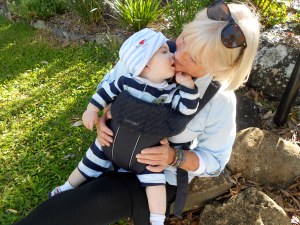
Meet Archie. According to you Archie has the ideal parental configuration, that is, he has a male and a female parent as his primary carers.

Note I don’t say he has a “mother and father.” That’s because in my experience the attributes the dominant culture (as represented by you in this instance) associates with mothers and fathers aren’t necessarily founded in biology, rather they are cultural constructs and as such, can be assumed by either sex. I have seen male parents in my family engage in “mothering” while I’ve witnessed female parents happily “fathering” away and nobody much cares, as long as the babies are getting what they need.

While Archie meets your standards in terms of immediate family, after that it gets a little wild. This fortunate infant has four grandmothers, two of whom are called Jennifer because one grandfather married the same name twice, though not simultaneously because as yet, nobody’s done polygamy. I don’t see this in our futures either, as the women in our extended family are exceptionally feisty, and most of us see polygamy as favouring the male of the species. The prospect of having more than one male partner at a time leaves us uninspired, though several of us have engaged in serial monogamy.

That being said, Archie does have Mormon-by-marriage cousins in the US, albeit lapsed.

Archie also has five cousins whom we all call the Caramels, owing to their Indian mother and Anglo-Celtic father. These parents were married in two ceremonies, one Catholic and one Hindu. Archie himself recently enjoyed a Catholic baptism and an atheist Name Day, to cater for the disparate choices of his nearest and dearest. All four grandmothers were present including the bisexual one, and nobody got into any recriminatory fights.

Oh, yes, I almost forgot. One of Archie’s great-aunts is also bisexual, and her partner is transgender.

Archie’s parents both work and the extended family as a whole has a strong work ethic, even the sexually adventurous among us. We are all good citizens paying our taxes and staying out of jail.

As yet, we have no idea how Archie will decide to express his sexuality. We don’t much care.

However, all us four grandmothers  love him with a ferocity you don’t want to mess with. If anybody like you tries to put Archie down because of who he loves, they’ll have us to contend with.

Until I was seven, I was brought up by my grandparents. They were then forced to relinquish me to my birth mother and her new husband. A heterosexual pair. In that configuration I experienced physical, sexual and emotional abuse that I barely survived. What I’m saying to you Mr Hockey, is that you and those who think like you are making too many assumptions, and there are too many of us with too much experience who will continue to challenge your assumptions, and we will win.

My family is a big family and we contain many differences. The babies in our family grow up accepting difference because it’s in the familial air they breathe. This is one of the greatest gifts we can give them.

I am sorry for you and your kind, Mr Hockey. I am sorry for your small minds and shrivelled spirits. With my history, I know the miracle of finding human beings who love me and let me love them. I feel sorry for you, Mr Hockey, that you are compelled to judge and reject human beings who don’t fit your narrow vision of what families should be. Maybe if like me, you’d lived in darkness from which you never imagined you’d emerge, you wouldn’t be so damn picky.

I don’t think you will win this battle. There are too many of us who can say, echoing the magnificent words of Penny Wong: “I know what my family is worth.” I know what my hard-won family is worth, Joe Hockey. And none of us need you to tell us how we should be.