Archive | Society RSS feed for this section

Marissa Mayer and the F word

24 Jul

And here we go again. Another “how dare she say she’s not a feminist” rant against a high achieving woman, this time newly appointed Yahoo CEO Marissa Mayer. You’ll find it at the mamamia website, written by self-described feminist Jamila Rizvi.

The term “feminist” has become extremely fraught, not least because of the rantings of  those feminists who demand every other woman on the planet describe herself thus. Many women are understandably disinclined to use the term about themselves. Many of us will not on principle, describe ourselves as others say we should, because we are engaged in a process of liberation from all those who arrogantly claim the right to tell us who we are, and who we should be.

Instead of addressing the complexities that have developed around the term, feminists such as Ms Rizvi wrongly attack women who do not wish to include that word in their lexicon of self-description. The problem is not that some women do not wish to describe themselves as feminists. The problem is that feminists like Ms Rizvi insist on publicly shaming such women.

Rizvi writes: Somewhere along the way being a feminist has become associated with hating on men, rather than being equal with them. So, I can see why women like Marissa Mayer, who work in male dominated professions, simply cannot afford to attract the label of ‘feminist’. After all, success doesn’t come to the woman who throws her hand up in the air and says ‘look at me, look at me, I’m a man-hater’.

No, Ms Rizvi, you are wrong. “Somewhere along the way” feminism has become associated with women bullying women, bullying us into describing ourselves as feminists, for example, by using abusive tirades that were they employed against us by a male, would be regarded as emotional violence.

“Somewhere along the way” feminists such as yourself decided to take over patriarchy’s work for them, and assume the right to define women.

“Somewhere along the way”  the cant of ideological purity  has blinded some feminists to the reality that when ideology of any kind gets the upper hand, the war is lost, and the revolution has become the  orthodoxy.

“Somewhere along the way” as well as being acceptable to the patriarchy, we now must be also be acceptable to a hegemonic feminism that demands we identify ourselves with its  laws, otherwise we are traitors to the women who have gone before us?

If I don’t  choose to identify myself as a “feminist”,” for example, that does not indicate that I am either ignorant of or ungrateful to the women who’ve gone before me, and by their hard work enabled some of us to achieve what was once unthinkable. I do not have to call myself a “feminist” in order to honour and appreciate those women. I do not have to use the label “feminist” for myself in order to actively care about equality. I do not have to play by your rules, Ms Rizvi, and I do not have to use your language.

There are feminists who would tear Rizvi to shreds for her love of red lipstick, her fondness for five-inch heels and her love of men. They would never grant her the right to the title. This is another reason many women refuse the label: it is, unfortunately, divisive, its meaning is unclear, and nobody quite knows what it’s describing.

I am delighted that a pregnant young woman has achieved what Marissa Mayer has achieved. I don’t give a stuff if she calls herself a feminist or not. The problem lies not with Ms Mayer. It lies with those people, women and men, who demand that human beings fit into pre-determined categories and in so doing, trash the human spirit and deprive it of its freedom.

I don’t believe for one moment that’s what the early feminists intended for us.

I do think of myself as  feminist. One of the reasons I claim that title is my belief that it is a woman’s right to call herself whatever feels appropriate for her, regardless of what others may think or demand. I will not define myself according to another’s lights. I will only define myself by my own. Feminists do not condemn a woman for defining herself by her own lights. That is the task of tyrants.

Real housewives: my week in popular culture.

21 Jul

I didn’t watch The Shire. I’ve never looked at Being Lara Bingle. I hate those shows where they have someone cruel on the panel to belittle contestants and make them cry.

As a critic of the reality TV genre  I’d be a failure. I can’t step far enough away from the emotions aroused in me. If I ridicule I feel guilty. After all, these are  human beings making a spectacle of themselves. I have on occasion made a spectacle of myself, though not, thankfully, on television. I might do it again. So who am I to sneer?

Which brings me to Real Housewives of Atlanta. Last weekend, when the infant I was minding had an afternoon nap, I took advantage of his parents’ Foxtel and trawling, came across housewife Kim and her boyfriend Kroy.

Actually, Kim didn’t start out with Kroy. She was finishing up a relationship with someone known as Big Poppa, whom I never got to see. Big Poppa lavished Kim with everything she could possible want, including two exceptionally pneumatic breasts and a feckin’ great diamond. But Kim isn’t the type to be satisfied by the superficial. Having all the stuff didn’t do it for her. Big Poppa was not emotionally (or reading between the lines, sexually) available, and Kim was over him.

And then along came Kroy. No, I have not misspelled his name. Football player. Cute. Shy. Within weeks, Kim and Kroy were pregnant. In three back-to-back episodes I watched them move house, give birth and get married. Kim gave birth in her blonde wig and full makeup. I worried for the baby, trying to latch onto those pneumatic breasts. I don’t know how she changed his diapers with those false nails. I don’t know why I sat there watching this unfolding spectacle, except that I was enthralled in the worst of ways, and I could not look away.

Luckily for me, just as we moved onto Housewives of Orange County the infant woke, and released me from the spell.

Watching this kind of television leaves me feeling as if I’ve scarfed down vile junk food because I’ve let myself get to a stage of hunger where anything will do, and I should really put my finger down my throat and hawk it all back up again if I know what’s good for me.

After watching Housewives, I realise I avoid reality TV not for aesthetic or intellectual reasons, I wish that were the case, but because it makes me far too emotionally uncomfortable.  I cringe and sweat and chew my fingers, and cover my eyes and put my hands over my ears, and want desperately to do something to stop the participants from revealing their tender underbellies. Be more careful with yourselves, I want to shout. Don’t show all this vulnerability to the world! People will laugh at you and mock you and look down on you! You will be judged, oh, how you will be judged!

But none of them seem to care. Indeed, they frequently enter into adversarial public exchanges with their critics, and thrive. Obviously, I need to drink a cup of cement and harden up.

On the other hand, one thing I have learned from the popular series Downton Abbey (which I watch because my household does and it would be churlish of me to absent myself from a bonding ritual and anyway, it is FICTION) is that there’s always been women who HAVE IT ALL. Wealthy women may not have been allowed employment outside of their stately home, but governing the household, which was their task, must have been akin to being CEO of a small to middling business. Add to this birthing the next generation, demanding social duties, responsibilities to the poor, dress fittings, spousal support, and marrying your daughters well, these upper-class women had careers, husbands, families, social lives and the wealth to engage all the assistance they required to maintain the lifestyle. Just look at this picture of Lady Cora.

Nothing much has changed, except having it all is no longer an ambition realised only by the well-bred. It’s far more egalitarian, however, the need for an income to support the lifestyle remains fundamental. You probably can’t have resident childcare if you live in public housing, for example, unless you have your mum or gran living with you and you don’t have to pay them to mind the children while you go to work.

I have to confess that I was almost banished from the Downton Abbey ritual when upon watching Captain Crowley (Crawley?) releasing his fiancée from her vows because the war had left him unable to be a full man, I laughed like a horse.

I would not have done this, of course, had Downton Abbey been reality TV. Even if they’d used the same mawkish language (and of course they would, probably worse) I would not, could not have laughed. I likely would have bawled.

I prefer the protection of fiction when I consume television for relaxation. I want a resolution to the drama, and catharsis. I don’t want to have to think about anybody’s real life issues going on and on and on until the show is cancelled.  I don’t want to watch someone weeping as they endure a verbal onslaught from a self-important celebrity judge of whatever.  And honestly, the thoughts and concerns of some of these reality stars are, well, numbingly, numbingly banal. I can only hope the taste for this unmediated drivel decreases in time. Otherwise we might find ourselves regressed to public hangings.

Pedophile priests make a mockery of confession

18 Jul

The Victorian inquiry into the handling of child sex abuse by religious groups poses this question in its submission guide: “To what extent should the reporting of suspicions of abuse be circumscribed by laws, customs and ethical codes of religions?”

Currently, the Catholic church regards confession as sacrosanct, and forbids its priests from revealing anything told to them during the performance of the confessional sacrament. Should an offending priest confess that he has raped and or sexually molested a child, his confessor is bound to keep his admission confidential. The priest escapes trial and punishment by the legal system, and is free to continue his criminal practices without fear of discovery and retribution.

No doubt the religious would argue that the mental and emotional anguish of facing the wrath of the sacred is far worse than anything incurred by facing the wrath of the profane. I can imagine suffering such self-inflicted spiritual torment, however my question is, why would anyone consider this punishment enough? Surely the offending priest must be made to face both his God and the wrath of the human world?

I’m reminded of the story of Jesus, who when asked if believers should pay taxes remarked “Render unto Caesar that which is Caesar’s and unto God, that which is God’s.” In other words, if you are going to traffic in Caesar’s coin in order to obtain what to you are benefits of some kind, then of course you   must be prepared to pay  Caesar’s taxes. It isn’t too much of a stretch to understand this as advice  on how to deal with far more than taxes. For example, if you are going to indulge yourself in exploiting children for your sexual satisfaction then you must be prepared to accept the human and worldly consequences of your human and worldly activity. You must render unto Caesar’s law that to which the law of Caesar is entitled, as well as answering to your god.

But I’m no theologian, and no doubt someone will tell me I can’t make that extrapolation. To which I would respond, why not?

Quite what punishment is inflicted upon the sexual offender by his confessor remains unknown, also subject to confidentiality . His crimes and his punishments are gilded with the sanctity of the confessional, and he remains unaccountable to any human being.

The Catholic church places its own laws (laws it then ascribes to God) above all else. This is unsatisfactory from any number of perspectives, not least that it places Catholic criminals beyond the reach of the law of the land. As we can see from the sad history of the serial offenders, these men don’t stop raping and sodomizing children, even, presumably, after they’ve confessed their crimes, done whatever the Catholic church regards as adequate penance for their crimes, and accepted forgiveness. They continue to offend against children, and they do it for years and years and years. Confession and penance means less than nothing to them. They make a mockery of their own rituals.

Perhaps they don’t confess their crimes in the first place? We have no way of knowing.

The victims of the pedophile priests are completely ignored. There is no concern for them, no efforts to assist them or rescue them from further rape and exploitation, because under the seal of the confessional, the perpetrator must be completely protected. The perpetrator’s rights to confidential confession trump children’s rights to be safe from sexual attackers. In what universe is this acceptable?

Father Frank Brennan, so far the only prominent Catholic priest to have fronted up to the ABC 7.30 Report to discuss these matters, declared that he would go to jail before revealing anything told to him under the seal of the confessional. Well, let him. Let the jails fill up with priests who’ve raped children, and priests who have protected priests who raped children so that they can continue raping children. I can say with the authority of experience that a few months in jail for Father Brennan or any other priest is as nothing, compared to being a raped child.

Pedophile priests make a mockery of the sanctity of confession, and a mockery of their God. Every priest who protects them adds to this mockery.

If priests continue to choose to put the law of their church before the well-being of children in their care, then jail would seem to me a reasonable outcome. The offences are committed in the spiritual and the human sphere, yet punished only in the spiritual. This is not good enough. Render unto Caesar that which is Caesar’s. God is already getting more than his fair share.

Is there an elephant in your room?

10 Jul

Today’s guest post is by Stewart Hase. 

Is that an elephant that I see?

Elephants are big people. In fact, you would not want one to sit on your sandwich.  You would think an elephant is too big to ignore. But there are zillions of elephants, everywhere you look, but we pretend they’re not there: it’s the elephant in the room phenomenon.

In families, elephants in the room range from the worst kind, such as family incest, to the more harmless (except to her) cupboard drinking of Aunt Mildred.  Everyone knows what is happening, in the case of incest it may even be the mother, but often no-one speaks up or takes action. Humans are even reluctant to say anything about relatively small matters such as offensive or antisocial behaviour, being let down by a friend or that what someone is doing might in fact be a poor choice: what I call the ‘zit on the nose’ phenomenon.

We just don’t like to tell people bad things.

It takes courage to act. Largely, humans dislike conflict mainly because it creates a huge amount of anxiety, which is extremely uncomfortable and to be avoided at all costs. There is also the fall out that might involve fractured relationships, being disliked and rejection. We like to be liked or as Albert Ellis says, we are love slobs. Better to remain in the inner circle with a nasty secret that being a pariah and morally or ethically intact. After all, it is family.

Elephants love living in organisations too where they are ignored with an even greater intensity than in families. You’d think it was the other way around given the emotional factor in a family setting but it is likely that there are huge emotional investments in the organisations in which we work and play.

Again, there is a huge range when it comes to severity and impact. There are organisations in which there is institutionalised corruption and bullying, for example, that goes on unchecked. In some cases the organisations acknowledge that there is a problem, such as paedophilia in the Catholic Church and bullying in the Australian defence forces, but still nothing is done. Its as if the elephant has been let out in the garden for feeding time.

Poor behaviour is one of the more common elephants in the room. Here I am not referring to poor performance, which often gets picked up at performance review time but to what amounts to anti-social behaviour. Every organisation or organisational unit has at least one person who behaves in ways that causes reactions from mild irritation to motional catharsis.

This is an even bigger problem when the person is a manager. You might find, for example, a very senior person is a dreadful bully but he is allowed to get away with it. The result is a culture of bullying that runs right through the organisation. People are, understandably, reluctant to speak up and people who do in fact blow the whistle on high level abuse or corruption do not have a good time if it, as the research on whistle-blowers shows.

We might think that, well, if its not a big thing then let it go. So what if the boss or someone else in the team tells lies, doesn’t keep promises, doesn’t listen, fails to communicate information, gets a little irritated, ignores people, is not a team player or is just plain rude. It doesn’t matter.

Well, it does, Employee engagement is a critical factor in job satisfaction and, we know that both these effect performance. Employees can easily become disengaged by elephants in the room. They sap motivation, destroy loyalty, disintegrate faith and hope, distinguish innovation and create a culture of mistrust. Elephants in teams can completely undermine effectiveness.

When we let someone get away with poor behaviour we being a co-dependent. We are implicitly saying that all is fine, that we approve and the behaviour will continue. And we’ll complain: a co-dependent victim.

All it takes is courage.

Also relevant to this topic is Stewart’s earlier post here on workplace bullying

Dr Stewart Hase

Guest author Dr Stewart Hase is a registered psychologist and has a doctorate in organisational behaviour as well as a BA, Diploma of Psychology, and a Master of Arts (Hons) in psychology.Stewart blogs at stewarthase.blogspot.com


What is this “IT” that women should want all of?

8 Jul

The other day I tweeted that if I heard one more discussion about women having it all, there would be blood spatter. I take that back because I want to say a thing or two.

There are two quite separate issues here that are being misleadingly conflated. One is the real need for adequate affordable child care for all women, and a non-discriminatory workplace in which we are treated with respect and equality, properly paid and not penalised for creating the next generation who will keep the country going. I wholeheartedly support those aspirations.

But while some of us weren’t looking it seems that a particular strand of feminism has declared that Woman’s highest and most noble aspiration is To Have IT all. This has recently drowned out the real struggle for equality for all women, and focused the debate on a privileged few.

As far as I can ascertain, the IT holy grail involves building and maintaining a highly successful career while shaping your body to fit into designer suits and stilettos that create a complex ambience of sexy yet capable. When you’ve got a sure foothold in your profession you then take time to partner up, get pregnant, gestate, and give birth. Then you get back to work looking as untouched by these experiences as possible.

You then have it all. Career, partner, family, money. You will need the support of other women to enable your lifestyle. Child care workers, nannies, cleaners, the majority of whom are female, are paid far less than you, but that’s all right, you are creating jobs in your efforts to succeed at everything except the boring, unglamorous stuff other women will do for you.

Sustaining and promoting the patriarchal paradigm, the “be born, get everything until you die because you are entitled” ethic so beloved by hegemonic masculinity, is apparently the only way a woman can achieve real power in the Western world. While there may be the occasional inroad into better conditions for women who are caught up in the various levels on which this paradigm operates,  the paradigm itself is not subject to real interrogation and real change. This is still a world that in the West at least, is founded on the principle of entitlement to everything, just because.  That is not feminism as I understand it:

I would like to blame the patriarchy for  the IT women should suddenly want all of. It looks to me like an attempt at counter insurgency operational propaganda, using collaborating women they’ve turned as agents. If ever you wanted to set up a disruptive enemy for a catastrophic fall, this is the way to go about it. Use the media to build unrealistic expectations in the female population and persuade the target audience to introject them. Bombard with images of glamorous women who have brilliant jobs, dishy supportive husbands often with their own high-powered professional lives, and adorable children and pets. Make the audience crave this, for because who wouldn’t want a life like that? If you aren’t having it, there’s something wrong with you. If you don’t want it, there’s something even more wrong with you.


The propaganda won’t work on everybody because not all women are susceptible, but it will probably work on enough of us to redirect anger away from the system where it belongs, and onto the self where it doesn’t. Mission accomplished. Feminism co-opted in the service of capitalism. System safe. Oh yeah.

What surprises me about high achieving women who are given as examples of having IT all, is that despite all their obvious intelligence and talent, they seem universally disinclined to question the IT. This is disappointing. Imagine if they  got in there and started up a ruckus.IT? What is this IT of which you speak? Happiness? Contentment? A lifestyle, as opposed to a life? DEFINE THE IT!

Of course, that would be biting the hand that feeds them, and women who want it all know before they know anything else that if you can’t fight them you join them and once you’ve joined them, that’s IT.

In a bizarre sense, these women do achieve a kind of equality but I have to ask the question, who wants to be equal to that? I mean can’t we aspire to something better than “I want it all?”

There was a time when thinking you could have everything was a sign of immaturity. Adults accepted that choices had to be made. Only the greedy narcissist, frozen in the mindset of a two-year-old, thought they were entitled to everything and everyone else had to help them get it.

What seems important to me is that we keep the complaints of privileged women quite separate from the real issues facing the majority of us. They are not the same thing, they do not have anything like the same urgency, and besides, the “I want it all” creed is not going to work for the planet. I don’t believe feminism was ever about having it all. It was, and remains about equality, not matching excessive male privilege. Privilege, I might add, that the majority of males don’t enjoy either.

Feminism isn’t about “wanting it all.” Nobody has that right. The ideology is about creating a world in which everyone has a better chance at decent survival, not just a greedy few of either sex whose sense of entitlement is in danger of raging out of control, to everybody’s cost.

For all the babies

7 Jul

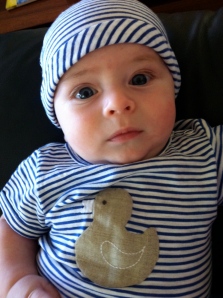
Especially this one: 

Because when the chips are down, what you need is a little bit of love. 

Forever Young

 Bob Dylan

May God bless and keep you always
May your wishes all come true
May you always do for others
And let others do for you

May you build a ladder to the stars
And climb on every rung
May you stay forever young
May you stay forever young.

May you grow up to be righteous
May you grow up to be true
May you always know the truth
And see the lights surrounding you

May you always be courageous
Stand upright and be strong
May you stay forever young
May you stay forever young.

May your hands always be busy
May your feet always be swift
May you have a strong foundation
When the winds of changes shift

May your heart always be joyful
And may your song always be sung
May you stay forever young
May you stay forever young.

And for these big kids too:  

When the going gets tough where are the child advocates?

5 Jul

Child advocate Julie Gale of Kids Free 2B Kids, and advocate for girls Melinda Tankard Reist, have thus far been strangely silent on the Four Corners report on child sexual abuse in the Catholic church. As of ten minutes ago, I could find nothing on either of their websites.

While this particular program focused on the young male victims of pederast priests, young girls have also suffered their unwelcome and terrifying attentions, and one can legitimately assume that these crimes against the young of both genders fall within the ambit of the two child advocates.

Both women work tirelessly to halt what they perceive as the sexualisation, objectification and pornification of children and women in the media. While this is a legitimate concern in some instances, compared to the literal sexualisation and objectification of children perpetrated by pedophile rapists, Playboy flogging necklaces to little girls pales into insignificance. Particularly as a responsible adult is presumably involved in the purchase of these baubles, while no responsible adult is involved in the sodomization and rape of little girls and little boys.

Of course, we all have our own particular sphere of interest and expertise, and I’m not prescribing what Ms Gale and Ms Reist’s sphere should be. I am, however, gobsmacked that as very public child advocates with a very high profile in their field, they apparently don’t feel the need to comment on the Four Corners’ revelations on their websites.

There are no innocent bystanders when it comes to the abuse of children, and those who remain silent enable its continuation. The responsibility to speak is particularly onerous when one has a public platform as a child advocate.

I cannot imagine a more destructive form of sexualisation, objectification and pornification of children than sexual abuse.

Ms Gale’s motto, according to her website, is “What we allow is what we approve.” Indeed, that is so. Silence implies tacit approval. Or lack of courage. Or fear. Or cowardice. It really doesn’t imply concern or interest. Silence by those who should speak out causes untold damage to children already grievously harmed. Self-described child advocates ought to be at the forefront of protest, at the very least with an acknowledgment and expression of concern, and an intention to raise awareness.

Both Ms Gale and Ms Reist have a commendable record of success at persuading various commercial interests to stop selling this or that on the grounds that the product is damaging to children’s sexual develoment and self image. They have the infrastructure in place and the following, to launch a huge campaign on behalf of children who are being sexually abused. They have the means to launch a petition for a royal commission into the Catholic church’s abuse, and its cover up of that abuse. If they choose to use their power for that good. It would take an hour or so at the most. Then they could go back to their main interest: images of sexualisation, objectification and pornification, rather than the real thing in our own back yards.

Time to walk the talk, ladies?

Abbott on Pell: “One of the greatest churchmen Australia has seen.”

4 Jul

When I saw Cardinal Pell on Qanda a couple of months ago, I felt a kind of  appalled pity for the man.

Pity, I hasten to add, is not an emotion I enjoy, based as it is in disinterested contempt, and complete lack of interest in its object’s fate. When I pity someone, they are pretty much dead to me.

Pell seemed subject to moments of confusion and rather bad judgement.

Then, in the ABC Four Corners report this past Monday on the sexual abuse of children by priests of his church, Pell again seemed quite out of his depth, and rigidly adhering to a well-worn script.

Pell clings to his belief in the word of three priests, even though there is very strong evidence to the contrary, including an admission in court by an accused rapist, Father F, that he did indeed perform some of the criminal acts of which he stands accused.

Pell was himself accused of sexually molesting a child,as is discussed here in an 2008 interview conducted by ABC journalist Ali Moore with former priest and now commentator Dr Paul Collins. Reading this 2008 interview I was struck by the similarities. Four years later, Cardinal Pell does not seem to have changed his perspective, in spite of more ghastly revelations about the behaviours of his priests, and the number of suicides thought to be related to sexual abuse.

I’m sometimes undecided as to who is the worst offender: the perpetrator or those who cover up for the perpetrator. I can only imagine the number of little kids whose lives would have been so different if the church authorities who knew about the pederasts in their ranks had taken proper action. Proper action in this instance is informing the police, however the Catholic church seems loathe to concede that sexually molesting a child is a crime, and treat it accordingly.

I note here that Cardinal Pell was very, very quick to threaten legal action against Catherine Deveney when he felt she had slandered him in a tweet. His reputation apparently warranted the protection of the law, unlike the lives of the children whose rape and molestation his church failed to report to the police.

As far as the mistreatment of children is concerned, I’m of the opinion that there are no innocent bystanders. Everyone who has anything to do with children professionally is required by law to report suspicions of abuse. This ought to include the Catholic church. When anyone knows something bad is happening to a child and keeps it quiet, she or he is enabling the perpetrators. The church takes that one step further and protects them as well.

It is my hope that like the US, it will be possible in this country to charge Catholic bishops and hold them criminally liable for the behaviours of the priests they supervise.

In the meantime I take my hat off to the ABC journalists who are persisting with this story, as well as other stories of child abuse. As a survivor, it does my heart good to know there are people willing to pursue these criminals and uncover their crimes. It is very difficult to speak about these things when you’ve endured them. We need others to help. We need others to confront and challenge those who would be innocent bystanders, and in their denial and silence, enable abuse to continue. I know it’s awful to have to listen to these things. But it is far, far worse to experience them.  Thank you to everyone with the courage to listen and care, and say so.

Finally, Opposition Leader Tony Abbott is credited here with having described Cardinal George Pell as ” one of the greatest churchmen Australia has seen.” If this is a measure of Abbott’s ability to judge character, and an example of someone he profoundly admires, I fear even more for our future should he become the next Prime Minister.

Tony Abbott, trainee priest, St Patrick’s Seminary

A voice for the children, by Gerard

2 Jul

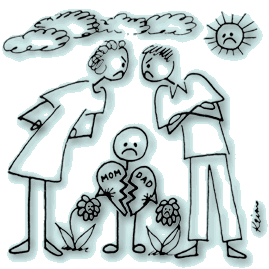
Guest post today by the lovely Gerard Oosterman who wonders why children don’t have more say in their future when a family breaks up.

Children should be seen but not heard?

In Australian Family Court disputes it is often the children who miss out on being heard by a Federal Judge or Magistrate. In most cases, even though the judge or magistrate has the power to hear the children, it is rarely exercised. It is usually the Independent Children’s Lawyer who represents the child/children/ (ICL).

In Germany and many other countries, the Family Court Judges always hear the child. There is a growing understanding of the importance of listening to the children involved. It is the child, more than anyone else, who will have to live with what the Court decides.

While Federal Judges and Magistrates can hear the children in Court, a survey has shown most decline the opportunity and rely on the ICL and other ‘experts’ for advice during the procedures. The cases coming before the Family Courts deal with property and access to children. The fact of Court action is generally a sign that the parents haven’t been able to amicably deal with the separation. Access rights to children are often just as heatedly fought over as the division of property.

The Family Court in all cases decides what is ‘best for the children.’ It seems ironic that in Australia the children are not given the opportunity to bring their wishes before the Court, as they are in many European countries that are signatories to the Convention on the Rights of the Child (UNCRC).

While it is unsatisfactory to say that children should all have the same rights as autonomous adults, including the rights of freedom of expression and the freedom of association and all other rights that adults own, it is equally unsatisfactory and unjust to say that children have no rights of this kind and that their rights in Court matters are irrelevant to the task of adults determining and deciding what is best. This seems to ignore the claim of children to be treated with respect and dignity instead of, as is often the case, fought over as objects

As Australia has been a signatory to the Convention since 1990, how do we explain why children are not heard in front of a Court and allowed to express their wishes?

Often the reason given is the fear of parentification of the child. This term describes a situation in which a role reversal occurs and children assume the role of parent to protect the adult. Asking a child to decide which parent she or he prefers to spend their time with can cause emotional turmoil.

In Family Court cases it is not unusual that one or both parents are deemed to have put the child in this position to try to enhance the prospect of getting more time with the child than the other parent. The child is expected to act as the parent to their own parent and sometimes over other siblings as well. The issue is very complicated because in some cases one of the parents might indeed be totally unsuitable as parent or as the primary caretaker.

However, parentification together with alienation theories about children in relationships remains highly controversial amongst psychologists, psychiatrists and therapists, who claim they are often simplistic or erroneous.

In the Family Courts it is the job of the ICL to sort the wheat from the chaff and investigate to get to the bottom of the issue if ‘parentification’ of the child is occurring. The Court appointed lawyer acting for the child will then call in an ‘expert’ in those matters. Both parents are to meet up with the ‘expert’ who is often a qualified child psychologist or therapist. Anyone who ever had dealings with Courts knows that at every turn huge amounts of money is spent. The ICL with the help of the Expert’s report weigh heavily in the final decision-making by the Judge or Magistrate.

The report by the children’s expert is drawn up as a result of a few hours or a day spent by both the parents and the children with the expert. Sometimes first in each other’s company then separately and then the children on their own. After parents as applicant and respondent  have filed into Courts numerous times for ‘mentioning’ and ‘final hearings’ the case is put and then includes the affidavits, responses and reports by all the parties’ lawyers including the ICL.

But, when all the lengthy proceedings come to an end, there is this glaring omission. The fundamental rights of every person including children to be heard in Court are totally ignored.

The ICL and other child experts cannot help but put in their own submissions and even if based on the best of intentions and the best advice given, it is second-hand and not direct. How is it possible that the ‘best interest of the child’ excludes this fundamental right?

One reason given is the perceived intimidation of the Court system with its tradition of the dreaded three knocks on the door and ‘all rise in Court’, the bowing of all and then the entrance of the black gowned judge or magistrate on the raised podium. The procedures are often seen as unfriendly if not silly as well. Surely the system can change when children are involved and become child friendly. I could ask, why not change it even for adults?

We love adhering to convention, but what about the children?

Gerard is an artist, writer and farmer. He blogs at Oosterman Treats Blog

Don’t let facts get in the way of hate…

21 Jun

In December 2010 when the WikiLeaks cable dump hit the headlines, Prime Minister Julia Gillard declared: “I absolutely condemn the placement of this information on the WikiLeaks website – it’s a grossly irresponsible thing to do and an illegal thing to do.”

A couple of days later, Ms Gillard was at a loss to explain her inflammatory comments.

“The foundation stone of it is an illegal act,” Ms Gillard told reporters in Canberra.

But the “foundation stone” was the leaking of the documents to the website, not the publishing of the cables.

“It would not happen, information would not be on WikiLeaks, if there had not been an illegal act undertaken,” Ms Gillard said.

Mr Assange’s lawyers have said they are considering defamation action against Ms Gillard after she accused the whistleblower of “illegal” conduct over the leak of US documents.

Thus our Prime Minister launched a campaign of misinformation about both Wikileaks and Assange, based solely on her personal opinion and clearly with little if any regard to her legal training.

The government then attempted to find legal cause to withdraw Assange’s Australian passport, in spite of the fact that he had broken no Australian laws.

Hardly surprising then, that Assange and his team of lawyers have come to believe he’s been abandoned by his government. While it may be true that Assange has received whatever consular support is due to him, Prime Minister Gillard had Assange hung, drawn and quartered from the get go, and she has never retracted her accusations and her condemnation.

If we follow Ms Gillard’s logic, then the newspapers who published the leaked cables they obtained from Assange, newspapers such as the Sydney Morning Herald, The Australian, The Guardian, The New York Times et al, are also acting irresponsibly and illegally because ““It would not happen, information would not be on WikiLeaks [or in the SMH, the Oz, the NYT, the Guardian et al] if there had not been an illegal act undertaken.” 

At this point I quote Anna Funder, winner of this year’s Miles Franklin Literary award:  I have spent my professional life studying totalitarian regimes and the brave people who speak out against them. And the first thing that someone with dictatorial inclinations does is to silence the writers and the journalists.


This is a link to an account by The Guardian of the events in Sweden that have led to Assange being accused of sexual misconduct. As you can see, the circumstances as described are unsavoury, though they would not all necessarily be considered sexual offences in Australia. They are also entirely a matter of she said/he said.

I have no idea of their veracity and I believe Assange, for his own sake, ought to have the opportunity to respond to the allegations made against him.  As well, the complainants are entitled to have their allegations addressed. It is puzzling that Swedish prosecutors are delaying the resolution of the women’s complaints by demanding, against, apparently, their own Supreme Court decision on interviews (see below) that Assange return to the country, rather than conduct a video link interview with him.

Bjorn Hurtig, Assange’s early Swedish counsel, makes these observations in his witness statement:

I also think it unreasonable that in a case of this kind, where extensive mutual assistance between the UK and Sweden would readily permit a video-link interview, for the prosecution to be so absolutely insistent that Mr Assange return (and at his own expense) to face questions that could easily be put over the video-link.

[Assange has many times offered to do this, and offered to engage in interviews with Swedish officials in person in the UK. The Swedish authorities have consistently refused these offers, demanding extradition instead. Assange continues to offer to answer the allegations via video link from the Embassy of Ecuador.]

I note that at least one of the complainants have been interviewed by telephone and the insistence that Mr Assange come back to Sweden merely for an interview is, therefore, unreasonable and contrary to the decision of our Supreme Court (NJA 2007, p. 337).

The problem for Assange with returning to Sweden is explained here. Briefly:

Michael Ratner of the Center for Constitutional Rights, which represents the WikiLeaks founder in the US, said Assange and his legal team considered it highly likely that he would face an onward extradition to the US if he were sent to Sweden.

The concrete reality [is] that he was facing a political prosecution in the US, he was facing the death penalty or certainly life in jail. Faced with that, he had extremely limited choices.

The US empanelled a secret grand jury investigation into WikiLeaks and Assange in May 2011, but has not issued any requests for his extradition to the UK or Sweden. However, Ratner said both he and Assange believed it was “more likely than not” that a sealed indictment had been drawn up.

According to a Human Rights Watch report, Sweden has form. In 2001 Sweden was involved in the illegal US rendition of  two asylum seekers suspected of terrorism from Stockholm to Cairo. This involvement violated the global ban on torture. Both asylum seekers were tortured when they arrived in Egypt, despite assurances given to Swedish diplomats.

The UN Committee Against Torture concluded that Sweden violated the Convention against Torture by illegally expelling him [Al Zari] to Egypt, and stated that “procurement of diplomatic assurances [from Egypt], which, moreover, provided no mechanism for their enforcement, did not suffice to protect against this manifest risk.”

The US has imprisoned Private Bradley Manning, the WikiLeaks cables source, in a manner that has been described by Glenn Greenwald as “conditions that constitute cruel and inhumane treatment and, by the standards of many nations, even torture.”

One need not be a conspiracy theorist to see where this is headed. The bizarre refusal by Swedish authorities to question Assange by video link in an interview which is designed to establish whether or not there are grounds for bringing charges against him. The oft -forgotten fact that Assange has already been questioned on these matters while in Sweden, the allegations were dismissed, and he was allowed to leave the country.

And on the matter of these allegations it’s worth reading this brief interview with Oscar Swartz, author of A Brief History of Swedish Sex: How the Nation that Gave Us Free Love Redefined Rape and Declared War on Julian Assange.  Swatrz claims that  in Sweden: “Sex is being increasingly used to control communications – and as a political weapon,” and says his book shows “how Sweden descended from one of the western world’s most sexually liberated nations to its most repressive.”

The hatred expressed against Assange in Australia is frightening, and much of it seems to be based on personal antipathy. A great deal of it seems to originate with journalists and has from the start, as I wrote in these two articles in December 2010

It is even more frightening in the US where there have been calls for his assassination and demands that he be hunted down like bin Laden. Hatred such as this, and the unworthy example of presumption of guilt set by Prime Minister Gillard at the start of the story obscures the complexity of the narrative, and reduces it to a George W Bush story of good versus evil.

Personal opinions about Assange and his character ought not to blind anyone to the bigger picture unfolding here. There is something rotten in the manner in which these events have been and continue to be handled by the Australian, Swedish, and US governments. This should sound alarm bells for all of us, especially, one would think and hope, for journalists and writers whose responsibility it is to hold governments to account and protect us from dictators. WikiLeaks efforts to do this may have been clumsy, and at times carelessly cavalier. However, to my mind, Bradley Manning, Julian Assange & WikiLeaks have struck a blow for transparency in high places that in spite of claims to the contrary has struck nerves. For this they have my admiration and my ongoing concern for their welfare.