
AN..THRO..PO…GEN…IC!!! I SAID IT!!!!
AN..THRO..PO…GEN…IC!!! I SAID IT!!!!

ASTRONAUT TRAINING
(AAP Image/Andrew Taylor)
The Gillard government yesterday declared its intention to rob overseas aid of $375 million in order to help pay the living expenses of asylum seekers who have arrived in Australia by boat.
The money will allegedly go towards supporting the resettlement of asylum seekers who have been released into the community on bridging visas. These asylum seekers need financial support because the government will not allow them to work while their claims are being processed.
They have been condemned to a marginal existence, receiving some 85% of the already meagre Newstart allowance, for some five years, the time it is estimated it will take authorities to process their asylum claims.
It’s not known if the money will also be used to fund off-shore detention centres, particularly the construction of new facilities on Nauru and Manus Island.
Foreign Minister Bob Carr claims this is no big deal, and cites the United States, Canada, Sweden and France as countries that already use overseas aid money for domestic purposes. However, none of those countries have a policy of indefinite and mandatory detention for asylum seekers.
In Sweden it is preferred that asylum seekers work while awaiting a decision on refugee status. In the US the maximum period an asylum seeker must wait before being allowed to work is five months. In most rich countries including Canada, asylum seekers are permitted to work within a matter of months.
However the countries cited by Carr spend their overseas aid money domestically, it is not on supporting asylum seekers for years while they await decisions on their status and are forbidden to work. It is not spent on supporting asylum seekers living in indefinite off-shore mandatory detention. Carr’s comparison of Australia’s asylum seeker policies with those of other countries is entirely false. We have nothing in common with any peer country.
The diverted money is intended for overseas aid and development. If it is to be spent overseas, that will be in our off-shore detention centres. Quite what development will be achieved in that instance is unclear. It’s also unclear how any development might be achieved domestically in denying asylum seekers the right to work, and forcing them into marginal existence paid for by the government for up to five years.
The Opposition, via its mouthpiece Julie Bishop, continue to confidently bray that they will “stop the boats.” As the Gillard government has implemented the most severe conditions we have yet seen, and still the boats arrive, it is difficult to imagine just how Mr Abbott will achieve this goal.
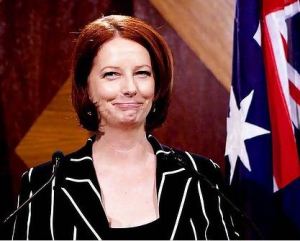 I don’t know about anybody else, but I think by now Julia Gillard has hands down won the verbal battle currently consuming the emotional and mental energies of our elected members. Her confident stamina in the face of the Opposition’s unrelenting (if largely ineffectual) attempts at reputational savagery is astounding. I get tired just thinking about it. I can think of many occasions in my life when I would have given anything for even a smidgen of Ms Gillard’s élan.
What a role model she’s turned out to be! If you overlook the knifing, asylum seeker policy, single parents on Newstart, Palestine, but what the hell, nobody’s perfect and credit must be given where it’s due, must it not and the PM can do scathing repartee better than any of them.
The Opposition, led in this fight by an increasingly bedraggled and war-weary Julie Bishop loyally firing her beloved boss’s shots, have well and truly lost the battle. Having produced little more than exorbitant amounts of piss and wind, they will limp defeated from the chamber tomorrow to lick their Gillard-inflicted wounds over the break and good riddance to them, I say.
I still have no clear idea what the PM is supposed to have done, but I don’t care really. If nobody has managed to come up with anything of substance for twenty years, and by the gods plenty have tried, then I for one am willing to call bollocks and move on.
I do hope they all lift their game next year, because the political discourse has gone to the feckin dogs.
Politicians from both major parties have set themselves quite a challenge to come up with a deterrent that will persuade asylum seekers that traveling to Australia by boat will result in them facing a situation worse than that they’ve fled. Potential refugees are clearly undeterred by the prospect of life threatening boat journeys: the desire to escape their circumstances is stronger than the very real threat of dying at sea.
It is a comment on the profound emotional, psychological and moral stupidity of leading politicians that they seem on the whole to be incapable of getting their heads around this core reality.
According to Amnesty International
The Australian Migration Act sets out the laws regulating migrants, asylum seekers and refugees in Australia. The Act incorporates the UN Refugee Convention and defines a refugee as anyone who:
owing to well founded fear of being persecuted for reasons of race, religion, nationality, membership of a particular social group or political opinion, is outside the country of his nationality and is unable or, owing to such fear, is unwilling to avail himself of the protection of that country; or who, not having a nationality and being outside the country of his former habitual residence as a result of such events, is unable or, owing to such fear, is unwilling to return to it.
The people our politicians wish to “deter”, many of whom will be granted refugee status anyway, are fleeing circumstances of such gravity that there is no “deterrent” a self-satisfied, self-interested Westerner can impose that will make the slightest difference to their will to live, and the risks they will take to make a life for themselves and their families. In any sane world, these courageous qualities would be appreciated and the people demonstrating them encouraged and welcomed as the kind of citizens who can be expected to enrich a country.
But we are a conflicted country when it comes to the stranger. On the one hand we are signatory to the UN Refugee Convention which in its introduction clearly states:
The Convention further stipulates that, subject to specific exceptions, refu- gees should not be penalized for their illegal entry or stay. This recognizes that the seeking of asylum can require refugees to breach immigration rules. Prohibited penalties might include being charged with immigration or crim- inal offences relating to the seeking of asylum, or being arbitrarily detained purely on the basis of seeking asylum. Finally, the Convention lays down basic minimum standards for the treat- ment of refugees, without prejudice to States granting more favourable treat- ment. Such rights include access to the courts, to primary education, to work, and the provision for documentation, including a refugee travel document in passport form.We need go no further than the Introduction to find examples of how many of these conditions we continue to quite cheerfully breach. The latest is the Gillard government’s refusal to allow those granted refugee status who are released into the community the opportunity to work, a refusal that in itself can be described as “persecution” or as causing “serious harm.”
In the Guide to Refugee Law in Australia Chapter Four offers the following criteria for assessing persecution, or serious harm:
SERIOUS HARM
Under s.91R(1)(b) of the Act, persecution must involve “serious harm‟ to the person. It provides:
For the purposes of the application of this Act and the regulations to a particular person, Article 1A(2) of the Refugees Convention as amended by the Refugees Protocol does not apply in relation to persecution for one or more of the reasons mentioned in that Article unless:
(b) the persecution involves serious harm to the person …
Subsection (2) sets out a non-exhaustive list of the type and level of harm that will meet the serious harm test. It lists the following as instances of “serious harm”:
(a) a threat to the person’s life or liberty;15
(b) significant physical harassment of the person;
(c) significant physical ill-treatment of the person;
(d) significant economic hardship that threatens the person’s capacity to subsist;16
(e) denial of access to basic services, where the denial threatens the person’s capacity to subsist;
(f) denial of capacity to earn a livelihood of any kind, where the denial threatens the person’s capacity to subsist.17
Persecution necessarily involves two elements: serious harm and a failure on the part of the state to afford adequate protection.
An asylum seeker who is granted refugee status is presumably potentially eligible to become a citizen of this country. We are creating potential citizens whose first experiences in our country have been entirely negative. This does not and cannot augur well for us in the long term.
The amount of financial support offered to refugees who arrive by boat is inadequate to feed, clothe and house them. Denying them the right to work will further dehumanise them. In its cruel and ignorant pursuit of a “deterrent,” the Gillard government has hopefully reached the end of the road in terms of punishment it can inflict for arriving by boat.
This is punishment we voluntarily undertook not to inflict in our role as signatory to the UN Refugee Convention. Our parliament has demonstrated its utter contempt for the UN Convention, while simultaneously bidding for and winning a seat on the Security Council.
There is no moral or ethical dimension to current asylum seeker policy. As many have pointed out, this is a policy and a discourse entirely bereft of values. The question is, can a democracy continue to be a democracy if its political discourse is bereft of values?
Deterrence has never worked. It never will work. If we don’t want people arriving by boat and seeking asylum, we have no alternative but to remove ourselves as signatories to the UN Refugee Convention. The invitation we extend as signatories to this Convention is precisely what asylum seekers respond to, and they have every legal and moral right to expect they will be accepted in this country no matter how they arrive. That is what we have voluntarily agreed to do: unconditionally accept asylum seekers no matter how they arrive. If this is not what we intend, there is an urgent moral imperative to withdraw the invitation, not to find increasingly cruel methods of punishment for those who accept it.
In implementing an impotent and dehumanising policy of magical thinking called “deterrence,” our parliament has made mockery of us all.

I read in the Global Mail yesterday that Tony Abbott is conspicuously subdued in Parliament at the moment, leaving the aggression to others and even letting Malcolm Turnbull ask a question.
(An aside: I returned to the Global Mail after it saw sense and went vertical instead of horizontal. I can’t be doing this left-right, east-west thing. Like the Kuuk Thaayorre of Cape York I prefer to use cardinal directions and say I’m a north-south kind of woman when it comes to scrolling).
While it can only be good to be freed from the holistic assault of Abbott’s strident and inanely repetitive aggression, it won’t be long before we get thoroughly sick of the rest of them picking up where he left off. We are heading into an election year. It’s time for the LNP to put forward some serious policies. In other words, it’s time for the LNP to treat the voters with some respect. They aren’t generally big on respect, especially for respect for women, preferring instead to operate from a position of entitlement. Respect and entitlement are not happy bedfellows, but sadly, for many who attain positions of public power a sense of entitlement overrules a sense of common humanity.
Speaking of respect, after a few months in the city I’ve had it with people bearing down on me, completely oblivious to my presence because they are obsessively focused on their phones. Innumerable are the times I have skipped to the side to avoid a collision, but no more. As of yesterday I’m standing my ground. I expect injury. I expect to be knocked down by men twice my size who probably won’t even notice they’re walking over me because they’re texting.
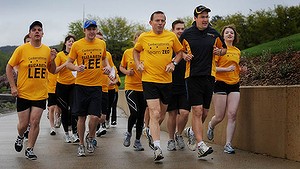
The ways in which we use public space have changed drastically since the advent of mobile phone technology and jogging. Once it was relatively safe to be a walker. Now there’s hardly anything relaxing about it at all. Strolling through the Sculptures by the Sea exhibition we were assailed by dripping joggers who seemed quite prepared to shove us off the cliffs rather than slow down, some even muttering “Move over for fuck’s sake” as beads of their rank sweat landed on our arms and faces.
On the question of the use of public space, there’s an excellent piece in the New York Times Review of Books, July/August 2012, on the decline of libraries in England. Author Zadie Smith points out the lamentable lack of public space where one can safely be without having to fork over any money for the privilege. Libraries are one such rare space and in England, they are rapidly decreasing as councils sell them off to developers for upmarket housing, because they aren’t considered “profitable.” Libraries are becoming obsolete. The argument made by technocrats is that people can find anything they want on the Internet, so why do they need the physical reality?
This economic and technocratic rationalisation again has no respect for humanity. Libraries offer much more than books. A library is a holistic experience. It offers an engagement for the senses that cannot be matched by the Internet. As a young girl, the library was for me a refuge, a temporary sanctuary from dysfunction, a safe place where I could lose myself in the sight, feel and smell of books that offered me other perspectives of other worlds. I could not have found this on the Internet, had it existed at that time, because apart from anything else, I would have had to stay in the physical reality of an unsafe home.
As Smith puts it: “…emotion also has a place in public policy. We’re humans, not robots…[libraries] are the only thing left on the high street that doesn’t want either your soul or your wallet.”
Politicians are in general pitifully lacking in respect for the people who put them where they are. What they should take from the results of the last election is that we are fed up with this attitude from all sides. Respect the human, is the message they need to take on board. We are not robots. We don’t like or want aggressive, repetitive sound bytes. We want policies. We want respect.
WARNING: this post contains images of shellfish and flowers that some readers may find confronting
I’m not at all disturbed by the disgraced Peter Slipper likening my lady bits to a shellfish, in one of many private text messages sent to his then new friend James Ashby.
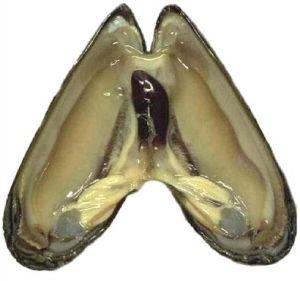
For a start, as I have often said, one overlooks the insult (if indeed we confer on this text message the status of insult) on considering the source, and chooses not to waste one’s time and energy getting exercised about it.
Secondly, the comment is hardly original. Women’s genitals have been likened to fish of one kind or another many times before. Does anyone recall that scene in Bliss, the Peter Carey novel turned film, in which sardines cascade from Bettina Joy’s vagina? Yes. Well. Is it a boy thing?
For myself, I’m more inclined towards the Georgia O’Keeffe visual analogies such as this one:

But hey, whatever floats your fishing boat.
On the other hand, I find Opposition leader Tony Abbott’s comments on women profoundly disturbing. For example:
It would be folly to expect that women would ever approach equal representation in a large number of areas simply because their aptitudes, their abilities and interests are different for physiological reasons.
Or:
The problem with the Australian practice of abortion is that an objectively grave matter has been reduced to a question of the mother’s convenience… Even those who think that abortion is a woman’s right should be troubled by the fact that 100,000 Australian women choose to destroy their unborn babies every year… When it comes to lobbying local politicians, there seems to be far more interest in the treatment of boat people, which is not morally black and white, than in the question of abortion, which is.
Why anyone would spend five minutes of their time worrying about how immature men describe female genitalia when we have an aspiring Prime Minister who thinks like this about women, is a mystery to me.
Then there is the semantic quarrel about the difference between sexism and misogyny. You don’t have to hate women to be sexist, apparently, but you do have to hate us to be a misogynist. Why do I not feel consoled by this distinction?
And let’s not forget hatred can take many forms. It does not have to be overt. It adapts itself readily to many guises. If I am treated as inferior because of my sex, as Mr Abbott suggests, am I to feel better about this if it is described to me as sexism rather than misogyny? Surely sexism is an expression of misogyny?
Tony Abbott has three daughters. He feels their virginity is their most precious gift. He reduces his daughters to a hymen, a reduction I would argue denies them their full humanity, as so many of Abbott’s statements about women deny us our full humanity.
What we need to ask is do we want a Prime Minister whose default position is to deny women our full humanity?
And why would he want to do this if he doesn’t hate us, however well that hatred may be disguised?

In the brouhaha about sexism and misogyny, the passing of legislation to reduce single parent payments to the Newstart allowance when a child reaches the age of eight has gone comparatively unremarked.
The government will save some 700 million dollars through slashing up to one hundred dollars a fortnight off payments to about 150,00 single parents,the majority of whom are women.
With no evidence to support the theory, the government believes that forcing single parents into poverty and charity handouts will increase their ability to find work.
At the very least, one would expect that before taking this drastic action the government might have commissioned a study, an inquiry, a report, a something into what actually happens to people when you take away what little they already have. Off the top of my head I’d guess it makes them desperate. I’d guess it makes them depressed. Neither are states of mind conducive to taking charge of one’s life and neither are states of mind conducive to the best parenting.
Common sense would suggest that the way to get single parents off benefits and into the workforce is not to first reduce them and their children to crippling poverty. The “we will make you and your children homeless and hungry and then you’ll get a job, won’t you” approach is punitive, classist and I believe sexist.
I have no idea what the ALP stands for anymore. I have no idea what kind of a feminist Julia Gillard is when she delivers passionate speeches about misogyny and sexism while at the same time making life so much more difficult for some of the most vulnerable women in society.
If ever we were to plead “Somebody think of the children!” then now would be the time. Because it will be the children of single parents who will suffer most as a consequence of the Gillard government’s cuts.
So Ms Gillard can make as many fancy speeches as she likes about misogyny and sexism, while she’s willing to condemn women and children to living on a Newstart allowance that almost nobody considers even remotely adequate, just to achieve a budget surplus, her words are little more than a noisy bell and a clanging cymbal, full of sound and fury and signifying nothing.
I was distracted from my current pre-occupations yesterday by Minister for Communications Stephen Conroy’s comment that he has “unfettered legal power” in his portfolio, and that if he told telcos to wear red underpants on their heads at spectrum auctions they’d have to do it.
There is a very good reason why no single individual in government should have “unfettered legal power” over anything: absolute power corrupts absolutely. When one has unfettered power there is no longer any need to engage and consult with others, one can simply, as Conroy’s boast exemplifies, force one’s will on everybody else. It is the antithesis of democracy and democratic process. That a Labor politician should hold this belief about himself and feel confident enough to trumpet it for the world press whilst in the US, makes me wonder yet again what the hell the ALP is about these days.
The following is a quote from a piece by Dr Robert Aziz in his Huffington Post blog on the subject of power and corruption:
So why does power corrupt? It corrupts because it gives license to unconsciousness and neglect. It corrupts because it licenses individuals to unilaterally, unreflectively and thus arbitrarily impose their will on others. It licenses individuals to impose their will without having properly engaged and processed through the Reality at hand. Power inflates the ego and through it the ego is erroneously led to believe it has the power to make people, ideas and even Reality itself disappear without due process. In the big picture nothing is further from the truth. Power corrupts because it gives license to unconsciousness, and in so doing it not only destroys the growth opportunity of the victim of such imposition, but no less the growth opportunity of the victimizer. Failure to engage another in consciousness, not only does the other individual harm, but it no less does serious harm to oneself, for in both cases the precious opportunity to extend consciousness by way of self-organizing nature is altogether lost, corrupted.
While I don’t take Conroy’s example of forcing others to wear red underpants on their heads literally (though who knows with this man?) his delight in his own raw power is revealed in his unpleasant desire to humiliate and demean others by forcing them to make themselves look ridiculous, just because he can. What does this say about Stephen Conroy?
To me it says we are likely dealing with a little man, one who lacks the wisdom and intelligence to hold high office, one who has already been seduced by the power bestowed on him by his portfolio, and one who will not hesitate to exercise that power for his own psychological benefit without any awareness at all of what he is doing. It sounds as if Stephen Conroy has lost sight of his purpose and instead has come to believe the unfettered exercise of power is his right and his priority. These are dangerous beliefs for anyone to hold, particularly if they are in charge of communications.
Conroy’s ongoing mission to control the internet takes on new dimensions after his latest megalomanic claims. He wants unfettered legal powers over the world-wide web as well. These ambitions are infantile, as is the example of red underpants as an exercise of power over others.
Conroy was out to crassly impress his audience, not with what he has or might achieve in his position, but with the raw power he believes he has. Power in itself means nothing. It’s how it’s exercised that is the measure of the man.

Following on from Stewart’s piece on Sheep yesterday about belief, I’d really like to know just why the state is involving itself in protecting the feelings of citizens who don’t “believe” in same-sex marriage, and who do “believe” that same-sex marriage will in some way destroy heterosexual marriage.
This latter claim seems so ludicrous it hardly warrants comment, except to say that from what I can see, heterosexuals do a first-class job of de-sanctifying the moral and ethical ideals of marriage all by themselves. Think domestic, intimate and partner violence. Think child sexual abuse. Think of the Kardashians. Enough said.
It was the government of former PM John Howard that in 2004 amended our Marriage Act of 1961 to read:
Marriage means the union of a man and a woman to the exclusion of all others, voluntarily entered into for life.
Certain unions are not marriages. A union solemnised in a foreign country between: (a) a man and another man; or (b) a woman and another woman; must not be recognised as a marriage in Australia.
These amendments were not based on research and reason, they were based on belief. A majority of politicians at that time and to the present day did not and do not “believe” a marriage can take place between same-sex couples. They are not required to offer any evidence to substantiate their beliefs. If I was boss of something, I wouldn’t accept belief as a valid basis from which to make public policy.
If there is one thing we should demand from our politicians it is that they do not enact laws based solely on “belief.”
Is it the state’s job to preserve and protect the feelings of believers? If the answer is yes then in order to remain consistent the state should immediately enact blasphemy laws to prevent any possibility of injuring the feelings of the religious among us.
If the state is in the business of preventing offence to believers on the matter of same-sex marriage, then there are a whole lot of citizens with strong beliefs in other areas who surely have the equal right to be protected from suffering offended feelings?
In this excellent piece on the movie that so wildly and widely offended some Muslims, Sarah Joseph reminds the reader that there is no human right not to be offended. Holding a belief about a spiritual leader, or same-sex marriage, does not entitle anyone to protection from the challenge of disagreement. We do have a human right to disbelieve without either being threatened with death, or being prevented by law from living arrangements available to others solely because of our sexual preference.
Opinions about the purpose of the state vary, but perhaps expectations that the state will give us security, peace, economic development, resolution of conflict, and social order via the rule of law are not overly ambitious.
Same sex relationships are not illegal. Homosexuality is no longer a criminal offence. Gays and lesbians may be as open about their relationships as are heterosexuals. So why, then, does the state consider it has the right to prevent them marrying if they so desire?
In his piece Stewart writes:
There is growing neurological evidence demonstrating that the way in which we make judgements and decisions is less rational than we like to think and is enormously complex. Decision-making is fraught precisely because of the way in which we draw on emotion and previous experience that generate preference, rather than examining the facts with any conviction. Stereotyping, racial bias, and misogyny are classic negative examples of this phenomenon. A convenient belief will trump facts any time.
Emotion, and previous experience that generates preference, rather than facts.
Politicians such as PM Julia Gillard and the rest who voted against same-sex marriage are entitled to their beliefs. They are not entitled to exploit their privilege in order to impose their beliefs on the rest of us. As politicians, I expect them to make decisions based on facts, not personal beliefs. They need to produce research that tells me why marriage is only for heterosexuals. I need to see evidence that same-sex marriage is bad for society. I don’t care what Ms Gillard and the rest of them “believe,” anymore than I care that some radical Muslims “believe” I should be separated from my head for not respecting their prophet.
The problem is not same-sex marriage. The problem is politicians who have forgotten what they are supposed to be doing. This is a secular state. We ought not to be favouring one set of beliefs over another. I challenge Ms Gillard to supply proof of the dangerous consequences of same-sex marriage for our society to justify her political stand against it. A position she quite inexplicably and vehemently stated, on the very morning of her ascension to the office of Prime Minister.
Because “belief” just doesn’t cut it, and yes, gods can be mocked.


This blog is archived at the Pandora Web Archive, National Library of Australia





 No Place For Sheep
Recent Comments