Archive | Media RSS feed for this section

The Newsroom, politicians, reality and Annabel Crabb

10 Nov

the-newsroom


For reasons I won’t bore you with, I’ve spent some time lately holed up binge-watching television series, the latest being a revisiting of the 2012-2014 HBO production, The Newsroom.

Written by Aaron Sorkin, it has many of the characteristics of The West Wing: engagement with complex issues in an at times tortuous, but honourable manner, and ongoing examination of the difficulties and costs involved in taking a particular moral perspective within the context of savage politics, and savage media, both of whose end game is to grab and hold onto power.

Both series can be irritatingly self-righteous and way too heart-warming but hey, Sorkin has a dream.

In his many monologic tirades against the dumbing down of news, and in particular the feeding of baser human instincts through the elevation of celebrity gossip to the status of journalism, anchor Will McAvoy (played by Jeff Daniels) grieves the loss of intellectual and moral engagement between media and consumers that the culture of celebrity has inevitably ousted, to everyone’s detriment.

As an extreme example, McAvoy is obliged by his employers to replace a segment of information of national economic significance with the story of former congressman Anthony Weiner sexting various women images of his penis, as told on camera by one of the recipients of his favours.

And this brings me to the point of this post: ABC TV’s Kitchen Cabinet, hosted by political journalist Annabel Crabb.

Crabb has copped sustained criticism lately for her pleasant little program in which she dines with various politicians. Much of that criticism and an analysis of Crabb’s response can be read here, at the Politcally Homeless blog.

Basically, the show is perceived by some critics as a dumbed-down, albeit classily-styled interaction with politicians, and as offering nothing of significance (contrary to Crabb’s claims) other than providing “humanising” propaganda for individuals on the public broadcaster.

Which, if you think about it, makes it a show of great political significance in the most negative and undesirable way.

Crabb’s justifications for her program are interesting, and for mine, disingenuous, or perhaps I can be more generous and describe them as naive, though naivety doesn’t strike me as a Crabb characteristic.  For example, she claims that:

I don’t think you can possibly separate what people are like from what they do… Observing someone in their own environment offers – in my view – some useful information about how they might behave outside it.

Well. For a start, the dinner times with politicians are absolutely contrived, and definitely not an example of how they behave in their own environment. In much the same way as we can argue that there is no such thing as reality tv because the presence of a camera crew immediately imposes a context that, unless you are completely narcissistic, creates a reality that bears no resemblance to the reality in which one actually lives, we can also argue that Crabb’s interviewees are in as much of their own environment as are monkeys in a zoo.

The participants are under surveillance and like most human beings, pitch their behaviours and their projection of what they are like to their expectations of the outcome of that surveillance. Like most human beings and unlike monkeys, what they’ll reveal of themselves under scrutiny is what they perceive as their best. This is only one aspect of what they are like, and it is a highly sanitised aspect.

Ms Crabb has long experience in media, and must be more aware than most of how people adapt to the presence of cameras. So for her to make the claim that Kitchen Cabinet is politically necessary because it shows us what politicians are like and thus helps us better understand their policies, is, quite frankly, a steaming pile of monkey poo, and insulting to our intelligence.

As for what they are like…I think I could binge-watch Kitchen Cabinet for a decade, and still be no wiser about what any of its subjects are like. Indeed, I learn far more about what they are like from the policies they espouse, than I could ever learn from the personas they present at dinner with Annabel.

To be honest, I have zero interest in what they are like. I’m far more interested in what they do and if I don’t like what they do I’ll vote against them, no matter what they might be like. 

I don’t want to be entirely negative so let me say here that I love the frocks. I’m immensely fond of frocks and Annabel’s are divine. In fact, it’s been a struggle for me, deciding to turn off the show, because I really wanted to look at those frocks.

But for mine, Kitchen Cabinet is an excellent example of what Aaron Sorkin has his characters rail against in The Newsroom. It is presented to its audience as having educative political significance, when in fact it has none.  It will, its presenter assures us, inform us as to the characters and motives of our politicians, thus adding to our understanding of the decisions they make. No it won’t. With very few exceptions we already know what they’re likely to decide: it’s on that basis that we do or do not vote for them.

This is dumbed-down politics, masquerading as important and relevant because it’s on the ABC and presented by one of that organisation’s senior political journalists. Which is, actually, shameful, it really is.

Kitchen Cabinet is as dumbed down in its way as the Daily Telegraph. It’s celebrity journalism, though Sorkin won’t have that called journalism at all. It does not enlighten, it obfuscates. It distracts us from the harm many of these men and women have inflicted upon us, our country and others. It dulls us in ways we ought not to accept being dulled.

The show could have worked as entertainment, if it hadn’t been found necessary to infuse it with faux usefulness and faux meaning. It might have also worked better if Crabb wasn’t seen snuggling up to politicians, and letting them get away with not answering important questions.

Maybe not a journalist at all. Maybe a chef. That guy who says SBS won’t have him because he’s too white. He’d be good.

We’re funding our own demise as an engaged and critical polity. Kitchen Cabinet is bread and circuses. Do yourself a favour. Revisit The Newsroom, re-imagine the ideals and potential of  journalism, then tell me I’m wrong.
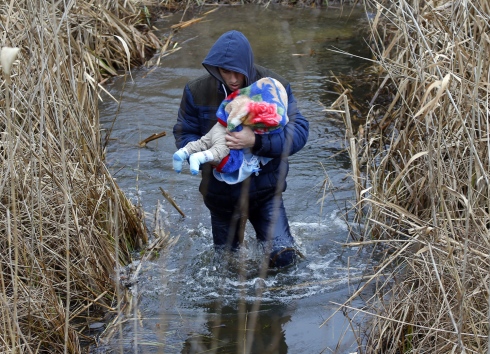


Abbott: Even a Nazi feels shame, but those illegal immigrants? Shameless

5 Sep

The Atlantic. Asylum Seekers flood into Hungary


Our socially dominating right-wing authoritarian Prime Minister, Tony Abbott, is talking more even more drivel than usual. ISIS, his pet death cult, are worse than the Nazis he claims, because unlike the Nazis, they have no shame.

I’ve searched far and wide. I can find no suggestion anywhere that the Nazis were ashamed of themselves. Never mind.

In practically the same breath Abbott has busied himself criminalising the estimated four million Syrian women, children and men fleeing their country and the ISIS death cult, by declaring them to be “illegal” immigrants.

In other words, death cult is badder than bad Nazis, but fleeing bad death cult is even badder then bad Nazis AND badder death cult?

Prime Minister Abbott then co-opted the death by drowning of Syrian toddler Aylan Kurdi to justify his stop the boats campaign, saying at least we don’t have drowned babies washing up here anymore because we’ve stopped the boats.

By the way, remember the Christmas Island boat tragedy when then immigration spokesperson Scott Morrison said we shouldn’t pay for the funerals of drowned babies? Flying corpses to the mainland for burial, Morrison said, was not giving taxpayers “value for money.”

(I urge you to read the article in New Matilda I’ve linked to in my first sentence, for an insight into the psychology of right-wing authoritarians. It explains much.)

British Murdoch columnist Katy Hopkins suggested that Europe should adopt Australia’s approach to asylum seekers by “threatening them with violence until they bugger off.” Which is a pretty good précis of off-shore detention, when you think about it. Australians have big balls and tiny hearts, Katy claims, admiringly, as apparently that’s the perfect combination for male-dominated leadership and murdering, directly and indirectly, millions of people seeking asylum.

At this point things become confusing. Nazis are bad for murdering millions but they have the capacity for shame, so not as bad as ISIS death cult who aspire to murder millions, as many as possible on social media so definitely no shame, so badder than Nazis. But Europeans should directly and indirectly murder millions and that’s good, no shame required, because big balls and tiny hearts are great. As long as they’re in white, non-Nazi bodies. Right.

Meanwhile, the New York Times published an excoriating editorial damning Abbott’s ruthless and inhumane asylum seeker policies. For which Abbott feels no shame, because…all right, I won’t say it all again but if he gets to talk in threes why can’t I?

There was considerable robust debate the other day concerning whether or not the image of the tiny body of Aylan Kurdi, washed up drowned on the beach, should have been published by The Guardian, and re-posted on social media.

For mine, the very fact of this debate highlighted our privilege: we do not have to directly deal with such horrendous circumstances, rather, from a safe distance, we have the option to debate whether or not it is kind or unkind to us that we are confronted with images of those circumstances.

There seems to be an attitude about that we have an inherent right not to be disturbed and discomfited. We don’t. Nobody was forced to look at the images, and warnings were issued for those who wanted to turn away. As Carol Duncan quite rightly tweeted, if you don’t want to see the pictures, exercise your privilege and turn off your devices.

With millions of displaced, desperate people roaming the globe, and the numbers set to increase, we have no right to demand censorship of images of their plight. If you don’t want to see it, don’t look, but please, spare us the preciousness of your complaints that you are traumatised by looking.

Shame, anyone?

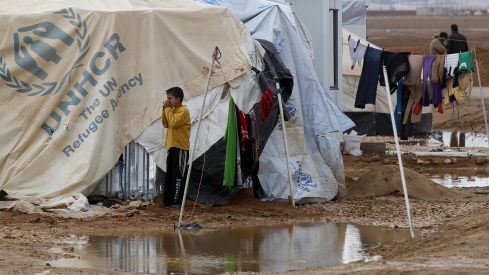
A Syrian refugee plays Thursday after heavy rain at the Zaatari refugee camp in Jordan.

A Syrian refugee plays Thursday after heavy rain at the Zaatari refugee camp in Jordan.


Is Struggle Street poverty porn?

7 May

Struggle Street

SBS aired the first episode of the documentary Struggle Street last night, amidst the kind of publicity and controversy media outlets dream of.

Briefly, the program follows the daily lives of families and individuals who live in Mount Druitt, a suburb in Sydney’s far west where unemployment and poverty are rife, and all the complexities created by lack of opportunity and marginalisation serve to oppress, in some cases, beyond endurance.

In this erudite review in The Conversation the program is described as “poverty porn,” created by the entitled for the entertainment of the entitled. It’s worth noting the author of this piece had not seen the program before writing his review of it. Always a mistake, in my opinion.

An alternative perspective can be found here, written by a journalist who has, thankfully, actually watched the documentary.

For the first ten minutes I found Struggle Street almost impossible to watch, so palpable was the pain, confusion, frustration and sorrow of the people involved. There seems to be an inevitability about the trajectory of their lives: the possibility of a happy ending, or an even slightly improved ending seems severely limited, not because the people involved are inherently undeserving or morally lax, but because of circumstances so complex that unravelling them requires skills and resources that are simply not available, and that authorities are unwilling to make available.

It is convenient to cast people in such situations as being entirely responsible for their own misfortunes, ignoring the vast web of circumstances created by the more privileged sectors of society, circumstances that inevitably create an underclass whom the privileged then have the satisfaction of despising.

To be poor is to be surveilled in a manner entirely alien to the middle class, where the possibilities of concealment are many and varied, and to whom “privacy” and the right not to be offended or embarrassed is a privilege enshrined in law.  It could be argued that the documentary is yet another form of surveillance of the marginalised, ostensibly entered into voluntarily, to which the middle class would never subject itself. It could also be argued that the privileged creators and viewers who perhaps voyeuristically consumed the program last night found moral gratification, if they needed to look for it, in the abyss between the them of Struggle Street, and the us of the entitled gaze.

For me, what fought its way through the grim despair that haunts the daily lives of many of the participants in this documentary is their humanity. The love of a father for his recalcitrant offspring who steal from him to buy drugs. The determined attempts to create, from nothing, a party atmosphere for small children. The yearning of a young woman, homeless for two years owing to family disruption, to return to learning and thus make something of her life. The ongoing adversarial encounters with authorities such as Centrelink and the police that are part of the daily grind that must be faced and endured. People keep struggling to love, to make things better, to stay alive, all against the overwhelming influences of forces beyond their control.

Struggle Street is not, to my mind, poverty porn, though there are those who will choose to view it as such. This says more to me about them, than it does about the program and its participants. There will be the righteously self-congratulatory who measure their success against the apparent failures of the residents of Struggle Street. That can’t be avoided, however, that they need to make such a measure speaks volumes, and not about Struggle Street. What I would hope is that this documentary will confront us with the ferocious inequalities in our society, and the inhumanity of political authority that refuses resources and care to those who most need it, opting instead to blame and punish and marginalise. Mount Druitt does not exist in a vacuum. If this series demonstrates anything, it ought to be that reality.

PS: And the Guardian agrees with me.

Truth, employment and freedom of speech.

2 May

President of the Australian Human Rights Commission, Professor Gillian Triggs, yesterday proffered this analysis of the sacking of SBS sports presenter Scott McIntyre, after he posted a series of tweets that suggested, among other things, an alternative and previously unspoken view of the actions of the ANZACS.

In her piece Professor Triggs refers to the case of Banerji v Bowles (2013) in which Department of Immigration former employee Michaela Banerji was sacked after tweeting criticisms of detention centres, the Prime Minister, and the Minister for Immigration. Ms Banerji used a pseudonym for her Twitter account, and argued that her comments are “constitutionally protected by her right to freedom of political communication as an indispensable incident of representative government.” The Federal Court rejected this view.

Ms Banerji has now replied to Professor Triggs’ observations on her case here.

I know there are readers of Sheep who are as intrigued by legal forensics as am I, and the arguments made by both parties are of significant import to anyone who is employed and uses social media. I won’t add my comparatively ignorant voice to those of Professor Triggs and Ms Banerji, rather I’m interested in Trigg’s observations on the use of social media and Truth.

Triggs begins her piece with a quote from John Milton’s Areopagitica in which the poet passionately opposes censorship, arguing for freedom of speech. “Whoever knew Truth put to the worse, in a free and open encounter?” he asks.

Triggs argues that “today’s near universal access to social media challenges the idea that freedom of expression ensures truth will be victorious over falsehood.”  The poet Milton could not have envisaged the extent of free and open encounters awaiting society in its future, and made his observation at a time when only the privileged had access to a public platform.

There are a couple of assumptions in Triggs’ argument that ought to be noted. In claiming that universal access to social media dilutes the possibility of Truth triumphing over falsehood, Triggs, inadvertently I’m sure, is claiming not only that Truth is, as it was in Milton’s time, defined and controlled by a particular demographic who enjoy freedom of expression due to their privilege, but that this is still a legitimate manner in which to determine what is Truth.  Now the masses have unprecedented access to public platforms that democratise freedom of expression, Truth will inevitably be vanquished by the freely expressed opinions of these masses. Whatever is publicly expressed by those other than the privileged and entitled will inevitably be falsehood, is what her argument implies.

Truth is a tricky concept, fluid in the extreme, determined by the orthodoxy, enforced by the state and its agents, and religion and its agents. Social media offers the most expansive and democratic opportunity for the contestation of what Foucault calls “regimes of truth”  that has ever existed in human history.

Truth, argues Foucault, does not exist outside of power:

 on the contrary, truth “is produced by virtue of multiple constraints [a]nd it induces regulated effects of power”. This is to say that “each society has its regime of truth”, and by this expression Foucault means: (1) “the types of discourse [society] harbours and causes to function as true”; (2) “the mechanisms and instances which enable one to distinguish true from false statements” and (3) “the way in which each is sanctioned”; (4) “the techniques and procedures which are valorised for obtaining truth”; (5) “the status of those who are charged with saying what counts as true” (Foucault 1976, p. 112; 13).

Therefore, “truth” is “a system of ordered procedures for the production, regulation, distribution, circulation and functioning of statements”; it is linked “by a circular relation to systems of power which produce it and sustain it, and to effects of power which it induces and which redirect it”. 

It is the function of social media, exemplified most recently by the tweets of Scott McIntyre, to contest truth regimes produced by systems of power that control and sustain what comes to be normalised as “Truth.” Scott McIntyre, Michaela Banerji and countless others have used social media to contest the constructed regimes of truth, to their cost. Whether these challenges to the orthodoxy are accurate or not, the point is they must be made and in a liberal democracy the people who make them ought not to be punished.

There is absolutely no correlation between freedom of expression and what we might, at any given time, consider to be Truth. The very best we can do is, as Foucault recommends, constantly question the origins of our current regimes of truth, by whom are they determined, whose ends do they serve, what techniques and procedures are valorised for obtaining truth and by whom. Our most powerful weapon for contesting regimes of truth is social media. Professor Triggs is quite wrong: today’s near universal access to social media ensures an unprecedented freedom of expression that in turn ensures an unrelenting contestation of truth claims, and herein lies its power, and its threat to authority.

Freedom of expression has never ensured Truth, not in Milton’s time and not in ours. Social media is a powerful tool for the examination of regimes of truth established by the privileged and entitled, regimes that all too often have little to do with what is true, and far more to do with what is advantageous to those who declare it to be true.

Foucault: Regimes of Truth


When abuse is just another news story

16 Apr

 news

I was driving home from my appointment with my shrink, with whom I’m attempting to unravel the mystery of how events of the past inescapably determine the present (“Those who cannot remember the past are doomed to repeat it.” George Santayana. Remember it) when I heard on ABC Radio National’s The World Today this report of evidence given at the Royal Commission into Institutional Child Abuse.

The report was preceded by a warning of “disturbing” content.

The content is disturbing. It might make you weep. It might make you remember. It might make you rage. It might make your heart break.

But what is even more disturbing is the manner in which this disturbing content, like all other disturbing content, is transmogrified from a heartbreaking, terrifying, rage-provoking account of one man’s childhood into nothing more than another news story in a busy news cycle, the majority of which is comprised of disturbing content of one kind or another. In other words, as soon as this disturbing event is reported we move immediately onto something else, as is routine, as is expected in a media-drenched world where news is barely considered interesting unless it’s disturbing. The need of comfortable people for the thrill of vicarious disturbance should never be underestimated.

What we should have had after Mr David Owen’s story is a minute’s silence. What we should have had is a minute to absorb the magnitude of his suffering. What we should have had is a minute to reflect that Mr Owen’s story of childhood sexual abuse is repeated and repeated and repeated, perhaps a billion or more times around the globe.

What we also should have had is the opportunity to reflect that while it is on the one hand a “good” thing that these matters are now public, it is also possibly a “bad” thing that they are treated as one more story in the news cycle, and that as a society we are becoming so inured to disturbing content that we can be momentarily appalled then move on, within seconds, to the next piece of news without as much as a moment to catch our breaths and reflect upon what we have just heard.

Everything is a damn hashtag. Everything.

It is unrealistic of me to want a minute’s silence after reports such as that on Mr Owen’s childhood suffering. Yet I was outraged by the manner in which his account of the details of his abuse was slotted between other items of interest to the ABC’s midday audience, and I was infuriated by how we are expected to lurch from stories of such atrocities to something Tony Abbott said with nary a second to catch our breaths. How can atrocity become anything more than wall paper when it’s doled out on the hour in sound bites? And what is this doing to us?

I don’t know what purpose was served by the ABC reporting Mr Owen’s evidence, in all its aching detail, in little more than a sound bite. Fair enough if some time is dedicated to the topic. Fair enough if some respect is accorded to the man, and to his experiences. But to sandwich it between Abbott and the jobless figures is a step too far.

While everyone ought to know what happens to far too many children, and the aftermath, it isn’t a sound bite. Mr Owen is a man of tremendous courage and resilience. His story isn’t fodder for the news cycle.

The question for Good Friday: What is truth?

3 Apr


orwell truth

Yesterday, human rights lawyer George Newhouse won his defamation case against News Corp blogger Andrew Bolt. A confidential settlement was reached, with News Corp paying Newhouse’s costs:

Justice McCallum found the five defamatory imputations pleaded by Mr Newhouse were capable of arising. These included that Mr Newhouse “has fraudulently represented to the public that people whom he represents are refugees when they are not”; that he “lied to the High Court”; that he is “motivated by deceit” and that he has “acted immorally”. 

In 2011, Bolt was found guilty of breaching the Racial Discrimination Act with a blog in which he’d implied that light-skinned people who identified as Aboriginal did so for personal gain. 

In 2002, magistrate Jelena Popovic was awarded $246,000 damages for defamation after suing Bolt and the publishers of the Herald Sun over a 13 December 2000 column in which he claimed that she had “hugged two drug traffickers she let walk free.”

Obviously, Bolt is in the business of mischief-making, as is his employer. There is a certain satisfaction in witnessing this activity come back to bite them both, however, Bolt’s narrative genre, bereft as it is of truth or any pretence at interest in it, is a vehicle for the conservative ideology that is currently struggling for control of western democracies.

Bolt’s blogs largely consist of great swathes of unsubstantiated personal opinion, that if subjected to a moment’s elementary Socratic interrogation would disintegrate into dust. The only way to deal with the man is to haul him before appropriate courts, an option open to very few. The cost to News Corp is little in the scheme of things, and is no doubt outweighed by the talent the man has for rousing ugly public opinion that favours conservative prejudices.

In conservative politics and in the media that support the ideology, truth long ago exited stage left and won’t be coming back. Prime Minister Tony Abbott boasts of his own dodgy relationship with the truth, and the ABC’s “Promise Tracker” records the number of pre-election assurances by the coalition that have been broken since Abbott assumed power.

Does truth matter? It would seem we’re in an era of norm renegotiation: at one time in our social evolution a man’s [sic] word was all that was required, and any man who broke his word was ostracised and shamed for it. We have apparently devolved to a state in which the leader of our liberal democracy can quite cheerfully say whatever he likes at any particular moment, then blame his audience for being daft enough to believe him.

On Good Friday, the day on which Christians such as Prime Minister Abbott grieve the death of their Christ, it seems appropriate to recall Pontius Pilate, the Roman governor who handed Jesus over for execution by literally and symbolically washing his hands of the whole ghastly affair and asking, rhetorically, Quid est verities? What is truth?

Prejudice, arrogance, entitlement and ideology have triumphed over truth in Australian political discourse. Truth is now regarded with the same jaundiced mocking eye as is compassion. It matters not if Andrew Bolt and Tony Abbott spin narratives bereft of truth, populated with stereotypes, peppered with clichés. Truth is crucified. Ideology rules. OK?


On the moral outrage of the “normal.” A response to Madonna King

2 Apr

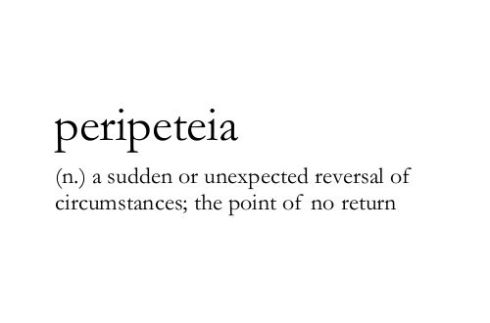
PeripeteiaI’d planned on a peaceful afternoon following a few arduous days but then I read this piece by journalist Madonna King, titled “Billy Gordon must stop making excuses for bad behaviour” and honestly, if this doesn’t encapsulate everything I’ve been writing about for the last few days I can’t imagine what would.

King opens by observing that Andreas Lubitz, co-pilot of the Germanwings flight that ended in tragedy after he flew the plane into the French Alps might well have been suffering from depression however, that doesn’t mean he ought not to be recorded in history as a mass murderer responsible for the deaths of 150 passengers.

From this King moves onto the saga of Queensland politician Billy Gordon, currently facing universal disapprobation for past crimes and present misdemeanours. Many people, King claims, suffer difficult childhoods and depressive illness, but they don’t all fly planes into mountains or resort to criminal activities, so why should anyone excuse the behaviours of Lubitz or Gordon on the grounds of their struggles with their personal demons?

Indeed, goes the illogic of her argument, Lubitz and Gordon are even more morally bankrupt because they did not manage to deal with their demons in a manner that did not cause anguish to others.

Let me unpick King’s moral dummy spit.

While there are undeniably common factors in depressive illness, and in the reactions to childhood trauma, it should never be forgotten that every circumstance is individual, and neither depressive illness nor childhood trauma occurs to robots and replicants but to human beings, formed by genes, nature, and nurture, different in every case, different even within the same family. To argue that because one person does not react like another to trauma indicates that they are exceptionally morally deficient, is the worse kind of middle class, self-righteous, pseudo-psychological conservative claptrap.

Lubitz undoubtedly will quite rightly be remembered as the murderer of 150 passengers and the bearer of anguish to hundreds of others. However, no human action takes place in a vacuum, and understanding Lubitz’s circumstances is not “making excuses” for his acts, but informing ourselves, the better to avoid such catastrophes in the future.

Likewise, knowing where Billy Gordon is coming from is not “making excuses” for his actions, but adding to our knowledge of how the events of an individual’s life form him or her, and of the enormous variety of responses and reactions individuals can have to what on the surface appear to be identical or very similar circumstances.

Taking a moral stand on these matters does nothing to inform us of anything. This is a classic example of how pointlessly destructive moral stands can be. If we say, as has Ms King, that explanations and understanding are “excuses” for certain types of behaviour, we come to a dead-end. If we want to reduce and prevent certain types of behaviours, we won’t do it by simply deciding they are “bad.”

Gordon has at some point this week described a deprived childhood. To which King replies: Guess what Billy. You should have spent less time wanting what others had, and less time breaking the law too.

He should have spent less time wanting what others had? What? It is an offence have nothing and want what others have? The poor must not envy and covet the privileges of the comfortable? They must simply accept they can’t have them?

King goes on: Excuses are now the reason for bad behaviour across the community. An act of road rage because someone cut someone off at the pass. A scratch along the side of a car because someone took somebody else’s car park. One punch outside a night club because someone thought someone else’s drink had been spiked. 

There is a vast difference between excuses and reasons, a difference that entirely escapes Ms King. These are explanations, however inadequate, of certain actions. They are vital to increasing our understanding of why some of us behave so abominably at times, and therefore indicators of how our abominable behaviour can be addressed and hopefully reduced, in the interests of the common good.

There’s not one among us, including Ms King, who can know with any certainty that we will not at some time become the victim of peripeteia. How we react in unexpected circumstances is determined by any number of factors, the majority of which are likely entirely unknown to us.  Morality is largely unhelpful in these situations, and is particularly so when applied after the fact.

Apart from anything else, it is profoundly arrogant for anyone to assume or demand that every individual who suffers trauma and/or mental illness reacts to her or his circumstances in the same way. Using some of us as a yardstick by which to judge the others is a game of the privileged and the entitled. Traumatised and mentally ill people do not lose our individuality because of our experiences. We have the right to be who we are, without the burden of the expectations and moral judgements of the “normal” and the “healthy.”

Thank you Eroticmoustache (I think :-)) for the link that led to this rant.

‘Pretty Woman’ is to blame for luring women into sex work. Right.

30 Mar

Everybody told me not to read this exceedingly stupid Mamamia piece alleging the film “Pretty Woman” caused young women to become sex workers by glamourising an industry that can be highly dangerous, but I did it anyway.

My question: how many films glamourise marriage and lure young women into that industry, only for them to become victims of violent partners to the extent that one woman each week in Australia is killed by that partner?

Which situation is the more dangerous for women?

And what are we, that we need to even ask such a question?

And when will Mia Freedman get her bourgeois morality off our bodies?

Runaway_Bride

At the mercy of the state

25 Mar

Surveillance-State


There is something very rotten in the state of a nation’s politics when both its government and its opposition are able to co-operate on the introduction of legislation for intrusive mass surveillance of the nation’s entire population.

If you want to better understand the repercussions of this legislation for the individual, I’d recommend reading this piece, sending the suggested letter to your MP, then retreating to a corner to weep for what we’re becoming.

The government and opposition argue that these extreme surveillance measures are necessary to apprehend terrorists, pedophiles and major criminals, all of whom will by now have devised encryption methods to bypass government surveillance, and most of whom will have had such methods securely in place for years.

What has been most alarming in the lead-up to the Senate debate on the legislation today has been the apathy of mainstream media towards proposed state surveillance that frames every citizen who uses the Internet as a suspect. Not as a potential suspect, but as a suspect whose online activity can be accessed by agents of the state without a warrant, if they decide to go after you.

If you’ve nothing to hide, you’ve nothing to fear, claimed AFP Assistant Commissioner Tim Morris. However, in Prime Minister Tony Abbott’s own words institutions aren’t perfect, as we well know from the institutional abuses of all kinds that are exposed daily by whistleblowers, many of whom will be left without a means to reveal corruption under the new legislation.

The “if you’ve got nothing to hide you’ve got nothing to fear” argument implies that the state and its agents have the right to know everything about you in the first place, and that they will determine what is deserving of their attention in your daily activities. The term “hide” is used in this argument rather than the term “privacy.”

In the replacing of one word for another, the citizen’s right to a life kept private from the state is pejoratively reframed as having “something to hide.” We are now guilty until we can prove ourselves innocent, because what else can we be if our online lives can be investigated without even a warrant?

Metadata retention legislation does not uncover what every citizen is necessarily “hiding.” It destroys every single citizen’s right to privately go about her and his online pursuits under the assumption that privacy equates to hiding, and thus becomes the object of suspicion and intervention.

Like a suspicious spouse or the interfering parent of an adolescent, the government now assumes if you want privacy you must be guilty of something.

Those who have “something to hide” will continue to find ways to hide, just like Communications Minister Malcolm Turnbull who uses an encryption service to send his text messages.

We know governments can’t be trusted simply because they are governments. We know institutions can’t be trusted simply because they are institutions. To give these bodies unrestricted access to our online lives is an insanity. We are now all at the mercy of the state and its agents to an unprecedented degree, a situation that is intolerable in a liberal democracy.

The ALP are a disgrace for supporting the Coalition in this Big Brother legislation.

Get encrypted. It’s not complicated. Senator Scott Ludlum makes some suggestions on RN Breakfast this morning.

And here’s a Get Up campaign that will help you go dark.

In the meantime, Prime Minister Tony Abbott  tells us he was never worried about metadata collection when he was a journalist so what’s the problem?

That man really knows his onions. It’s breathtaking.