Archive | Anti porn shock jocks RSS feed for this section

The godification of children; the bizarre marriage of anti raunch feminism with the religious right.

10 Oct

Evangelical Christian children’s pastor Becky Fischer takes several hundred children aged from around six to early teenage, and some of their parents, to a fundamentalist boot camp at Devil’s Lake, North Dakota for a weekend of indoctrination into the principles of  evangelical Christianity (ABC 2, Sunday October 9, “Jesus Camp”)

One of these principles is founded on the belief that there’s a dire need for the merging of church and state in the USA, to be achieved through what she describes as a war to reclaim America for Jesus. This war is a just war, founded in the truth because they know The Truth,the pastor claims, and everyone else is lost to God.

Pastor Becky is taking a leaf out of the Muslims’ book, she reveals. If they can train kids to be suicide bombers for the sake of their God, why can’t she train kids to give their lives for the one true God, albeit metaphorically. She just needs them before they turn seven, she adds.

One extremely articulate and intelligent little girl tells us that some people do die for God and they are MARTYRS. Like, wow!

There’s a cardboard cutout of George W. Bush, role model for the successful integration of the two powers. There’s emotion-driven prayer meetings where little kids fall sobbing, wailing and shaking on the floor. The poor little buggers, by now in a state of frightening emotional extremity, cry out their sinfulness, thrash their arms and legs about, and beg Jesus to forgive them. The adults howl praise the Lord as the little ones noisily repent.

Once cleansed by a few drops of water out of a plastic bottle administered by Pastor Becky, the kids are declared born again, welcomed into the Lord’s army, and instruction on their mission as soldiers in the fight to get America back on the path of righteousness begins.

One of the most important battles they’ll face, they’re told, is the battle to stop abortion. They must pray to God to end all abortive procedures, a very creepy man in blue jeans and scarlet tee-shirt with “Life” printed on it in large black letters, tells them. The future of millions of unborn babies is in their young hands. They have the opportunity to make the difference between unborn babies living, or dying before they even get a chance to breathe. Jesus wants them to save the babies.

There’s not a dry eye in the house. The children are whipped up into a state of febrile fanaticism. The adults have no apparent compunction about involving young children in abortion issues, a form of child sexualization that is truly disgraceful, and never mentioned by activists as harmful.

The man in the red shirt  shows the kids little plastic models of a foetus through the stages of gestation. Kids start screaming, swaying, and speaking in tongues. Heavy metal Christian rock music gets them and keeps them in the zone. “We’re kickin’ it for Christ!” the children scream.

The man in the red shirt tapes tiny plastic babies to the palms of the kids’ hands with red duct tape. He next places the red duct tape across the children’s mouths, silencing them. Written on the tape is the word “Life.”

Then he takes the children to Washington to demonstrate against abortion on Capitol Hill.

Meantime, Pastor Becky tells them they must not read Harry Potter, for Potter is a warlock and God hates warlocks and witchcraft. Harry Potter would have been put to death in the Old Testament, she tells them. One child is bewildered and a little unnerved when later at lunch, other kids at his table tell him he looks a lot like Harry. Will he be metaphorically put to death? Maybe he needs to change his glasses?

In their ordinary lives the kids make no moves without first asking if God would like what they’re considering doing. They have no life outside of their religion. Many of them are home-schooled in creationism, and taught that global warming is irrelevant, given that we are on earth for such a short time before ascending to heaven so why worry? In fact some 75 per cent of home-schooled children in the US come from evangelical families, of which there are some 80 million.

In Australia, right-wing Christian conservative and pro lifer Melinda Tankard Reist, editor of the recently released Big Porn Inc, a collection of anti pornography writings, is also an anti free choice advocate. This is a link to an article Tankard Reist wrote for the Canberra Times in 1997, that has recently been posted on anti abortion website  “Abortion Concern.”

In the article Tankard Reist argues that the pro-choice rhetoric ignores the situations of women who’ve had bad abortion experiences.  She calls for the re-examination of the “pro-choice orthodoxy”, citing testimonials she’s collected for her book on the reactions some women suffer after an abortion.

Tankard Reist’s conclusion is that because there are women who suffer as a consequence of abortion, the procedure ought not to be allowed. Which is a little like arguing that because some women suffer adverse reactions as a consequence of marriage, all marriage should be banned. It’s the all or nothing, you’re with us or against us, George Bush fundamentalist mentality that is the hallmark of politically right-wing evangelical Christianity, and Tankard Reist is right in that zone.

Tankard Reist’s lesser known co-editor, academic Abigail Bray, is reputedly a left-wing feminist whom one would expect to be soundly pro-choice, ideologically, emotionally and intellectually opposed to Tankard Reist’s entrenched anti choice and right-wing religious position. Nevertheless the two women have managed to overcome their differences in the production of Big Porn Inc. This union of left wing and sometimes radical feminism, and right-wing Christian evangelical conservatism is an uneasy marriage, one would think, in which both parties are called upon to seriously compromise core beliefs in order to achieve a supposedly greater good, that of preventing pornography and what both parties perceive as the pornification and sexualisation of the young.

As I mentioned in an earlier post, Big Porn Inc has received a good deal of promotion from the ABC, and indeed, will be launched in Brisbane later this week by the ABC’s online Religion and Ethics editor, Scott Stephens.

Tankard Reist has been described by UNSW academic Zora Simic in her 2011 paper Anti-raunch Feminism: An Australian Case Study, which can be found on her website and is a very good read for anyone interested in feminism in Australia today, as Australia’s most public feminist voice, dethroning such long time luminaries as Eva Cox of the Women’s Electoral Lobby.

Anti-raunch feminism is a feminist protest against what is perceived as a dominant cultural hypersexualization of women and girls, in which so-called “raunchy” behaviour (pole dancing, for example) clothing, make up, music etc is thought to dehumanize, “pornify” and “sexualize”  women and girls, creating a false sense of empowerment from behaviour that in reality, the protesters believe, is degrading and objectifying.

Zimic informatively unpacks Tankard Reist’s evolution from Senator Brian Harradine’s bioethics advisor during the period when Harradine managed to prevent Australian aid to developing countries from including reproductive education, and also managed to ban Australian women’s access to the “morning after” pill, RU-486.

Tankard Reist went on to found the conservative pro-life Women’s Forum Australia, an organisation supported by then Prime Minister John Howard, Pentecostal Family First Senator Stephen Fielding, and Catholic Opposition Leader and former Coalition Health Minister Tony Abbott. In 2004, Abbott called for a debate on what he termed the “epidemic of abortion” in Australia. Kevin Rudd also endorsed WFA when he was ever so briefly PM and favoured doorstop interviews on Sundays as he came out of church.

As Simic writes, it appears that Tankard Reist, with the assistance of feminists such as Bray and Nina Funnell, has managed to blend an anti-abortion platform with the anti raunch culture some feminists despise and see as a backward step for women. Both parties have apparently decoupled from their traditional women’s reproductive concerns, and neither side is at present anyway, making any reference to the other’s opposing views on abortion, or pursuing their own.

Tankard Reist is currently keeping very quiet about her pro-life beliefs and her connections to the conservative Christian Right. For example on her website where she publishes testimonials from organisations who’ve hired her as a speaker, the Australian Christian Lobby is conspicuously absent, though she has been engaged by them several times.

The marriage of convenience between anti raunch feminism and right-wing religious conservatism is to say the least bizarre. When you lie down with dogs you get up with fleas is a maxim that could be employed by either party about the other. Have the anti raunch feminists turned their backs on pro-choice, sacrificing it to some perceived greater good? Have the Christian conservatives temporarily agreed to silence their rabid anti choice rhetoric in pursuit of more mainstream and easily attained goals, such as whipping up outrage about the sexualization of children?  How long can their differences be papered over, given the great big elephants in both their rooms? Is it possible to trust any of them? Do they all have hidden agendas? Are any of them what they seem?

At least with Pastor Becky Fischer, what you see is what you get.

ABC promotes private interests: what happened to impartiality?

6 Oct

Between June 15 and October 5 2011, the ABC’s Religion and Ethics Online and the Drum have published eight articles written by anti pornography campaigners and colleagues who share the same perspective on pornography.

Judging from many of the comments on some articles, the views of this collective are regarded as extreme, and pushing right wing Christian conservative values.

Seven of these articles were written by contributors to Big Porn Inc, a collection of anti pornography essays edited by activists Melinda Tankard Reist and Abigail Bray.

In five of the articles reference is made to the soon-to-be-released Big Porn Inc, and three of them are extracts from the book. Clive Hamilton‘s article in Religion and Ethics reads like a book launch speech, and his last two paragraphs enthusiastically promote Big Porn Inc.

Gail Dines, also an author in Big Porn Inc, appears in R&E on September 15 promoting her anti pornography position. Meagan Tyler writes in the Drum on October 5th defending Gail Dines against critics, and promoting the same anti porn position. Tyler has another anti porn piece in the Drum on September 20th.

During this period the ABC has published one, yes that’s one alternative perspective to that put forward by all the above authors. That piece was by academic Alan McKee on September 23rd. McKee addresses many of the criticisms launched at him and his colleagues by some of the above authors.

Editor of the ABC’s Religion and Ethics forum, Scott Stephens, is launching the book the ABC has been blatantly promoting in Brisbane next week.

The ABC Code of Practice states as follows:

4. Impartiality and diversity of perspectives

Principles: The ABC has a statutory duty to ensure that the gathering and presentation of news and information is impartial according to the recognised standards of objective  journalism.

Aiming to equip audiences to make up their own minds is consistent with the public service character of the ABC.  A democratic society depends on diverse sources of reliable information and contending opinions.  A broadcaster operating under statute with public funds is legitimately expected to contribute in ways that may differ from commercial media, which are free to be partial to private interests.

Judgements about whether impartiality was achieved in any given circumstances can vary among individuals according to their personal and subjective view of any given matter of contention.  Acknowledging this fact of life does not change the ABC’s obligation to apply its impartiality standard as objectively as possible.  In doing so, the ABC is guided by these hallmarks of impartiality:

• a balance that follows the weight of evidence;

• fair treatment;

• open-mindedness; and

• opportunities over time for principal relevant perspectives on matters of contention to be expressed.

By neglecting to observe the required balance, the ABC has promoted both a specific position on pornography, and  a book written entirely from this position. This has continued for five months, with only one article that challenges this perspective published during that time period.

At the editor’s website, the launch of Big Porn Inc is headlined thus: “ABC Editor Scott Stephens to launch Big Porn Inc in Brisbane October 14.”

That the ABC should promote a book that is subsequently launched by one of its employees is bizarre. The ABC is not publishing this book. It isn’t written by ABC employees.

There’s a big difference between noting publications in an author’s biography, and the kind of intense promotional activity immediately prior to a book launch we’re seeing here. There’s a big difference between the ABC interviewing an author about his or her book, and the promotional activity seen here. There’s a lot of cosiness between the book’s editors and the ABC Religion and Ethics editor. None of this is good for a public broadcaster whose mission is to convey as many perspectives as reasonably possible on issues that affect the whole of our society.

Comments on all pornography articles on the Drum in 2011 reveal a wide variety of community views, the majority of which dispute those purveyed by the collective currently dominating the issue at the ABC. There are many comments calling for the publication of other perspectives.

Gail Dines was shouted down by left wing tossers, claims academic

5 Oct
Caricature on "The great epidemic of porn...

Image via Wikipedia

Oh my god, I just got home after a terrible day trying to buy a smart phone only to find this on the Drum. 

The good Dr Meagan Tyler is having a dummy spit at those of us who did not take to Professor Gail Dines and her anti pornography messages, and those of us who continue to resist the same harangues from MTR, Abigail Bray, and the man I’ve written about twice already this week so I won’t say his name because Steve at the Pub will say I’m obsessed.

Many anti porn activists are reasonable and rational and don’t want to ban anything, Tyler assures us, giving Dines as one of her examples of the rational and reasoned. She then claims the Professor was “shouted down” on Q&A, and otherwise abominably humiliated by left-wing tossers who feel they have a duty to be sympathetic to the plight of pornography consumers, whether they agree with porn or not.

Plight? What plight?

Needless to say I’ve dashed off a response, but whether or not the Drum will use it is another matter. As one commenter remarks, there are so many articles on the Drum written by anti porn campaigners, and hardly anything putting another perspective. I venture that maybe two of my articles there are among the very, very few that challenge the anti porn status quo. Why is that, I wonder?

Smart phones. I tried to explain to the man in the phone shop, who had very bad breath, that all I really want is to receive photos of the new baby, send emails and tweets and texts, and a few other little things.  Talking on the phone is not one of my great interests so I don’t really need 500 million hours of talk time. Turns out I’m an aberration on two counts: 1: not having got a smart phone way before now, and 2, not liking to talk on the phone. There’s no plan that caters for my needs he said, rather triumphantly I thought, for somebody with dog’s breath.

So tomorrow I’m going to another shop, but I’m wondering just how much of my life I want to waste on this mission. It’s the plans that do your head in. How did it all get so hard? Why don’t they just make an iPad with phone stuff? Should I just stick to email and forget the phone? Then I’ll miss out on the baby pictures everybody else gets on their smart phones. I’ll be marginalized. I won’t belong. An outsider. They won’t love me.

I’m hungry. I’m tired. I have to walk the dog.I can’t think straight. It’s cold.

Clive Hamilton needs a lesson in ethics and manners.

26 Sep

In June this year Hugh Hefner opened a new Playboy Club in London. When asked about the feminist demonstrators outside, Hefner said: “Playboy and the Playboy Clubs were the end of sexism.”

The sad thing about this statement is that Hefner probably believes it. Hefner is at one with those postmodern radicals who believe girls are empowered through the exploitation of their sexuality and that participating in the making and consuming of porn is a valid part of that. Clive Hamilton.

These are the opening paragraphs of ethicist Clive Hamilton’s essay “Rescuing sex from porn,” published in ABC Drum’s Religion and Ethics section last week.

The sad thing about Hamilton’s statements is that he apparently really believes anyone who disagrees with his understanding and definition of pornography and female sexual empowerment is automatically Hugh Hefner’s best buddy. In making sweeping (and many may feel insulting) assumptions such as that one, Hamilton signals his intention to frame the debate as a “George Bush: you’re with us or against us” battle between the forces of good (Hamilton and his buddies Gail Dines, Melinda Tankard Reist, Abigail Bray, et al) and evil (Hugh Hefner and everybody on the planet who disagrees with Hamilton and his buddies, even if we aren’t wild about Hefner either.)

Anyone who believes girls are “empowered” through what Hamilton considers “exploitation of their sexuality” is a “postmodern radical,” whatever that might be, clearly nothing good as far as Clive is concerned, and someone too ignorant to know there’s a difference between empowerment and exploitation to boot.

The “postmodern radical” also believes that the production and consumption of porn is a valid  part of female sexual empowerment. Really?

How does Clive get himself to these conclusions? Oh, silly me, it’s not difficult when all “postmodern radicals” share the same sensibilities as Hugh Hefner.

So, let me get this straight. A postmodern radical is someone who thinks that Playboy was the end of sexism?

A postmodern radical is someone who can’t tell the difference between empowerment and exploitation?

A postmodern radical confuses sex with pornography and needs Clive, MTR, Gail and Abigail to rescue him or her from that cesspool of confusion and filth?

A postmodern radical is a really, really bad thing to be?

If you don’t agree with Clive Hamilton you’re a postmodern radical and therefore probably really, really bad?

Excuse me while I get some air, I’m totally overcome by the ethical elegance of Hamilton’s arguments.

I don’t know about anybody else, but I’m getting seriously irritated by  Hamilton’s codswallop disguised as ethics. I’d like to know what exactly is ethical about stereotyping other human beings because they disagree with you? I’d like to know what is ethical about reductionism?

I’d like to know  what is ethical about an argument that lumps every dissenter in with every other dissenter and concedes no variation in their dissent, rather condemns the whole lot solely because it does not accord with your point of view?

Sweeping generalizations are the hallmark of many anti porn arguments, and their fatal weakness. Sweeping generalizations are intellectually lazy, and dehumanizing. They are the antithesis of ethical debate.

There are many decent, ethical, and generous people who have profound concerns about certain types of pornography and its possible effects, and many people who have serious concerns about the treatment and well-being of actors who participate in its production. It is disgraceful that Clive Hamilton should contemptuously dismiss such people because they may disagree with him on the definitions and understandings of pornography put forward by him and his fellow activists.

Nobody owns the rights to moral and ethical concerns about the production, consumption and effects of pornography. Mr Hamilton and his fellow activists do not determine for the rest of us what those concerns are or should be by high handedly assuming an imaginary right to legitimize and validate them, according to their own beliefs and values.

If Mr Hamilton and his fellow activists are to continue to complain about being described as “anti-sex wowsers” perhaps they need  to consider that their own acts of reductionist stereotyping are equally alienating, and serve equally little purpose.

If the attitude of anti porn activists continues to be one of “you’re with us or against us” they will achieve nothing lasting. Nobody will listen to them, except those who are already in agreement. They need to remind themselves that they are merely a part of society, not the whole, and that there is a wide range of opinion on this topic from people equally, and sometimes more, intelligent and informed as themselves.

That’s if they want to be ethical.

And if they don’t, then where do they get off, bagging Hugh Hefner?

How to incite a moral panic about sex

5 Sep
220

Image via Wikipedia

In On Line Opinion today How to incite a moral panic about sex. Researchers claim there’s increased sexualized images of women in popular media, but their only source is Rolling Stone magazine.

Have they gone too far and confused sexy with sexualized? There is a difference and it’s an important one. Jennifer reads between the lines.

The pornography panic: a dodgy testimonial for a dodgy product

4 Sep

This is a link to an extract in the Australian from the new book on pornography by conservative Christian commentator Melinda Tankard Reist, and feminist academic Abigail Bray. (Thank you, Matthew, for the link). It’s an account of the feelings of an “ordinary” middle class professional woman on finding that her male partner has accessed pornography sites on his laptop.

She discovered her partner’s interests when she borrowed his laptop and for some unexplained reason, decided to trawl his internet history. Presumably she suspected possible nefarious behaviour that led her to check up on him.

At the beginning of their relationship, she’d “discovered” Playboy magazines in the back of his wardrobe when she was left alone in his apartment for the afternoon, so her suspicions were aroused early on. Or maybe she was just looking for silverfish.  Something sent her burrowing through the bloke’s wardrobe in search of something about him he hadn’t voluntarily revealed.

The woman experienced her internet discovery as: “viciously invading my sexual identity and choking it with images that were distorted, ugly, degraded. The internet history revealed that this was no occasional thing but a regular search on my partner’s part.”

The anonymous woman experiences her discovery as a fundamental threat to her relationship. Her partner’s predilections, she feels, have infringed her rights. One counsellor reinforces these feelings, another explains that men are different, aren’t they, and as there was no agreement about him not pursuing his interest in pornography at the beginning of their relationship, the woman really has no right to introduce one now.

After being confronted and disgraced, the male agrees to give up his pastime, and even gives the woman permission to check up on him via his internet history. Which she does, finding he has an occasional lapse. She stays in the relationship, and her final word on the matter is: “I wait for the day he’ll say he understands and that he’s sorry.”

The reader is given no idea of the type of images the hapless fellow is accessing, only that the aggrieved narrator loathes and is deeply threatened by them. This means little outside of her subjective experience. One person’s porn is another’s harmlessly sexy fun. There are couples who happily watch it together, though these two clearly aren’t of that cohort.

The story give rise to many questions, one of which is to what degree do we have the right or the ability to control our partner’s sexual imagination? The fact that the author is so distressed by her partner’s interest demonstrates that she believes there is something inherently wrong with him imaging women other than her in sexual situations, and with perusing images of women other than her in sexual situations. But isn’t that hopelessly unrealistic? Doesn’t almost everyone have sexual fantasies, even about a person who is not their partner? We are sexual beings, monogamy is a cultural not inherent state that can require enormous self-restraint and self-vigilance. Looking doesn’t mean doing, except in the Christian tradition where if you covet your neighbour’s wife (or his donkey, that reveals the worth some Christians attach to women doesn’t it?) you’ve morally transgressed.

As there’s no indication of the type of porn the bloke is looking at, the story implies any and all such images are wrong, and it’s wrong for any man in a relationship to be looking at them. The alleged “wrong” in this instance takes the form of sexual betrayal, treachery and breach of trust. It is clearly regarded by the offended party as an indication of her partner’s lack of character and his moral weakness. He requires surveillance, for his own good I presume, so she willingly takes up the morally superior role of policing him, and the responsibility for keeping him sexually pure. This actually conforms to some right-wing religious beliefs about the role of a wife. (I have used this link once before with a warning to turn down your sound because there’s a spectacularly bad piano rendition of Rock of Ages.)

It isn’t difficult to imagine situations in which the use of pornography can be problematic. If a man (it’s usually men, apparently) prefers masturbating with the aid of sexual imagery to having a sexual relationship with his partner, to the degree that it negatively affects their life together, then they probably need to address that. The writer of this account doesn’t mention whether that’s the case or not. Is he still making love with her as well as looking at porn? Or has he given her up in favour of porn? We don’t know the scope of the problem, we just know that she doesn’t like him doing it. Well, this alone isn’t a good reason for anyone to be forced to do or not do anything.

I’d argue that everyone has the right to their private imaginings. Everyone has the right to secret places in their psyche that they can’t or don’t want to share. This isn’t betrayal or treachery or infidelity: it’s being human. If we can’t allow that to a partner maybe we’re the ones who need help.

As a case history or as an example of the harm porn can allegedly cause, this story is rather incomplete. Indeed, there’s way too much left out for anybody to read it as anything more substantial than one of those (probably made up) testimonials one finds on the websites of dodgy companies selling dodgy products that can’t be marketed any other way.

I haven’t read the book, which is an editing collaboration between a right-wing conservative Baptist and a radical feminist academic (radical feminist and right-wing Christian alliances? It’s true, misery really does make for strange bedfellows) with contributors including Gail Dines who once wrote: “Pornography is one more form of media. It’s a specific genre which, by the way, is very powerful because it delivers messages to men’s brains via the penis, which is an extremely powerful delivery system.” Don’t say you haven’t been warned, chaps.

If this extract is a typical example of its contents, I can’t see how its going to add much to the debate about pornography which all too often (think Gail Dines again) is dominated by histrionic first person accounts of alleged horrors pornography has brought to a life, accounts that aren’t verified or verifiable. There’s porn and there’s porn, but for those who have taken a set against it, all porn is dangerous porn, and all men who look at it are morally fouled. Extremist attitudes to pornography,like extremist attitudes to anything, are rarely honest and rarely helpful.

“Art is dangerous. Art is not chaste” Robert Crumb and the anti child abuse campaigner

20 Aug

The recent Sunday Telegraph campaign against graphic artist Robert Crumb’s proposed participation in an exhibition at the Sydney Opera House, used the opinions of anti child abuse campaigner Hetty Johnson to infer that Crumb’s work is complicit in creating communities that are unsafe for children and should be banned.

The Tele apparently faxed Ms Johnson (who had previously never heard of the artist) a few copies of Crumb’s cartoons, leading her to decide that: ”the Sydney Opera House is endorsing the depraved thought processes of this very warped human being. These cartoons are not funny or artistic – they are just crude and perverted images emanating from what is clearly a sick mind.”

Crumb cancelled his trip, giving reasons in this open letter to the Sydney Morning Herald.

Anti child abuse campaigners like Ms Johnson have an important role to play in any community. Children must not be abused. We must do everything we can to address child abuse of every kind wherever we find it, because we are cruel and inhuman if we don’t.

But it’s a symptom of psychosis to mistake illusion for reality. Campaigners such as Ms Johnson are striving to impose a psychotic world view when they campaign against images such as those produced by Crumb, and closer to home, Bill Henson. Such campaigners necessarily view the world around them through the eyes of those who are sexually aroused by children. They seek in images of all kinds what they imagine paedophiles desire. They assume these images will provoke undesirable action in their viewers. They have no basis for these assumptions. They have no evidence. They simply object.

After working for many years with survivors of childhood sexual assault, I can attest that one can eventually see suspicious behaviour everywhere, in the most innocent of gestures, and on reaching that point a sensible practitioner knows it’s time to take a break. Yes, there are adults who abuse children. No, it’s not everybody. Yes there are images that paedophiles seek out and exchange. No, they are not every image in art or advertising that feature children.

These efforts by campaigners to colonise the public gaze have nothing whatsoever to do with preventing child abuse. Children are overwhelmingly sexually abused by people they know, frequently close family members. They are not necessarily abused by sexually crazed admirers of Robert Crumb and Bill Henson, or even by those sad human beings who earn their livelihood designing “sexy” underwear for little girls, and the even sadder mothers who buy it for them.

Here, I have to say that I don’t find the linked advertisements guilty of “sexualizing” the young models. I believe we need a conversation about what is and isn’t sexy and to whom, because it seems to me that campaigners are adopting a definition of “sexy” that is not necessarily shared by the whole community.

I find these images of the girls silly and sad. There’s not one thing that’s “sexy”about them. They are degrading not because they sexualize, but because they commodify. The young girls’ beauty is not sexualized, it is ruthlessly co-opted and exploited to sell product. The girls are dehumanized because of this, as are we all to varying degrees by the capitalist society in which we live.

It’s also worthy of note that these campaigners cannot, apparently, achieve their goals without perpetuating and trafficking in the “offensive” images. So on websites such as that belonging to Melinda Tankard Reist you will find links to purported “evidence” of the “sexualization” of young girls, sometimes tantalizingly prefaced by comments such as “if you can bear to look.” Unless you are willing to take Reist’s word for it, you have to open the links.

Without public outrage, these campaigners will cease to exist. They have everything invested in encouraging the viewing and sharing of the images they condemn. The question must be asked, are they too engaged in the process of commodification and exploitation of the child models? Is this the underlying reason why they are unable to address these matters as corporate and consumer issues?

What campaigners such as Hetty Johnson and Tankard Reist are actually engaged in are diversionary tactics. In blaming the art they do not understand for creating a climate in which the so-called “sexualization” of children is promoted and nurtured, they are distracting attention from the real culprits: corporations and consumers. Human beings have long been reduced to the status of a commodity in the interests of profit. Greed, not paedophilia underpins the increasing  sexualization of children. The personal worth of adults has long been measured by their exchange value: it was only a matter of time before this extended itself to the imposition on children of  impoverished and crude adult notions of what is “sexy,” designed purely to extend the profitability of human exploitation and commodification.

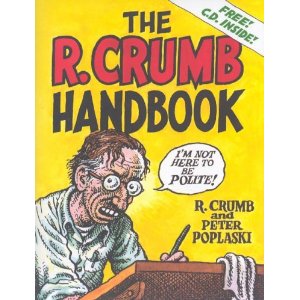
Back to Robert Crumb. Crumb’s work is a fine example of the power of catharsis. The artist owns himself as “weird,” highly anxious and neurotic, and possessing a vividly boisterous sexual imagination. These characteristics imbue his work with powerful feeling, and viewing Crumb’s images is often a disturbing experience.

But remember: “Art is dangerous,” Picasso claimed. “Art is never chaste. Where it is chaste, it is not art.”

The artist’s job is often to expose to the rest of us what we might not want to see or acknowledge as human. The best artists won’t flinch in their task of expressing what we would most like to deny about humanity. Those who are too afraid to rise to the artist’s challenge will demand censorship. They will clamour for the silencing of the artist’s imagination because, they claim, there is an inherent link between the imagination, and the acting out of imaginative visions. In other words, they take Picasso’s claim that art is dangerous far too literally.

Art is dangerous to the closed mind. Art can take us to emotional experiences and spiritual realisations that are not always easy and comfortable. But art will not turn us into paedophiles. The horrifying photographic images of sexually exploited and tormented children passed around a paedophile ring are not art.

While the artist may be expressing a personal vision, the fact that others can identify with and appreciate the artwork transforms the personal into the universal. Finding imaginative ways in which to safely express the darker and more dangerous emotions is the cathartic experience, and the cathartic experience is one that can enable a safe release of unconscious conflicts in the viewer as well as the artist. This is the power of art, and I include in the category of “art” all mediums of expression. Dark and dangerous emotions are human. They demand acknowledgement and safe expression. Art offers safe emotional release, both in its making and its appreciation.

This is the experience campaigners such as Johnson and Tankard-Reist wish to deny us. Trapped in a spiral of denial, they need to universalize their positions in order to feel validated. They need us all to agree with their critical judgements. They demand that we all adopt the paedophile’s gaze, and interpret the art that surrounds us, whatever its form, through that lens. They do not discriminate, their responses are formulaic and tiresome: if it is weird and sick to them, it has to be weird and sick to everyone, and the weird and sick must be silenced and denied.

What currently passes for “sexy” in our culture seems to me to be highly unsubtle, crude and largely uninteresting. Yet these campaigners have somehow managed to turn this one-dimensional representation of human sexuality into a cultural threat of nuclear proportions, especially for our children. Artists such as Crumb and Henson, of all people, have been caught up in this manufactured threat.

Campaigners themselves insist on reproducing many of the very images they decry, because, they claim, people must see them in order to be able to protest them. Outrage is their weapon of choice, and they must create enough of it to bring about their censorship goals.

Yet all they ever achieve is a band-aid solution. They do not address the underlying issues. They do not go deeply into the immorality of the increasing commodification of the human. They do not address a global economy that survives only as long as we all consume as much as is possible for as long as we are alive, making the construction of new markets an absolute necessity, even when that market is children and childhood. They do not address the complicity and collusion of mothers and caregivers in the sexualization and commodification of children and childhood. They do attack art, in all its forms, because that is easy.

The conflation of the “sexualization” of children and paedophilia with the perceived dangers of art needs to be challenged and resisted whenever it rears its hydra-head. The real role of anti child abuse campaigners is to work for educative and economic services that will help protect children, and that will offer accessible services for adults recovering from the frequently life long aftermath of childhood abuse.

There is no place for these campaigners as arbiters in the world of art. They have proved over and over again that their perspective is warped and one-dimensional, and that censorship is their only response to expressions of the human that they do not understand.

Dear Gail Dines: Don’t use that tone with me

23 May

Gail Dines

There are certain ways of speaking that I just can’t hear. For example, the anti pornography campaigner Gail Dines, currently doing the rounds of talk shows, Writers’ Festivals, and I believe appearing on Qanda tonight, speaks in a tone that I find so aggressive, so arrogant and so unrelentingly certain of her absolute rightness, that I can’t hear what she’s saying for the tone in which she’s saying it.

In an effort to be fair, I resorted to reading transcripts of her interviews with various media. Even reading what she says left me in a state of numbed exhaustion, and feeling as if I’d been held captive in a small cage stark naked and with Glenn Beck spitting on speed. This woman knows everything. She has no uncertainties. She takes no prisoners and brooks no argument. She is rude, she is bombastic, she has no respect for anyone who dares to disagree with her, and if you ask her where to find the evidence for her radical position on pornography she tells you to buy her book. If you offer another perspective she tells you you’re like a climate change denier, refusing to pull your head out of your arse and face up to the catastrophe that’s coming at us head on (so to speak) from Internet porn.

Dines damns porn of every variety and according to her it’s all “Gonzo”, that is hard core, brutal and degrading. And here we immediately come up against the dangers of accepting a single perspective on what is considered pornographic. There is no room in Dines’ world for dissent about this. She knows that men who watch pornography are, and I quote, “amoral life support systems for erect penises.”

Paedophiles, she further claims, adopt their unsavoury practices because they become “bored” with adult women,  and to alleviate this boredom watch pornography in which adult women dress like schoolgirls. According to convicted child rapists Dines interviewed in jail, six months after viewing porn they started to rape children. This notion was entirely abhorrent to them, Dines claims, prior to their exposure to Internet porn.

How the hell, I ask, do we account for the raping of children prior to the Internet then? But Dines’ theories on this are so ridiculous it doesn’t do to dignify them with serious questions. Her only sources appear to be convicted paedophiles, who are no doubt only too happy to avoid responsibility for their actions by claiming the Internet made them do it.

People who think they know everything get right up my nose. They’re a variety of particularly unpleasant and noisy bully. They might also know a great deal, but I don’t care.  I especially hate it when they wag their fingers at me, and so many of them do that. I would really like to smack them upside their heads, but I’m too civil. As I’m not prepared to raise my voice and compete, I resort to silence. This is exactly what they want. Even when they’ve temporarily exhausted their argument, by the time you open your mouth to respond they’ve recovered and you might get out one sentence before they drown you out again. I hope Tony Jones is on his toes tonight.

This is how bullies function – by silencing everyone else, and Dines is a masterful bully. Listening to her on a panel recorded by ABC Radio National at the Writers’ Festival last evening I was thoroughly impressed with the grace, respect, and restraint with which the other panelists dealt with her aggression and  barely disguised contempt for them.  Leslie Cannold was exceptional as moderator.

I would have flown out of my chair and slugged Gail Dines. I would have chucked a Glenn Milne at the Walkleys.Well, I probably wouldn’t have actually done that. I’m not good at physical violence except in my fantasies, and then only well after the event.

Dines is flogging some appalling garbage. Some important and interesting material might well be in there somewhere. But the combination of  garbage and the manner in which it is delivered is too much for me. Surely the issue of violent and degrading pornography  on the Internet, and what we can do as responsible adults to protect children from accessing this, is too important to be hijacked by this self – promoting flogger of pseudo sociological snake oil?

It’s all bad in Dinesland. If you visit, don’t stay there too long.

Bill Henson revisited

11 Apr

I’m putting this upfront again because a new discussion has opened up as a result of my piece in the Drum yesterday on Robert Crumb and Hetty Johnson.

Bill Henson by publik 16 via flickr

Bill Henson has a new photographic exhibition at the Tolarno Galleries in Melbourne.

The usual suspects, who art critic John McDonald calls the “despisers of the body” (Spectrum, April 9-10, 2011) have taken up cudgels against Henson’s images.

Interestingly, two prominent objectors, journalist and media researcher Nina Funnell, and Christian conservative Melinda Tankard Reist, both admit they haven’t seen the exhibition, however Reist says she has seen previous works and she knows what Henson is up to.

I haven’t seen this exhibition either, so am in no position to comment. What I do object to, however, is the conservative attitude that any depiction of adolescent nudity is pornographic, and the implication that everyone who views the images of adolescents is doing so from the perspective of a paedophile. That is, the danger they perceive is that all viewers will be sexually aroused in an inappropriate manner, and will want to sexually engage with the young people depicted in the photographs.

Therefore, the photographs  are “a catalyst for forbidden desires” to quote McDonald again, and  as such, should be censored.

Objectors such as Funnell and Reist have as their basic assumption that the young person’s body can only ever be viewed as a sexual object when portrayed in Henson’s photographs, even when they haven’t actually seen them.  They do not allow for any other understanding or interpretation, such as those Henson himself has advanced that are to do with his interest in capturing the liminality of adolescence, and revealing the young person on the threshold of immense change, in the throes of  all the uncertainties and ambiguities that accompany this state.

In the world view of the protestors, there is no room for any interpretation other than the sexual, and they urge all of us to view the images through the eyes and with the imagined desires of the paedophile.

There is something very alarming about their perspective, and something even more alarming about their urgent need to thrust that perspective on everyone else. Funnell tells us breathlessly that Henson’s images are known to be collected by paedophiles. Well, so are Target catalogues picturing little kids in their undies. Does this mean we must order and censor the world around us according to the base desires of the perverted? Does this mean that anything likely to appeal to the paedophile’s gaze must be obliterated from our cultural landscape?

Or are they arguing that any gaze directed towards photographs such as Henson’s is inherently paedophiliac, simply because the owner of the gaze directed it there in the first place?

This attitude turns everyone who visits the exhibition into a vicarious paedophile. It defines all visitors as abusers. It suggests that all those who view the images are compelled to adopt the perverted gaze to the exclusion of any possible other.

And this is what makes people like Funnell and Reist dangerous. They see a world comprised of sexual predation and abuse, and are unable to allow the legitimacy of any other vision. For this reason alone, they should not be trusted in the matter of Henson’s work, anymore than one would trust a paedophile’s limited and distorted perspective.

The conservative sexual crusader wants kilos of McFadden’s flesh

3 Mar

At Melinda Tankard Reist’s website today there’s a list of tweets from the hapless Brian McFadden, promising to donate money to rape crisis centres, and saying he’s sorry that his lyrics have been misunderstood.

He reiterates that he intended them as an intimate song for fiancee Delta Goodrem, and not as triggers for women who’ve been sexually assaulted while drunk.

I’m inclined to believe the bloke. I don’t think for  minute he wrote that song with the intention of glorifying or encouraging the rape of senselessly drunk women.

But his apologies and donations are not enough for Melinda Tankard Reist. Not a truckload of money, she writes, will make up for the damage he has done to women.

Even in a court of law, intention counts when you’re passing sentence. But not in the courts of Christian sexual conservatism.

MTR also holds Delta Goodrem partially responsible. Why didn’t Delta check the lyrics before allowing Brian to record them, she asks. Is Delta so inured to sexual violence that she didn’t even notice what Brian was on about?

This would be unfortunate, MTR implies, as Delta is a spokeswoman for Avon Voices, a group that raises awareness of violence against women.

I guess the sexual conservatives also hold women responsible for what the men they live with do.

Personally, I think that’s a pretty low and unnecessarily malicious swipe.

Then there’s a letter from a victim of sexual assault whilst she was drunk, telling how McFadden’s song has brought it all back and is severely distressing her.

Nina Funnell then writes a long reassuring response to the victim, and I hope the woman follows this up with counselling.

There are triggers that cause memories of sexual assault, and many other traumatic experiences to flood back into consciousness, often without any warning.  This is very hard for the survivor to deal with.

Triggers can be almost anything. I once worked with someone whose flashbacks were caused by pieces of green soap with a particular smell. Triggers are impossible to predict, extremely individual, and powerfully connected to the original trauma.

As much as the survivor would like never to have encounter these triggers, it is literally impossible to clear the world of them.

In some instances they may be so particular as to rarely emerge. Sometimes they aren’t known until the moment they strike. In many instances the triggers are all too common, and people have to deal with them on a daily basis.

It would be a foolish therapist indeed who recommended total avoidance of anything likely to act as a trigger. That would be condemning the survivor to a miserable life.

What we can do is teach cognitive behavioural techniques that can be used to manage the distressing flashbacks. This has the added advantage of empowering the survivor, both with the skills to handle bad times, and with the sense that she or he has some control over circumstances that can feel uncontrollable.

Given the proliferation of sexual topics in popular culture, it’s unrealistic to blame any artist for triggering a survivor’s flashbacks. As the triggers are so individual, its impossible to know what they might be.

As stupid as you might think McFadden’s song is, blaming him for activating post traumatic stress disorder is wrong. You might as well blame the manufacturer of green soap, and I believe McFadden, in his intentions, is as  undeserving of blame.

The world is not an easy place to live in when you’re suffering post traumatic stress disorder. Many people don’t understand it, and have a low tolerance of sufferers who can seem difficult, withdrawn, moody, angry, weepy, and generally not interested in much. It’s tough, having first to withstand the trauma, and then to spend your time dealing with the aftermath.

The most difficult part is working with people towards an acceptance of their experiences, in the sense that they cannot be changed and must be lived with, as must the aftermath. The survivor has to take responsibility for learning to do this. This is the cornerstone of recovery. It can take many years, and nobody can do it for them.

I don’t think it helps survivors to be encouraged to look for someone to blame in the world around them. Nobody deliberately triggers someone’s flashbacks, unless they are entirely sadistic and know the survivor well enough to be able to do it.

If a creator of any kind must first consider if something in their work will cause distress to someone somewhere, and then abandon it in case it does, then nothing will be created.

I think Tankard Reist’s crusade against McFadden, and now Goodrem as well, is bordering on the vicious. She wants what she wants, which is an abject confession that they’ve caused immeasurable distress to women everywhere by recording the song. If she doesn’t get that, she will hound them, of that I’m certain.

She is displaying all the signs of the outraged self-righteous good Christian woman bent on vengeance, not only on him but on the woman he loves, and that is not a pretty sight.

And let’s remember, he isn’t a rapist. He wrote a song.