Archive | Abbott, Tony. FORMER Australian Prime Minister RSS feed for this section

Gillard and Abbott and the art of verbal abuse

27 Mar

It ain't over till it's over. by Dr John Bullas via flickr


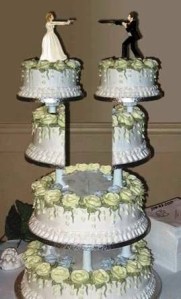
Watching Prime Minister Julia Gillard and Opposition Leader Tony Abbott go at it is a lot like witnessing a couple trapped in the death throes of a hideous relationship. They’ve got to the point where verbal abuse is not a side issue: it’s the issue. Whatever the specific conflict, it gets buried in a hail of verbal salvos designed to accuse, blame, denigrate, manipulate, control, and put down.

The couple sees each other only as adversaries. Their goal is to bring the other undone, and achieve domination. They struggle to achieve this in some or all of the following ways:

The verbal abuser refuses to responsibly communicate. She or he establishes what can be discussed, or withholds information, making genuine discussion impossible. She or he can prevent any possibility of resolving conflicts by employing this blocking tactic.

Diverting from the matter at hand into abuse that the other then feels obliged to defend or return is another impediment to discussion of real issues. Climate change, the economy, gay marriage – no matter what the topic on the table, it is always subsumed under the couple’s compulsion to do one another in.

Doing the other one in has become the raison d’être of the relationship. In a worst-case scenario, it has become the participants’ entire reason for getting up in the morning, and has taken on the qualities of a life-controlling addiction.

A verbal abuser will often accuse his or her partner of some wrongdoing or breach of the basic agreement of the relationship. This always distracts from the current issues, and puts the partner on the defensive.

Then there’s judging and criticizing. The verbal abuser may express their critical judgment of their partner. This is often disguised as being helpful and when in enacted in that form, can be particularly insidious as any retaliatory accusation of wrong-doing can be disingenuously denied, as in “Wot, me?”

Sometimes verbal abuse is disguised as jokes. While the comments may be presented as humor, they have poisoned barbs. They may be delivered inelegantly, or with great skill, but their intention is to diminish the partner, and throw her or him off balance.

Trivializing can also be a form of verbal abuse. Trivializing is the attempt to make what the partner has said or done, insignificant. This tactic can be quite hard to identify and name, although you know immediately and viscerally when it’s happening to you, and it makes you want to hit back, or crawl under a stone, depending on your particular learned method of self protection.

Undermining is another tactic. The abuser will attempt to slaughter an idea or suggestion with a few pointed comments, or derisive laughter.

Name-calling is also a classic tactic of the verbally abusive, as is reference to the hated other’s appearance, mannerisms, and past mistakes.

All these tactics can be employed in the privacy of home, or in public, often at dinner parties and barbeques, because couples in this state do best with an audience. An audience offers a golden opportunity to shame the other, and hopefully get somebody else on side. So delusional are couples by this stage, that they really do think what they say is taken seriously by those poor sods unwittingly subjected to their folie à deux. They have no idea that all anybody wants is for them to leave and never come back.

It can be disconcerting to be anywhere near couples dedicated to destroying one another. It can remind you uncomfortably of your own parents, or adults you knew as a child who were set on this path. It isn’t unusual, unfortunately, and having to witness it in adult life can provoke flashbacks.

In a verbally abusive relationship, there is no specific conflict. The issue is the abuse, and this issue can never be resolved. There is no possibility of closure.

This does not bode well for the Australian people.

Abbott says Gillard “too precious” about “bitch” word

25 Mar

by Stephen Rowler via flickr


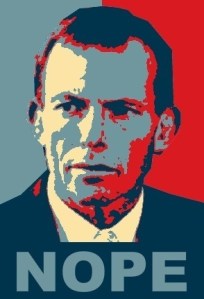
Not content with standing under a banner proclaiming that Julia Gillard is “Bob Brown’s Bitch,” Opposition Leader Tony Abbot (aka the Nope Dope ®!!) said on the 7.30 Report last night that Prime Minister Julia Gillard is getting a bit “too precious” about the signs.

I’m not easily offended – I have to stop myself from scrawling the F word on signs in public parks in Nevada that say “No profanities. Have a nice day.” But I don’t like the signs I saw at yesterday’s Tea Party moment in front of Parliament House.

As others have pointed out, we’ve seen more violent rallies in the past. Then there was that spectacular papier-mâché John Howard as a little dog with its nose up George Bush’s fundament.

I thought that was pretty funny.

But calling a female PM some bloke’s bitch has really got up my nose, and I don’t even care that much for the PM. It’s nothing to do with the dignity of office either, that disappeared as a consideration a long time ago.

The bitch sign is actually no more offensive than portraying Howard as an arse licker, except that’s not a gender specific insult, whereas bitch most certainly is.

If you call a bloke a c**t  that’s a bigger insult than calling him a prick. Some feminists regularly try to insult me by telling me I’ve got a prick in my head, and I should get back in my “man fondling box”, and strangely, I’m not offended by either of those observations. If a woman called me a “c**t I wouldn’t bat an eyelash, but if a man used the same expletive in anger, I’d be a little troubled and keep my distance.

Then there’s those wonderful subversives who reclaim bad words and turn them right back at you. I love to see forbidden language exposed for what it is – words with cultural baggage.

It all comes down to intent – what forces fuel the use of the expletives? Loathing, rage, fear? Affection, humour, joshing? It’s the emotions that give language life  and meaning.

The difference for me between the Gillard bitch placards, and Howard as a bad mannered dog is humour. There was nothing humorous about the bitch placards. They were a little bit scary because of that. Their rage-filled message was unmediated by invitations to laughter.

Though there are groups in which the word is entirely lacking in offense who would have found it funny.

I didn’t like it, but I have to concede that’s an entirely personal preference and I can’t make a moral judgement on whether or not Gillard is “too precious” and Abbott is “sexist” in positioning himself in a manner that endorses the sentiments of the sign. I suspect he wanted to insult the PM, he usually does. And she usually wants to insult him.

We live in a culture of insult, daily faced with the onerous task of decoding the language used by us and around us, making instant judgements abut whether or not the words were intended to offend, and whether or not we’ll agree to be offended.

But what I do intensely dislike, no matter where it comes from, is the distorted, screaming fury (or fake fury that’s even worse) that sets the tone in Parliament and increasingly outside the chamber. It doesn’t matter what they say when they’ve turned themselves into the raging furies, frothing and spitting from faces reddened with outrage, real or fake.

I can’t hear them anymore.
Related Articles

The brutalizing of Australia

24 Mar

Anger Bot by Dave Sliozis


When human beings whip themselves up into states of apoplectic rage they tend to all look the same. Thus the images of Barnaby Joyce frothing at the mouth at the “Look, we’re a Tea Party!” demonstration yesterday, reminded me immediately of Muammar Gaddafi. While retaining their individual features if somewhat contorted, the energy of  their lunacy is foregrounded, and it doesn’t really matter anymore who they are.

Self-interested fury is a continuum with Joyce at the milder end and Gaddafi at the murderous extreme. But it is a continuum.

Then there’s the placards, backgrounding Opposition Leader Tony Abbott in TV footage: “Ditch the Bitch, Ditch the Witch, Bob Brown‘s Bitch.” I’m no fan of Ms Gillard, but whoa!  We’re entering Sarah Palin territory here.(I’ve got an article in On Line opinion this morning on the merging of the religious right and state politics in NSW and the USA, that yesterday’s rally eerily supports.)

Then there’s the articles in the Drum over the last couple of days, by Gerard Oosterman, Bruce Haigh and Greg Barnes, all protesting the treatment of detainees at Christmas Island. The comments on the articles are something to behold. The rage against the authors and refugees is palpable, and the misinformation and ignorance displayed is a tribute to the propaganda talents of politicians and shock jocks. These homegrown talents are about to rival Sarah Palin’s Get them in the Crosshairs campaign against Democrats who voted for healthcare reform.

Violence, incitement to violence, brutalizing and hyperbolic language, verbal abuse, xenophobic and sociopathic disregard for the safety of human beings from other parts of the world, are all on the increase in Australia. They are aroused and nurtured by some self-interested politicians, and self-interested rabid media commentators.

It’s not that edifying watching Gillard and Abbott go at it in Question Time either.

Brutalized and brutalizing methods of communicating displeasure are becoming the default position. After yesterday, nobody can deny that. In other spheres public and private, these abusive uncontrolled verbal attacks are known as domestic violence, and intimidatory bullying.

Pointless trying to reduce these violences in intimate settings. Pointless trying to reduce bullying in schools and the workplace. As long as this type of brutalized attack is encouraged by political leaders and ranting media types, as long as it is accepted as our daily discourse, we’re fighting a losing battle in the schools and the home because its in the air that we breathe, and everyone has permission to indulge their most base emotions.

People’s revolt? No, revolting people.

KanYe West, Melinda Tankard Reist, and the control of the representation of desire.

26 Feb

by Lucero Design via flickr

At Melinda Tankard Reist’s website underwear manufacturer Victoria’s Secret is under attack, two hapless tools from the Gold Coast trying to sell real estate using a woman in her undies are copping it, and oh no! Not that, still! Yes, the KanYe West Monster video clip, months after we all got into that epic tussle at the Drum, is still absorbing the Tank’s attention.

Last week MTR was described by Stephen Harrington at the Punch as “Australia’s Helen Lovejoy,” for her complaints about this video clip, as well as the “what about the children” rhetoric she invokes as an argument against just about everything.

(For those not familiar with the Simpsons, Helen Lovejoy is the ultra conservative wife of the local Christian minister whose catchcry is “But what about the children!”)

Melinda pours retributory scorn on Harrington here. The West video is, she claims, a “significant watershed in the de-humanisation of women.”

That’s a bit hyperbolic, in my opinion, given the on going, grave, and global abuses of women’s human rights that certainly do de-humanise those groups subjected to them.

The psychotherapists’ interpretations

At New Matilda, psychotherapist Zoe Krupke interprets the video clip from her professional perspective, and explains that violence such as is portrayed therein can be a consequence of “denial of personal weakness and fragility,” resulting in projection of these qualities onto others, in this case the strung-up, zombiefied and helpless women.

In other words, controlling others through violence allows the perpetrator to bury feelings of inadequacy and vulnerability, and replace them with an illusion of power.

All of which is true enough, but if you read the lyrics it’s clear that they are about nothing but West’s feelings of personal weakness and fragility; rage at perceived exploitation by the music industry, and women, rage at his admitted inability to behave in any way other than monstrous; identification with other monster figures, and a pathetic plea for someone to love him.

by Maximillian Dinslage via flickr

None of which are expressed in ways that are likely to get him any of the things he seeks, but rather are an explosion of fury, frustration, and self-mockery.

I’m a monster
no good blood-sucker
everybody know I’m a
muthaf*cking monster
None of you n*ggas know the carnage I’ve seen
I still hear fiends scream in my dream…

And so on. The thoughts and feelings of a disturbed being, a rapper having a laugh, or both, depending on your perspective.

Feminists aren’t the only ones with opinions
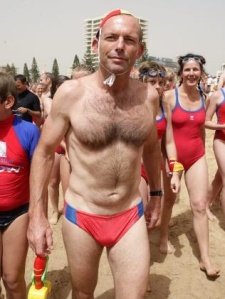
You've Been Dickrolled. by David Jackmanson via flickr


What is certain (I’m sorry, at this point I can’t help myself, the only certainty is the certainty of uncertainty, thank you so much for the philosophical insight, Tony the Tool, another of the known unknown unknowns littering the political landscape, and pictured here damn near naked) is that while a feminist analysis of the work is worthwhile, it’s far from being the only possible analysis. The video and lyrics are complex, with racial references as well as those mentioned above, and to attempt to have it censored because it “dehumanises” women is, in my opinion, the kind of sadly unimaginative reaction we’ve come to expect from some media feminists these days.

What the video clip certainly is: the concretisation of one rapper’s subjective vision of his world. If it weren’t as popular as it is, there would be no need for further discussion. But it is tremendously popular, (listed in Rolling Stone’s best 30 albums of 2010) and has received critical acclaim from that magazine’s  informed commentators

These accolades suggest West’s Beautiful Dark Twisted Fantasies strike a chord, so to speak with millions of others. It may not be the kind of chord MTR wants struck, whatever that is, and I can’t figure that out. What do these women want? Nevertheless, it’s popularity alone makes it culturally significant, and worthy of examination.

Not that I’m suggesting popularity is the only criterium for cultural significance because clearly it isn’t. The bizarre and complex vision represented in this piece lifts it out of the mundane.

It isn’t everybody’s vision of the world. Then again, neither is a man nailed to a cross, blood seeping out of his wounds and a hole pierced in his side everybody’s vision of a healthy religious experience. John the Baptist’s bloody head on a silver platter doesn’t cut it as inspiring religious commentary for all of us either.

I have a strong visceral response against most moves to censor. No matter what you think of the aesthetic quality or otherwise of the KanYe West video, it is the expression of an artist’s vision.  Are we to live in a world bereft of all dark and difficult imagery? Are we to censor all representations of emotions and passions because they make some people uncomfortable?
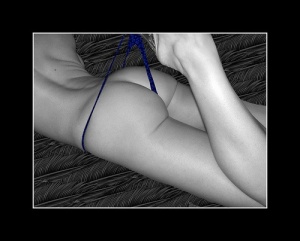
Cindy and that sexy thong. by Dave Lee via flickr


When women choose to earn their living from their bodies

Women who model for Victoria’s Secret do so of their own free will, and are well paid for their work. Likewise the women who appeared in the West clip as simulated corpses and zombies.

The luscious woman in the Gold Coast real estate agents’ ad was also, presumably, paid for her work. Many women with lovely bodies enjoy using them as a source of income. Many other women and men enjoy looking at those bodies. Is this really “objectifying” women? Or is it merely admiring, and maybe sometimes envying their beauty?

I’m not likely to meet any of them. They are likely to remain only one-dimensional images to me. So why do I have any responsibility at all to see them as anything else? Why is it wrong for me to take pleasure their beauty? How am I offending them?

If I were to treat the women and men around me as one dimensional, then I would be objectifying and insulting them. But like most people, I know the difference between an image and a fully fleshed human being.

There are some who try to make the people in their lives more closely resemble a one-dimensional image they’ve seen on screen or in a magazine. Their problems, and the problems of their partners, won’t be solved by banning the images. I’d suggest their difficulties are deep, and if no images are available they’ll manifest in some other equally unfortunate way.

The desire to be desired

The desire to be desired is a normal human need. Practically everyone at some time wants, indeed needs, to bathe in the glow of somebody’s desiring gaze. But desire and its expression and representation are intensely personal matters. Lacy panties or cottontails, stilettos or bare feet, cleavage or buttoned up modesty – there’s a place for everything, but not in the world of Melinda Tankard Reist. In that world there’s only one possibility for the expression and representation of desire, and that’s hers.

Baffled by her negativity, I’m as yet entirely unable to ascertain what her vision actually consists of. Though she unrelentingly castigates us for our unhealthily fetishistic and voyeuristic gaze, I’ve never once heard MTR give an example of how she thinks female sexuality ought to be represented and expressed.

We should pretend we aren’t sexual beings, and deny that we love to look at each other, even though much of the time society requires us to do that with a furtive gaze?

We should pretend that erotic zones are not of intense interest to us, starting when we emerge from the latency period laughing ourselves silly at jokes about underpants?

If every publicly revealed body is an exploited and objectified body, are we all to cover up to protect ourselves from a gaze that MTR would have us believe can only be interpreted as exploitative and objectifying?

The battle for the control of the representation of desire

by Breezer, via flickr


MTR is fighting a two fronted battle for  the right to determine not only what we should look at, but how we should look at it. She wants to be inside our heads, telling us how to see things. Where she see exploitation, so must we.

She wants to control the representation and expression of human desire. She wants to control the interpretation of the gaze.

MTR seeks to superimpose her moral vision upon everyone else, a vision that cannot allow the possibility of a benign desiring gaze, a vision that insists the desiring gaze is always dangerous, unless it is confined to encounters between to consenting adults (preferably married) in the privacy of their own homes. Once desire is provoked outside of the marriage bed, her thinking goes, it must inevitably result in damage of some kind. I have long suspected this to be at the heart of MTR’s crusades. Now she’s proved it, by taking on Victoria’s Secret.

In her vision, the free flow of desire in the world, far from being a driving creative force, is miserably reduced to a threat to women.

This is why MTR does not offer her vision of an acceptable public representation of female sexuality. There isn’t one in her moral framework.

In this, she’s a bit like the followers of Sharia law.

But feminists fought for freedom

MTR and her followers justify their desire to impose their desire, by dressing their arguments up as feminist rhetoric, and indeed there are some conjunctions.

But feminists fought for freedom. If a woman chooses to use her body to earn her living then it’s nobody’s business but hers. Melinda Tankard Reist makes an unfortunate conflation between free choice and exploitation. That exploitation and abuse of women exists is not at issue. However, it does nobody any good to confuse the two, and in the process attempt to shame women who are making a free choice, and attempt to deprive them of that right. That’s an anti feminist move, in my book.

The argument that we’re brainwashed to think we must do our best to look like underwear models or we’re inadequate, holds some water. There’s a great deal to critique in fashion magazines that manipulate insecurities in order to get us to go out and buy something to address those perceived failings.

On the other hand, one of MTR’s fellow campaigners, journalist and researcher Nina Funnell, whose tirade against the KanYe West video can be read here recently took part in a Cosmopolitan (October 2010) competition to find the year’s most influential woman. All the competitors were young, and had the Cosmo look, including killer heels, and sexy masks. There were obviously initial selection criteria that had everything to do with the contestant’s physical appearance. Only after those requirements were met, were the women’s career and personal achievements considered.

There were no older women in the contest, baffling, given that older women are often excellent mentors and influential figures.

In my book, an outrageous and insidious abuse and objectification of women right on our doorstep, sending the message that how you look matters much more than what you do and are, from a magazine read by thousands of young Australian women. Yet not a  murmur was raised in the MTR camp.

To wrap it up…

The Gold Coast tools are pretty funny, I thought when I watched their video clip on Melinda’s website. Their ad is so over the top as to be bordering on a spoof of using sex to sell. It wouldn’t make me want to buy their penthouse, so in that sense it’s an advertising failure.
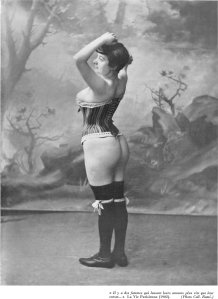
Corset, Paris 1902. Unknown via Wikimedia

Corset, Paris 1902. Unknown, via Wikimedia

As for Victoria’s Secret well, good luck with that one. While the sight of stunning women in lacy thongs and balconette bras might not be everyone’s idea of beautiful or sexy, it is currently a dominant cultural expression of those qualities. Once the sight of an ankle did it for us, and who can forget the practically (in my opinion) only good bit in Jane Campion’s The Piano, when Harvey Keitel caressed Holly Hunter’s leg through a hole in her stocking? Aaaargh, the recollection can make me shiver with delight even now.

The propaganda and collusion at the heart of “Stop the boats.”

3 Jan

January 8 2011: No Place for Sheep lodged a complaint with the Australian Press Council, claiming that Sheehan’s article breaches principles 1,2 3 and 6 of the Statement of Principles.

No Place for Sheep earlier sent the following letter to the Editor at the Sydney Morning Herald:

In the last paragraph of his article of January 4th, Mr Sheehan refers to “illegal boat arrivals” and arrivals “without proper papers.”

Will Mr Sheehan kindly explain his complete disregard for the Australian law that permits those seeking asylum to arrive in any manner, and without documentation?

It used to be that journalists were required to get their facts right.
This would seem to be an example of either woeful ignorance on the part of Mr Sheehan, or deliberate obfuscation in order to promote political propaganda.
Would the SMH please explain Sheehan’s campaign of disinformation?
This was not published.


In the Brisbane Courier Mail on December 20 2010, Opposition leader Tony Abbott called for: an “urgent” return to temporary protection visas, the reopening of the Nauru detention centre and turning the boats around.

“We stopped the boats before, we can stop the boats again if we put the right policies in place,” he said.

It’s not clear just where Abbott intends to “stop the boats” and “turn them around.” Presumably before they enter Australian waters. Nobody has yet requested that the Opposition Leader clarify his proposals.

Will he use the navy, and will they fire on vessels that disregard instructions, risking death and injury to asylum seekers and their children? In international waters?

Will he kill and maim them rather than let them apply for asylum?

Why is nobody in the mainstream media asking him these questions?

Instead, on January 4 2011, Sydney Morning Herald senior journalist Paul Sheehan yet again resorts to using the completely wrong term “illegal boat arrivals” and yet again makes the completely irrelevant characterisation of boat arrivals as people “without proper papers.”

The Coalition mantra of “Stop the Boats” disregards Australia’s international obligations, incurred as a consequence of signing the UNHCR 1951 Refugee Convention. Asylum seekers who arrive by boat, even without papers, are entitled to apply for refugee status in Australia, according to both our domestic and international law.

For the last few years, politicians from both major parties have sought to find ways around our obligations to those seeking asylum, rather than ways to responsibly fulfill our undertakings.

One of the major tactics used is the propagandist description of boat arrivals as “illegal.” The mainstream media in general support and promote this propaganda. The justification is that boat arrivals have breached our sovereignty, and our right to protect our borders.

What’s not acknowledged is our domestic and international legal obligation to accept asylum seekers no matter how they arrive. Those seeking asylum are not illegal immigrants breaching border security. Their pursuit of asylum legally removes them from that category.

In July 2010 both Adrienne Millbank of the Age and Greg Sheridan of the Australian, launched calls in their respective newspapers for Australia to withdraw from the Refugee Convention, claiming that 1951 Convention is no longer appropriate for world conditions. These calls continue in the blogosphere, and in the mainstream press.

In fact, Australia revisited our agreement to the original Convention and subsequent updates and additions as recently as 2008, so the Convention has not exactly languished unexamined for almost sixty years.

There may well be reasons why the Convention needs re-assessment. However, until such time as it is revisited, the facts remain that Australia did not add a rider to the Convention limiting the manner in which asylum seekers could arrive in this country. Australia did not specify that those seeking asylum must have a certain amount of money, or no money. Australia did not say we would accept asylum seekers only from specific countries. Australia did not add a clause specifying only people in queues.

At the heart of “Stop the Boats” is a profound dishonesty and immorality. Those promoting this position are making a mockery of UN Conventions, and domestic law.

They are advocating the behaviours and attitudes of a rogue state, while in an act of two-faced political bastardry, continuing to apparently support the principles of the Convention, by virtue of making no move to withdraw from it or change it.

If we don’t intend to abide by our obligations we should withdraw from the Convention, and change domestic law. As it is, we are inviting asylum seekers to seek sanctuary in Australia, then incarcerating, criminalizing or refusing them entry when they accept our invitation.

We are subjecting them to indefinite mandatory detention when they have done nothing more than recognize Australia as a democratic country that has signed the Refugee Convention, and therefore as a safe place for them to seek asylum.

This is a despicable act of duplicity, of which our nation should be thoroughly ashamed.

On December 6 2010, Amnesty International launched a campaign they titled Stopping the spin on “the boats.” Amnesty’s research found that hostility towards asylum seekers originates not in racism, but is primarily caused by myths and misinformation, for example their portrayal by politicians and some mainstream commentators as “illegals without papers.” This framing implies to the community that boat arrivals are committing a criminal act by attempting to force their way into the country ahead of a mythical queue comprised of those who do not arrive by boat. This offends a strong community sense of the fair go, and provokes antipathy and outrage, and is entirely inaccurate.

It’s a brilliant example of the power of propaganda when applied by both politicians and colluding media.

In November last year, a High Court ruling put all asylum seekers on an equal footing under Australian law, regardless of their mode of travel. (Sydney Morning Herald November 11 2010. Court casts doubt over legality of processing off-shore asylum seekers.) In spite of this re-affirmation of our domestic law by the High Court, Abbott and many media commentators still continue to use the term “illegals.”

Assertions that asylum seekers want to come here because they know they will receive welfare payments etc makes little psychological sense. 

People with the drive, ingenuity and courage to undertake journeys such as theirs, are not usually people who easily accept welfare as a life-style.

However, when people with these strengths are incarcerated for indefinite periods and/or issued with temporary protection visas (TPVs) whose long term uncertainty has alarming effects on their well being, they are damaged in ways they have not been damaged in the countries they fled, and may well be much reduced in their extraordinary strengths, and their will to survive and prosper. Their spirits can be broken.

Australian governments manage to achieve what the Taliban could not.

As a nation, we cannot continue to behave in this duplicitous manner, giving lie to the international commitments we voluntarily undertake, as well as to our own domestic laws.

Politicians must be forced to acknowledge our international responsibilities, along with our domestic laws and concerns. Politicians must not be allowed to toss our international obligations, and our corresponding domestic laws out the window, in order to win an election.

Whenever one of them starts up about stopping the boats, somebody needs to ask, what about the Refugee Convention we’ve signed? What about our own laws?

When will the mainstream media abandon its role of political apologist, and ask these questions?

Bush, Blair and Howard ignored the UN and its weapons inspectors, and took us to war in Iraq. It isn’t difficult to ignore the UN, very little if anything happens as a consequence.

But is that the point? Isn’t the point rather about being a country that cares about the morality and ethics of its way of being in the world? A country with the common decency to abide by its commitments?

Does our word as a country mean so piteously little that we are under no compunction to abide by it?

Are we happy to be a country whose signature on an international UN Convention is worth less than the paper it’s written on?

The questions need to be asked of all politicians engaging in the refugee debate. We should be demanding straight answers, and refusing to accept this ongoing campaign of disinformation.

Asylum seekers are not the problem, but they are an easy target.  The real problem is politicians with no moral compass, and not much interest in anything more than winning the next election.

The problem is politicians who have decided to exploit asylum seekers, even to their deaths, for their own political gain.

The problem is a tame media, who lack the courage to confront political inaccuracies and lies.

We have a responsibility to instigate a reassessment of the Convention if it is no longer to our liking. Until then, we are obliged to fulfill our commitments. Just as with any domestic law, we cannot decide to ignore it because it no longer seems appropriate.