Tag Archives: Refugee

Foreign ownership or boat arrivals – which is most likely to invade and conquer?

4 Jul

On the Watermelon Blog on Saturday, David Horton notes that when a recent Greens’ survey revealed that 83% of mining companies in Australian are owned overseas there was, in his words, “a swift and predictable response from one of the egregious right wing think tanks whose role is to protect corporations from criticism.” Foreign investment is good for Australia, they brayed, and we have plenty of land to sell. They then called up the spectre of xenophobia, more commonly hauled out in “don’t stop till blood is spilt and maybe not even then” arguments over asylum seekers arriving by boat.

Horton raises the crucial matter of where we should draw the line at foreign ownership, and what assets are we willing to relinquish to foreign control. “What happens,” he asks, “when push comes to shove in a financial crisis or a raw material crisis?” We would be naïve indeed to imagine that foreign corporations give a toss about our welfare and wellbeing. Heck, even our own corporations aren’t overly concerned about any of that soft stuff.

‘So how many asylum seekers do YOU think we should allow?” is the question frequently and usually aggressively hurled at supporters by the anti boat people faction, who express deep fears of being overtaken, of losing our culture and Australian way of life, and of losing control of our boundaries and sovereignty if we open the gates and let the refugees in.

The arguments used by corporate interests against those who oppose unbridled foreign ownership, and those used by the anti boat arrival faction against those who support their re-settlement, are ironically similar. In the absence of reliably specific demographic evidence, I’ll make an assumptive  leap that there may well be those amongst the anti boat arrival group who would regard expanding foreign ownership as good for our country, while simultaneously railing about the catastrophic dangers posed to us by a few thousand boat arrivals. I have no proof of this – it’s a good subject for a poll.

In essence, it’s the same argument employed for very different purposes and by very different interests.

Wealthy foreigners in suits arriving first class by plane and bearing papers won’t want to live next door, and they won’t be a drain on the welfare system. That they might well be in a process of asset stripping the country is such an intangible that it can’t be seriously be raised to the level of a threat. As is frequently the case, the danger lies not in the obvious, and one doesn’t see it coming.

Those who struggle to bring the hidden danger into collective awareness are usually dismissed as a bunch of Cassandras, after the mythical woman blessed with foresight then doomed by Appollo  to be mocked and disbelieved when she revealed her predictions.

The conflation of the topics of boat arrivals and foreign ownership usefully highlights where the danger to this country’s future really lies. It’s not in the few thousand foreign asylum seekers fetching up in boats on our shores. It’s a pretty safe bet that none of them are going to own the rights to our water in the future. We probably don’t need to worry that any of them are going to buy up our prime farming land for mining, leaving us more dependent on imported food supplies when we can’t produce our own. It’s not very likely that any re-settled boat person is going to end up owning our energy companies, our transport companies, our stock exchange, or any of the other assets Horton lists as at possible risk.

In spite of the Greens raising the issue of the dangers of foreign ownership for our future and ultimately our sovereignty there will not be, I predict, anything like the furore over foreign investment that there is over boat arrivals.

Other than what spews forth from the corporations who stand to benefit enormously, of course, and we can likely prepare ourselves for billion dollar advertising campaigns as soon as any serious rumbling starts up.

It’s undoubtedly in the interests of corporations and governments that xenophobic fears (apparently endemic in some human communities) of being invaded and conquered are channeled away from the issue of foreign ownership, and into something as petty as a couple of thousand boat arrivals.

“Illegal immigrants” Press Council ruling: Why is Paul Sheehan is allowed to say it while Greg Sheridan is not?

3 Jul

Imagine my astonishment when I came across this post describing how in June 2011 the Australian Press Council upheld complaints against the Australian‘s Greg Sheridan alleging that he had wrongly described boat arrivals as “illegal immigrants” not once, but three times.

On January 7 2011 I put the following post up on  No Place for Sheep:

Today we sent a complaint to the Australian Press Council claiming that the article by Paul SheehanSydney Morning Herald January 3 2011, titled Cast adrift from reality, the slick spruikers of ‘our’ shame, breaches Principles 1,2,3 and 6 of the Council’s Statement of Principles.

These Principles address misrepresentation of groups and individuals; suppression of available facts; deliberate misinformation through omission or commission, and fairness and balance.

We claim that these principles were breached by the use of the terms “illegal” and “without proper papers” when referring to asylum seekers arriving by boat.

This is the post I put up on January 13 2011, announcing the APC’s dismissal of my complaint against Sheehan:


I received the following email from the Australian Press Council today:

Dear Dr Wilson,

The Council has received a complaint from you, in which you raise a concern with terminology used by a bylined opinion columnist in The Sydney Morning Herald.

For your information, a copy of the Council’s principles and practices can be found on the Council’s website http://www.presscouncil.org.au.Therein are set out the standards of journalistic ethics that the Council upholds and the procedures it uses to deal with complaints alleging breaches of those standards.

Attached, for your information, is a copy of the Council’s Guideline No 288 on the issue of asylum seekers.

The Council believes that columns such as Sheehan’s should be given a reasonably wide licence to express a point of view. They are the clear expression of a viewpoint of the individual writing them and are commentary upon the news.

The terminology you complain of talks of  “illegal boats”. Since the boats can be seized and their crew tried before the courts, there is good reason to suggest that the arrival of the boats is in fact “illegal”.

Have you submitted a letter to the Sydney Morning Herald for publication in response to the published column? The Council has consistently said that the best response to a disagreement with such material is the submission of a contrary view for publication. I therefore urge you to take the matter up direct with the newspaper in the first instance, if you have not already. I will write to the newspaper urging it give due consideration to any submitted letter as a way of dealing with your concern.

I will bring your concern to the attention of the newspaper but believe that the best settlement of your concern, in this case, is through the letters to the editor column.

Yours sincerely,

Deb Kirkman, Acting Executive Secretary, Australian Press Council

To which I replied as follows:

Dear Ms Kirkman,
I have indeed twice written to the SMH letters on this matter, as I stated on my complaint form, and neither letter has been acknowledged.

To reiterate, the terminology I complained of is as follows:

1. Illegal boat arrivals. If Sheehan was referring only to the arrival of SIEVs, or to the crew of SIEVs, then these references makes no sense at all in the context of his paragraph.

It is rather disingenuous to suggest that Sheehan was referring to the vessels and their crew, given that the crews are arrested and the vessels are impounded, therefore the problem is addressed immediately at the source and offers no basis for Sheehan’s on-going angst.

Sheehan then goes on to comment on the “relatively small number of people who arrive by boat,” thus clearly confirming that he is indeed referring to the passengers who are seeking asylum, and not to the SIEVs and their crew.

2. Those who arrive by illegal means,and those who arrive without proper papers.

The UN Refugee Convention, to which Australia is signatory, recognises that refugees have a lawful right to enter a country for the purposes of seeking asylum. The Convention stipulates that what would usually be considered an illegal action, eg entering a country without a visa, should not be treated as illegal if a person is seeking asylum.Australian law, in line with the Convention, also permits unauthorised entry for the purposes of seeking asylum.

Therefore, under Australian law, and under the terms of the Convention we have signed, a person who is seeking asylum has the legal right to enter this country without papers, and by any method of transport, even SIEVs, and has the legal right to remain in this country, until his or her refugee status is established through the proper legal processes, to which, as asylum seekers, they are legally entitled.

Their mode of transport does not render asylum seekers “illegal,” as suggested by Sheehan.

This was re-affirmed by the High Court of Australia in November 2010.

Again, my complaints  relate to numbers 1, 2, 3, and 6 of your Statement of Principles.

Sheehan has misrepresented the facts of this situation – asylum seekers are not illegal, even if they enter the country on SIEVs.

Sheehan has suppressed facts that are available to him, i.e. the facts that under domestic law and by international agreement, Australia does not consider those requesting asylum to be illegal in any way, no matter how they arrived in this country, including if they arrived “without proper papers.”

The illegality of their mode of transport is a separate issue, as the law recognises, and is dealt with as a separate issue. Asylum seekers are not held responsible for the legality or otherwise of their mode of transport.

Sheehan has misinformed and misled the SMH readership by conflating the two, and in so doing, ignores Australian law and the UNHCRConvention.

Since when has it been acceptable that even an opinion writer has the license to misinform their readers about Australian law, and the legal status of a particular group of people?

Sheehan has not presented his readers with the facts, and his opinions are not based on the facts. Sheehan has acted irresponsibly in putting forward an uninformed point of view as his opinion. The facts are readily available to him. Surely even opinion pieces are supposed to have some basis in reality?

I have requested that the SMH correct Sheehan’s inaccuracies and conflations. I have received no response

Yours sincerely,

Jennifer Wilson.

Australian Press Council Guideline 288 in regard to Asylum seekers.

Guideline No. 288 Describing “asylum seekers”

Issued: October 30, 2009

For immediate release

The Australian Press Council has updated its guideline on “asylum seekers”, replacing General Press Release 262 with the attached guide. The Council issues guidelines from time to time. These are, in essence, amplifications on particular issues arising from the Council’s Statement of Principles. The guidelines apply the Principles to the practice of reporting and are intended to guide the press on how it should report certain matters. These guidelines are not intended to be prescriptive instructions to the press but act as a series of advisories on the application of the Principles that the Council seeks the co-operation of editors in maintaining. A list of the extant guidelines (and links to them) can be found on the Council’s website athttp://www.presscouncil.org.au/pcsite/activities/gprguide.html.

The Council has from time to time received complaints about the terminology used to describe people who arrive in Australia through means other than regulated immigration and visa transit processes. They are often referred to by the press and others as “illegal immigrants”, “illegal boatpeople” and so on –  or simply as  “illegals”. The descriptor “illegal(s)” is very often inaccurate and typically connotes criminality.

The press has, by and large, abided by the Council’s 2004 Guideline about the use of inaccurate and derogatory terminology to describe such people.

Having considered the matter further, the Council believes that the term “asylum seeker” is a widely understood descriptor, generally a fair and a sufficiently accurate one, and one which avoids the kinds of difficulties outlined above. The Council recommends its use as the default terminology in relevant headlines and reports both by the press and others.

The Australian Press Council comprises representatives of the public and of the industry and acts to preserve the freedom, and the responsibility, of the Australian press. It was founded in July 1976 and has been in continuous operation for over 30 years.

End of Guideline 288

What are we to make of this disparity in the Press Council’s judgement?

 Is the APC favouring the Sydney Morning Herald, while holding the Australian to a different set of standards? Is it more personal than that, ie can Sheehan do what Sheridan cannot and if so, why?


Raquel is a bogan? So what’s that make the rest of us?

23 Jun

Go back to where you came from: Part Two

I don’t know if it was the confusion of the raid, but it looked to me last night as if two of the Australian men taken along with Malaysian immigration officials for the ride, actually joined in ferreting out those miserable refugees from the rat’s nests they called home, and in sending them into a legal system where they’ll be subject to a variety of possible punishments including caning. I don’t want to believe that, but it’s what it looked like.

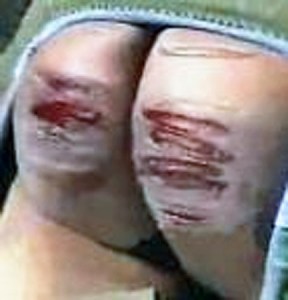
Caught up in the excitement of the chase, perhaps. Can happen to anybody.

Young Raquel, who I hear has been subjected to torrents of Twitter abuse on account of being considered a “bogan,” positively reveled in the rounding up of women, children and men, declaring that’s it’s what we should be doing in Australia because these people have done the wrong thing. (Apparently racism is a bogan characteristic.I thought it was much more widespread than that.)

Raquel was later questioned about herself by a UN official at a refugee camp in Kenya where she’ll spend the next few days of her life trying not to go to the toilet. In response to his questions Raquel replied that she does nothing, she doesn’t work, and she stays at home with the dogs. The UN official looked bemused. Life is odd in Western democracies.

I don’t really approve of the Twitter crowd’s attack on Raquel. I’m a subscriber to the opinion that the bogan is a construct created by the middle classes to give themselves something to feel superior to. This indicates terrific insecurity on the part of the middle class, if they need to trash somebody else in order to feel like worthwhile human beings.

It strikes me as ironic that a participant in a program that demonstrates extraordinarily well how comfortable Australians construct a refugee other in order to feel morally superior, is herself subjected to this othering by her countrymen and women. It confirms my suspicion that one of the most common ways human beings reassure ourselves about our worth is to measure it against someone we think is in some way less than us. Boganing is but one example of this, as is the moral condemnation of asylum seekers.

Then there’s those of us who morally condemn those who morally condemn asylum seekers and bogans.

In truth, there’s a bogan in all of us.

As for the program – I find myself wondering what the refugees think of having six privileged white people plus camera crew and gear plonked down in their midst, in the interests of producing a spectacle for everybody back home. The middle class hungers for spectacle, and the miseries of others temporarily satiate that craving. Is this morally repugnant exploitation? Whose interests does this program serve? What difference will it make to those refugees?

Or in the end, is it all about us?

Go back to where you came from

22 Jun

fuck-off-we-are-full


Go back to where you came from, aired on SBS last night,  is a three part series with a unique approach to educating it’s audience on the complex issues of boat arrivals and refugees in Australia.

In part one we’re introduced to the six participants, three men and three women, who have a diverse range of views on asylum seekers, from understanding and compassion, to angry rejection. There’s a young woman Raquel for example,who hates Africans, a position that presents something of a challenge for her when she’s sent to stay for three nights with a refugee family from Burandi and Congo.

Interestingly, while Raquel discovers herself capable of genuine empathy after listening to the sufferings endured by her hostess, she later declares that they were just one nice family, doesn’t mean she’s going to get friendly with Africans per se, whom she still doesn’t like.

The use of reality TV techniques, such as dramatic music and the friendly but authoritative manner of the program’s host, refugee researcher Dr David Corlett, are reminiscent of Big Brother and Survivor. I read this as ironic comment on reality TV shows that similarly challenge participants to take time out of their comfort zone to see what they can become, but unlike the SBS series, take no interest in anything other than the personal emotional journey.

In widening the focus the series becomes part reality TV, part documentary. This is a fascinating combination.

Already the participants have begun a psychological process of decompensation, as they’re thrust into situations entirely foreign to them, including embarking on a leaky boat for an unknown destination, bereft of passports, wallets, phones, money and ID. Just like real boat people. Tempers fray, harsh words are exchanged, and the experience may well have given Rae, a 63 year old retired social worker, pause for thought. At the beginning of the show Rae told us that when the boat was wrecked at Christmas Island last December she thought: “Serves you bastards right.”

While not agreeing with all of their views, nonetheless I very much admire this motley crew. They can never experience the life threatening dangers and torments boat people and refugees actually endure, but they are willing to go way outside of their physical, emotional and psychological comfort zones. This is brave, even if there is a camera crew and later, UN and US troops guarding them as they enter into dangerous territory. It’s a long way from Cronulla beaches, idyllic farmlets and safe lives with people who love you. All credit to them for volunteering to take themselves into something completely different.

The series promises intriguing insights into human behaviour under extraordinary stress, combined with profound insights into what asylum seekers and refugees are actually fleeing. As a social experiment it’s got to be unique. With the wide range of views represented by the participants, there’s someone for everyone to identify with, and this is smart. It wouldn’t have been nearly as useful if the group were like minded either way.

There seems to be little concern about the presence of cameras. I don’t think anyone is performing, though they may certainly be restraining themselves at times. It’s an unnatural situation in every way, and nobody’s going to behave as they do in their own homes without surveillance. Be that as it may, the participants seem to be honest in their expression of emotion and opinion, and this is one of the most powerful aspects of the program as they react, for example, to their initial visit to the Villawood Detention Centre where they talk to Iraqi detainees.

The program is a powerful argument for how people’s attitudes can shift when they are face to face with human suffering. All the propagandists from John Howard on have recognized the need to hide boat people away in desert camps and behind razor wire, to prevent their faces and their stories being known. Dehumanizing them by rendering them faceless continues to be a primary tool in the manipulation of Australian public opinion.

The first rule of propaganda is to stereotype your target.  Go back to where you came from challenges the propaganda head on, and for this alone, I’m glad to see it out there.


Gillard’s world first: state sanctioned trade of children

14 Jun

The Gillard government’s deal with Malaysia on asylum seekers has taken yet another turn. Immigration Minister Chris Bowen has now conceded that he will decide whether or not to send unaccompanied children to that country’s refugee camps on a “case by case” basis. In coming to this decision he has dramatically shifted from his original position that all unaccompanied children who arrive here by boat will be sent on to Malaysia.

This backflip raises many questions, of which two are particularly pressing. The first is, what criteria will the Gillard government use to determine which unaccompanied children to export to Malaysia, and which to allow access to refugee processing in Australia?

In the Malaysian camps unaccompanied children are at risk of physical, sexual, psychological, and emotional abuse leading to long-term psychological and physical ill health. They are at risk of exploitation of all kinds, as well as inadequate nutrition, and inadequate education. In short, they are at risk of a complete loss of childhood, to which the UNHCR Convention on the Rights of the Child (yes, we signed that too) states all children are entitled.

We have failed to protect children in Australian detention centres from extensive and long-term harm. How then do we propose to exert any influence over their treatment in another sovereign state?

We need to know as a matter of urgency just what guidelines the Gillard government intends to use to enable it to judge which unaccompanied child is suitable for exposure to these risks in Malaysia, and which child is not.

Will there be a checklist test of a child’s resilience? How has this minor withstood the traumas he or she has thus far endured? Reasonably well? OK, off to Malaysia.

Is the assessment to be left to officials in the Department of Immigration? Or does the government intent to employ experts in child psychology and psychiatry who will present informed opinion on which child has a better chance of survival in Malaysia, and which child does not? I use “survival” in a broad sense, not necessarily referring to their death, though that possibility cannot be discounted.

Protocols such as the Gillard government needs now, will create a groundbreaking global benchmark for the establishment of innovatory assessment processes for child asylum seekers who arrive unaccompanied in Western countries. The processes will necessarily be designed to determine the type of personality unaccompanied minors must have, in order to be judged capable of surviving the dangers of camps in countries that are not signatories to any human rights conventions. As far as I am aware, no such assessment process of lone children seeking asylum exists anywhere else in the world.

The second pressing matter we need to consider is that Chris Bowen is the legal guardian of all unaccompanied minors who arrive here seeking asylum. The welfare of children in his care must be his first priority if he is to fulfill the legal, ethical and moral requirements of guardianship.

How would we deal with any other legal guardian who subjected his or her charges to risks of this magnitude? We would find it entirely unacceptable that a guardian would consider putting any child in his or her care on a continuum of risk that includes rape, exploitation, hunger and death. We would likely incarcerate such a guardian. We certainly would not allow them to continue to be responsible for children who have no one else to take care of their wellbeing.

Does Bowen therefore have a conflict of interest in these circumstances?  If his duty is first towards the vulnerable children in his care, might this not conflict with Gillard’s demands that he send any of these children to Malaysia?

Bowen has been quick to point out that the numbers involved are few. We aren’t looking at sending very many unaccompanied children to fend for themselves in Malaysia. This situation may change with the government’s recent decision. Denied income from adult cargo, smugglers may well resort to moving boatloads of minors, with the selling point that they do have a chance to stay in this country and it’s well worth the risk.

When Scott Morrison complained about the burial of drowned asylum seekers and their babies it looked as if we had reached an ethical and moral nadir in Australian politics. Now the Gillard government has again shifted the goalposts in the game to see who can stop the boats. Nauru is looking like the lesser of two evils.

What does it say about the character, competence and complete moral turpitude of our politicians, that the best choice they can come up in this situation has to be between two evils?


You watched the Australian cows – now watch what they do to human beings in Malaysia

10 Jun

http://www.liveleak.com/view?i=5ab_1172940415

WARNING: THIS VIDEO CONTAINS IMAGES OF EXTREME CRULTY TO HUMAN BEINGS AND MAY DISTURB SOME VIEWERS

SO THIS IS WHERE YOU’RE SENDING ASYLUM SEEKERS AND UNACCOMPANIED CHILDREN IS IT GILLARD?

They cane refugees there don’t they? But wait! Gillard and the U.N. can stop them! Yeah!!!

Gillard and the UN have triumphed over the domestic laws of a sovereign state!! Watch and learn, punters! Watch and learn!

Oh, the feminists must be soooo proud of our first female PM!

BTW -WHERE THE HELL IS GET UP?

Gillard continues to pretend that the UN matters

10 Jun

It should be obvious to everyone by now that  being a signatory to a United Nations convention doesn’t mean anything in real terms.
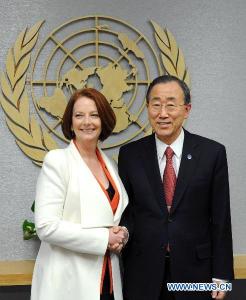
Unless the UN is about to start hauling recalcitrant signatory countries before an international court, the conventions aren’t worth the paper they’re written on.

Especially in a country that doesn’t have a bill of rights in the first place.

As proof of this, since 2002 the UNHCR has been castigating Australia about our treatment of asylum seekers. That’s ten years of being publicly reprimanded for our disregard of the Refugee Convention, and the Convention on the Rights of the Child. We breached these conventions ostensibly in the interests of protecting our totally unthreatened sovereignty. In reality it was done in the interests of self serving careerist, and immoral politicians.

Have we taken any notice? Have we been shamed? Who is there among us that really gives a stuff what the UN thinks of us?

John Howard started it by complaining that UN committees critical of his government’s stand on indigenous affairs and refugees were unfairly treating democratically elected governments. Howard didn’t acknowledge that the purpose of the UN was to look out for democratic governments that are also disregarding of human rights, as if such institutions couldn’t possibly exist:

Those who had argued before the UN that mandatory sentencing laws or native-title legislation were racially based were wrong, and it was absurd to let a foreign group decide such issues from afar. ‘ I mean, can’t these things be resolved by Australians in Australia and not us having to dance attendance on the views of committees that are a long way from Australia,’ Mr Howard said.

Things have gone down hill from there.

In a breathtaking act of hypocrisy, the Gillard government now expects us to believe that the UN has some control over Malaysia. Although the Gillard government continues to ignore the UN’s complaints about our treatment of asylum seekers, she simultaneously seeks its support to sell her Malaysian solution.

You can’t have it both ways. If you don’t give a damn about the UN’s opinions on our breaches of the conventions, you can’t then claim that their approval of the Malaysian solution carries any weight at all, let alone makes such an agreement safe and sound.

The UN conventions mean nothing. They are entirely dependent on signatory countries implementing the undertakings. Nobody really gives a stuff about a bad report from a body that has no legs and teeth. This is a post UN world. Catch up, Gillard. We see right through your spin.

4000 Refugees from Malaysia – how will ASIO cope?

9 Jun

Does anybody know where the Gillard government plans to put  4,000 refugees when they arrive from Malaysia?
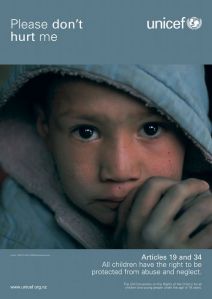
Presumably they’ll be subjected to the same ASIO security checks as are the other people already granted refugee status in Australia. Even after achieving this status, refugees continue to be held in mandatory detention until the ASIO checks are complete.

Does this mean we’ll need detention facilities for 4,000 more while their security status is established? How long will this take?

How will ASIO, already apparently already coping with a backlog, handle an influx of 4000 refugees needing security scrutiny before they are allowed to start their lives in the community?

There are already some 1000 genuine refugees being held in detention, some for up to 12 months, awaiting ASIO clearance. Chris Bowen has vowed not to compromise our security systems.

Will the Gillard government change the rules for the arrivals from Malaysia, and allow them into the community while their security checks are conducted? How would that move contribute to the discontent of all those refugees who are already detained behind the razor wire? Will she let them out? Who will care for the unaccompanied minors we send to Malaysia? Are the feminists still happy with our first female Prime Minister?

Oh, what interesting times in which we live!

The vulnerability of children

7 Jun

Come forward to childhood, and do not despise it because it is small and it is little

As American philosopher and academic Judith Butler puts it in her book, Precarious Life: the Powers of Mourning and Violence, the condition of childhood is “a condition of being laid bare from the start.” In childhood, she continues, we inhabit “the condition of primary vulnerability…a primary helplessness and need, one to which any society must attend.”

The face of the child makes a powerful moral claim on us, none more so than the face of the suffering child. Children have no capacity to represent themselves. If we are unable to represent ourselves, as children or in adulthood, we “run a greater risk of being treated as less than human” Butler observes.

Vulnerability is an inescapable fact of existence, particularly in childhood, and a child alone, without country, home, family and protectors, is in a state of extreme vulnerability. That vulnerability can be respected, exploited, or denied by adults. In situations where it is exploited and/or denied the child is radically objectified, and constructed as less than human.

 The child seeking asylum is a child who is stateless and without rights. As Hannah Arendt observed, rightlessness follows from statelessness. Our human rights are dependent upon being part of a community that enacts these rights on our behalf, and offers a framework in which these rights can be realised. Refugee children have lost their place in the world: they do not belong to a political community from which they are able to claim the right to human rights. UN Conventions such as The Rights of the Child supposedly offer avenues for the protection of such children. But for these to have any meaning, signatory countries must be trustworthy enough to abide by our undertakings.

When signatory countries like Australia do not honour the rights the Conventions bestow on a stateless child, when we disregard our serious obligations, refugee children remain stateless, rightless, lost and utterly vulnerable.

As long as we do not grant the child’s dignity and sovereignty by honouring our commitment to the Convention, we continue to perceive and treat refugee children as objects.

We are defined by where we belong, who cares about us, and our fundamental rights as human beings. The profound sense of violation reported by survivors of childhood abuse is often described as soul damage. Perhaps it’s also realistic to think of that profound damage as the destruction and or denial of the rights that help to construct us as human, in the eyes of others, and of ourselves.

As survivors will agree, the journey back from that rightless position to the point where one can come to believe that one has even the right to have rights, is a journey of hardship, and struggle. Many do not make it through. In sending unaccompanied refugee children to a country that does not honour the UN Convention on the Rights of the Child we are condemning them to a rightless life, and denying them an opportunity that could be provided in this country for healing, and a productive adulthood.

Yesterday I heard a talking head comment that if the government allows any children to stay here, rather than send all of them to Malaysia, people smugglers will seize this opportunity to load their boats with children. Yes, that’s probably true. But, he went on, if there should be another Christmas Island tragedy, and a boatload of children are drowned, this will be a political catastrophe. Can’t argue with that.

But what struck me about his observations was that it’s perfectly acceptable in Australian public discourse for anything to do with unaccompanied child asylum seekers, or adults, to be framed in purely political terms. Not in human terms, involving compassion, understanding, desire to assist, responsibility or even concern for the welfare of kids. The only thing that counts is how events affect politicians and their party’s future.

We need no more proof that Australian politicians, echoing the sentiments of many in their electorates, do not see refugee children as human beings. They are objects, to be palmed off to another country as quickly as possible in an effort to minimize political fall out.

The moral dilemma any politicians with integrity face is that to demand that these children be treated as human as the rest of us means going against the tide, and possibly losing their jobs. There’s no room for respecting refugee children’s humanity, human rights, and human vulnerability, in Australia today. Our society is not one that, as Butler puts it, will attend to the child’s primary helplessness and need.

Better to be a cow.

Gillard’s choice: which kids will she send to the camps?

6 Jun

The Gillard government’s deal with Malaysia on asylum seekers has taken yet another turn. Immigration Minister Chris Bowen has now conceded that he will decide whether or not to send unaccompanied children to the camps on a “case by case” basis.

Just what will be the criteria for these choices? How will the Minister assess which of the unaccompanied children (in his legal care as their guardian) he will send to the Malaysian camps?

Does Bowen have a conflict of interest in this situation? As the children’s guardian, should he not be putting their welfare before his duty to Gillard? Isn’t the well being of these children his first responsibility? How would we deal with any other legal guardian who subjected their charges to unacceptable risks?

In these camps unaccompanied children are at risk of physical, sexual, psychological, and emotional abuse; exploitation, inadequate nutrition, and loss of the childhood to which the UNHCR Convention claims all children are entitled.

What are the criteria the Gillard government will use to judge which unaccompanied child is “suitable” to be subjected to the perils and abuses of a Malaysian camp, and which unaccompanied child is not?

If we are to observe the Convention on the Rights of the Child, to which we are, as usual, signatory, we cannot send any unaccompanied child to Malaysia.

And the Minister’s suitability to continue as guardian to unaccompanied refugee children needs to be urgently addressed.