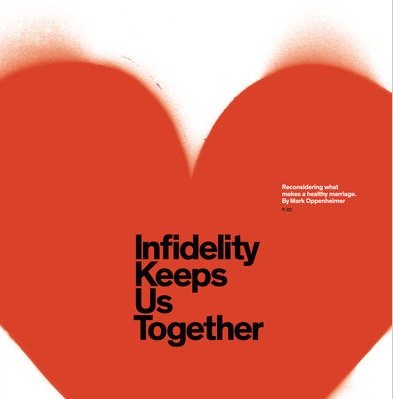
Fourteen months into my first (and last) relationship with a married man, I knew I’d gone as far as I could go with it.
I’d been feeling that way for some time. Since the beginning really, it had never seemed like something that was going to work for me. I liken it to learning to smoke when I was a teenager. That made me feel horrible but I persisted, enjoyed it, became dependent, and then went through agonies of withdrawal when I realised for the sake of my health I couldn’t do it anymore.
There were many reasons why the situation wasn’t good for me, but the one that’s most relevant here is the precedence his marriage, and his professed desire to maintain it, took over everything else. I say professed because he swung wildly between his desire for “us,” and his desire not to lose everything else. From the beginning I agreed to give his situation precedence, and then gave him the gift of absolute trust in me that I wouldn’t do anything to disturb that situation. And I didn’t.
But this agreement demanded that I put my own life and well-being second to his marriage, and this gradually caused me to feel more and more worthless. Why, I wondered, was my life and the effects the relationship was having on it, any less significant than his, or his wife’s? His children are well into adulthood, so there was no question of disturbing young ones or adolescents. I wrote:
All the time we have been conducting this so as not to destroy your life, and your wife’s, and all the time mine has been destructing. I can’t live like this anymore.
You believed, and I went along with it, that the fact of your marriage was what needed most consideration and protection. Because I no longer live in my marriage we assumed it would be easier for me. As if the fact of a marriage is the only possible reason for a life to explode in these circumstances. As if the destruction of a life that does not involve a marriage is not quite so much of a destruction. But that is wrong. The effect this is having on my life is as significant as it is for anybody else, marriage or not. This affair has damaged me in ways I haven’t yet begun to unravel, and I can’t do it anymore.
(He ignored this by the way, and begged me to get on a plane and come and see him “in the flesh.” He couldn’t get on a plane and come and see me because he didn’t have any money except what his wife doled out to him. But that’s another story).
The privileging of pretend monogamy is fundamental to an affair. The levels of dishonesty required with self and others are equivalent to the density of the earth’s layers. At the core is the demand for the protection of the central lie: while outwardly the married person lives monogamously (currently the most highly valued, highly respected and highly protected relational arrangement in western culture) he or she is secretly non-monogamous. The deceits multiply outward from that central point.
The recognition that monogamy can be extremely difficult for some people has spawned a movement led by American columnist Dan Savage. Advocating “honest infidelity” Savage recommends that partners “go outside the bounds of marriage if that’s what it takes to make the marriage work,” with the permission of their spouse. Honesty with one another is Savage’s core principle, and he is insistent that any potential infidelity must first be discussed and agreed upon.
The problem with Savage’s thesis is that it privileges marriage absolutely, at the expense of any other person. For example, what of the individual one uses as the sexual and/or emotional outlet required in order to maintain the marriage? Is this practice not using another as a means to an end, in the service of the couple, and doesn’t using another as a means to an end dehumanise him or her?
How and why has marriage become so important, that the intimate use of another human being to maintain it can be justified?
Or does Savage simply assumed the world is littered with available, selfless women and men just waiting to help couples maintain their marriages with a spot of sexual and emotional infidelity? People who will happily set aside their own needs in the service of the institution of marriage, so rich in generosity they will agree to begin and end an intimate relationship entirely in accordance with the couple’s timetable, and always in the knowledge that whatever happens, the relationship they undertake has as its only purpose making someone else’s marriage work?
Savage refers us back to a time when “men had concubines, mistresses, access to prostitutes” and were not considered disloyal to their wives in doing this. Sex with concubines, mistresses and “prostitutes” was not regarded as breaking the vow of monogamy, because these women were perceived as of less value than their wives. These “lesser” women served the purpose of keeping the marriage intact, and had no value outside of the services they provided. They were, at least, paid or kept; Savage seems to be expecting his imagined sexual servants to be doing it for free.
From a woman’s perspective, attitudes such as Savage’s, and that of any man playing at monogamy who wants a secret lover on the side, are continuing a very long history of perceiving and using women as a means to an end. Society is largely silent on the predicament of a woman who is discarded when a spouse discovers an affair. Society is not silent or backward in denigrating her, describing her in the most appalling terms, and expressing general views that she deserved what she got for trying to take another woman’s man, and probably breaking up a marriage.
This latter charge surely ought to be levelled at the faithless spouse.
With Savage’s “honest infidelity” the female lover is less likely to incur such abusive wrath, unless of course it all goes south and the marriage breaks up despite the honest fidelity. However, she is still being used. Anyone, I would argue, who engages in an intimate relationship with another human being in the full knowledge that they will never consider that human being as anything more than secondary to their primary relationship, is using her. Or him.
It was this knowledge, initially inchoate and held at bay by passion, that caused my discomfort from the very beginning of my relationship with a married man. I knew on a very deep level that I was letting myself be used, no matter how many declarations of love he made. I just couldn’t let the knowledge in. He knew it better than anyone, having used women for decades, including, some might argue, his wife.
The legitimising of the ideal of monogamy as the best option for relationship is one of the great deceits of our culture. Not only does it cause us to fail at monogamy, it also causes us to fail at non-monogamy: it is a lose-lose situation. Society needs to stop lying about this, and solutions such as Savage’s are not as progressive as he seems to think. From this woman’s perspective they take us backwards, or at the very least keep us trapped in a binary of good woman /bad woman, wife/mistress, worthy/unworthy.
There are people for whom monogamy works well, and it should never be abandoned as an option. But it is just that, an option, and nothing more. It’s not sacred. It’s man-made.
There are also people for whom being a lover works well. I acknowledge that just because I’m not one of them doesn’t mean it can’t happen.






 No Place For Sheep
Recent Comments