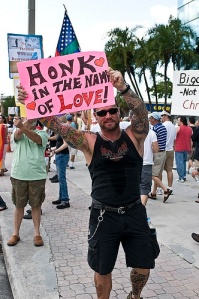
Tag Archives: Marriage

Desire, and good men

17 Nov

wings-of-desire-title


My lover writes to me: So, we discover another everyday thing that we charge with sexuality. I would love to soap you all over in the shower. Your back, your legs, your arse, your cunt, your belly, and linger long over your breasts…

There is an erotic book by Cameron S. Redfern titled “Landscape with Animals,” that tells of her affair with a married man. Redfern is the pseudonym of Sonya Hartnett, author of novels classified quite wrongly in my opinion as young adult fiction.

The affair is initiated by the single woman who is described as unashamedly predatory, and utterly determined to have him. This is both a subversion of the heterosexual dance of infidelity in which the woman is pursued by the married man, and a repetition of the myth of woman as sexual temptress who, like Eve in the garden, brings the man to ruin by offering him knowledge neither of them, according to the rules of the culture in which they live, ought to have.

The married lover in the book is portrayed as a good, gentle, honourable man, who loves his wife and children. He succumbs, but not before he announces to his mistress and to himself, “I am doomed.”

When I read those words I remembered how my married lover (who pursued me, then accused me of the crime of “irresistibility” thereby having it both ways) told me, “I am ruined,” referring to the effects of our affair. And yet, torn, he writes:

Being with you gives me pleasure, gratitude, happiness, amazement, delight, wonder, excitement. It gives me succour and strength and a new lease on life. I need to see you. I need to be in bed with you on a Sunday morning…

The doom and ruin are offset by the extraordinary knowledge found in the discovery and exploration of sexuality and sensuality that at the same time seriously threaten the established order of marriage and family life. Freud was onto this in his “Civilisation and its Discontents” in which he explores the conflict between what he calls the pleasure principle and the reality principle. It is necessary, he argues, for the desire for pleasure, especially sexual pleasure, to be repressed in order for civilisation as we have constructed it to survive. Desire realised for anyone other than the partner will cause destruction to varying degrees, threatening the foundations of monogamous relationship on which our culture rests.

Is it morally wrong for an individual to desire the expression of sexual and sensual aspects of him or herself that have been repressed and unrealised?

I’ve long held a theory that the rule of monogamy, as with many other societal restrictions, is enacted in an effort to bypass difficult emotions, in this case jealousy and deep hurt. Morality is merely the sign language of the emotions, Nietzsche argued. That is, we construct our moral codes not from our rational mind but from our feelings, reactively. I do not like the way this makes me feel therefore it is morally wrong. Infidelity may bring pain, discord and even destruction, but why do we declare all of these uncomfortable experiences to be morally wrong?

He writes before we meet: I want to fuck you physically so badly it hurts…

The fear of doom and ruin expressed by both men is complex. Goodness, gentleness and honour are qualities both identify and value in themselves. The deceit and betrayal of an extra marital affair will make it difficult to maintain that self-image. “I was a good person,” my lover told me, “I want to go back to being that good person.” But of course it was much too late, and one can never go back to the person one was before significant events. The whole point of significant events, it could be argued, is to move one along and if one stays stuck, the universe has done its best.

Both men fear the doom and ruin of their marriages and their families, as well as of themselves, as if their personal ruin must terminally ruin the lives of those who are close to them. Yet none of this prevents them pursuing their goal, so powerful is their desire to experience themselves, to discover who they are in the bed of the other woman.

We are so deep in such complexities, he writes. I could (and do) desire you an infinite amount but still be mentally ravaged by guilt feelings about my wife and family. You are my second wife. That sums it up. I so loved hearing your voice. Don’t have any idea how to deal with this terrible tangle we are in…

Whenever my lover spoke to me of his distress at having ceased to be a good man as a consequence of his love for me, I would tell him that none of us is entirely good or bad, that we find a temporary point on a continuum, move further towards one end or the other, then back again, and again, and this is how we live out our lives on earth. I had no interest or belief in his self-described goodness. If we are indeed “good,” we will never deny the capacity for “badness” that resides within every one of us and may emerge at any time, given the right circumstances. To define myself as “good” limits my human potential. Inside me, there is the possibility of everything.

I would rather you were real than good, I told him.

Then I thought of Freud. Sexuality unconfined by monogamy is bad because it risks the destruction of civilisation. Reality, which demands repression and denial, is good and will enable civilisation as we have constructed it to continue. I don’t think Freud was necessarily in agreement with the way society is constructed, given how he laboured to uncover and defang repression, but I think his observations are accurate. Desire is the most powerful of all the transgressors. It will not be denied without inflicting terrible individual and collective suffering, and it may not be expressed in our monogamous culture without risking the infliction of terrible suffering. I was his second wife, he said, but there is no place for a second wife in a monogamous society.

Do you love me? I ask

Oh, Lordy, yes, I love you. You know I do. I told you.

DCF 1.0


The house of widows

23 Jun

Mrs Chook, with whom I share a home, two dogs, and much of my life, became a widow some considerable time ago, after nursing her husband through lung cancer. For a while she was a member of the local Widows Club. They had good times, played cards and golf, got drunk and raucous, spoke realistically of the men they’d lost, acknowledging their aggravating complexities, at times speaking ill of their dead because there’s no human being who can’t be spoken ill of to some degree, and the Widows Club women were nothing if not honest.

I was once invited to become an honorary member, not because I was widowed but because I was separated, living life without my husband’s daily presence and sharing it with Mrs Chook, but I declined, feeling out of place. Yes, I’d lost my husband in a very real sense, but to see that misadventure as widowhood did not feel true to me.

A separation is indeed a kind of death. But death has different dimensions, and they must be given their due.

I’m sitting in a bus station watching the World Cup on the overhead TV. I’m between worlds, and remembering another bus station, another World Cup on an overhead TV in Cancun, Mexico, another country when I was alone just like now, and it occurs to me that there is something of a pattern in this, bus stations, football, overhead televisions, a heart in a confusion of desire, loss, grief, a woman facing an unknown future. A sense of the complete unknowableness of certain events, transgressive events that tear apart the fabric of the ordinary, events that force open the portal into the extremities of human experience. I realise I have no control over death, or desire or love, and should I attempt to exert any illusionary control I will make myself ludicrous. There are forces abroad in the world that far exceed my puny human capabilities, and there is nothing to be done but ride them out as best I can.

The bus station today is not in Cancun but Sydney, my husband is dying, and I suddenly recall with bizarre accuracy the notice on the door of a hotel room in Mexico City:

 Many people are injured having fun in Mexico.
Air pollution in Mexico City is severe.
Failure to pay hotel bills or pay for other services rendered is considered fraud under Mexican Law.


 I’m at a loss to understand the workings of my memory until I recall that my journey to Mexico caused my husband great angst, indefinite as I’d announced it would be, determined as I was to go without him as he had travelled so often without me. It marked a turning point in the dynamics between us. I had asserted myself as the leaver rather than the left. Twenty years older than me, he was outraged and bewildered, having spent much of our marriage wishing me to be Penelope, spinning faithfully at my wheel at home and keeping suitors at bay while Odysseus travelled the earth. The role never sat well with me and seemingly out of nowhere I exploded out of it, like a woman blown from the mouth of a cannon. This turning of the tables unhinged my husband somewhat, and he wept at the airport. Not even his tears could melt my determined heart. A woman has to do what a woman has to do I didn’t say, but I could have. These were serious endings. I was no longer who I had been up to that point, and neither was he who had never in his life before wept at an airport, while a woman he loved left him behind.

It is tempting to describe these endings as deaths, but I have a profound distaste for the appropriation of death as a metaphor. There is nothing in life for which death can be asked metaphorically to stand. There is nothing in life that can be likened to the radical absence that is the signifier of death. Death is the one situation in which all hope for presence ends. Up to that point, one has merely endured absence.

I have recently become a legitimate member of the Widows Club, though it no longer exists in its original form. More than three decades of marriage, always unconventional, have ended and I am no longer just living separately from my husband while we continue to love one another in spite of our differences. I am widowed. I have begun the labour of mourning, as Freud described the gradual relinquishing of all hope of connection with the loved one that is made inevitable by his or her death. I will never again see his face. I will never again hold his hand. I will never again climb up on his hospital bed and lay my warm body along the length of his frail and shrunken frame.

It’s the finality that brings me undone. I find myself repeating, in my struggle to come to terms with his departure, I never will again.

In the end, I did not leave him weeping at an airport. He left me. I don’t know if he heard me tell him I will always love him. I don’t know if he heard me tell him he did not have to stay, that I did not begrudge him this journey, that I did not need or want him to remain here with me, that I wanted only his release, that he could leave with my blessing, I don’t know if he heard those things I whispered as I laid my body the length of his, and held his beloved head against my breasts.

 Because we’re alive, we inhabit the country of the living; that which is outside, we don’t have the heart to believe, I read, in Hélène Cixious. She’s right I don’t have the heart to believe, yet it is necessary to find the heart to believe, what else is there to do?  We live in the house of widows, I tell Mrs Chook, sitting on her bed in my dressing gown, Little Dog lying on my feet, you’re so pale, she says, and I don’t tell her I’ve woken up maybe ten times in the night, crying those tears you know are serious because they are hot, and burn their way down your cold cheeks. We will be all right, she tells me. You will be all right. In time. It takes time.

As is to be expected at the death of a loved one, memories are crowding in on me, our life together parading itself well out of any chronological order, according to some time line I cannot recognise as having anything to do with reality. I see him dancing towards me across our sitting room, singing, You made me love you, I didn’t want to do it, I didn’t want to do it, which always symbolised for me his infuriating reluctance to take responsibility for anything. Give me give me give me give me what I sigh for, you know you’ve got the kind of kisses that I’d die for redeemed him, as he always knew it would. The night before he died I found on YouTube a video of him talking about poetry, made just before his stroke. And then, for reasons I cannot explain, I recalled a scene from The Sopranos in which Meadow Soprano sits beside her unconscious father, crime boss Tony, whom she fears is dying, and reads the Jacques Prevert verse:

Our Father which art in Heaven
Stay there
And we shall stay on earth
Which is sometimes so pretty
 

I shall stay on earth, which is sometimes so pretty. Vale, Arnold Lawrence Goldman.

Arnie


Marriage equality: what is it good for?

8 Dec

Marriage Equality

I realised during an enthusiastic debate on Twitter yesterday with @amicus_AU and @chronicfemme on the question of marriage equality, that apparently both ends of the continuum fear that same-sex marriage will result in an apocalypse for their cause. Marriage conservatives fear equality will bring about the death of marriage in an inexplicable metaphysical erosion of heterosexual values, while some in the queer community fear it will bring about the death of queer, as queer couples reject the radical demand to abolish state-sanctioned commitments altogether, and instead seek acceptance within the heteronormative paradigm of marriage.

The marriage equality debate inevitably becomes conflated with the debate about the institution of marriage, which is unfortunate, to my mind. They are two separate and equally important issues, and neither is done justice when they are intertwined.

Nobody wants the state in their bedroom. It is not the state’s business whom one chooses to marry, or live in a de facto relationship with. At the same time, when such arrangements break down, there must be protections in place for the wellbeing of vulnerable parties, usually women and children under current arrangements, who are likely to come off second best in serious matters such as property settlements, child support, access to a parent and all the other miserable detritus that commonly litters the personal landscape when things go wrong.

Humans being what we are, and being even more what we are in times of relationship breakdown, many of us cannot be trusted to behave reasonably when we are in the grip of extreme emotion provoked by the collapse of hope and future and the losses involved. We need laws at these times, and state-sanctioned relationships provide us with these laws.

If the argument is for no state involvement at all then we cannot argue for recognised de facto relationships either, as these are also governed by the state at times of breakdown, though not in precisely the same way as is marriage.

If it is heteronormative for queer couples to marry, is it also heteronormative for them to be covered by the protections offered to de factos?

Are queers arguing against marriage equality actually arguing that creating a couple is heteronormative? This is to my mind an interesting argument, and one that takes us into the fascinating territory of theories of constructed desires, et al, however, in practice as a society we have to contend with coupledom and its consequences for the vulnerable being currently rather more in our faces than theories of desire, and requiring our urgent practical attention.

Which is not to say people shouldn’t think about these things if that is our inclination, and radically interrogate entrenched norms.

I’m at a loss to imagine a system of relationship in which the state is not involved. It cannot be left up to individuals to fairly sort out the messes that occur when intimate relationships break down. Therefore, it is absolutely unjust for that protection to be denied to couples other than the heterosexual. There is simply no valid argument to deny marriage equality: every human being is entitled to the same protections, regardless of sexual orientation.

If you don’t “believe” in the state having anything to do with your relationship, don’t call upon its laws to protect you if your relationship breaks down. Find a radical new paradigm, rather than simply calling for our current arrangements to be abolished. I haven’t heard or read any discussion of viable alternatives that can achieve what state intervention achieves when marriages and de facto relationships collapse, and people have to salvage what they can of their lives and the lives of any children involved.

As for the supernaturally destructive powers invested in marriage equality by opponents of all kinds: if your ideology is so fragile that people loving each other in the manner they choose is going to destroy it, maybe it’s time to find a new ideology?

Love. That is all.

20 Jul

A few months ago I wrote here about spending time with my seriously ill husband, and my experience of coming to terms with the end of a love that had been everything to me.

It took years to accept that love was over, and what I eventually took from that lonely, arid time was painful instruction on the power of human attachment.

When I visited A last year,  desperately ill after a massive stroke, unable to speak coherently and only intermittently recognising me, our life together did indeed parade itself before my eyes, and I laid many things to rest as I sat for weeks beside his bed, holding his hands while he struggled to tell me he loved me and always would.

The miracle was, that after everything that went wrong we did still love each other. I wasn’t altogether surprised to find that in me, because I am very bad at endings. The life may no longer be a shared one, but something in me, deep in my belly, refuses to entirely let go of the love. I don’t know if this is a good or a bad thing, it just is. So I can look at someone I loved years ago and think  oh, yes, I loved you and oh yes, the ending was hard and I hated you for a while, and oh yes, though I don’t want to do anything about it and my life has changed, still there is tenderness, and gratitude for what we knew together.

Grief is an altered state. It can take you by surprise, long after you think you’ve done with it. It becomes less wild, less consuming as time passes. It can take on a sorrowful tenderness that for all its softness, still wrenches the heart. Grief can be triggered unexpectedly, long after you think you’re done with it, and you find yourself needing to hide away while you work out what has suddenly gone wrong with your breathing, and why out of nowhere you badly want to cry.

For example, I walked into a room today where someone was playing Mendelssohn’s Sonata for Cello and Piano, #2 in D Major. I listened to this Sonata, along with the Brahms #1 in F, during a very rough period in my marriage, during the last of many journeys A and I made together, down the Mekong, through Laos. I’ve heard both many times since, of course, but never without some emotion, the power of which has lessened over time. Yet today, for reasons I can’t explain, I heard the familiar first movement as if I was back on that long boat, sitting on my backpack beside A, both of us silenced by the misery of knowing it was too late for this journey or any other journey together, and neither of us able to end it.

OLYMPUS DIGITAL CAMERA

I don’t have a list of things I want to do before I die. At times I think, vaguely, of travelling to places I’ve never been because it would be excellent to leave the earth having seen as much of it as possible. At times I think I want to go back to the place where I was born one more time, because every time I return to that North Yorkshire country I feel a primitive and powerful sense of belonging that I have never felt anywhere else.

But lately I’ve been thinking that these things come a poor second to love, in all its frequently unexpected and varied manifestations, and it’s likely love that tops my bucket list.

Today my friend said, there’s no such thing as a perfect relationship is there?  There is, I said, after a while. The perfect relationship is the one where you care enough to bother struggling through the shitty bits and find you still want to stay in it. The perfect relationship is the one where you don’t want to struggle through the shit, and you have the decency and the courage to leave before you cause anymore damage to yourself and the other. Love is required for both. Isn’t it?

OLYMPUS DIGITAL CAMERA

Today I re-learned that nothing ends when you think it has. This annoys me, because I don’t live easily with loose ends. Somewhere along the way I’ve got it into my head that one must have “closure,” resolution, well-defined endings in order to move onto anything new. But actually, I’m coming to think that’s crap. My life is a chaos of ongoing love of varying kinds and depths, and I can’t think how to tidy up any of it. Perhaps I don’t have to? Perhaps instead I must learn to live with the disorder of a functioning human heart? Perhaps for years to come I will unexpectedly feel grief for my husband, for my dead mother, for my friend, for everyone I’ve  loved and will love, with various degrees of complexity and difficulty, success and failure.

There is a human being. There is love. That is all.


Marriage, equality, and the sentimental

20 Apr

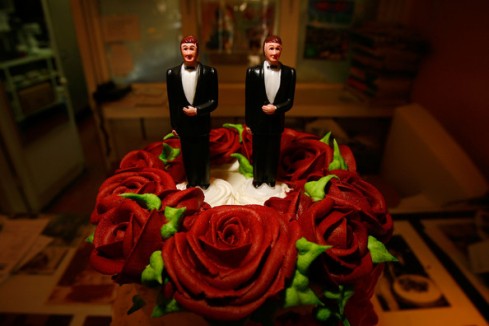
DO YOU KNOW WHAT I HATE MORE THAN RAINBOWS IT IS PICTURES OF TWO WHITE PLASTIC MEN ON TOP OF A FUCKING CAKE. Helen Razer, April 19 2013.

Gay wedding cake

Razer’s tweet caused me to reflect on sentimentality, what it is, and just how much it has to do with our society’s attachment to getting married. It seems to me that rainbows, and cakes such as the above, symbolise easily accessible emotions and contribute to a wider cultural inclination to substitute such emotions for critical thinking and reason. This isn’t peculiar to same-sex weddings: there seems to me to be a strong element of the sentimental in the very nature of weddings, no matter how “tasteful.” Which, of course, can be half the fun, but just how much does that aspect blind us to the faults of the institution?

“Sentimental” is in current usage a pejorative term, though it was not always thus. The sentimental is considered shallow, excessive, spurious, dishonest, false, and mawkish. It is emotion devoid of reason and critical judgement, indeed the sentimental stands accused of privileging diluted and short-lived emotional experience over logic to such a degree, that ethical and intellectual judgements that ought to be applied to a situation are abandoned in favour of the thrill of a temporarily heightened state.

In a sense, the sentimental has served to obfuscate the debate we have to have, which is about the institution of marriage itself, and redirected our attention and energies to the question of marriage equality. I don’t think anyone can deny the presence of the sentimental in this dispute, and perhaps the wonderfully excessive Maori wedding song sung by that joyous group in the New Zealand parliament the other day is an indicator of the rush of heightened emotion associated with all weddings, but especially so when those weddings have been forbidden and are now sanctioned. We don’t think about the failings of the institution, and how it functions in society, so carried away are we by the uncomplicated thrillingness of the romance of it.

I have to say here that as long as we have marriage in our culture and remain in its thrall, there is no question but that it ought to be available to everyone who desires it and is of an age to consent. Forbidding a group of people what they very much want to have  while it is freely available to everyone else, simply on the grounds that they have the same genitalia, is absolutely wrong, and counter productive. The marriage equality debate brilliantly demonstrates how we are distracted from arguing the deeper considerations of the ethics of the institution itself.

No one who wants to marry and is prevented by our laws from doing so, is going to want to start questioning the institution from which they are unfairly excluded, because the exclusion and the desire to be admitted will take precedence. I don’t believe we will be in any position to seriously challenge marriage until it is available to everyone, and the dust of the fight for equality has settled.

Rainbows, hearts, and plastic gay or heterosexual couples on excessive confectionery, can be read as symbols of the sentimental, signifying  a dominant aesthetic of sentimentality that obscures the deeper questions and feelings, and quite rightly thoroughly aggravates observers such as Razer who rail against our collective willingness to settle for the sentimental, and allow it to dull our judgement and reason. Judgement and reason ought to cause us to first think critically about this institution we are celebrating: sentimentality seduces us into settling for the heightened emotion that inevitably surrounds the desire of two people to commit themselves to lifelong state-sanctioned monogamy. Sentimentality is strongly present in that desire: the desire is, I would argue, not born of logic and reason, and it is perhaps not particularly ethical either, unless qualified as an intention, rather than a vow.

I recall a wedding a few years ago, non-religious, colourful and casual, pretty much your north coast upmarket hippy event, and a lot of fun. After the couple exchanged their vows, a friend standing next to me said in a voice that was much louder than she’d intended, owing to a sudden lull in the celebrations, “Well, it’s all down hill from here.” The bride and groom looked aghast. I dug her hard in the ribs with my elbow. “Well, it’s true,” she hissed at me defensively. “I know, but you don’t have to bloody well say it,” I hissed back.

All the weddings I’ve attended have been joyful, including both of my own. But there has been a great deal of sentimentality associated with them and more, with the idea of them. Personally I’m very taken with the love and hope that cause two people to throw their lot in together for life. I suppose that’s why I’ve done it twice and would probably do it again, because third time lucky and anyway I’m closer to death than I was the first two times.

The impulse to fidelity and mutual trust seems to me a worthy one, however I think I would add “To the best of my ability” or “I’ll do my very best” next time, because one never knows what’s ahead, and reason and logic suggest vows are sentimental in their very nature, and therefore untrustworthy.

Then there is the question of the regulation of the expression of emotion. It makes people very happy to marry one another at the time, and on the whole. It usually, one hopes, makes their friends and relations happy as well. Who has any right to deny others this happiness, even if the aesthetics and politics of it are not to one’s taste?

Yes, the institution may be a flawed foundation stone of a conservative agenda. Yes, conservatives love marriage because they love what they consider family. There is actually nothing in the least bit wrong with loving family, it is the traditional conservative notion of what a family consists of that is at fault here.

That the state has no business deciding who may or may not marry is a given. The fact that our Prime Minister does not approve of marriage equality ought to be of no consequence to anyone other than Ms Gillard herself. Nobody will make her marry another girl. It is remarkable to me that Ms Gillard, herself living in a de facto relationship, continues to take this obstructionist stand against marriage equality. Apparently marriage is not an institution she values for herself, yet she is perfectly willing to deny it to others on the spurious grounds that it is supposed to take place only between a man and a woman.

It is not so very long ago that Ms Gillard’s de facto relationship would have made her  occupation of the Lodge an impossibility. The Prime Minister has much to be grateful for. Society’s changes have worked to her great advantage. Why then, does Ms Gillard persist in denying these same advantages to others? I’m certain her stand has little or nothing to do with the sentimental.

rainbowA very sentimental rainbow but at least there is no unicorn

The Slap: a middle class morality tale

7 Oct

I haven’t read the book but I watched the show.

The first thing I thought was how absolutely awful that middle class marriage looked from the outside, and I thanked God I wasn’t in one. He’s drinking, smoking, snorting coke and considering an affair, all to escape the confines of a relationship that he looks to be pretty fed up with, and the responsibilities of fatherhood he seems to be pretty much over as well. I mean, telling your slightly plump young son to get off his fat arse isn’t loving, especially after you’ve yelled at him for eating potato chips and being sedentary into the bargain. Is it?

She’s harassed, feels she’s responsible for everything he doesn’t want to be responsible for and therefore is unfairly burdened, and on top of that she’s got highly manipulative in-laws he won’t stand up to, who want to ruin the only couple holiday they’ve planned in years by taking them all to Greece instead. He is not overly concerned with this interference, leading one to imagine he wasn’t that keen on the couple holiday in the first place.

Somehow we are meant to believe that the slap itself brought about a complete change of heart in him, and in the much younger woman he was planning to conjoin with as a temporary reprieve from his miserable life. The slap apparently shocked them both out of their  lustful fantasies, and caused them to within half an hour or so re-evaluate their lives and conclude they’re very lucky and they’d better not screw it up, so to speak.

I don’t find that instantaneous change of heart in a moment of shock entirely credible as a long-term prospect, but perhaps I’m a cynic.

An urgent post-slap marital root on the kitchen bench that seemed to afford passing satisfaction to him and little if any at all to her, acts as a temporary circuit breaker, and she grudgingly agrees to find ways to capitulate to her in laws’ travel plans.

An aside – I’ve never understood those sex scenes in which the woman is banged hard against some unyielding surface without any foreplay whatsoever, and likely very little skin on skin contact where it matters most, and apparently is left totally satisfied by the encounter. This doesn’t make a lot of sense when you think about it. Yet it is probably the most frequently employed portrayal of heterosexual sex in movies and on the telly. I get how it’s fine for the bloke, but…

Back to The Slap. You just know that the next morning or the next, however long it takes for the post-coital glow to subside, they’ll be back at it, him on his various drugs of choice, and her on her overburdened, aggrieved and resentful trip. This is the warp and woof of the marriage. Brief interludes of sex and drug induced relief punctuating vast expanses of chronic, unaddressed ill-feeling.

Mrs Chook, I’m sorry to say, slept through the slap, not the entire program but the actual swipe. Who did it, she muttered, rousing herself from her slumbers, who did the slap? Christ, I told her I can’t believe that of all the bits you could have happily slept through you chose the central event around which all else revolves. Shut up, she said. I’m tired, she said. I’ve been talking to phone people all day trying to get your bloody smart phone organized since you jacked up and said you were effing over it.

An aside: my daughter-in-law persuaded me onto Skype. I did it straight away before I could frighten myself out of it. It was so easy! Last night I talked to the new baby as he lurched about in a milk coma while his mother held him up to the camera and told him I’m his grandma. I still have to get the smart phone, but they’ve let me off Facebook. Compromise and negotiation: this is what gets you a happy family life.

Back to The Slap. I usually refuse to fill in bits people miss when they fall asleep on account of it gets tedious and they should just go to bed and let me record it for them. But I made an exception in this case, as it was pivotal. Mrs Chook said I was being uncharacteristically pleasant, but I let that pass on account of her generous attention to my smart phone difficulties.

It was not OK for that bloke to slap Hugo, nobody’s going to get an argument from me on that. At the same time I totally understand what led him to do it. Whenever somebody inflicts pain on us it’s instinctive to lash out, and the kid served up what must have been a very painful kick to the bloke’s shins. In what looked like a completely reflexive reaction, he delivered a hard retaliatory slap. Not premeditated. Totally reactive. Totally useless. Wrong. Understandable.

So what are the moral lessons we are to take from this first episode of what looks to be shaping up as a middle class morality tale? Well, there seems to be an inference that if you breast feed a child longer than the culture feels is necessary, you’ll end up with a brat everybody hates, and even if that isn’t why everybody hates him, it won’t help.

The second moral seems to be that an undisciplined child can wreak havoc far beyond his immediate family, and so middle class people have a moral obligation to properly discipline their children. Apart from anything else it’s just good manners as nobody wants their party ruined by a fractious, willfully disobedient, destructive escapee from South Park.

The third moral I took from the first episode was that it doesn’t matter how grubby your middle class marriage is, you have to find ways to make it tolerable for yourself because the alternative is too terrifying to contemplate. Even if that means having an affair, and everybody knows that marriages frequently survive affairs, and that affairs can often be, in the long-term, quite good for a marriage if not for the cast-off lovers who are dumped in favour of maintaining the institution.

The fourth moral I took was that human beings are frail and fragile, and we generally expect too much of them, whether it’s ourselves or somebody else.

I thought the acting was pretty good, the story interesting, and I’m not troubled by foul language. The smoking has copped a bit of criticism but people still smoke, and it does go to establishing character. The cigarettes were an important symbolic connection between Hector and the much younger woman he wanted to root, I think, and anyways, you can’t censor everything unsavoury and unhealthy out of stories or you’ll have no story left, unless it’s the Wiggles, or Mr Rabbit and Jemima Puddleduck.

I’m going to keep watching.

Rainy day woman on marriage

27 Aug

It’s raining cats and dogs and all my plans for Saturday centred around the outdoors. Thwarted, I turned to my computer and read this piece on the Watermelon Blog in which David reckons it’s time to make the billionaires pay the rent; and this piece on the Political Sword, in which Ad astra alleges that Tony Abbott is the worst opposition leader in our political history, and gives resoundingly convincing arguments to support the allegation.

Rainy days are good for musing and as I ventured out to give the dog an airing, I thought about marriage, and gay marriage in particular. I fully understand why people want to get married. Heck, I did it myself twice. I did it once in a church and once with a celebrant. It was nothing to do with the state, or religion, or societal expectations. It was everything to do with my heart. In retrospect the heart alone isn’t  the smartest organ from which to make such major decisions, but I didn’t know that until I’d done it twice.

In another of the triumphs of hope over experience with which my life is littered, I’d probably do it again if the circumstances ever arose.

People usually enter into a formal commitment to one another full of good will, desire and hope. It doesn’t always work out, and we pick ourselves up from the wreckage and start our lives over, often to do it all again. It’s a public expression of mutual love, and it’s valued by many as the ultimate such expression.

It seems to me there’s two arguments going on in the gay marriage debate. The first is that gays and lesbians ought to be entitled to the same public expressions of their love and commitment as are heterosexuals. This is a no brainer, IMO. Love is no respecter of genital arrangements. In a world that needs love as much as this one does, we should be celebrating it everywhere we find it. It seems extraordinarily mealy-mouthed and mean-spirited, not to mention ignorant, for any heterosexual to insist that it can’t count as marriageable love when it blossoms between same-sex couples.

The second is the interrogation of marriage itself. Like, marriage? What is it good for? Well, I could get cynical here and say not much. But in my experience that’s a conclusion everyone has to come to, or not, in their own good time and their own good way. The idea of marriage continues to exert a powerful emotional hold. No amount of rationalizing is going to change that in the near future. I know many couples who after years of living together decide to do the marriage thing, even though de facto arrangements are as legitimate. We are encultured to view marriage as the strongest commitment couples can make. This may change, but currently, it’s what we’ve got.

It seems unfair to expect that same-sex couples, rather than demanding inclusion in the culture ought to contest it, although there are voices in the gay and lesbian community raised against the institution, as there are in the heterosexual community. Nevertheless, I doubt that marriage is going to go away anytime soon. So it matters a great deal that same-sex couples have the right to celebrate their commitment just as heterosexuals do, if they so choose.

And that’s the real argument. It’s an argument about equal rights. Whether you think marriage is a necessary institution or not is largely irrelevant at this point. Currently there are couples who are denied access to marriage solely because of their sexual orientation This is discriminatory and breaches their human rights.

None of the arguments put forward by opponents of same-sex marriage stand up to scrutiny, and most are mired in superstition and religion. We have a Prime Minister who is beholden to neither superstition nor religion. So let’s move forward, Ms Gillard, unless of course the Australian Christian Lobby, those vocal opponents of same-sex marriage, have got you under their thumb.

Finally, my apologies for spelling Craig Thomson’s name wrongly in a previous post – I gave him a p when he shouldn’t have a p. He does not have a p! There is no p!! How can anyone believe anything I say if I stick p’s in where they don’t belong! Respect the p, Jennifer! Respect the goddamn p!!

KanYe West, Melinda Tankard Reist, and the control of the representation of desire.

26 Feb

by Lucero Design via flickr

At Melinda Tankard Reist’s website underwear manufacturer Victoria’s Secret is under attack, two hapless tools from the Gold Coast trying to sell real estate using a woman in her undies are copping it, and oh no! Not that, still! Yes, the KanYe West Monster video clip, months after we all got into that epic tussle at the Drum, is still absorbing the Tank’s attention.

Last week MTR was described by Stephen Harrington at the Punch as “Australia’s Helen Lovejoy,” for her complaints about this video clip, as well as the “what about the children” rhetoric she invokes as an argument against just about everything.

(For those not familiar with the Simpsons, Helen Lovejoy is the ultra conservative wife of the local Christian minister whose catchcry is “But what about the children!”)

Melinda pours retributory scorn on Harrington here. The West video is, she claims, a “significant watershed in the de-humanisation of women.”

That’s a bit hyperbolic, in my opinion, given the on going, grave, and global abuses of women’s human rights that certainly do de-humanise those groups subjected to them.

The psychotherapists’ interpretations

At New Matilda, psychotherapist Zoe Krupke interprets the video clip from her professional perspective, and explains that violence such as is portrayed therein can be a consequence of “denial of personal weakness and fragility,” resulting in projection of these qualities onto others, in this case the strung-up, zombiefied and helpless women.

In other words, controlling others through violence allows the perpetrator to bury feelings of inadequacy and vulnerability, and replace them with an illusion of power.

All of which is true enough, but if you read the lyrics it’s clear that they are about nothing but West’s feelings of personal weakness and fragility; rage at perceived exploitation by the music industry, and women, rage at his admitted inability to behave in any way other than monstrous; identification with other monster figures, and a pathetic plea for someone to love him.
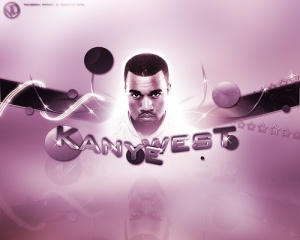
by Maximillian Dinslage via flickr

None of which are expressed in ways that are likely to get him any of the things he seeks, but rather are an explosion of fury, frustration, and self-mockery.

I’m a monster
no good blood-sucker
everybody know I’m a
muthaf*cking monster
None of you n*ggas know the carnage I’ve seen
I still hear fiends scream in my dream…

And so on. The thoughts and feelings of a disturbed being, a rapper having a laugh, or both, depending on your perspective.

Feminists aren’t the only ones with opinions

You've Been Dickrolled. by David Jackmanson via flickr


What is certain (I’m sorry, at this point I can’t help myself, the only certainty is the certainty of uncertainty, thank you so much for the philosophical insight, Tony the Tool, another of the known unknown unknowns littering the political landscape, and pictured here damn near naked) is that while a feminist analysis of the work is worthwhile, it’s far from being the only possible analysis. The video and lyrics are complex, with racial references as well as those mentioned above, and to attempt to have it censored because it “dehumanises” women is, in my opinion, the kind of sadly unimaginative reaction we’ve come to expect from some media feminists these days.

What the video clip certainly is: the concretisation of one rapper’s subjective vision of his world. If it weren’t as popular as it is, there would be no need for further discussion. But it is tremendously popular, (listed in Rolling Stone’s best 30 albums of 2010) and has received critical acclaim from that magazine’s  informed commentators

These accolades suggest West’s Beautiful Dark Twisted Fantasies strike a chord, so to speak with millions of others. It may not be the kind of chord MTR wants struck, whatever that is, and I can’t figure that out. What do these women want? Nevertheless, it’s popularity alone makes it culturally significant, and worthy of examination.

Not that I’m suggesting popularity is the only criterium for cultural significance because clearly it isn’t. The bizarre and complex vision represented in this piece lifts it out of the mundane.

It isn’t everybody’s vision of the world. Then again, neither is a man nailed to a cross, blood seeping out of his wounds and a hole pierced in his side everybody’s vision of a healthy religious experience. John the Baptist’s bloody head on a silver platter doesn’t cut it as inspiring religious commentary for all of us either.

I have a strong visceral response against most moves to censor. No matter what you think of the aesthetic quality or otherwise of the KanYe West video, it is the expression of an artist’s vision.  Are we to live in a world bereft of all dark and difficult imagery? Are we to censor all representations of emotions and passions because they make some people uncomfortable?

Cindy and that sexy thong. by Dave Lee via flickr


When women choose to earn their living from their bodies

Women who model for Victoria’s Secret do so of their own free will, and are well paid for their work. Likewise the women who appeared in the West clip as simulated corpses and zombies.

The luscious woman in the Gold Coast real estate agents’ ad was also, presumably, paid for her work. Many women with lovely bodies enjoy using them as a source of income. Many other women and men enjoy looking at those bodies. Is this really “objectifying” women? Or is it merely admiring, and maybe sometimes envying their beauty?

I’m not likely to meet any of them. They are likely to remain only one-dimensional images to me. So why do I have any responsibility at all to see them as anything else? Why is it wrong for me to take pleasure their beauty? How am I offending them?

If I were to treat the women and men around me as one dimensional, then I would be objectifying and insulting them. But like most people, I know the difference between an image and a fully fleshed human being.

There are some who try to make the people in their lives more closely resemble a one-dimensional image they’ve seen on screen or in a magazine. Their problems, and the problems of their partners, won’t be solved by banning the images. I’d suggest their difficulties are deep, and if no images are available they’ll manifest in some other equally unfortunate way.

The desire to be desired

The desire to be desired is a normal human need. Practically everyone at some time wants, indeed needs, to bathe in the glow of somebody’s desiring gaze. But desire and its expression and representation are intensely personal matters. Lacy panties or cottontails, stilettos or bare feet, cleavage or buttoned up modesty – there’s a place for everything, but not in the world of Melinda Tankard Reist. In that world there’s only one possibility for the expression and representation of desire, and that’s hers.

Baffled by her negativity, I’m as yet entirely unable to ascertain what her vision actually consists of. Though she unrelentingly castigates us for our unhealthily fetishistic and voyeuristic gaze, I’ve never once heard MTR give an example of how she thinks female sexuality ought to be represented and expressed.

We should pretend we aren’t sexual beings, and deny that we love to look at each other, even though much of the time society requires us to do that with a furtive gaze?

We should pretend that erotic zones are not of intense interest to us, starting when we emerge from the latency period laughing ourselves silly at jokes about underpants?

If every publicly revealed body is an exploited and objectified body, are we all to cover up to protect ourselves from a gaze that MTR would have us believe can only be interpreted as exploitative and objectifying?

The battle for the control of the representation of desire

by Breezer, via flickr


MTR is fighting a two fronted battle for  the right to determine not only what we should look at, but how we should look at it. She wants to be inside our heads, telling us how to see things. Where she see exploitation, so must we.

She wants to control the representation and expression of human desire. She wants to control the interpretation of the gaze.

MTR seeks to superimpose her moral vision upon everyone else, a vision that cannot allow the possibility of a benign desiring gaze, a vision that insists the desiring gaze is always dangerous, unless it is confined to encounters between to consenting adults (preferably married) in the privacy of their own homes. Once desire is provoked outside of the marriage bed, her thinking goes, it must inevitably result in damage of some kind. I have long suspected this to be at the heart of MTR’s crusades. Now she’s proved it, by taking on Victoria’s Secret.

In her vision, the free flow of desire in the world, far from being a driving creative force, is miserably reduced to a threat to women.

This is why MTR does not offer her vision of an acceptable public representation of female sexuality. There isn’t one in her moral framework.

In this, she’s a bit like the followers of Sharia law.

But feminists fought for freedom

MTR and her followers justify their desire to impose their desire, by dressing their arguments up as feminist rhetoric, and indeed there are some conjunctions.

But feminists fought for freedom. If a woman chooses to use her body to earn her living then it’s nobody’s business but hers. Melinda Tankard Reist makes an unfortunate conflation between free choice and exploitation. That exploitation and abuse of women exists is not at issue. However, it does nobody any good to confuse the two, and in the process attempt to shame women who are making a free choice, and attempt to deprive them of that right. That’s an anti feminist move, in my book.

The argument that we’re brainwashed to think we must do our best to look like underwear models or we’re inadequate, holds some water. There’s a great deal to critique in fashion magazines that manipulate insecurities in order to get us to go out and buy something to address those perceived failings.

On the other hand, one of MTR’s fellow campaigners, journalist and researcher Nina Funnell, whose tirade against the KanYe West video can be read here recently took part in a Cosmopolitan (October 2010) competition to find the year’s most influential woman. All the competitors were young, and had the Cosmo look, including killer heels, and sexy masks. There were obviously initial selection criteria that had everything to do with the contestant’s physical appearance. Only after those requirements were met, were the women’s career and personal achievements considered.

There were no older women in the contest, baffling, given that older women are often excellent mentors and influential figures.

In my book, an outrageous and insidious abuse and objectification of women right on our doorstep, sending the message that how you look matters much more than what you do and are, from a magazine read by thousands of young Australian women. Yet not a  murmur was raised in the MTR camp.

To wrap it up…

The Gold Coast tools are pretty funny, I thought when I watched their video clip on Melinda’s website. Their ad is so over the top as to be bordering on a spoof of using sex to sell. It wouldn’t make me want to buy their penthouse, so in that sense it’s an advertising failure.
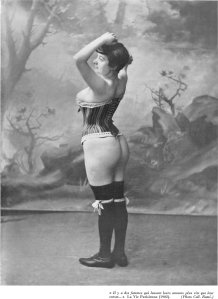
Corset, Paris 1902. Unknown via Wikimedia

Corset, Paris 1902. Unknown, via Wikimedia

As for Victoria’s Secret well, good luck with that one. While the sight of stunning women in lacy thongs and balconette bras might not be everyone’s idea of beautiful or sexy, it is currently a dominant cultural expression of those qualities. Once the sight of an ankle did it for us, and who can forget the practically (in my opinion) only good bit in Jane Campion’s The Piano, when Harvey Keitel caressed Holly Hunter’s leg through a hole in her stocking? Aaaargh, the recollection can make me shiver with delight even now.

Reclaiming marriage from the great big Christian hijack

10 Feb

This essay was first published by Graham Young in On Line Opinion, December 2010

In view of the scare tactics employed by the Australian Christian Lobby in their new petition to prevent the legalisation of gay marriage, it seems timely to publish it again.

by Danny Hammontree via flickr


Judging from the flurry of articles that have appeared recently written by Christians against same sex marriage (as well as same sex adoption, in which many similar religious justifications are invoked) one can be forgiven for thinking that many Christians believe their god invented the institution.

This could not be further from the truth. Marriage has existed a whole lot longer than Christianity. The Chinese philosopher Confucius, born in 551 BC, offered this delightful definition: “Marriage is the union of two different surnames, in friendship and in love.”

Indeed, there is considerable historical evidence that in Greece, Rome, China and Europe same-sex marriages were celebrated along with the heterosexual unions deemed necessary either for economic purposes, or for men to ensure (they hoped) the parentage of children.

For a period in our history marriage had little to do with romance and love, and much to do with economic and physical survival. The spiritual and emotional dimensions of marriage that many Westerners feel are at its core are relatively recent developments.

Christians imposed their beliefs on an institution that was already long in place, and called this fallacy god’s will. Instead of acknowledging that Christian marriage is but one example of that institution, they appear to deny validity to any other and thus attempt to reify their singular take on the concept.

So successful has this reification been that there are people who want to marry in churches, even though they never set foot in them before or after the ceremony. Many people feel an understandable desire for their marriage to be “blessed,” and there’s no doubt the Christian ritual can be quite beautiful.

I’ve no wish to throw the baby out with the bathwater.

But people marry for all kinds of reasons. For example, it’s estimated that some 200,000 marriages per year take place in the United States expressly for the purpose of obtaining a Green Card for the spouse who is not a US citizen. There are marriages made in Australia for the same pragmatic reason. These unions apparently disrespect the Christian god’s purpose for marriage, and ought to cause offence to believers. However, they don’t appear to be anywhere near as offensive to Christians as are same sex marriages, chosen on the basis of love, and the desire for commitment and family.

On the other hand, marriage between blacks and white in the US southern states (miscegenation) was illegal until 1967. Not only did the Christian god demand that marriage only take place between a man and a woman at that time, apparently he needed them to be the same skin colour as well.

It took that country’s Christians some 276 years to overthrow that particular racist injustice.

Christian beliefs about marriage change, as the above example demonstrates. Presumably, this is as a consequence of god changing his mind, and somehow relaying that change to the faithful who then update the law.

But what a truly intolerable state of affairs, that the lives and futures of many same sex couples are at the mercy of the arbitrary decisions of a transcendental exteriority that many citizens don’t believe exists at all, or not in the form touted by Christians.

This state of affairs is undemocratic. It breaches the human right to have freedom from religion as well as to have freedom of religion.

As some 60% of Australians are in favour of same sex marriage, it is puzzling that the two major parties continue to believe they can afford to ignore this majority. One can only conclude their mutual fear of offending the religious vote is stronger than their fear of offending the 60%, who they probably assume will not rate this issue highly on their wish lists of what they want governments to change.

One person’s god is another person’s superstition. Christians are not renowned for their democratic principles when it comes to the many varieties of spiritual practice at work in the world. Who can forget the scary tale of Mother Theresa baptising dying Hindus who were too ill to protest?  An act of spiritual terrorism by stealth if ever there was one.

The problem with many believers (not just Christians) is that their belief prevents them from respecting another person’s point of view. Non- believers are dismissed as simply wrong headed. They’re on their way to hell in a handcart, and they will be sorry when they get there that they didn’t listen when they had the chance.

There’s no reasoning with this mindset. Once you come up against the tunnel vision of implacable belief (often known as “faith”) you’ve come to the end of the discussion, and all that’s left to do is to walk away.

Then there’s the question of Christian credibility. The churches currently have a very bad reputation to overcome. The appalling incidence of sexual, physical and emotional abuse of children in their care, and the equally appalling attempts to cover up and deny these abuses, have gone a long way to undermining the churches’ credibility in any thinking person’s mind.

It was Jesus who said “It were better for him that a millstone were hanged about his neck, and he be cast into the sea, than that he should offend one of these little ones.”

Yet while ordinary Christians are more than willing to speak out against same sex marriage and same sex adoption, among many other issues of which they disapprove, they are bone-chillingly silent when it comes to protesting the evils perpetrated in their own back yards. Has there ever been a better illustration of Burke’s maxim “All it takes for evil to flourish is for good men [sic] to remain silent?”

Perhaps what is required from Christians these days is a little humility. An acknowledgement that they haven’t got everything right, indeed there are things they have got horrifically wrong, and that there is a collective as well as an individual responsibility for this that must be addressed before they can legitimately turn their rigorous attention to the maintenance of a broader human morality.

If I were imagining a god, she/he would care a whole lot more about believers destroying the bodies, hearts and souls of children than about preventing same sex marriage, and same sex adoption. If my god was going to smite anybody, I hope she/he would be smiting the perpetrators of those crimes against children, and those who enabled and protected those perpetrators and denied their crimes. I hope she/he would take positive action to enlighten those who would deprive children of love and legal security, solely because these people are unable to personally deal with the concept of love between same sex partners.

My god would teach that loving one another is the only thing that matters, and from that all else will grow.

She/he would also be smart enough to admit that loving one another is the hardest thing we’ll ever have to do on this planet.

“Love one another. As I have loved you, so you must love one another,” said Christ.

“We must love one another, or die,” said the poet, W.H. Auden.

“If I speak with the tongues of men and of angels, but do not have love, I have become a noisy gong or a clanging cymbal,” warned St Paul.

It’s time to reclaim marriage from the Christians. They can’t claim it as their own. It belongs to everybody. Marriage in Australia in 2010 is about loving one another, whatever gender the other happens to be. It is about hope, and deeply good intentions. It’s about wanting to be the best a human being can be. It’s about wanting to create a living, breathing mystery, day by day, with the person you love and who loves you.

It doesn’t always work. Hearts get terribly broken. We dust ourselves off, and sometimes have another crack at it, because we are very brave, and we are full of hope, and we have a vision of enduring love that keeps us going, no matter what form our marriages take, or even if they end.

We do this whether we are Christians or not. We do it because we are human beings who at our best are capable of living out these wonders regardless of gender, and oftentimes in spite of the difficulties gender can create for us.

I’m perfectly happy to let Christians conduct their marriage ceremonies according to their beliefs. And every other religious group as well. They don’t have to celebrate same sex marriage in their own places of worship if they don’t want to. This is one of the freedoms our democracy guarantees. I don’t wish to take that freedom away from Christians or any other religious group.

But what no democratic government should tolerate is Christians, or any other religious group, defining marriage and dictating its practices in this country. Government decisions must not be based on religious belief in our pluralist society. They must be based on what is fair, what is just, and what is non-discriminatory. Democracy is inclusive. Christianity, sadly, increasingly demonstrates that it is not.

Same sex marriage and same sex adoption are not dangers from which governments need to protect us. But the tyranny of religions destroying anybody’s democratic rights to these things, most certainly is.

The perfection of heterosexual marriage?

8 Feb
Rainbow flag flapping in the wind with blue sk...

Image via Wikipedia

This article  written by me was first published at On Line Opinion December 2010.

Editor Graham Young published it in response to the earlier anti gay marriage piece by Bill Muehlenberg.

I have just read the article by Bill Muelhlenberg, Dismantling a homosexual marriage myth, published in Online Opinion Thursday November 25 2010, for the second time.

The sentiments expressed are the polar opposite to my own views on the subject of same sex marriage, views I’ve expressed in articles on this site. However, there is one point on which we agree.

The struggle for the right to same sex marriage does have several dimensions, as the article suggests, not all of them immediately apparent. The struggle is indeed about far more than a simplistic change to the wording of the Marriage Act. (Though it must be noted here that the wording of Marriage Act was in fact changed by the Howard government in 2004 to define marriage as only permissible between a man and woman. So perhaps the wording of the original Act was not quite so simple, if Howard felt compelled to change it).

I do not agree, however, that these deeper dimensions of the debate are gay conspiracies designed to subversively change the nature of marriage altogether. Indeed, I find the arguments for this theory rather bizarre.

For example. There is nothing currently in the Marriage Act that speaks to a legal prohibition against infidelity. Monogamy is nothing more than individual hope and intention. That is, there is no legal requirement for monogamy in the Marriage Act that faces revision or extinction should gays and lesbians be allowed to marry.

I am completely at a loss as to understand how permitting marriage between gays and lesbians will encourage infidelity and promiscuity in heterosexual married couples.

The author claims that, “The wonderful interaction of a man and a woman in the complementarity of heterosexual marriage is what makes it so special and beneficial.” De facto relationships aren’t blessed with this special beneficence, according to his paradigm. The author doesn’t mention whether this “complementarity” is only available in Christian marriage, and denied to those who marry in the Registry office or in mosques and synagogues.

I’d like to suggest that what makes a marriage “special and beneficial” is the commitment of the couple, to one another and to the love they live and create, regardless of their gender, religion or lack of it. I’d like to remind the author that very similar arguments were made, not so very long ago, against marriage between blacks and whites.

There are heterosexual marriages that work really well. There are heterosexual marriages that are sites of nuclear devastation and certainly do not work at all. And there are heterosexual marriages that occupy a place between these two extremes, and muddle lovingly along without much drama, one way or the other. But how, I ask in all good faith, will permitting gays and lesbians to marry affect the nature, progress and outcome of any of those marriages?

“The truth is,” the author instructs us, because he clearly believes he is someone who knows a) what the truth is, and b) what most of us think the truth is,  “homosexuals do not at all have in mind what most of us understand marriage to be.” I have to take Meulhlenberg up on this, because I was taught from an early age to always question terms such as “most of us.” To someone from my background (and there are many of us), the use of the term “most of us” to support an argument implies an unsubstantiated but hegemonic perspective that may well be highly inaccurate, if not delusional, and we must treat it with caution.

It is always inadvisable to assume that everybody else thinks like you, or that a “most of us” even exists.

Just what demographic is this “most of us” supposedly comprised of, anyway?

Whether or not all homosexuals have a different concept of marriage from “most of us” has not been determined. But whether they do or not is actually quite irrelevant in terms of the effects of their concepts on heterosexual marriage.

Heterosexuals can already do exactly whatever they choose within their marriages. There is nothing to stop them pursuing any and all kinds of perversions, unless one party in the marriage complains to the police. Gay and lesbian marriage is not going to change the status quo for heterosexuals, even if their ideas are as different as the author claims.

Back to the point on which we do have agreement. The struggle for same sex marriage is indeed about much more than allowing gays and lesbians the same marriage rights as heterosexuals. It is a struggle for equality. It is a struggle for the legal recognition of the all-embracing power of that force we call “love.” All embracing, that is, not exclusive. I do not believe that love excludes. I believe inclusion is one of its prime characteristics. I won’t presume to add that I believe “most of us” agree with my perspective, but I know some people do.

The struggle for same sex marriage is about our nation having the generosity of heart to acknowledge, in its laws, that love comes in many and varied ways, and there is not one amongst us who has the right to judge which loving way is right, and which loving way is wrong.

There are many arguments to be made against marriage, heterosexual and gay. There are many arguments to be made for it. There is no reasonable argument to be made for same sex couples being excluded from this institution, with all its wonders and all its failings. If some gays and lesbians wish to marry, for better or for worse, then it is their business and there is no good reason to exclude them from the joys and the catastrophes of the married state.

If there is fear abroad for the future of marriage, then address that fear at its real causes. For example.  Family violence in heterosexual marriage. The abuse and sexual abuse of children within heterosexual partnerships. Infidelity, overt and covert.  Inequality in heterosexual marriages.

To quote the magnificent Leonard Cohen on this last point, there’s “the homicidal bitching that goes down in every kitchen to determine who will serve and who will eat.” As far as I am aware, much of this ‘homicidal bitching” goes down between heterosexual couples, and frequently concerns how much more housework women do than their male partners.

As well, there are heterosexuals who could well write an article titled “How to be married and still be a slut.” (I have strong reservations about the use of the term ‘slut’ in this pejorative manner, but that discussion is for another time and place).

The impression Meulhenberg has worked hard to create in his article is that heterosexual marriage is some kind of perfect state that no one other than heterosexuals may aspire to, and whose perfection will somehow be threatened by including gays and lesbians in the Marriage Act. This is simply not true. Anything bad that can happen in marriage is already happening, and nobody seems to be able to do very much about preventing it, if the child abuse and domestic violence statistics are anything to go by.

The questions that immediately arise in this reader’s mind are, how fragile is this institution, that its proponents must circle their wagons against any and every perceived threat?  How fragile is this institution that some people must fight with all their might to keep it exclusive?

Will focusing on the perceived evils of gay marriage distract heterosexuals from their collective responsibility for the parlous state of the institution of which they are currently in sole charge? Because whatever is going wrong in marriages, and there’s plenty going wrong, responsibility for it certainly can’t be laid at the doors of gays and lesbians.

In our culture, marriage is still an extremely powerful public and legal acknowledgment of love and commitment. This acknowledgement ought to be available to anyone who wants it.

As I have written here before, “Same sex marriage and same sex adoption are not dangers from which governments need to protect us. But the tyranny of religions destroying anybody’s democratic rights to these things, most certainly is.”