What is this “IT” that women should want all of?

8 Jul

The other day I tweeted that if I heard one more discussion about women having it all, there would be blood spatter. I take that back because I want to say a thing or two.

There are two quite separate issues here that are being misleadingly conflated. One is the real need for adequate affordable child care for all women, and a non-discriminatory workplace in which we are treated with respect and equality, properly paid and not penalised for creating the next generation who will keep the country going. I wholeheartedly support those aspirations.

But while some of us weren’t looking it seems that a particular strand of feminism has declared that Woman’s highest and most noble aspiration is To Have IT all. This has recently drowned out the real struggle for equality for all women, and focused the debate on a privileged few.

As far as I can ascertain, the IT holy grail involves building and maintaining a highly successful career while shaping your body to fit into designer suits and stilettos that create a complex ambience of sexy yet capable. When you’ve got a sure foothold in your profession you then take time to partner up, get pregnant, gestate, and give birth. Then you get back to work looking as untouched by these experiences as possible.

You then have it all. Career, partner, family, money. You will need the support of other women to enable your lifestyle. Child care workers, nannies, cleaners, the majority of whom are female, are paid far less than you, but that’s all right, you are creating jobs in your efforts to succeed at everything except the boring, unglamorous stuff other women will do for you.

Sustaining and promoting the patriarchal paradigm, the “be born, get everything until you die because you are entitled” ethic so beloved by hegemonic masculinity, is apparently the only way a woman can achieve real power in the Western world. While there may be the occasional inroad into better conditions for women who are caught up in the various levels on which this paradigm operates,  the paradigm itself is not subject to real interrogation and real change. This is still a world that in the West at least, is founded on the principle of entitlement to everything, just because.  That is not feminism as I understand it:

I would like to blame the patriarchy for  the IT women should suddenly want all of. It looks to me like an attempt at counter insurgency operational propaganda, using collaborating women they’ve turned as agents. If ever you wanted to set up a disruptive enemy for a catastrophic fall, this is the way to go about it. Use the media to build unrealistic expectations in the female population and persuade the target audience to introject them. Bombard with images of glamorous women who have brilliant jobs, dishy supportive husbands often with their own high-powered professional lives, and adorable children and pets. Make the audience crave this, for because who wouldn’t want a life like that? If you aren’t having it, there’s something wrong with you. If you don’t want it, there’s something even more wrong with you.


The propaganda won’t work on everybody because not all women are susceptible, but it will probably work on enough of us to redirect anger away from the system where it belongs, and onto the self where it doesn’t. Mission accomplished. Feminism co-opted in the service of capitalism. System safe. Oh yeah.

What surprises me about high achieving women who are given as examples of having IT all, is that despite all their obvious intelligence and talent, they seem universally disinclined to question the IT. This is disappointing. Imagine if they  got in there and started up a ruckus.IT? What is this IT of which you speak? Happiness? Contentment? A lifestyle, as opposed to a life? DEFINE THE IT!

Of course, that would be biting the hand that feeds them, and women who want it all know before they know anything else that if you can’t fight them you join them and once you’ve joined them, that’s IT.

In a bizarre sense, these women do achieve a kind of equality but I have to ask the question, who wants to be equal to that? I mean can’t we aspire to something better than “I want it all?”

There was a time when thinking you could have everything was a sign of immaturity. Adults accepted that choices had to be made. Only the greedy narcissist, frozen in the mindset of a two-year-old, thought they were entitled to everything and everyone else had to help them get it.

What seems important to me is that we keep the complaints of privileged women quite separate from the real issues facing the majority of us. They are not the same thing, they do not have anything like the same urgency, and besides, the “I want it all” creed is not going to work for the planet. I don’t believe feminism was ever about having it all. It was, and remains about equality, not matching excessive male privilege. Privilege, I might add, that the majority of males don’t enjoy either.

Feminism isn’t about “wanting it all.” Nobody has that right. The ideology is about creating a world in which everyone has a better chance at decent survival, not just a greedy few of either sex whose sense of entitlement is in danger of raging out of control, to everybody’s cost.

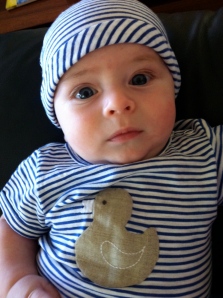
For all the babies

7 Jul

Especially this one: 

Because when the chips are down, what you need is a little bit of love. 

Forever Young

 Bob Dylan

May God bless and keep you always
May your wishes all come true
May you always do for others
And let others do for you

May you build a ladder to the stars
And climb on every rung
May you stay forever young
May you stay forever young.

May you grow up to be righteous
May you grow up to be true
May you always know the truth
And see the lights surrounding you

May you always be courageous
Stand upright and be strong
May you stay forever young
May you stay forever young.

May your hands always be busy
May your feet always be swift
May you have a strong foundation
When the winds of changes shift

May your heart always be joyful
And may your song always be sung
May you stay forever young
May you stay forever young.

And for these big kids too:  

When the going gets tough where are the child advocates?

5 Jul

Child advocate Julie Gale of Kids Free 2B Kids, and advocate for girls Melinda Tankard Reist, have thus far been strangely silent on the Four Corners report on child sexual abuse in the Catholic church. As of ten minutes ago, I could find nothing on either of their websites.

While this particular program focused on the young male victims of pederast priests, young girls have also suffered their unwelcome and terrifying attentions, and one can legitimately assume that these crimes against the young of both genders fall within the ambit of the two child advocates.

Both women work tirelessly to halt what they perceive as the sexualisation, objectification and pornification of children and women in the media. While this is a legitimate concern in some instances, compared to the literal sexualisation and objectification of children perpetrated by pedophile rapists, Playboy flogging necklaces to little girls pales into insignificance. Particularly as a responsible adult is presumably involved in the purchase of these baubles, while no responsible adult is involved in the sodomization and rape of little girls and little boys.

Of course, we all have our own particular sphere of interest and expertise, and I’m not prescribing what Ms Gale and Ms Reist’s sphere should be. I am, however, gobsmacked that as very public child advocates with a very high profile in their field, they apparently don’t feel the need to comment on the Four Corners’ revelations on their websites.

There are no innocent bystanders when it comes to the abuse of children, and those who remain silent enable its continuation. The responsibility to speak is particularly onerous when one has a public platform as a child advocate.

I cannot imagine a more destructive form of sexualisation, objectification and pornification of children than sexual abuse.

Ms Gale’s motto, according to her website, is “What we allow is what we approve.” Indeed, that is so. Silence implies tacit approval. Or lack of courage. Or fear. Or cowardice. It really doesn’t imply concern or interest. Silence by those who should speak out causes untold damage to children already grievously harmed. Self-described child advocates ought to be at the forefront of protest, at the very least with an acknowledgment and expression of concern, and an intention to raise awareness.

Both Ms Gale and Ms Reist have a commendable record of success at persuading various commercial interests to stop selling this or that on the grounds that the product is damaging to children’s sexual develoment and self image. They have the infrastructure in place and the following, to launch a huge campaign on behalf of children who are being sexually abused. They have the means to launch a petition for a royal commission into the Catholic church’s abuse, and its cover up of that abuse. If they choose to use their power for that good. It would take an hour or so at the most. Then they could go back to their main interest: images of sexualisation, objectification and pornification, rather than the real thing in our own back yards.

Time to walk the talk, ladies?

Abbott on Pell: “One of the greatest churchmen Australia has seen.”

4 Jul

When I saw Cardinal Pell on Qanda a couple of months ago, I felt a kind of  appalled pity for the man.

Pity, I hasten to add, is not an emotion I enjoy, based as it is in disinterested contempt, and complete lack of interest in its object’s fate. When I pity someone, they are pretty much dead to me.

Pell seemed subject to moments of confusion and rather bad judgement.

Then, in the ABC Four Corners report this past Monday on the sexual abuse of children by priests of his church, Pell again seemed quite out of his depth, and rigidly adhering to a well-worn script.

Pell clings to his belief in the word of three priests, even though there is very strong evidence to the contrary, including an admission in court by an accused rapist, Father F, that he did indeed perform some of the criminal acts of which he stands accused.

Pell was himself accused of sexually molesting a child,as is discussed here in an 2008 interview conducted by ABC journalist Ali Moore with former priest and now commentator Dr Paul Collins. Reading this 2008 interview I was struck by the similarities. Four years later, Cardinal Pell does not seem to have changed his perspective, in spite of more ghastly revelations about the behaviours of his priests, and the number of suicides thought to be related to sexual abuse.

I’m sometimes undecided as to who is the worst offender: the perpetrator or those who cover up for the perpetrator. I can only imagine the number of little kids whose lives would have been so different if the church authorities who knew about the pederasts in their ranks had taken proper action. Proper action in this instance is informing the police, however the Catholic church seems loathe to concede that sexually molesting a child is a crime, and treat it accordingly.

I note here that Cardinal Pell was very, very quick to threaten legal action against Catherine Deveney when he felt she had slandered him in a tweet. His reputation apparently warranted the protection of the law, unlike the lives of the children whose rape and molestation his church failed to report to the police.

As far as the mistreatment of children is concerned, I’m of the opinion that there are no innocent bystanders. Everyone who has anything to do with children professionally is required by law to report suspicions of abuse. This ought to include the Catholic church. When anyone knows something bad is happening to a child and keeps it quiet, she or he is enabling the perpetrators. The church takes that one step further and protects them as well.

It is my hope that like the US, it will be possible in this country to charge Catholic bishops and hold them criminally liable for the behaviours of the priests they supervise.

In the meantime I take my hat off to the ABC journalists who are persisting with this story, as well as other stories of child abuse. As a survivor, it does my heart good to know there are people willing to pursue these criminals and uncover their crimes. It is very difficult to speak about these things when you’ve endured them. We need others to help. We need others to confront and challenge those who would be innocent bystanders, and in their denial and silence, enable abuse to continue. I know it’s awful to have to listen to these things. But it is far, far worse to experience them.  Thank you to everyone with the courage to listen and care, and say so.

Finally, Opposition Leader Tony Abbott is credited here with having described Cardinal George Pell as ” one of the greatest churchmen Australia has seen.” If this is a measure of Abbott’s ability to judge character, and an example of someone he profoundly admires, I fear even more for our future should he become the next Prime Minister.

Tony Abbott, trainee priest, St Patrick’s Seminary

A voice for the children, by Gerard

2 Jul

Guest post today by the lovely Gerard Oosterman who wonders why children don’t have more say in their future when a family breaks up.

Children should be seen but not heard?

In Australian Family Court disputes it is often the children who miss out on being heard by a Federal Judge or Magistrate. In most cases, even though the judge or magistrate has the power to hear the children, it is rarely exercised. It is usually the Independent Children’s Lawyer who represents the child/children/ (ICL).

In Germany and many other countries, the Family Court Judges always hear the child. There is a growing understanding of the importance of listening to the children involved. It is the child, more than anyone else, who will have to live with what the Court decides.

While Federal Judges and Magistrates can hear the children in Court, a survey has shown most decline the opportunity and rely on the ICL and other ‘experts’ for advice during the procedures. The cases coming before the Family Courts deal with property and access to children. The fact of Court action is generally a sign that the parents haven’t been able to amicably deal with the separation. Access rights to children are often just as heatedly fought over as the division of property.

The Family Court in all cases decides what is ‘best for the children.’ It seems ironic that in Australia the children are not given the opportunity to bring their wishes before the Court, as they are in many European countries that are signatories to the Convention on the Rights of the Child (UNCRC).

While it is unsatisfactory to say that children should all have the same rights as autonomous adults, including the rights of freedom of expression and the freedom of association and all other rights that adults own, it is equally unsatisfactory and unjust to say that children have no rights of this kind and that their rights in Court matters are irrelevant to the task of adults determining and deciding what is best. This seems to ignore the claim of children to be treated with respect and dignity instead of, as is often the case, fought over as objects

As Australia has been a signatory to the Convention since 1990, how do we explain why children are not heard in front of a Court and allowed to express their wishes?

Often the reason given is the fear of parentification of the child. This term describes a situation in which a role reversal occurs and children assume the role of parent to protect the adult. Asking a child to decide which parent she or he prefers to spend their time with can cause emotional turmoil.

In Family Court cases it is not unusual that one or both parents are deemed to have put the child in this position to try to enhance the prospect of getting more time with the child than the other parent. The child is expected to act as the parent to their own parent and sometimes over other siblings as well. The issue is very complicated because in some cases one of the parents might indeed be totally unsuitable as parent or as the primary caretaker.

However, parentification together with alienation theories about children in relationships remains highly controversial amongst psychologists, psychiatrists and therapists, who claim they are often simplistic or erroneous.

In the Family Courts it is the job of the ICL to sort the wheat from the chaff and investigate to get to the bottom of the issue if ‘parentification’ of the child is occurring. The Court appointed lawyer acting for the child will then call in an ‘expert’ in those matters. Both parents are to meet up with the ‘expert’ who is often a qualified child psychologist or therapist. Anyone who ever had dealings with Courts knows that at every turn huge amounts of money is spent. The ICL with the help of the Expert’s report weigh heavily in the final decision-making by the Judge or Magistrate.

The report by the children’s expert is drawn up as a result of a few hours or a day spent by both the parents and the children with the expert. Sometimes first in each other’s company then separately and then the children on their own. After parents as applicant and respondent  have filed into Courts numerous times for ‘mentioning’ and ‘final hearings’ the case is put and then includes the affidavits, responses and reports by all the parties’ lawyers including the ICL.

But, when all the lengthy proceedings come to an end, there is this glaring omission. The fundamental rights of every person including children to be heard in Court are totally ignored.

The ICL and other child experts cannot help but put in their own submissions and even if based on the best of intentions and the best advice given, it is second-hand and not direct. How is it possible that the ‘best interest of the child’ excludes this fundamental right?

One reason given is the perceived intimidation of the Court system with its tradition of the dreaded three knocks on the door and ‘all rise in Court’, the bowing of all and then the entrance of the black gowned judge or magistrate on the raised podium. The procedures are often seen as unfriendly if not silly as well. Surely the system can change when children are involved and become child friendly. I could ask, why not change it even for adults?

We love adhering to convention, but what about the children?

Gerard is an artist, writer and farmer. He blogs at Oosterman Treats Blog

On desperation

30 Jun

While politicians of various bents have found it expedient to weep in the Parliament these last days, what is absent in the asylum seeker policy brawl is an indication that the majority of them have any understanding at all of the desperation that drives the global movements of refugees.

And it is a global movement and we must eventually accept that we are not the only developed country stateless peoples look to for refuge, and indeed, we are so un-beleagured as to make us the laughing stock of nations whose borders are crossed by thousands of asylum seekers every week.

What I’m about to write about desperation may be unsettling, and may act as a trigger for some people. It is my experience of desperation, and it’s an experience that gives me the authority to speak on the topic.

As a young girl, from the age of about seven, I lived in very dangerous circumstances. I was beaten with hose pipes, fishing rods and my stepfather’s bare hands. I was tied up, always after I’d been ordered to remove my clothes. On many occasions until I was fifteen, I was threatened with death by this man who wielded a loaded gun that he fired into cushions. I was regularely absent from school because of my injuries.

I was first raped when I was ten. These rapes continued at regular intervals until I was fifteen. I cannot talk about these rapes more than to state their occurrence.

My stepfather was a doctor, and he performed various medical procedures on me in the surgery that was attached to our house. I cannot talk about these.

He also photographed me, posed and naked from the age of ten.

There’s nothing to be gained for either me or my readers in attempting descriptions of these events, and I am barely able to write this much. I am trembling. I am sweating. I am weeping. My heartbeat is loud and irregular. I feel nauseous. My body hurts everywhere. The pain in my head is appalling.

During those years  I told at least seven adults what was happening to me. Every one of them sent me back.  Every time I arrived home I was beaten, tied up, threatened with death if I did it again, and raped. I never stopped telling people, even though I knew the next telling might cost me my life.  In retrospect this seems to me something of a miracle. I love my young self, I love her with all of my heart, for her determination to help herself survive, for her willingness to risk death in the attempt to have her life.

So what does this have to do with asylum seekers? As Judith Lewis Herman wrote in the introduction to her book “Trauma and Recovery: From Domestic Abuse to Political Terror:”

This is a book about restoring connections…it is a book about commonalities: between rape survivors and combat veterans, between battered women and political prisoners, between the survivors of vast concentration camps created by tyrants who rule nations and the survivors of small, hidden concentration camps created by tyrants who rule their homes…

One of the things we have in common, those of us who survive the small, hidden concentration camps, and those of us who survive political terror, is our experience of desperation. Desperate to escape. Desperate to live. Desperate to experience the ordinary. Desperate to feel we can sleep safely in our beds at night, whether we fear the invasion of soldiers, or the stealthy night time visits of the rapacious stepfather. Desperate to be allowed to eat and drink. Desperate to live like a human being, untrammelled by the kind of primitive terror that reduces everything to a question of day to day survival.

The will, not just to live but to live a decent life, is inexpressibly powerful. Death can seem preferable to suffering the tyrannies of the imposed will of another, tyrannies that strip one of all integrity. This much I know. I know it with the full authority of my experience, and my survival.

One does not have to suffer in order to appreciate desperation. One does not have to experience prolonged terror and coercive methods of control. What is required for understanding is emotional intelligence and imagination. The majority of our politicians would seem to be seriously lacking both. Instead they appear to be, in the words of philosopher Martha Nussbaum  …people whose imaginations are blunted, who simply refuse the acknowledgement of humanity.

The odious tears of the sentimental who weep for the cameras yet support policies that will condemn the desperate to even more desperation, are deeply offensive to me as a survivor.  Your emotions count for less than nothing, when deterrence is your only answer to desperation.

The leaders of this country are behaving as did those adults who sent me back to the dangerous hell that was my home. I do not think those people were evil. I think they didn’t want to become involved. I think they were incapable of imagining the circumstances I was attempting to escape. I think they wanted more than anything to maintain the equilibrium of their lives, and I was a child who could disturb that forever. They moved me on, out of their sight and mind. They were cowards.

The concept of a human right to ask for help and protection seems barely to exist in our world. Such requests are viewed as impositions, and those who make them, importunate. The implication of our treatment of asylum seekers is that they are sub-human, and that seeking asylum is a criminal offence. We deny any recognition of a priori suffering, and instead focus on maintaining an abstract construct of national sovereignty.

Those who denied me asylum did so to maintain their domestic sovereignty. They could not let me in, for fear of the ruptures dealing with my suffering would provoke.

I can never forget desperation. I can call it up in an instant. When I see it in another I have to respond. Try as I might, I find it very difficult not to despise those who wilfully close their ears and eyes and hearts to desperation. I have even wished it on them, that they walk a mile in the shoes of the desperate and know what it is to be turned away, when all you are asking is help to conduct a decent life.

Thank you for reading this. I give the last word to Emmanuel Levinas:

To shelter the other in one’s own land or home, to tolerate the presence of the land-less and homeless on the “ancestral soil” so jealously, so meanly loved – is that a criteria of humanness? Unquestionably so. 

Battling the Imaginary Pretentious.

28 Jun

Guest post today by my friend, writer, film maker and photographer Samuel Webster.  The Sydney Dance Company recently performed the show  2 One Another, an interpretation of Samuel’s poetry.

Just to demonstrate how current we are on Sheep, I note that the prestigious Salon.com published on this topic JUST A MERE FEW MOMENTS AGO.

Over to Samuel:

It’s been three months since my last collaboration opened at the Sydney Theatre, and I’ve talked a lot about it. I had been working with Rafael Bonachela and Sydney Dance Company on 2 One Another, and before it hit the stage, I had to do the usual rounds of media to promote and discuss the show. I’ve never minded doing interviews – I don’t find it a grind – because I enjoy talking about my work. Part of that is pure egotism, I’m sure, but I think there’s something more to it. Personally, I think I’m still finding the ‘mythology’ which pop artist Momus has referred to in his own work.

That mythology is part method and part a system of thought. The latter is such that even as I write this, the first time I have done so since undertaking the task of writing poetry for dancers, I find it evolving. It is the system of thought, beyond technique, which gives an individual artist some style. It’s that system which allows me to feel comfortable promoting myself as a film maker and poet, a photographer and painter. Because it sits above the technique and medium and informs the message.

It is this state of mind that I took into the studio. Without it, a poet working with dancers might turn out to be as strange as it sounds. By adapting myself as someone who represents and interprets, and forgetting the technical element with which I do so, I feel that I can work in any scenario based in impulse response. It is for this reason that none of the interviews filed about the show refer to the technical. Though I have made some effort to describe the kind of output that the process created, that was not the focus of the work. The focus of the work was always about building that mythology, contained and centralised in the dance studio, to inform the creation of abstract work. It is my firm belief that, unlike other forms of art, modern dance would cease to exist if it let go of the necessity for mythology. For me, contemporary dance’s means of representation is far too abstract to sustain without some grander consideration. Working with Rafael Bonachela may have spoiled me on this fact, because he is a very intelligent choreographer who has almost completely succumbed to the whimsy of such ‘mythological’ elements, yet has the technical ability to back it up. In fact, he is one of the artists I aspire to be like for this reason. I have not yet found the place where I can surrender to those elements, though I suspect that is part of an artist’s ongoing development. This is not to say that I wish to find my place in complete abstraction, but rather, I would like to train myself in a method which mythologises the real.

Reality is the catalyst for abstract expression – it is the anchor for grander ideas. Over the last few years, I’ve found myself strangely enamoured by work which finds itself in reality. Like Billy Collins naming the silence between himself and his dead father, or the way modern poets experiment with Twitter as a social medium of brevity. These are intellectual rich endeavours, yet sit in a plain of reality I find comforting. However, the appeal of such things has the by-product of leading me away from the simple enjoyment of the popular. Pop music is the first casualty, but film is sure to follow as I sink deeper into the comfort of pretence.

That dreaded term, ‘pretentious’, seems now to be the empty dismissal of anything lacklustre to which effort seems to have been applied. Indeed, even engaging with it is likely to have me branded likewise. Nevertheless, I don’t see any reason to shy away from an idea for the sake of avoiding marginalisation.

It seems that the term ‘pretentious’ is the cry of the less engaged when feeling forced to think beyond the pure aesthetic of a piece of art. Why does that drive me away from pop culture? Because, those who really engage with the genre can come to one of two ends:

  1. Pop culture is naturally, and intentionally, devoid of meaning.
  2. Pop culture is unaware of the triviality of the tropes it propagates.

Pop musicians and blockbuster directors don’t guide us either way, because a belief in either direction requires conviction to the cause. Admitting superficiality could be a death knell for an artist who has been perceived otherwise.

So, instead of degrade a genre which the majority enjoys, we say that ”art has changed” and the art which refuses to change is “pretentious.” The term pretence literally refers to the act of intentional deception. But by that virtue, all art is pretentious, because even the furthest attempts at portraying reality are not without some form of deception. This is not a bad thing, because deception (a magician’s disappearing act) is not the same as insincerity (a loaded roulette wheel). Pretence seems necessary to me, so ‘pretentious’ as a term should not be used to degrade cerebral art.

Additionally, the notion of Art evolving into Pop Culture we see today is patently false. If anything, art has split into Intentional Art and Entertainment, and it did so because people engaged in the Entertainment business hijacked it with considerable amounts of money.

Perhaps, we could redefine the way we refer to the cultural landscape: ‘Art’ could refer to the use of a medium to bring about a point of some philosophical or intellectual statement or engagement; ‘Culture’, the repetition of specific tropes within a society which promote engagement and work toward some form of identifiable structure; ‘Entertainment’, is the use of a creative medium to fascinate and engage without aspiration to a developing consciousness. Instead of just accepting that the modern world’s concept of art is preoccupied with nightclubs and the hedonistic exploits therein, why not establish pop music as entertainment and deconstruct it through aesthetics instead of philosophical arguments?

Of course, none of this is particularly new, though we have more and more platforms on which to discuss it.  In 1988, Momus released “Tender Pervert”, a stand out track of which claims: “Whenever I played my protest songs, the press applauded me, rolled out the red carpet and parted the red sea. But the petit bourgeois philistines stayed away. They preferred their artists to have nothing to say.” (I Was a Maoist Intellectual)

If the music industry claims to be interested in art, why did people call for censorship when Sinead O’Connor tore an image of the Pope on national television? Why is such an act not standard fare?

A year after releasing Tender Pervert, Momus responded to the accusation that he could be considered pretentious with this: “You’ve got to have a mythology, a set of ideas to live by. Otherwise you have to get your ideas from News at 10 or Brookside or something. Pretentious – okay, I’ve read a couple of books in my time, because I was lonely and had nothing better to do on a Friday night than read Nabokov. I would probably have preferred to go down to the Stretton discotheque and boogie down, but that’s not the way my life turned out.”

To consider the pretence of something is like breaking apart the “technical playground” of the Ferris Wheel. Sure, knowledge of physics isn’t a requirement to enjoy the ride, but the manipulation of that knowledge, on the engineer’s behalf, is key.

The problem with conflating pretence and insincerity is simple. What should be niche, high order thinking, is dismissed because of some consideration that says an aspiration toward intelligence cannot occur without some level of arrogance. This way of thinking implies that the intellect exists only for perpetuating elitism, when it is more frequently the case that art aims to destroy the bourgeois, not strengthen it. In fact, if there’s anything that perpetuates the elite, it’s the pop music industry which profits hugely while paying artists a pittance.

With lovers of entertainment judging the progression of art, it seems that the only way to avoid the cry of arrogance seems to be to shoot for the middle-ground. This is the problem with bundling the arts and entertainment together. It is a bundling which places soviet war anthems alongside UK dance hits. The genre matches but the intention, reception and intellectual potential differ. Sadly, funding is also lumped together in this way, such that $1 million dollars for the rights to Annie is quoted, alongside grants for new opera, dance and theatrical works, as ‘funding for the arts’ when they are quite different in form.

My next project is to shoot images in Tuscany, to experiment with the concept of memory and history and clashing nostalgias. Is this pretentious? Of course. It is an engagement with a localised mythology, defined by geography and constrained by medium. Without a doubt, the focus will be intentional and the colour balance deliberately manipulated. To lose the mythology would be to turn myself over to pure aestheticism and publish only those images which matched the generic representation of Italy. There may be those who have no need for deeper considerations than this but, for me, that is not art; it is entertainment. I have no wish to be an entertainer.

Read more about Samuel Webster here.

 SAMUELS NEXT PROJECT, BELLA TOSCANA, IS PUBLICLY FUNDED IN EXCHANGE FOR REWARDS FROM THE PHOTOGRAPHIC SERIES. VISIT THE PROJECT PAGE ON POZIBLE FOR MORE INFORMATION

“If that means deaths at sea continue, he said, so be it.”

26 Jun

As I read today’s piece by Peter van Onselen on the asylum seeker policy stand-off, the following stood out: 

One well-placed Liberal source told The Australian that Abbott would rather see Labor continue to bleed politically with ongoing boat arrivals. If that means deaths at sea continue, he said, so be it.

Let me just say that again.

One well-placed Liberal source told The Australian that Abbott would rather see Labor continue to bleed politically with ongoing boat arrivals. If that means deaths at sea continue, he said, so be it.

Fasten your seat belts: turbulence ahead

25 Jun

It was with a certain contempt that I watched footage of Opposition Leader Tony Abbott piously declaring that he would hold his forked tongue for twenty four hours while the bodies of drowned asylum seekers were recovered and taken to a makeshift morgue on Christmas Island.

And I noted the absence of any comment, pious or otherwise, from Shadow Minister for Immigration Scott Morrison. Perhaps they’ve put the muzzle on in case he comes out with observations somebody might construe as racist.

However, it seems inevitable that all gloves will be off when Parliament resumes today, and we will be subjected to the self-interested politicising of the plight of asylum seekers that began with John Howard and hasn’t stopped since.

No doubt the government will attempt a revival of its Malaysia plan. This surely will necessitate re-negotiations with that country, as the initial agreement covered only 800 boat arrivals, after which, presumably, we went back to how things always were.

Mr Abbott will no doubt adhere to his demands that the government re-open his beloved Nauru detention facilities, because, he will argue, when they were operative they stopped the boats. Quite how the Nauru option will stop the boats is unclear to me, after all, practically everyone who got to Nauru was found to be a refugee and resettled. Hardly seems like a disincentive.

What both major parties apparently fail to grasp is the desperation of people who undertake these journeys. The dangers they face are no deterrent. They risk their lives to have a life. An inability to comprehend desperation is fairly typical of most politicians. They lack the imagination, and are far too occupied with saving their own arses than they are with the plight of human beings in dire circumstances, at home and abroad. Lack of political will is responsible for some of the most obscene travesties on the planet.

What we urgently need is a regional approach to managing people movements. This will require a degree of co-operation between the government, the Coalition and the Greens. This possibility looks as likely as Gina Rinehart funding care and housing for homeless children.

What we will get is yet another extended brawl that will achieve nothing. Then there will be another catastrophe in which more lives are lost. Then we will have another extended brawl that achieves nothing. Then there will be another catastrophe in which more lives are lost.

As well as the asylum seekers, you know who I feel sorry for? The good people of Christmas Island who have to deal with the stark reality of these events in their back yards.

This piece from the Castan Centre unpacks the complexities with clarity. The author addresses the notion of saving lives by deterring asylum seekers from embarking in the first place. Perhaps, if our objective really is to save lives, we would supply safer boats?  Or is the saving of life a cover for deeper concerns about border protection and just stopping the boats?

Thus far our politicians have proved themselves entirely inadequate on this matter. It isn’t good enough. Refugees are not going away. The numbers seeking resettlement here are miniscule compared with many other countries. It is a regional problem, but how can Australia take a responsible role in addressing it at this level when our politicians continue to domestically exploit widespread human misery to further their own interests?

Don’t let facts get in the way of hate…

21 Jun

In December 2010 when the WikiLeaks cable dump hit the headlines, Prime Minister Julia Gillard declared: “I absolutely condemn the placement of this information on the WikiLeaks website – it’s a grossly irresponsible thing to do and an illegal thing to do.”

A couple of days later, Ms Gillard was at a loss to explain her inflammatory comments.

“The foundation stone of it is an illegal act,” Ms Gillard told reporters in Canberra.

But the “foundation stone” was the leaking of the documents to the website, not the publishing of the cables.

“It would not happen, information would not be on WikiLeaks, if there had not been an illegal act undertaken,” Ms Gillard said.

Mr Assange’s lawyers have said they are considering defamation action against Ms Gillard after she accused the whistleblower of “illegal” conduct over the leak of US documents.

Thus our Prime Minister launched a campaign of misinformation about both Wikileaks and Assange, based solely on her personal opinion and clearly with little if any regard to her legal training.

The government then attempted to find legal cause to withdraw Assange’s Australian passport, in spite of the fact that he had broken no Australian laws.

Hardly surprising then, that Assange and his team of lawyers have come to believe he’s been abandoned by his government. While it may be true that Assange has received whatever consular support is due to him, Prime Minister Gillard had Assange hung, drawn and quartered from the get go, and she has never retracted her accusations and her condemnation.

If we follow Ms Gillard’s logic, then the newspapers who published the leaked cables they obtained from Assange, newspapers such as the Sydney Morning Herald, The Australian, The Guardian, The New York Times et al, are also acting irresponsibly and illegally because ““It would not happen, information would not be on WikiLeaks [or in the SMH, the Oz, the NYT, the Guardian et al] if there had not been an illegal act undertaken.” 

At this point I quote Anna Funder, winner of this year’s Miles Franklin Literary award:  I have spent my professional life studying totalitarian regimes and the brave people who speak out against them. And the first thing that someone with dictatorial inclinations does is to silence the writers and the journalists.


This is a link to an account by The Guardian of the events in Sweden that have led to Assange being accused of sexual misconduct. As you can see, the circumstances as described are unsavoury, though they would not all necessarily be considered sexual offences in Australia. They are also entirely a matter of she said/he said.

I have no idea of their veracity and I believe Assange, for his own sake, ought to have the opportunity to respond to the allegations made against him.  As well, the complainants are entitled to have their allegations addressed. It is puzzling that Swedish prosecutors are delaying the resolution of the women’s complaints by demanding, against, apparently, their own Supreme Court decision on interviews (see below) that Assange return to the country, rather than conduct a video link interview with him.

Bjorn Hurtig, Assange’s early Swedish counsel, makes these observations in his witness statement:

I also think it unreasonable that in a case of this kind, where extensive mutual assistance between the UK and Sweden would readily permit a video-link interview, for the prosecution to be so absolutely insistent that Mr Assange return (and at his own expense) to face questions that could easily be put over the video-link.

[Assange has many times offered to do this, and offered to engage in interviews with Swedish officials in person in the UK. The Swedish authorities have consistently refused these offers, demanding extradition instead. Assange continues to offer to answer the allegations via video link from the Embassy of Ecuador.]

I note that at least one of the complainants have been interviewed by telephone and the insistence that Mr Assange come back to Sweden merely for an interview is, therefore, unreasonable and contrary to the decision of our Supreme Court (NJA 2007, p. 337).

The problem for Assange with returning to Sweden is explained here. Briefly:

Michael Ratner of the Center for Constitutional Rights, which represents the WikiLeaks founder in the US, said Assange and his legal team considered it highly likely that he would face an onward extradition to the US if he were sent to Sweden.

The concrete reality [is] that he was facing a political prosecution in the US, he was facing the death penalty or certainly life in jail. Faced with that, he had extremely limited choices.

The US empanelled a secret grand jury investigation into WikiLeaks and Assange in May 2011, but has not issued any requests for his extradition to the UK or Sweden. However, Ratner said both he and Assange believed it was “more likely than not” that a sealed indictment had been drawn up.

According to a Human Rights Watch report, Sweden has form. In 2001 Sweden was involved in the illegal US rendition of  two asylum seekers suspected of terrorism from Stockholm to Cairo. This involvement violated the global ban on torture. Both asylum seekers were tortured when they arrived in Egypt, despite assurances given to Swedish diplomats.

The UN Committee Against Torture concluded that Sweden violated the Convention against Torture by illegally expelling him [Al Zari] to Egypt, and stated that “procurement of diplomatic assurances [from Egypt], which, moreover, provided no mechanism for their enforcement, did not suffice to protect against this manifest risk.”

The US has imprisoned Private Bradley Manning, the WikiLeaks cables source, in a manner that has been described by Glenn Greenwald as “conditions that constitute cruel and inhumane treatment and, by the standards of many nations, even torture.”

One need not be a conspiracy theorist to see where this is headed. The bizarre refusal by Swedish authorities to question Assange by video link in an interview which is designed to establish whether or not there are grounds for bringing charges against him. The oft -forgotten fact that Assange has already been questioned on these matters while in Sweden, the allegations were dismissed, and he was allowed to leave the country.

And on the matter of these allegations it’s worth reading this brief interview with Oscar Swartz, author of A Brief History of Swedish Sex: How the Nation that Gave Us Free Love Redefined Rape and Declared War on Julian Assange.  Swatrz claims that  in Sweden: “Sex is being increasingly used to control communications – and as a political weapon,” and says his book shows “how Sweden descended from one of the western world’s most sexually liberated nations to its most repressive.”

The hatred expressed against Assange in Australia is frightening, and much of it seems to be based on personal antipathy. A great deal of it seems to originate with journalists and has from the start, as I wrote in these two articles in December 2010

It is even more frightening in the US where there have been calls for his assassination and demands that he be hunted down like bin Laden. Hatred such as this, and the unworthy example of presumption of guilt set by Prime Minister Gillard at the start of the story obscures the complexity of the narrative, and reduces it to a George W Bush story of good versus evil.

Personal opinions about Assange and his character ought not to blind anyone to the bigger picture unfolding here. There is something rotten in the manner in which these events have been and continue to be handled by the Australian, Swedish, and US governments. This should sound alarm bells for all of us, especially, one would think and hope, for journalists and writers whose responsibility it is to hold governments to account and protect us from dictators. WikiLeaks efforts to do this may have been clumsy, and at times carelessly cavalier. However, to my mind, Bradley Manning, Julian Assange & WikiLeaks have struck a blow for transparency in high places that in spite of claims to the contrary has struck nerves. For this they have my admiration and my ongoing concern for their welfare.