Asylum Seekers: what it costs Australian governments to persecute stateless persons

12 Nov

 Asylum Seeker Three


The foreigner is the political precondition of the nation state… Costas Douzinas.

Australia, while remaining a signatory to the United Nations Convention relating to the status of refugees, long since gave up any pretence of observance of international human rights in favour of a nationalistic observance of state sovereign rights. State sovereignty permits governments the right to exclude persons the state deems unworthy of inclusion.

The power of the state to exclude is perhaps the fundamental state power.

Ideological, racial, economic and political factors are the criteria for deciding who is and is not included in the nation-state. As Hannah Arendt noted, statelessness is not a problem of geographical space, but of political space.

The stateless person has as their only descriptor the fact that they are human. Ironically, this strips them of their right to human rights, rights which are only available to them if they are citizens of a state. It is not enough to be human. One must also belong to a state in order to claim human rights. Arendt suggest that the only fundamental human right is the right to have rights. Asylum seekers who have a legitimate right to arrive by boat in Australia are stripped of the right to have rights once their vessel is intercepted by Australian authorities.
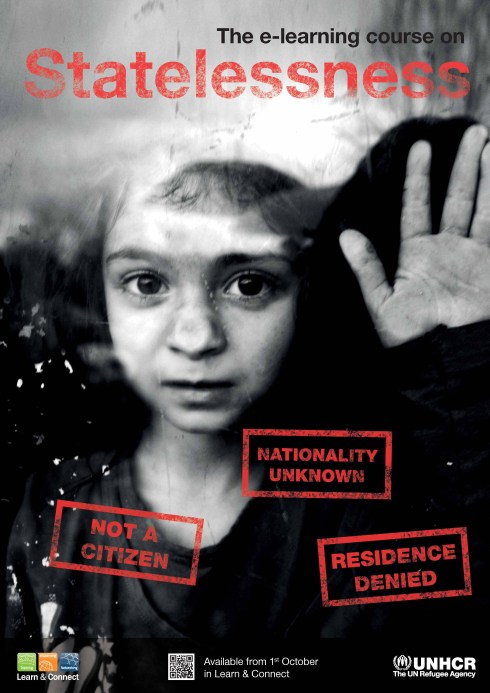
 

Stateless Persons UNHCR

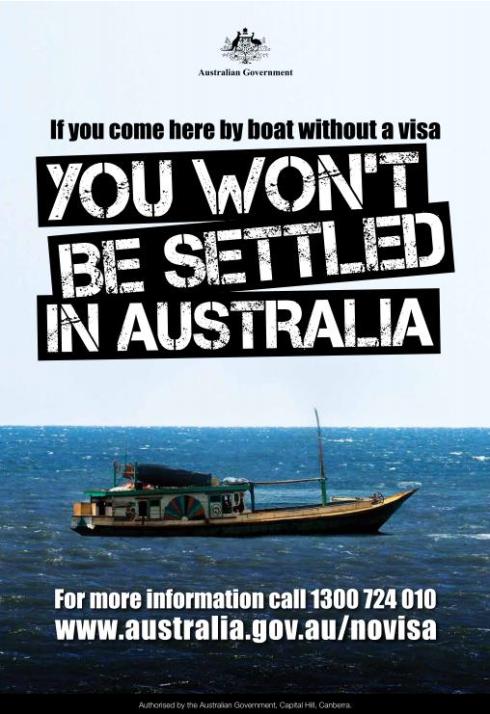
Persons seeking asylum from persecution who attempt to access Australia by boat are singled out for exclusion, and though their method of arrival is perfectly legitimate under the Convention, they are criminalised and detained in off-shore camps. Detention camps on Nauru and Manus Island are all that is offered to de facto stateless persons, that is, refugees unable to claim the human rights afforded by citizenship. Persons detained in these camps are exempted from “normal” laws. The methods of addressing their plight are containment and repatriation, or resettlement in another country, rather than granting asylum and legal integration into the Australian nation.

This action against asylum seekers is justified as being in the “national interest,” an abstract concept in which the mystical “nation”  is prioritised over the interests of singular human beings who are dispossessed non-nationals, and therefore considered rightless.  The state is committed to protecting only legitimate members of the nation, the rights of asylum being in conflict with the rights of the state. There is in Australia no concept of offering sanctuary and refuge to those fleeing persecution who arrive by sea. Their loss of place in the world, their loss of belonging, has the effect of reducing them to physical objects, bereft of human dignity, because without rights one is not a person, one is not an agent in the public realm.

In reaction to this deliberate and systematic dehumanisation, asylum seekers held in detention camps on Manus and Nauru behave as did those held in mainland camps such Woomera and Baxter. They sew up their lips in a symbolic protest against the silencing of their voices. They harm their own bodies. They suffer depression and anxiety, and hopelessness. Their suffer the abjection of those who have ceased to belong to any state.

Asylum Seekers Two SMH photo


Sovereignty, like religion, is a constructed knowledge imbued with faux mysticism. The Abbott government’s “Operation Sovereign Borders” appeals to this pseudo-mysticism, offering citizens the opportunity to come together in unity, led by a concerned, fatherly government to protect our nation against the breaching of its borders by the unwanted, stateless foreigner. As Douzinas points out, there can be no nation state without the foreigner; one must have someone to protect oneself from in order to maintain the perceived power of sovereignty.

The asylum seeker is equally imbued with mysticism, of the most negative kind as the assumption is peddled that merely due to the fact of her search for asylum she is morally corrupt and corrupting. Her crime is breaching sovereign borders. She is used as a scapegoat to unite citizens and strengthen boundaries, ultimately supporting the ideology of sovereignty.

What we are doing in this country is wrong. The idea that we must treat people horrifically in order to discourage others from attempting sea journeys is morally corrupt. Action the state is legitimised to take against one group can be and will be extrapolated to other groups, when the state deems it in the national interest. When the fate of human lives is secondary to the rights of the state, we are all at risk.

Is it really in the interests of the citizens of this country that so many billions of taxpayer dollars are eaten up in the pursuit and detention of a relatively few people who arrive here by boat, in the pursuit of the maintenance of our sovereign borders? No, it isn’t. It is, however, in the political interests of both major parties. The cost to the taxpayer of pursuing these political interests is obscene, and it is rising, as this graph from The Conversation shows:


The Conversation


The major parties continue to persecute stateless persons seeking asylum and refuge, solely because of their method of arrival. Australia moves further and further away from the undertakings we made when we signed and later ratified the Refugee Convention. Human beings suffer appallingly in concentration camps, out of sight and out of mind. The matter of the future of stateless persons is a massive global problem, and one that will continue to increase. Australian governments have long thought it is a problem that they can continue to outsource to countries far less capable than are we of providing the possibility of a decent life to those who by no fault of their own, are dispossessed of the lives they once had. This cannot go on. In all conscience, it cannot go on.
All the dead horses

5 Nov

What a vile species we are. Not satisfied with mistreating and murdering one another, we let other species die in our pursuit of entertainment and spectacle.

The overworked term tragic is used to cover all contingencies, the slaughter of civilians, the rape of children, and the  untimely deaths of two magnificent animals, Admire Rakti and Araldo,  after yesterday’s Melbourne Cup. Or as the Guardian reporter puts it, “the race was soured” by these deaths.

What is sour as a barrel of lemons is the sight of animals enslaved for human gratification. I loathe bloody horse racing, and I especially loathe the Melbourne Cup. I was unfortunate enough to be passing a television when a close up of Admire Rakti’s last collapse appeared on the screen. The horse was clearly distressed in his stall, then slowly his poor legs buckled, and I watched, sickened, as he sank to the ground for the last time.  It was fucking awful.

There’s something badly wrong with us. Sadly, this isn’t news, and on the continuum of bloody awful things people do, a dead horse isn’t at the high-end.

You look at the Melbourne Cup spectacle and you think, Christ, these humans, their stupid little “fascinators,” their ugly, ill-fitting clothes, their spine-destroying  heels, red-faced men squeezed into suits and tight cravats, drooling and drunk, all of them screaming at  horses running round in a circle, what the fuck?

All that was missing was Gerry Harvey ranting about how many horses in the Melbourne Cup aren’t Australian anymore, and damn me if we didn’t get that as well.

My friend included me in a sweep. My horse? Unchain my heart. Fucking bloody Jesus, I said. Kill me now.


Julie Bishop and the prism of gender

30 Oct

Gender Inequality

Look. Julie Bishop doesn’t have to call herself a feminist if she doesn’t want to. Her public disavowal of the very political movement that made her success possible says far more about her than it does about feminism. But her refusal to “look at the world through the prism of gender” is insane.

There is nothing in this capitalist world that should not be viewed through the prism of gender, especially if you are  a member of the bloody government. Bishop is one woman who has achieved success at the highest level because of a constellation of fortunate circumstances, including, I’m sure, hard slog. However, there are millions of women who slog just as hard in circumstances far less conducive than those experienced by Ms Bishop. “I’ve had a very privileged upbringing as many women in Australia have,” she says. “We don’t fear violence, we don’t fear hunger. We don’t have the degraded life that many women around the world suffer.”

Um, what? There are millions of women and girls in Australia who fear violence. There are thousands of women and girls  in Australia who go hungry, and are dependent on charity for food and somewhere for themselves and their children to sleep. They don’t count as women? The “we” Bishop speaks of excludes anyone whose life experience does not coincide with her own, a lack of imagination that is a given in conservatives circles.

I don’t give a toss if Bishop doesn’t call herself a feminist. I’m a bit challenged by that myself these days, when feminism seems to have become about the right to sculpt our labia, and binge drink till we vomit in the gutter just like the blokes do. But the ignorant refusal to consider the world through the prism of gender is a symptom of a self-absorbed, smug woman entirely out of touch with reality.

Apart from that, I’m wracking my brains to think of one thing, one single thing Bishop has ever said publicly that is interesting, original or enlightening. She’s like a bloody Stepford wife in the Abbott government.

Christ.

The cupboard under the stairs

29 Oct

A combination of illness and heart carnage has resulted in weight loss that has seen me holding myself together for the last few months with safety pins, and belts with new holes gouged in them by Mrs Chook’s screwdrivers. I knew that somewhere I had a store of thin clothes but I’ve lacked the energy and interest to look for them. I always hurl everything I don’t immediately need into a vast cupboard under the stairs that has no adequate lighting so a torch is required, or one of those reading lights that fit around the head. Having light doesn’t stop me forgetting that at some point I can no longer stand up in the cupboard, and I always crack my head on a beam. Nothing is stored in any kind of order so I have to trawl through all kinds of stuff to find the one thing I need. The whole process drives me mad, but seeing as I couldn’t stand safety pins for another day, I had to do it. I found my thin clothes, which are probably vintage by now but that’s all right, vintage is good, it’s like having a new wardrobe, and the pleasure of wearing something that actually fits me is great.

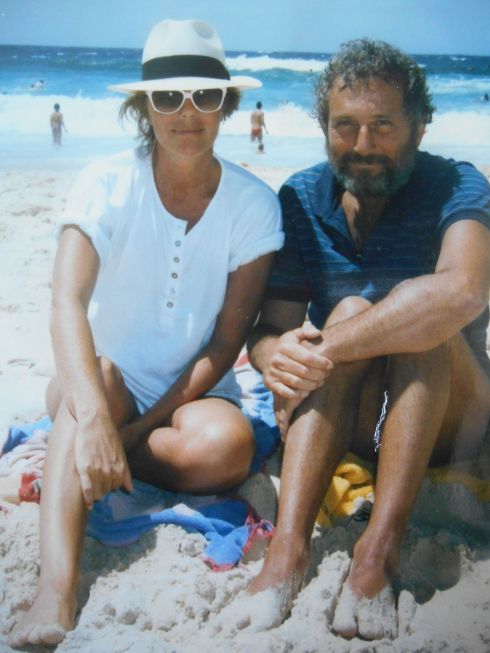
In the cupboard I found my husband and me a long time ago on Bondi Beach

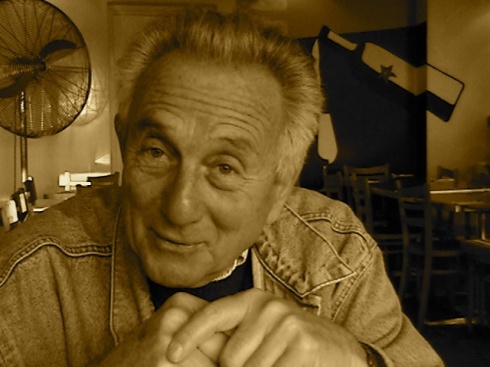
Arnie and me

Arnie was a very unobservant Jew, except for Passover feasts which he loved, but I never acquired a taste for gefilte fish and matzah ball soup and fortunately, he delighted in cooking them. He loved as well getting into vigorous arguments with the man from Jews for Jesus up at Bondi Junction, and if he could, he’d bale up the Hasidic Jews who lived round the corner from us and have a robust exchange with them about the Talmud. Very occasionally he would go to the synagogue, and in his seventies he started Hebrew classes. I used to say he was conflicted about his tribe, to which he invariably responded “Ah, conflicted, schmicted,” with a rabbinical shrug. When I first met my mother-in-law in Hartford, Connecticut, she said, “For a shiksa, you’re a doll.” He always said that when we die we become energy in the universe. I don’t know in which part of the universe he has become energy, but I hope I can find him.

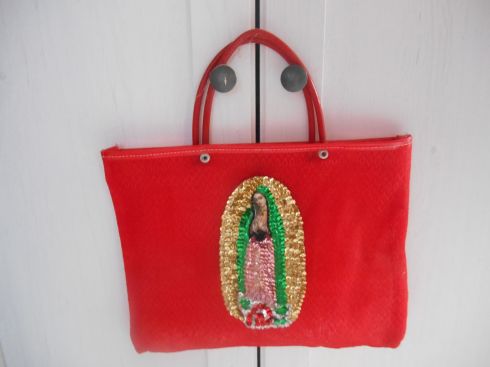
I discovered all kinds of things in my rummaging, including Mexican kitsch I’d forgotten all about. While living there a few years ago I became fond of the Virgin of Guadalupe, not least because she is also known as the Woman of the Apocalypse, “clothed with the sun, and the moon under her feet, and upon her head a crown of twelve stars.” I found her on a handbag in a market

Virgin bag

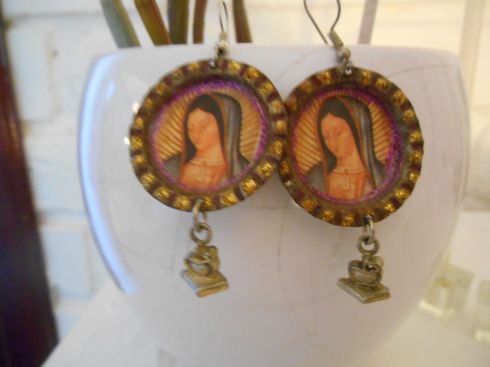
I found her in another market on earrings made from beer bottle tops

virgin earrings two

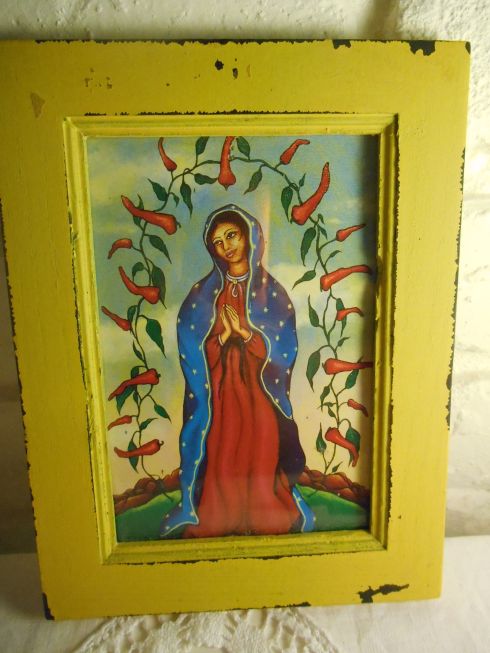
I found her on a postcard that I’ve put in a frame beside my bed

virgin photo

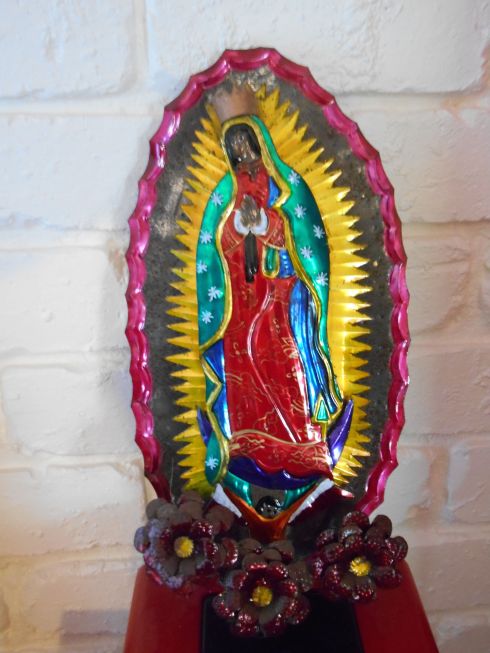
I found her on matchboxes and scarves, and in beaten tin that I’ve hung on the sitting room wall where she can watch over me while I sleep on the couch. She comforts me, and there are times in life when we must take our comfort wherever we can find it.

virgin guadalupe

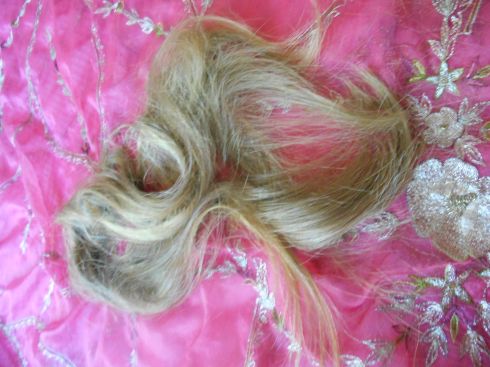
Then I found my hair, cut off when I was twelve

Hair aged 12

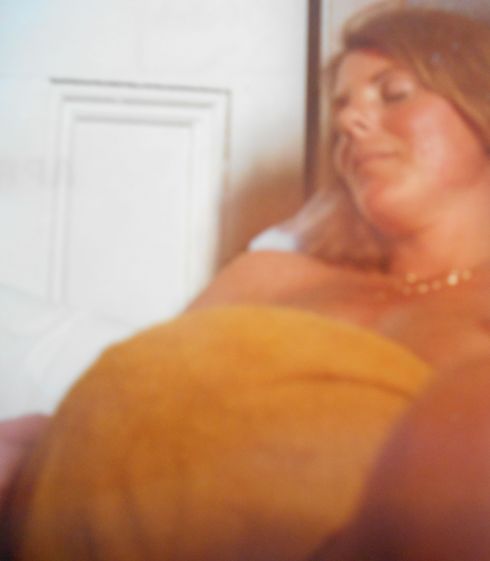
And then I found this

In labour

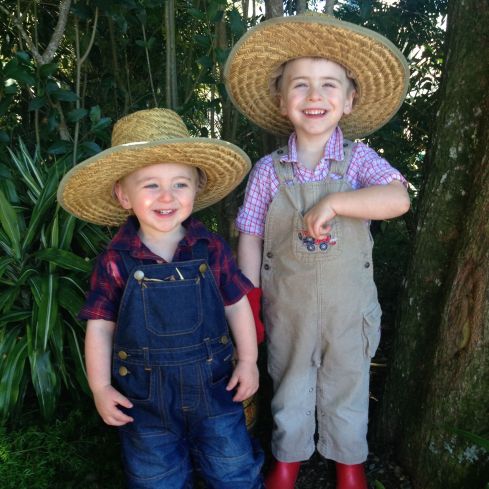
The child I gave birth to that April day is now the father of these two

farm boys

And after being in that cupboard I like to fancy that we are all women of the apocalypse, clothed with the sun, and the moon under our feet, and upon our heads a crown of twelve stars, and if I can remember that when I go into the universe perhaps my husband will find me, and I won’t even have to look for him.

Intimate images: after the love has gone

24 Oct

So, won’t you let me see, /I said, won’t you let me see, /I said, won’t you let me see/ your naked body?


The Victorian Parliament has introduced draft legislation that makes distribution or the threat of distribution of intimate images online without consent a criminal offence. There is, it appears, a burgeoning of “Revenge Porn” sites where aggrieved and bitter ex lovers can post photos taken in happier times of their partner’s private bits, often selfies taken by that partner. Anecdotal evidence has it that perpetrators of revenge porn are mostly male, however, it is not unknown for wives or girlfriends to post sexually explicit photos of their former partner’s new lover online, if they’ve managed to get hold of them.

Common advice as to how to avoid having your lady bits made available to the public gaze without your consent includes never taking or allowing photos of them to be taken in the first place. This is tantamount to advising us to avoid rape by staying inside unless we’re accompanied by bodyguards – the fault lies not with those of us who’ve given lovers intimate images, but with the lovers or their associates who distribute them without our consent. This ought to be self-evident, after all, who is ever advised never to leave home if their house is burgled, but because it involves sex and female bodies, responsibility defaults to women to protect ourselves by crippling our lives.

As a woman who has (for the first time in her life and at an age where one would not expect to do such things) taken intimate photos of herself and given them to a lover, I feel a certain interest in this topic. When my lover first asked for photos I inwardly baulked. I was a long way from my twenties, I had never before even thought of engaging in such an act. The most I had seen of my own bits was when, like many other young feminists, I squatted over a mirror and had a good look, then later when my sister crouched between my legs with her camera and recorded in astonishing detail the birth of my second child. As a delaying tactic, I asked him what he actually wanted to see. You know, he replied. Not your toes.

I wrestled with this. Deeply in love, I didn’t want to refuse. I feared my reluctance was to do with sexual inhibition that I would do well to overcome, and much of our relationship was about both of us testing sexual boundaries, creating a list of what he called our “firsts.” I love him, I reasoned, so I can do this for him. I began with my breasts. I was pleased with the result, and so was he. We added this to our list of firsts. We moved on to even more intimate bits and I began to enjoy myself, it was exciting, it was fun, it brought us very close to each other, and so I wouldn’t feel alone in the venture and in good faith, he sent me pictures of his bits as well. I loved them because I loved him, but truthfully, a bloke’s bits don’t come near a woman’s for beauty and complexity.

Never in my wildest imaginings did I consider I might one day regret all this.

But I do. The relationship came to an emotionally devastating end. For the last few months I’ve fretted and churned about those pictures that I no longer want him to be able to look at. Several times I’ve contacted him by email, snail mail, and phone messages, asking that he let me know he has deleted the photos and that I don’t have to worry about them anymore. He has not responded to any of my requests. I’m not quite sure what to make of this. Is he exercising vengeful power over me, by refusing to tell me what has become of my intimate photos? Is he determined to keep them, and rather than lie to me has decided to say nothing at all? While I cannot bring myself to believe he would misuse the photos, I don’t know that others with access to his computer would be as discreet, and besides, I don’t want anyone else even looking at them, as they shouldn’t without my consent.

The reality is, once I sent those images to him I relinquished any control over their fate. Sent in deep love and absolute trust, a powerfully bonding “first,” I now no longer have any idea who will see them and in what circumstances, and my former lover seems to want me to live with that distress.

Although I regret engaging in this “first” with someone who was obviously entirely the wrong person to trust, I don’t regret overcoming my inhibition. I don’t regret the deeper acquaintance with my body, though I wish I’d shared that discovery with someone who was trustable. I’m beside myself with rage and hurt at his refusal to reassure me as to the fate of the photos, and at my powerlessness to do anything about this. It is indeed a foul betrayal, and I can only imagine how much worse it is for women whose ex partners actually do post intimate images online without consent. The problem lies not with those of us who share images of our bodies with lovers, but with lovers who lack the sensibility to honour the intimacy of that sharing, and instead choose to cause us fear and distress in their abuse of our trust.

As Leonard Cohen tells it, I don’t have to be forgiven / for loving you that much…


Everything is politics. Discuss.

20 Oct

In this piece on The Drum today titled “Labor misreads the politics of Ebola,” Paula Matthewson argues that the Opposition has misjudged its stance on the Abbott government’s response to the current Ebola health crisis. There was a momentary lament on Twitter about the term “the politics of Ebola” to which Matthewson responded “Everything is politics.” To which I responded “And that is the biggest problem we will ever have to face.”

Everything has a “politics” to be sure, but not everything is solely politics. Good governance, of the kind we have yet to see from the Abbott government, doesn’t reduce every situation to its politics, unless that governance is entirely dedicated to self-interest in which case it isn’t good, or even adequate. Yes, there is a political dimension to the Ebola crisis, and there is a humanitarian dimension, and an economic dimension as well. Privileging the political is of benefit to politicians and their extended entourage, but rarely does it benefit the broader community to have any issue reduced to only one of its dimensions.

This isn’t to criticise Matthewson’s piece, she’s clear about the dimension she’s focusing on. However, some of us nursed a secret hope that the Opposition’s critique of Abbott’s hardline position in refusing to supply boots on the ground in West Africa indicated its humanitarian leanings, rather than being merely the assumption of a conveniently contrary political position, but so bereft are we of trust in politicians we can’t be sure of any of their motives. Leader of the Opposition Bill Shorten delivers his set lines with all the conviction of a wombat brought down by a tranquilliser dart, and while the Prime Minister performed superbly in opposition as the world’s best bovver boy, his affectless promises to shirtfront Putin at the G20 are a bad fit with his current manifestation as our country’s leading statesman. As my grandmother liked to say, you can’t make a silk purse out of a pig’s ear, more’s the pity as the political landscape is currently littered with pigs’ ears, with barely a silk purse in sight.

It’s probably sadly true that every issue has become distilled to its politics, to the exclusion of any other consideration. So we treat asylum seekers abominably, break our necks in our urgency to become involved in distant wars, refuse to send medical personnel to assist with globally threatening diseases, and the rest, all because of political expediency. It has got to the point where to even raise humanitarian concerns will likely lead to a tsunami of mockery. Matthewson may well be right: everything is politics, and if that’s the case, that is indeed the biggest problem we’ll ever have to face.

Should Uthman Badar’s talk “Honour killings are morally justified” have been cancelled by the Festival of Dangerous Ideas?

25 Jun

honour-killing11

Uthman Badar is the Media Representative of Hizb ut-Tahrir, an Islamic organisation whose goals are described on its website as follows:

 4. Hizb ut-Tahrir’s Work

The work of Hizb ut-Tahrir is to carry the Islamic da’wah in order to change the situation of the corrupt society so that it is transformed into an Islamic society. It aims to do this by firstly changing the society’s existing thoughts to Islamic thoughts so that such thoughts become the public opinion among the people, who are then driven to implement and act upon them. Secondly the Party works to change the emotions in the society until they become Islamic emotions that accept only that which pleases Allah (swt) and rebel against and detest anything which angers Allah (swt). Finally, the Party works to change the relationships in the society until they become Islamic relationships which proceed in accordance with the laws and solutions of Islam. These actions which the Party performs are political actions, since they relate to the affairs of the people in accordance with the Shari’ah rules and solutions, and politics in Islam is looking after the affairs of the people, either in opinion or in execution or both, according to the laws and solutions of Islam.

Badar was until today scheduled to give a talk at the Festival of Dangerous Ideas titled ” Honour killings are morally justified.” After a public outcry, Mr Badar’s session has been cancelled.

The fact that I have great reservations about Badar’s proposed talk, and question the title and accompanying précis, does not mean I think it should have been cancelled. The fact that I don’t believe a festival of ideas is a platform for defending or advocating murder does not mean I think Mr Badar’s talk should have been cancelled either, in light of the story becoming rather more complicated with Mr Badar’s assertion that FODI dictated both the title and the content of his presentation, and neither were of his choosing.

It’s a mistake in a debate about free speech to assume that questioning or contesting an opinion equates to a demand for silencing that opinion. It is possible to hold two apparently opposing views simultaneously, for example, objecting to a position while allowing it to be presented and argued. It doesn’t seem possible in today’s climate to argue against a point of view, without an assumption being made that you are attempting to silence that point of view. My right to freely express my doubts and objections is not synonymous with me calling for the speech I’m questioning to be banned. Indeed, accusing someone of denying someone else free speech when they are robustly questioning a perspective, is an effective way of closing down debate.

We still have, if by the skin of our teeth, legal protections in place for when free speech becomes an incitement to perpetrate harm.

If I see a talk advertised under the title “Honour killings are morally justified,” given by an individual who advocates Shari’ah law, I’m not going to read that title as ironic, as has been argued by some. I might if, say, The Chaser used it. I have never associated irony with proponents of Shari’ah law, which might well be a grave misunderstanding on my part, however, the dire consequences of the implementation of that moral code, particularly for women and girls, lead me to believe a statement such as “honour killings are morally justified” is more likely to be literal than ironic when it apparently originates from an advocate of Shari’ah law. I am not Islamaphobic, xenophobic, racist, closed-minded, in favour of censorship, or a denier of free speech, when I question a talk that purports to commence from the alarming proposition that honour killings are morally justified.

It was once in Western culture perfectly acceptable to drown women suspected of exercising supernatural powers, which may not be vastly different from murdering women suspected of offending male sensibilities. I seriously doubt, however, that a talk with the declarative title “Drowning women who might be witches was morally justified” could be offered as an “exploration” of the topic.

Badar has been denied access to one platform, arguably not a particularly large one. He has other platforms available to him from which he is at liberty to express his views. To claim that his freedom of speech has been denied is ludicrous. Should he now post his talk on his website, for example, I’m fairly sure he’ll have a much wider audience, given the publicity, than he’d have enjoyed at the festival. Far from curtailing him this outcry, should he take advantage of it, will allow him to explain his opinions to a much wider audience.

Badar claims he did not want the title used, or the accompanying précis in which he argues that the West’s attitude to honour killings is a form of Orientalism, following Edward Said’s ground-breaking work. In itself this is a problematic thesis as the abhorrence of killing women and girls who have allegedly “shamed” their menfolk is an abhorrence of ghastly murder, rather than an abhorrence of Muslims. Like any other cultural practice, it can be and is employed in racist slurs, but to assume all objections to honour killing are racially motivated is ridiculous.

That the West’s position on honour killings is hypocritical is beyond doubt, given the numbers of women killed by their male family members in Australia alone every year. If this is the direction in which Mr Badar intended to take us, then FODI would have done well to better explain his intentions, and the talk would indeed have been dangerous.

Given that Badar denies that he supports honour killings, albeit it with the caveat “as they are understand (sic) in the West,” I think his talk should have gone ahead. I suspect FODI did not have the appetite for the demonstrations it would likely provoke, and so refused Badar access to their platform. However, if Badar’s claims are true, and FODI orchestrated both the content of his talk and its publicity, one has to wonder what their moral justification might be for the exploitation of honour killings of women and girls, in the pursuit of controversy and publicity.

Those of us who challenged Badar’s advertised thesis have not silenced him. FODI removed him from their platform, with Simon Longstaff, Director of the St James Centre for Ethics, claiming he would not be given a fair hearing. In other words FODI is unable to deal with the public reaction to a dangerous idea they proposed, apparently in their terms and contrary to the beliefs of the speaker, which, when you think about it, makes the whole purpose of FODI rather open to question.

This morning Longstaff tweeted as follows: “The session to explore ‘honour killings’ has been cancelled. Alas, people read the session title – and no further. Just too dangerous.” Unfortunately the session title does not suggest an exploration. It is a declaration: Honour killings are morally justified. Presumably the FODI publicists are aware of the power of a title, and the belief readers are entitled to hold that titles are an indicator of content, unless of course we’re reading News Corpse.

I do not accept there is a cultural context that warrants the barbaric practice of honour killings, anymore than I accept that the Puritans should have tied alleged witches to a stool and thrown them in the river. Therefore, quite what there is to “explore” on the topic is a mystery to me. The slaughter of women and girls for the alleged crime of offending male sensibilities is not a topic for clever intellectual play. Shame on the FODI for considering it to be such.


The house of widows

23 Jun

Mrs Chook, with whom I share a home, two dogs, and much of my life, became a widow some considerable time ago, after nursing her husband through lung cancer. For a while she was a member of the local Widows Club. They had good times, played cards and golf, got drunk and raucous, spoke realistically of the men they’d lost, acknowledging their aggravating complexities, at times speaking ill of their dead because there’s no human being who can’t be spoken ill of to some degree, and the Widows Club women were nothing if not honest.

I was once invited to become an honorary member, not because I was widowed but because I was separated, living life without my husband’s daily presence and sharing it with Mrs Chook, but I declined, feeling out of place. Yes, I’d lost my husband in a very real sense, but to see that misadventure as widowhood did not feel true to me.

A separation is indeed a kind of death. But death has different dimensions, and they must be given their due.

I’m sitting in a bus station watching the World Cup on the overhead TV. I’m between worlds, and remembering another bus station, another World Cup on an overhead TV in Cancun, Mexico, another country when I was alone just like now, and it occurs to me that there is something of a pattern in this, bus stations, football, overhead televisions, a heart in a confusion of desire, loss, grief, a woman facing an unknown future. A sense of the complete unknowableness of certain events, transgressive events that tear apart the fabric of the ordinary, events that force open the portal into the extremities of human experience. I realise I have no control over death, or desire or love, and should I attempt to exert any illusionary control I will make myself ludicrous. There are forces abroad in the world that far exceed my puny human capabilities, and there is nothing to be done but ride them out as best I can.

The bus station today is not in Cancun but Sydney, my husband is dying, and I suddenly recall with bizarre accuracy the notice on the door of a hotel room in Mexico City:

 Many people are injured having fun in Mexico.
Air pollution in Mexico City is severe.
Failure to pay hotel bills or pay for other services rendered is considered fraud under Mexican Law.


 I’m at a loss to understand the workings of my memory until I recall that my journey to Mexico caused my husband great angst, indefinite as I’d announced it would be, determined as I was to go without him as he had travelled so often without me. It marked a turning point in the dynamics between us. I had asserted myself as the leaver rather than the left. Twenty years older than me, he was outraged and bewildered, having spent much of our marriage wishing me to be Penelope, spinning faithfully at my wheel at home and keeping suitors at bay while Odysseus travelled the earth. The role never sat well with me and seemingly out of nowhere I exploded out of it, like a woman blown from the mouth of a cannon. This turning of the tables unhinged my husband somewhat, and he wept at the airport. Not even his tears could melt my determined heart. A woman has to do what a woman has to do I didn’t say, but I could have. These were serious endings. I was no longer who I had been up to that point, and neither was he who had never in his life before wept at an airport, while a woman he loved left him behind.

It is tempting to describe these endings as deaths, but I have a profound distaste for the appropriation of death as a metaphor. There is nothing in life for which death can be asked metaphorically to stand. There is nothing in life that can be likened to the radical absence that is the signifier of death. Death is the one situation in which all hope for presence ends. Up to that point, one has merely endured absence.

I have recently become a legitimate member of the Widows Club, though it no longer exists in its original form. More than three decades of marriage, always unconventional, have ended and I am no longer just living separately from my husband while we continue to love one another in spite of our differences. I am widowed. I have begun the labour of mourning, as Freud described the gradual relinquishing of all hope of connection with the loved one that is made inevitable by his or her death. I will never again see his face. I will never again hold his hand. I will never again climb up on his hospital bed and lay my warm body along the length of his frail and shrunken frame.

It’s the finality that brings me undone. I find myself repeating, in my struggle to come to terms with his departure, I never will again.

In the end, I did not leave him weeping at an airport. He left me. I don’t know if he heard me tell him I will always love him. I don’t know if he heard me tell him he did not have to stay, that I did not begrudge him this journey, that I did not need or want him to remain here with me, that I wanted only his release, that he could leave with my blessing, I don’t know if he heard those things I whispered as I laid my body the length of his, and held his beloved head against my breasts.

 Because we’re alive, we inhabit the country of the living; that which is outside, we don’t have the heart to believe, I read, in Hélène Cixious. She’s right I don’t have the heart to believe, yet it is necessary to find the heart to believe, what else is there to do?  We live in the house of widows, I tell Mrs Chook, sitting on her bed in my dressing gown, Little Dog lying on my feet, you’re so pale, she says, and I don’t tell her I’ve woken up maybe ten times in the night, crying those tears you know are serious because they are hot, and burn their way down your cold cheeks. We will be all right, she tells me. You will be all right. In time. It takes time.

As is to be expected at the death of a loved one, memories are crowding in on me, our life together parading itself well out of any chronological order, according to some time line I cannot recognise as having anything to do with reality. I see him dancing towards me across our sitting room, singing, You made me love you, I didn’t want to do it, I didn’t want to do it, which always symbolised for me his infuriating reluctance to take responsibility for anything. Give me give me give me give me what I sigh for, you know you’ve got the kind of kisses that I’d die for redeemed him, as he always knew it would. The night before he died I found on YouTube a video of him talking about poetry, made just before his stroke. And then, for reasons I cannot explain, I recalled a scene from The Sopranos in which Meadow Soprano sits beside her unconscious father, crime boss Tony, whom she fears is dying, and reads the Jacques Prevert verse:

Our Father which art in Heaven
Stay there
And we shall stay on earth
Which is sometimes so pretty
 

I shall stay on earth, which is sometimes so pretty. Vale, Arnold Lawrence Goldman.

Arnie


When your dad is not the PM

16 Jun

Frances Abbott, 24 year-old daughter of Prime Minister Tony Abbott, made news a couple of weeks ago when it emerged she’d been offered a $60,ooo scholarship to attend the Whitehouse Institute of Design. The scholarship has been awarded only once before, to the daughter of the school’s director, and students interviewed say they had no idea such a scholarship was available, and would have applied for it if they had.

As the scholarship is apparently awarded on merit, the Whitehouse Institute of Design appears to have a remarkably low number of meritorious students, the Director’s daughter and the daughter of the Prime Minister being the only ones considered worthy of such financial largesse in the Institute’s entire history.

Today it’s been revealed that Ms Abbott broke her lease agreement  on an apartment she rented in Prahan, citing lack of security in the ground floor dwelling, and telling a VCAT hearing that “My dad is the Prime Minister” and he and his security teams did not consider the apartment safe for her. Ms Abbott had signed the lease without first consulting her father on the security issue because she wanted to be “independent.”

For reasons I find completely incomprehensible, not least because they haven’t been explained, VCAT found in Ms Abbott’s favour, and she was not obliged to pay $1000 requested by the landlady, a single mother recovering from cancer who was forced to default on a mortgage payment to cover her costs after Ms Abbott broke the lease.

Nobody would disagree that members of the PM’s family need security, however, it is remarkable that Ms Abbott herself did not think about this, or consult her father prior to signing the lease. This does not sound like the same standard of mature, responsible behaviour Mr Abbott demands from other 24 year-old Australians, especially those who are unemployed.

If you are in this category, and your dad is not the PM, you will have to apply for 40 jobs every month for six months before you are eligible for meagre government assistance, and quite how you are going to house, feed and clothe yourself during those six months is anybody’s guess.

Mr Abbott clearly believes young people ought to be independent, unless, of course, they are his young people. Handouts never encouraged anyone to stand on their own two feet, unless of course they are handed out to his children in the form of $60,000 scholarships. If your dad isn’t the Prime Minister, you won’t be offered scholarships nobody else knows about to get you through university, private college, or TAFE,  if you choose to learn instead of earn between the ages of seventeen and thirty. Indeed, the cost of your learning, set to double or triple in the coming years, plus interest, may make it difficult for you to carry the burden of a mortgage as well, so you will be facing extraordinary challenges of the kind we are not used to in Australia, where education has been a right, and not simply a privilege available to the wealthy and powerful.

The matter of Ms Abbott’s security, and the matter of the broken lease are two separate issues. While I sympathise with Ms Abbott’s struggle to carve out her independence, something many of us had to do before we were twenty-four but let’s not carp, surely it is Ms Abbott’s responsibility to fulfil her legal obligations. The lease was signed. The property proved inappropriate after the lease was signed. If this happened to me, or you, we’d be stuck with it or we’d pay the penalty for breaking our agreement. If our dad earned half a million dollars a year, he might help us out with whatever costs we’d incurred, but only if he had political power could we get off scot-free, leaving another out-of-pocket and paying for our irresponsibility.

Mr Abbott insists that families should be off-limits in the political arena. However, he did rely heavily on the presence of his wife and three daughters throughout the election campaign, not least of all to prove he isn’t a misogynist, though I remain unconvinced by that dubious evidence. When politicians’ families benefit from the spouse and parents’ occupation, it is impossible to argue that they should be left out of the fray. They can’t be in it for the goodies, and out of it for the critiques. Ms Abbott is an adult. Her father is making enormous demands on adults of the same age, and much younger.  It is these very demands made by their father that will continue to ensure the Abbott daughters remain under intense scrutiny. The Prime Minister cannot see his daughters favoured, while he subjects the daughters and sons of others to harsh and cruel demands that have the potential to ruin their lives.

No love in Abbott government’s tough

12 Jun

Prime Minister Tony Abbott and Treasurer Joe Hockey have taken to describing their budgetary cruelty as an act of “tough love” for which we may well rail against them in the present, but will respect them for in the years ahead, presumably when we can see how their tough love has achieved the goal of all tough love, that is to bring the poor amongst us to their senses and force them to live non-vulnerable, standing-on-their-own-two-feet lives, or die.

Tough love is a phrase usually associated with advice given to parents of drug-addicted offspring: refuse support in order to achieve a drug-free outcome. It demands that one have sufficient strength to withdraw all assistance that might enable the addict to continue on their self-destructive path. It requires the stamina to watch another spiral into an abject desolation and marginalisation that is allegedly entirely his or her own doing, and in which, the theory would have it, the addict will hit their own personal bottom line and in so doing begin the long trip back to sobriety and a decent life. I have no idea if it works or not.

There is no love in the tough Abbott and Hockey are dealing out to the vulnerable who will bear the brunt of their withdrawal of government support. Indeed, it is very telling that Abbott and Hockey appear to equate (with no evidence whatsoever to support their bigoted assumptions) economic vulnerability with anti social addictions, and have set about “curing” the vulnerability by withdrawing already meagre support in the deranged belief that if you make people starve, they will stop being vulnerable. Vulnerability is, in the Abbott and Hockey ideology, a choice, and people must be forced to stop making it by using the harshest possible methods until they hit their bottom line, and wake up one morning enlightened, repentant, and ready to get a job.

This government has no interest in equality. The admirable ethos of the “fair go,” so intrinsic to what we fondly think of as our national character, has been mangled beyond recognition in the first few months of the Abbott incumbency. Instead, we have Hockey thundering why should you pay for someone else’s education, completely overlooking the fact that someone else paid for his. We contribute to the costs of educating others because it benefits all of us. Educating people gives us the professionals who are absolutely essential to our daily lives and well-being.

Abbott and his government are in the business of installing a new regime of truth, one that is foreign to us, a regime that casts fairness and concern for others in a negative light, a move that is made even more inexplicable by the Christian affiliations of the PM and his Treasurer. The marriage of religion and neo liberalism apparently spawns an extreme of wilful ignorance, and the inevitably cruelty that accompanies the trait.

In his excellent piece in The King’s Tribune, Tim Dunlop argues that progressives need to change the current conversation, that there is little to be gained in agitating for a change in LNP leadership, or castigating Abbott, pining for Turnbull or bringing back the ALP in its current configuration. The Australian ALP appears to be in its own downward spiral, following the lead of the UK Labour Party, described by George Monbiot in this Guardian piece  as selfishly committed to inequality in its acts of omission, and its commitment to supporting aspects of the obscene Tory attacks on that county’s vulnerable.

What progressives must do, Dunlop argues, is work from the premise that we do want a country in which it is possible to offer everyone a fair crack at a decent life, a premise that will lead us in a very different direction from that offered by the LNP. The way in which we might achieve this revolution is by vocalising our resistance to the government’s imposition of inequality as a way of life in our country, using protest and withdrawal of labour. Where there is power there is always resistance, as Foucault noted, and the most powerful form of resistance available to citizens in situations such as ours is taking to the streets, as often as we have to, and letting the government know we are not a people who desire the increased suffering of the already vulnerable, rather we are a people who will fight for the fair go.

There is no love in the Abbott government’s tough. Much as Abbott and Hockey seek to portray themselves as men of character who are willing to risk short-term popularity for long-term gain, the reality is these men have gone for the jugular of the most vulnerable human beings in our country. There will be no long-term gain for the vulnerable. There will be increasing hardship, despair and disintegration. Abbott and Hockey will deliver us a new underclass, generations of citizens who have never been given a fair go.

Vulnerable people have never experienced entitlement, that is the province of the wealthy and comfortable. The age of entitlement is not over, it thrives. The age of the fair go has come to a sticky end, and we will all be the poorer for its death.