Archive | The Personal RSS feed for this section

When you can’t say no

3 Sep
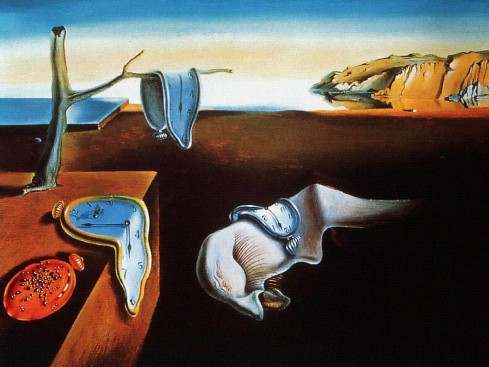
The Persistence of Memory Dali

The Persistence of Memory
Dali


Long read on a difficult topic.

There’s an abundance of evidence in the literature that women who have been sexually abused in childhood are twice as likely to experience sexual assaults at some later point in our lives, than are women who have not.

The reasons for this are many: an inability to recognise and avoid predators, high risk behaviour, depression, post traumatic stress disorder, alcohol and drug use; inability to refuse unwanted sexual contact, inability to behave assertively with a man in a sexual situation, emotional flooding and numbing when in situations of unwanted sexual activity. All these can lead to what is known as “re-victimisation,” and that in turn leads to long-lasting and high levels of psychological distress and compounded trauma, as the re-traumatising impact of the adult abuse adds to and exacerbates that already experienced in childhood.

Somehow, after years of severe CSA I escaped re-victimisation, not by any conscious effort on my part because I was entirely unaware of the perils that can be the consequence of early abuse, but because I didn’t encounter any predators. I had a suite of other significant difficulties to deal with as a result of that childhood, such as trusting people, fear of abandonment, hyper-vigilance, suicidal ideation, anxiety, and the rest, but the re-traumatisation of further sexual assault was not among the obstacles I encountered in my desire to fully live my life, in spite of my childhood.

Until last year, that is, when I became another statistic. Another survivor of CSA who experienced re-victimisation, re-traumatisation, and is now on the long, long road to getting my life back. Again.

I’m reminded here of the Twitter hash tag “ Not all men.” Intended to counter generalisations about men’s behavior, the phrase has been criticized for deflecting conversations from uncomfortable topics, such as sexual assault. Whenever women write and speak about our negative experiences with men, someone inevitably chimes in, “Not all men are like that.” I’ve said it myself, because I’m wary of the stereotyping that is inevitable with gender-based arguments, and I don’t like it when it’s used against women. At the same time, there’s no doubt the phrase is used to derail and distract. Instead of a discussion about sexual assault it becomes a brawl about “not all men do it.” I don’t know how we circumvent this, unless we replace the word “men” with “predators,” when we’re talking about male perpetrated violence against women.

There’s no doubt that not all men are predatory, and the men I encountered for decades posed no threat to me.

ƒ

Eerily, the circumstances of last year’s sexual assault almost exactly replicated scenes from my childhood. I continue to be tormented by the possibility that the man had sufficient knowledge about my history to make this deliberate, rather than coincidental. I have written about my childhood in some detail on this blog, and in my PhD, which is online and easily accessible. In fact, at our second meeting the man asked me about my childhood abuse, and it was after I’d briefly answered that he made his first sexual overture.

I’ve never found it easy to speak of those childhood events. Writing, though, is another experience altogether. Writing allows me to make some kind of order from the chaos of that time, and bring the fragments of myself back together into something approaching a whole. We are nothing if not story, and the urge to have our story make sense to us is a powerful one. There’s a necessary discipline in autobiographical writing that allows the author to stand back from the immediate rawness of her own narrative. She becomes an observer and recorder, a witness, bearing testament to her own self. These are skills I acquired to help save myself from annihilation by the dark magnitude of sexual abuse. Stepping back, while at the same time never letting go of her, that child who couldn’t say no.

ƒ

The assault last year took place in a car parked in a secluded area, one of my stepfather’s settings of choice when I was a child. I had gone to considerable lengths to ensure that situation, one that had occurred with this man on two previous occasions, was not repeated. The present-day experiences had left me struggling with a crippling distress I didn’t recognise, couldn’t analyse, and had no desire to repeat. I told the man I had been distressed by the sexual encounters in the car, and I didn’t want to do it again. He responded by assuring me that he never wanted to do anything that distressed me, and that the manner in which we next met was entirely up to me. He agreed when I said our next meeting would be in public, and there would be no intimate contact. I resolved that I would use that meeting to end the relationship.

Unfortunately, the man did not respect our agreement, and without any attempt to renegotiate the terms of engagement, drove me to a secluded place. I think it was when I realised he was unnecessarily driving me somewhere that I first began to feel a vague unease. But I had no reason to distrust him. Rather, I distrusted my own feelings.

ƒ

Traumatic events can lead to extremes of remembering and forgetting. The events may be remembered with intense vividness, or deeply repressed. Often there’s a combination of both. Traumatic events can remain fixed in the memory just as they occurred, their intensity unassuaged by the passage of time and experience. The extreme emotional arousal experienced in such a situation may account for the unique nature of traumatic memory, as the body’s chemical response to terror interferes with normal memory function.

I had never experienced flashbacks to do with the specific childhood circumstance of my stepfather’s car, though I have over the years struggled with them in other settings. They became increasingly infrequent, until I almost never experienced them at all. The emotional scaffolding of traumatic memory was, I believed, sufficiently disassembled after years of hard work in and out of therapy, and I was free.

ƒ

I didn’t like how I’d felt about the sexual encounters in the car with the man. They felt demeaning, but I initially attributed those feelings to the adolescent and unsatisfactory nature of such encounters that I wouldn’t expect, as a mature woman with a long and satisfying partnership behind her, to enjoy.

However, I had not in my life thus far experienced anything that might trigger memories of my stepfather’s sexual assaults on me in his car. I remember on one or two occasions in my life being a passenger in a car with leather seats. The smell of those seats nauseated me, and caused me a strange emotional discomfort, but it wasn’t until years later I remembered my stepfather’s car had leather seats, and I was able to make the connection.

What was necessary for the trigger to become fully operational was that the experience be forced upon me. The unease that started up as the man drove away from where we were supposed to be, became the silent terror I endured when my stepfather picked me up from my boarding school and drove me somewhere I did not want to go, to do things I did not want to do. I was unable even to ask the man where he was going. Already I’d lost touch with the present, and the process of being engulfed by the past had, unbeknown to me, begun.

ƒ

Trigger. There’s a term with its fair share of controversy. Last year, in the US, there were demands across many university campuses for trigger warnings to be attached to all manner of texts, so that students would know in advance that some of them contained material that might cause distress. The term “trigger warning’ first appeared in feminist spaces to alert women that topics such as sexual abuse and other forms of violence against women were discussed in these spaces, at times graphically, to give them the opportunity to choose not to go there. Fair enough. This makes sense. However, things got rather out of hand, for mine, when students demanded The Great Gatsby be marked with a trigger warning, and various other kinds of, for mine, silly demands that, like the “not all men” claim, serves to derail and distract from the very serious matters of discussions of violence against women, and the provision of opportunities for women to speak out, in detail if we wish, about what has been done to our bodies, our minds and our hearts. There is a dark world of difference between feeling uncomfortable or disturbed by confronting scenes in literature, and experiencing a flashback.

What is a trigger, then? It’s smell, sight, sound, taste, touch, a circumstance that particularly evokes the memory of a past traumatic event. It results in a flashback that returns the victim to the original trauma, with all the intensity and immediacy of the initial experience. Obviously, triggers are unique to the individual survivor.

A flashback can be visual, when traumatic events are vividly re-seen by the mind’s eye. It can be experienced entirely in the body, with no visual component. The body has its own memories, stored in all its secret places.

The flashback can consist entirely of feelings, with no images attached to them. For me, it is generally the latter, accompanied by bodily sensations. I rarely visualise. I am flooded with overwhelming and chaotic emotions that make no sense in the present, and that paralyse me. I feel a sensation of extreme cold in my belly, and I tremble at my core. My legs feel unusually weak, and I fear they won’t work. Terror dominates, and keeps me physically locked in place. All this is concealed. There are no overt manifestations. As a child I knew I couldn’t show any fear or resistance. I had to comply, while inside me the terror roared and swirled.

These are the things that happened to me last year with the man in the car. It was as if the two earlier encounters were preparatory rumbles, and this third one, compounded by the shock and disbelief of his profound betrayal, his abduction of me against our agreement and my firmly expressed wishes, unleashed the full force of traumatic memory. I could do and say nothing. I couldn’t refuse, and I couldn’t resist. I complied.

The intensity was such that eventually I became numbed, and dissociated. I watched myself take his penis in my mouth and suck until he came, just as I’d done with my stepfather. I saw the leaves of the trees through the windscreen, just as I’d done with my stepfather. I felt nothing, and I felt, chaotically, everything. He moaned, like my stepfather. He even said, repeatedly, “We’re not really doing this,” a phrase so reminiscent of my stepfather’s order that I forget what had happened and tell no one that to this day, I feel shaken by the coincidence.

I told no one for almost twelve months.

ƒ

My stepfather, though a violent man in other areas of family life, was never violent with me sexually. Rather he wanted to be a lover, and he wanted me to respond in kind. The man was not violent either. He wanted to be my lover, and he wanted me to respond in kind. They wanted me to enjoy them, and to enjoy myself. I’ve often thought that this deeply corrupted message of “love” and apparent consideration for my enjoyment in circumstances that make enjoyment inconceivable, has messed with my head to such a degree that I will never entirely clear myself of its corruption. They walked softly, and carried the big stick of love and harm made one. They saw me only as a means to their end.

This is characteristic of predators. They are unable to distinguish between love and great harm, and so they perpetrate the latter, while proclaiming the former. There is no firm ground left for you to stand on, once you’ve encountered ambiguities of that complexity.

ƒ

As a child I found solace in books, and in music. Later, I found writing. Against all odds I became a reasonably accomplished pianist, I think because when I sat at the piano in some unaccountable way my body became mine again, through the music I made. At every possible opportunity I hid myself away in a practice room, and played. There was an ageing nun at my boarding school who liked to sit beside me, and knit black mittens while she listened. Her presence was comforting, though we rarely spoke more than a few words.

A few weeks ago, struggling with after-effects over which I have little control, I felt a powerful desire to play the piano again, as I haven’t for years. In a fine piece of serendipity a woman round the corner had a piano she didn’t want anymore, and now it’s mine. I have much of my old music, kept since girlhood. When it arrived, I approached the instrument with a great deal of trepidation. What if I couldn’t play anymore?

My fingers are stiff and inflexible, compared to how they used to be. I’m starting with scales and arpeggios. Yet even as I fumble I feel the return of the mysterious force that moves through my fingers and connects my body to the source of sound. I hear the musical possibilities in the mundane and repetitive notes of a scale. I feel the joy of making sound, the satisfaction, humble as the sound I make is. I can’t resist attempting to play a simple piece, though I hear my teacher’s voice telling me I’m not ready yet. A sweet arabesque, and to my delight the fingering comes back to me, it’s still there after all these years, another kind of memory triggered by an altogether different set of circumstances, a welcome memory, a memory that reminds me who I am, and what I can still be.

When you can’t say no, you have no freedom, no agency. You’re anybody’s victim. When you write, when you play music, when you read the text you act with agency, you exercise your freedom. You are a human being, no longer only a means to another’s end.

ƒ

Next week, we are expecting our newest family member, who we already know is a little girl. Today I bought pink rompers for her, then I said to her mother on the phone, I had to buy just one pink thing, I don’t know why, I don’t believe in all that stupid stuff, I’m not buying one more pink thing, I swear, just this one.

I want to be here to help teach her everything she needs to know.

I want to be here to read to her.

I want to be here to teach her how to play the piano, should she be so inclined.

I want to be here. That is all.


The scent of a lime

8 Aug

I’ve just had a late lunch of Yamba prawns, which, as anyone who is knowledgeable about prawns will tell you are the best in the country, and we get them fresh from the trawler.

But what was more important than the Yamba prawns were the limes I squeezed over them. I can’t smell, let alone taste a lime, without experiencing a powerfully sensual evocation of Mexico, where I encountered more limes than ever in my life before or since, in a variety of situations from beach cafes on Isla Mujeres where we scuffed our feet in the white sand as we ate fresh grilled fish (with limes) and drank beer (with sliced limes) to the mountainous country of the Zapatistas, where we sat snacking on tortillas (with limes) in the zocalos watching shamen pore over the entrails of dead armadillos. Limes, their scent and their flavour, became Mexico to me, along with the odour of the Lismore sewage plant. Ah, I think every time I drive past it. Mexico.

It is just over twelve months since my husband died. He wasn’t in Mexico with me, much to his chagrin. He cried at the airport when he saw me off and for some reason I can see as clearly as if it was yesterday not his face, but his bare feet in his Teva sandals. The recollection of those sandaled feet brings me completely undone: who would have thought?

Twelve months down the goat track of widowhood, his body is as vivid in my memory as it was when we first fell in love, and it is incomprehensible to me how that body can no longer exist in this material world.

I don’t know what is this animal thing in us that can make us weep and howl for the loss of the sensation of the flesh of a beloved against our own.

In Mexico people prepare feasts, take picnics to the graves of loved ones, believing their spirits are present and engaging with the living. Día de Muertos. There are times when I imagine I can hear his voice. There are moments when I think a man I’ve caught a glimpse of must be him. Is this what they mean, the people who believe the dead are always amongst us?

If I return to Mexico as I’ve long wanted,  he won’t be there in his Teva sandals to weep into his handkerchief at the airport, and remonstrate with me for leaving him behind. He’s left me behind, as he always said he would, because he didn’t want to live in this world without me.

There are many reasons why Mexico would inevitably be different next time, but the fact that he will not be waiting for me to come home is the at the heart of them. There is absence, and there is terminal absence. There is a temporary separation, and there is the ungraspable concept of infinite finality.

We never fully live, Freud claimed, unless we acknowledge the inevitability of our mortality. In denying our mortality, we live in rooms untouched by death, wrote Walter Benjamin, dry dwellers of eternity.

I had no idea that when I sliced the lunchtime limes I would be overwhelmed by memories of my dead husband’s slender feet and his gait, lopsided owing to one leg being slightly shorter than the other, and his hand on my shoulder as we waited for a train. Such is the nature of memory: inexplicable as life itself. The scent of a lime. The make of a shoe. A whole country. And the one who no longer waits for me to come home. Vale, beloved.

Day of the Dead

Day of the Dead


Leave of absence

12 Jun

leave of absence


I might not be around on Sheep very regularly for a while as there are personal circumstances to deal with.

I’m writing about them on The Practice of Goodness from time to time, they aren’t political in the ordinary sense, and I need to keep them separate from No Place for Sheep.

All the best to everyone.


The Recording Angel

24 May

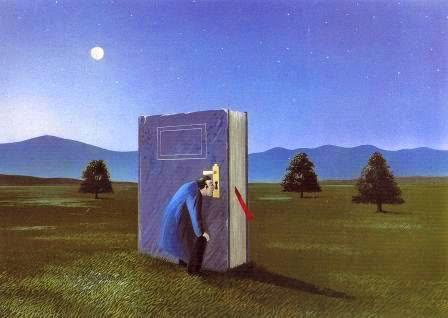
ilustraciones-quint-buchholz-L-S3pwdL


Twelve months ago, I found myself in a situation that eerily replicated scenes from childhood. I had done everything in my power to avoid the circumstances, knowing the damaging effect they would likely have on me. In the initial example of traumatic repetition the matter was taken out of my hands by the other party in a betrayal of trust that continues to leave me stunned, and exhausted by the fatigue that accompanies the struggle to come to terms with events over which one has no control.

I behaved exactly as I had when a child. I became compliant. I tried to anticipate the other’s wishes. I did what I thought the other wanted me to do. I felt outside of myself, an observer rather than a participant. I fled, as I did as a child, into the persona I came to think of as the recording angel, the only part of me with any agency, the part of me that witnessed, the part of me whose role it was to remember.

I’ve watched and listened as survivors of childhood sexual abuse give their wrenching testimony to the Royal Commission. Every one of them has, like me, their own recording angel who witnessed, and remembers the events that determined the course of our lives. Every one of us found ways in which to stay alive except for those of us who didn’t, and who died of grief, and despair, and wounds that would never heal. Every one of us knows what it is to live a life in which every choice we make, every step we take, is steeped in the aftermath of our experiences and so is never free, and all too often self-destructive or at the very least, not in our own best interests. We have tainted perspectives on our own best interests. How could it be any other way?

My experience of a year ago plunged me into an ongoing nightmare of flashbacks, sleeplessness, anxiety, depression, terror, self-blame, and ultimately despair that I will never be free of my history. I thought I was free, or at least as much as I could expect to be. I thought I had learned to manage the ongoing fallout from childhood. I thought that managing it was the best I could hope to achieve and all in all, that wasn’t too bad an outcome. Yet out of nowhere I encountered circumstances that released the demons; as an adult I failed to protect myself though I was certain that I had, and in a matter of minutes I found myself as powerless as I was when I was ten.

My life-long belief in my ability to manage, even overcome the damage of childhood was destroyed in those few minutes. That was the scaffolding on which I built my adult life, and it collapsed.

When survivors tell the Royal Commission their lives were stolen, this is one of the things they mean. We are never free. We never know what circumstances lie in wait that might hurl us back at the speed of light into the terror and powerlessness of childhood experiences. We cannot trust that our scaffolding will hold fast, subject as it is to the vagaries of memory provoked by unforseen reminders of hideous events.

There is what the abusers did to our bodies. There is what the abusers did to our hearts. There is what the abusers did to our spirits. And there is the recording angel, witness and testifier, speaker of truth.

To Cardinal Pell I would say, find the courage to face the testimony of the recording angels. If you wish to salvage something of your soul.


Funeral music

15 May

I’ve spent much of today compiling a playlist for the funeral of a member of my extended family who died suddenly on Sunday night.

I wanted songs like I did it my way by the Sex Pistols.

Give over, they said.

So next I thought of Amazing Grace by the Dropkick Murphys

For god’s sake, they said.

Hey, you get off of my cloud I suggested.

I’m coming up soon, get the party started. Pink’s version? I asked tentatively.

Another one bites the dust. Queen?

We’re sacking you as musical director, they threatened. I never asked to be anyway, I retorted, stung.

So they went with:

You raise me up. Il Divo.

I first and last heard this at very loved one’s wedding. The bride’s mum asked for it. The officiating priest was drunk as. The quartet, dependent on his erratic cues, got themselves right out of sync. The bride docked the priest ten dollars from his fee for every mistake he made, and twenty dollars for asking the groom if he wanted to marry himself.

At the reception the good father spent much of his time on his mobile, betting on the horses. Then he danced with me and said, Jennifer, I’m a better drinker than dancer, and I was forced to agree. There are photos of me holding him up. It was the best wedding any of us have ever attended.

https://youtu.be/huWVGbDQtjs

Bridge over troubled waters. Johnny Cash

Come Healing. Leonard Cohen. (If they refused Leonard Cohen I was done with them. Forever.)

Thank you for the music. Abba. A good metaphorical note to go out on, I think.

https://youtu.be/MfM9gQkfwyg


As for the Sex Pistols, and the Dropkick Murphys – they’re on my funeral playlist.

And this one:


Vaya Con Dios, R.N.


A small photo essay

13 May

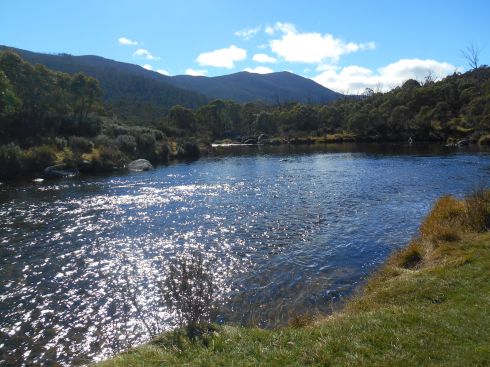
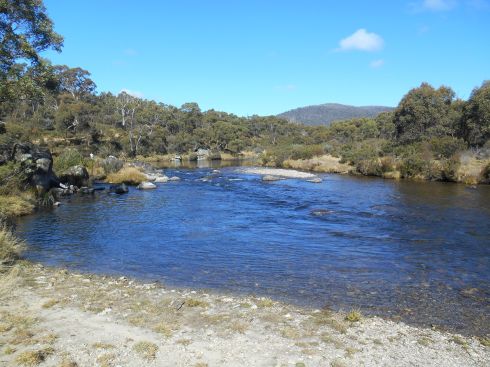
Greetings from the mountains.


Thredbo River

Thredbo River


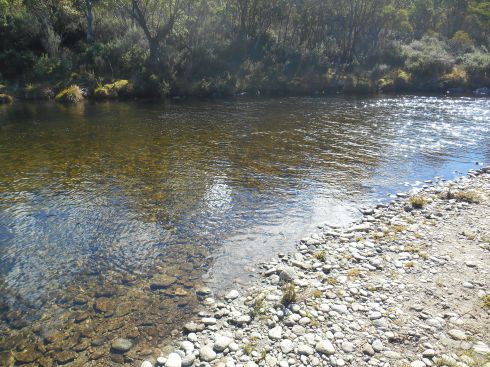
Thredbo River near Crackenback

Thredbo River near Crackenback


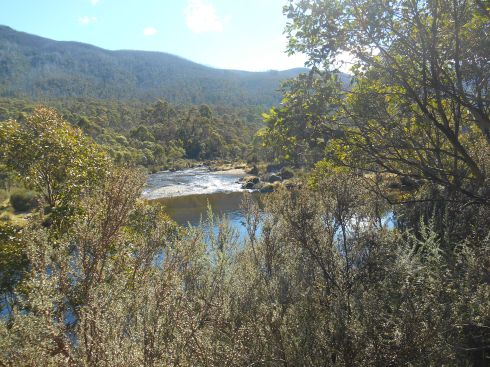
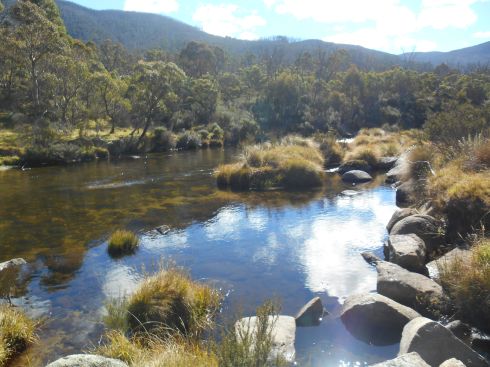
Thredbo River again

Thredbo River again


Thredbo River, sorry

Thredbo River, sorry


Thredbo River. Cos I can

Thredbo River. Cos I can


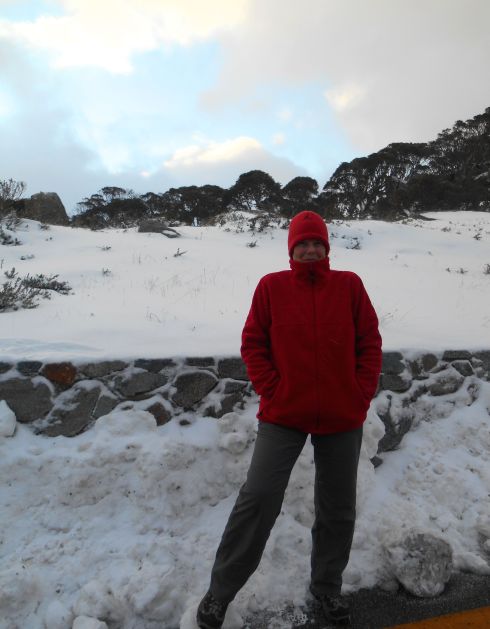
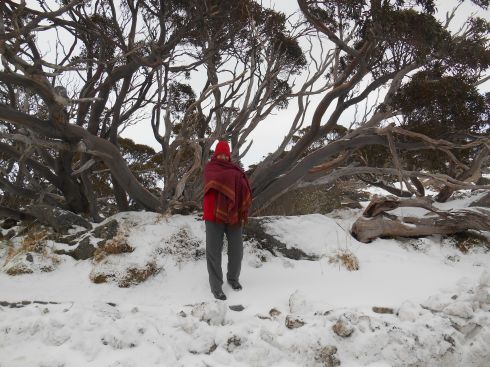
Very cold blogger. Charlotte Pass

Very cold blogger. Charlotte Pass


Frozen blogger.

Frozen blogger.


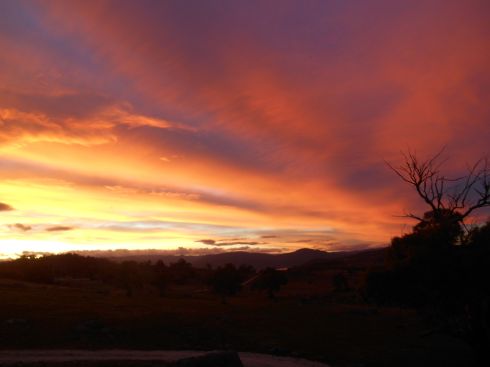
Evening sky. Jindabyne

Evening sky. Jindabyne


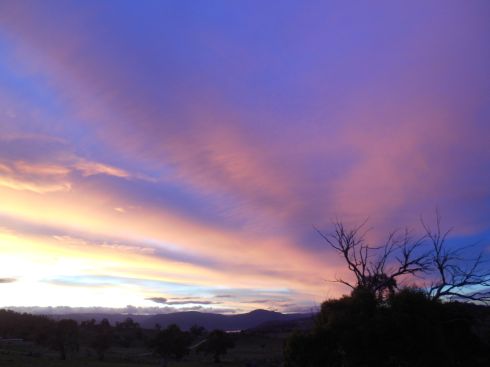
Evening sky again

Evening sky again


There. That should cheer everybody up. xxx

Pluto shits on the Universe

1 May

Pluto-and-charon-artists-impression


This is the title of a pome, sent to me by the lovely M who sends me pomes to wake up to most days, and I’ll include it in this post because it is spectacularly attitudinal, and a ripper of a metaphor.

Back again at last in my beloved Snowy Mountains, I woke this morning with a vivid memory of the birthday I celebrated after my first round with cancer. My sons, who were teenagers at the time, broke into their piggy banks and cadged off their dad to buy me a luxurious Yves Saint Laurent bathrobe of thick white towelling with delicate pink and green satin embroidery on the collar and cuffs. I said, unwisely, wow, is this for me to cark in, and nobody but me thought it funny.

My sense of humour was always dark grey and the cancer experience turned it black. The colour black is, of course, the result of the absence of, or the complete absorption of light, depending on your point of view when you wake up in the mornings. I prefer to think of it as the latter because I’m cheered by the notion of darkness needing light for its very existence, rather than being the consequence of light’s total absence.

Anyways, this Yves Saint Laurent bathrobe is the most luxurious item of clothing I have ever owned, and it is still almost as good as it was the day of that first survival birthday. I may yet cark in it. I most certainly will insist on being buried or burned in it. I’m kicking myself that I left it at home, because it would be perfect for running from the hot tub on the freezing verandah back into the glow of the fire-warmed sitting room. I don’t know how those louts of mine even knew about Yves Saint Laurent at that obnoxious stage of their lives, but I’m ever so glad they did.

The pome:

Pluto Shits on the Universe
BY FATIMAH ASGHAR
On February 7, 1979, Pluto crossed over Neptune’s orbit and became the eighth planet from the sun for twenty years. A study in 1988 determined that Pluto’s path of orbit could never be accurately predicted. Labeled as “chaotic,” Pluto was later discredited from planet status in 2006.

Today, I broke your solar system. Oops.
My bad. Your graph said I was supposed
to make a nice little loop around the sun.

Naw.

I chaos like a motherfucker. Ain’t no one can
chart me. All the other planets, they think
I’m annoying. They think I’m an escaped
moon, running free.

Fuck your moon. Fuck your solar system.
Fuck your time. Your year? Your year ain’t
shit but a day to me. I could spend your
whole year turning the winds in my bed. Thinking
about rings and how Jupiter should just pussy
on up and marry me by now. Your day?

That’s an asswipe. A sniffle. Your whole day
is barely the start of my sunset.

My name means hell, bitch. I am hell, bitch. All the cold
you have yet to feel. Chaos like a motherfucker.
And you tried to order me. Called me ninth.
Somewhere in the mess of graphs and math and compass
you tried to make me follow rules. Rules? Fuck your
rules. Neptune, that bitch slow. And I deserve all the sun
I can get, and all the blue-gold sky I want around me.

It is February 7th, 1979 and my skin is more
copper than any sky will ever be. More metal.
Neptune is bitch-sobbing in my rearview,
and I got my running shoes on and all this sky that’s all mine.

Fuck your order. Fuck your time. I realigned the cosmos.
I chaosed all the hell you have yet to feel. Now all your kids
in the classrooms, they confused. All their clocks:
wrong. They don’t even know what the fuck to do.
They gotta memorize new songs and shit. And the other
planets, I fucked their orbits. I shook the sky. Chaos like
a motherfucker.

It is February 7th, 1979. The sky is blue-gold:
the freedom of possibility.

Today, I broke your solar system. Oops. My bad.

ƒ 

This pome is infinitely applicable to all kinds of situations. I particularly enjoy the use of “chaos” as a verb.  I like to recite the pome to the regiments of cancers and their tired metaphors of war. I say it to a couple of people who shit me to tears. I say it to the goddamn state and all its agents. I say it to everybody who

Somewhere in the mess of graphs and math and compass…
 tried to make me follow rules. Rules? Fuck your
rules.

I pass it on to you, dear reader. Go forth and chaos like a motherfucker.

Now there’s an epitaph.

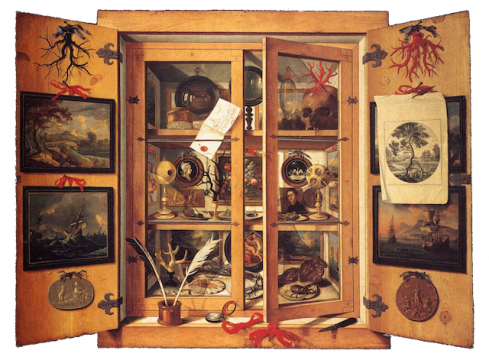
Cabinet of Wonders

22 Feb

Cabinet of Wonders


I’ve decided to re-open my blog The Practice of Goodness as the place where I post stories, poems, fragments, etc, keeping No Place for Sheep for politics and commentary. This piece to my late husband is the last of its kind I’ll post here.


Cabinet of Wonders

I dreamed I was walking through the park at the end of an autumn day. The tree shadows were long and the light golden. I saw you on the path in front of me, and hurried to catch up. Your hands were in the pockets of your jeans. You wore the dark purple sweater I knitted for you to keep out the cold you felt so keenly. The pattern was elaborate, it took months to finish, and you marvelled that my hands, with wool and needles, wove for you enduring warmth.

My wife made this, you told people.

Sometimes you would cradle my face in your hands and look at me and say, my wife.

When I caught up with you I slipped my hand into your pocket to touch yours. You turned your head and your look was quizzical. I saw the man I thought was you, wasn’t. The difference was barely discernible, but it was there. Shaken, I pulled my hand out of your pocket. We kept walking side by side, in silence.

We came to a bandstand, painted white with green trim, and hung with paper lanterns. Silent still, we walked up three wooden steps to the platform. We stayed there for some time, leaning on the railing, watching park life. I started to cry. You gazed at me then you pointed to a small house with double doors, off to the right, whose windows top and bottom looked to be filled with hand-carved toys, painted silks, and the mysterious devices of starlit sorcery. A cabinet of wonders, I thought. Our hearts.

You started down the bandstand steps. I cried harder. You looked back at me and smiled and pointed again to the house. I was to go with you there, I believed.

I could barely see for weeping as I stumbled down the wooden steps and followed you. But I was far behind and you forged ahead and I knew I wouldn’t catch up.

That moment in time, between when I put my hand in your pocket and when I realised the man I thought was you was not, has now settled deep in the cradle of my belly, where it has taken on the qualities of eternity.

I watched as you looked back and raised your goodbye hand. I watched as you disappeared into the cabinet of wonders. I watched as its doors closed behind you and I did not try to follow.

Awake, I know again that you are dead, and there is not one part of me that does not grieve you.

Wife. Time. Eternity. Wonders. The mysterious devices of starlit sorcery. Come back, and I will throw my arms around you.

Treading on bees

18 Feb

This post is not about politics. Don’t complain that I didn’t tell you.

bee lifting leg

I woke from a dream of my lover’s shoes. 

He always wore dirty black shoes with square toes when we met up. I asked him as I watched him undo them in preparation for getting into bed with me, “Do you ever clean your shoes?”

He shook his head. “I only have one pair,” he told me.

I thought that was all right. I have lots of shoes but I prefer wearing boots. Mostly in the climate I live in it’s better to go barefoot. The only problem with going barefoot is treading on bees. I accidentally tread on bees a lot and as you might know, a bee sting can itch for around five days and it’s no picnic.

I’ve been trying to keep a dream book for a while and interestingly, the effort has provoked more dreaming than I can remember for years. Dreams are like poems, or bits and pieces of them.

Shattered people are best represented by bits and pieces. Rainer-Maria Rilke.  I know this to be true. I have never in my life been able to sustain a continuous narrative.

My lover was in his shoes in the dream, but I couldn’t see him. I wrote down the bits and pieces  I could remember, and then the phrase ” erotic vulnerability” dropped into my head from out of nowhere so I wrote that down too. A writer ought to jot down everything, no matter how disparate the bits and pieces might seem at first blush.

After that I could no longer ignore what I was trying to avoid. I was having one of the worst feelings I’ve ever felt in my life. It was a feeling of the most abject, and infinitely lonely desolation. I was looking into an abyss, but it was inside me. The abyss was filled with the miasma of all the grieving I have never done.

I did what I was taught to do, and let the feeling linger for as long as it wanted. That made my day difficult, trying to be ordinary as all the while this dark, dank grief came over me in minor thirds.

The grief wasn’t about my lover. It felt as old as the world. Yet somehow, his dirty black square-toed shoes took me right into it. I forget, sometimes, the unsaid things we do for one another, without even knowing that we do them.

The next day the feeling was mostly gone. Only a few miasmic wisps remained. I thought, well, that’s interesting. I’ve felt the most abject feeling of utter desolation that I’ve ever felt in my life. For a whole day I looked into the abyss, and it didn’t, as I’ve always feared, kill me.

Childhood sexual abuse damages the soul. I don’t use that word in a religious sense. I use it to describe the sense of oneself that is forbidden to a child who is sexually abused. The sense of me. Sometimes a child has little chance to form that sense of me, if the abuse begins very early.  Sometimes the task is to restore it after the damage.

It never crossed my mind that I might find a fragment of me in the abyss.

I have been in the garden, sitting under the mango tree beside Big Dog’s grave. Of course, on my way barefoot across the grass  I trod on a bee.

I don’t know what will happen next.  The abyss will probably be there again some time. These things never entirely leave us. We are shattered people and we are best represented by bits and pieces. Sufficient unto the day.


Missing you.

28 Jan

Today, for the first time since you died, I sat with someone in a room and wept and wept for the loss of you.

I know you will understand why it has taken me these whole six months to find the strength to grieve for you. You well know the strength that grieving demands. You thought Freud was firstly a poet, with his “labour of mourning.”

I am trying to imagine which quote you would find for me now, because you always found a quote for me in all my situations and at times, I was less than grateful.

Perhaps it would be Auden: “In the deserts of the heart, let the healing fountain start.”

Perhaps it would be Dylan: “He not busy being born is busy dying.”

Perhaps it would be Blake: “For all eternity I forgive you and you forgive me.”

I am lost without you.  I have no idea how to proceed in a world that no longer has you in it.

He asked me, the man  in whose room I sat today, a quiet man who well knows the uses of silence, he asked me, what did he do, your husband?

I told him your doctorate was on Shakespeare’s comedies. I told him you loved Bob Dylan, and Leonard Cohen, and Lenny Bruce, and Seinfeld, and Larry David, and William Blake, and Tony Soprano, and John Donne, and Bach’s concertos, and Mahler, and the list of what you loved was way too long,  you were interested in everything, and I told him how sometimes I would tell you that your mind was so open, everything just fell out.

I told him  that you fought with me about Foucault, and feminism, and I fought with you about F.R. Leavis and fucking white male privilege and the damn canon. I told him how you were the only man I’d ever known who was confident enough in himself to tell me I was smarter than he was. I told him how you used to look at me and say, “I could die happy right now, just being with you.”

But mostly I just cried, love.

Buccholz