Archive | Society RSS feed for this section

How has Centrelink come to normalise contempt?

13 Mar


In The Saturday Paper this weekend there’s an editorial addressing the recent Centrelink scandals that, among other extreme dysfunctions, have seen the private data of two clients released to that publication, The Guardian, and The Canberra Times.

What you might not know is that The Saturday Paper declined to publish unsolicited private data sent to them by Centrelink, and that those private details belonged to a young man, Rhys Cauzzo, who died by suicide after receiving automated debt notices and subsequent harassment by Centrelink, and debt collectors Dun and Bradstreet:

Recently, private information about welfare recipients has been leaked to the media in the hope of discrediting critics. After The Saturday Paper published Rhys Cauzzo’s story, the department shared his personal data with our reporter in the hope of changing the piece.

The construction of citizens as enemies of Centrelink is engendered by the conservative ideology of Minister Alan Tudge, and senior departmental staff such as DHS secretary Kathryn Campbell, who use as their starting point the proposition that the majority of clients are criminals, or criminals-in-waiting.

(Sound unnervingly familiar?  The assumption by the Department of Immigration and Border Protection Minister Peter Dutton and his lackies that asylum seekers are criminals. I said a while back that what they do to asylum seekers they’ll do to Australians)

In her evidence before a Senate committee last week, Ms Campbell, who played a leading role in creating and presiding over the robo-debt system, refused to acknowledge that the system has any flaws, and remarked that clients have a responsibility to provide the department with correct information. Here you’ll find an excellent piece by Jack Waterford on Ms Campbell, and her “relentless suspicion of the poor.”

The ideologically-driven belief that Centrelink clients (or asylum seekers) are fraudsters is used to justify ill-treatment of them for political gain. The public does not like fraudsters.

Both DHS and DIBP are designed to deal with stereotypes, not human beings. The Ministers and senior staff in both departments are too lazy, too ignorant, too arrogant, too well-paid and too privileged to question their assumptions about those less comfortable in the world. Misfortune of any kind is perceived as a reprehensible moral failing, and as such, punishable by those with the power and authority to punish.

In the upper echelons of these departments you’ll find no broad view of context, of societal and cultural influences: the individual is entirely responsible for his or her own predicament. Society does not exist. There are individual men and women and there are families, but there is no society in the context of which the lives of individuals and families are played out.

Your part in destroying a country has nothing to do with its citizens subsequently seeking asylum in your country. Your ill-conceived policies have nothing to do with people becoming working poor, jobless, homeless, and needing assistance from the state. There’s bunch of rabid Thatcherites running DIBP and DHS.

Ministers such as Tudge, and senior public servants, treat welfare recipients as deviants. Welfare recipients embody what the ruling class fears most: loss of its power and its financial security. They must be punished for their carelessness, but more than that, they must be punished for reminding the comfortable just how close discomfort can be.

Ms Campbell may embrace the Thatcher ideology in her attitudes to citizens, however, it is easily unveiled as a comfortable and convenient delusion. Kathryn Campbell might reflect, if she has the capacity, that were it not for “clients” she’d be out of a job. Campbell’s $700,00 salary is entirely dependent on the misfortunes of millions. So much for the individual’s sole control over his or her circumstances.

The revelation that Centrelink authorities sent unsolicited private details of a dead man to the media, in the hope of changing the journalist’s story, ought to be beyond belief. Sadly, it isn’t. Sadly, we have in this country at least two bureaucracies whose leaders have modelled a pathological lack of humanity, and the dire weakness of all bullies. It’s time to get rid of the Tudges, the Campbells,  the Duttons and the Pelluzos. We’ve travelled far enough down the path of cruelty and unreason. It’s time for a change.


How to deal with being raped: two incompatible points of view.

7 Mar


On ABC Qanda last night, Icelandic writer Thordis Elva spoke about how she had, over a seventeen year period, communicated with and finally forgiven Australian Tom Stranger, who raped her when she was sixteen and he was eighteen.

Stranger raped Elva as she lay literally paralytic from the effects of alcohol, in her own bed. He’d taken her home from a party, where friends were so concerned they’d wanted to call for medical assistance. Stranger undertook to protect and watch over her until she recovered. The rape took place over two hours, and so damaged Elva she was unable to walk properly for some time.

The two have since given a TED talk on their many email encounters, which were initiated by Elva and culminated in a physical meeting in Cape Town. Stranger remarks on the suitability of this country for their purpose, given the truth and reconciliation project of the Mandela government that sought to address crimes against humanity during decades of apartheid in South Africa, employing a process that involved admissions of guilt, and subsequent forgiveness by victims.

Stranger and Elva have written a book about their long experience of seeking a resolution to their victim/perpetrator relationship. They finally reached a point where Stranger was able to take responsibility for his actions, and name himself as a rapist. This ownership of his behaviour has allowed Elva to find relief from her feelings of hatred, rage and desire for revenge.

While I don’t find it at all difficult to imagine the relief and liberation I’d feel if a perpetrator admitted his crimes against me, I do find it difficult to imagine wanting a relationship with him that would see us co-authoring a book, and travelling the world together, sharing a stage.

As Elva notes, and I agree, forgiveness is something victims do for ourselves, not for the perpetrator. However, what I couldn’t extrapolate from the TED talk or Qanda, or interviews I’ve read, is how she moved emotionally and intellectually from regarding Stranger as an assailant, to interacting with him as a colleague.

Or perhaps not so much how, as why? Releasing myself from dark feelings and desires so as to get on with my life is both sensible and healthy. But keeping the rapist in my life?

I can forgive the perpetrator for my own sake, but that doesn’t mean I ever want to see him again.

Also on the panel last night was Josephine Cashman, Indigenous lawyer and business woman. Ms Cashman’s take on rape is situated at the opposite end of the continuum, and she was rather dismissive of Elva’s story. Ms Cashman stated unequivocally that sexual assault should be dealt with by the legal system, women must go to the police, the perpetrator must be charged, tried, convicted and incarcerated.

Which in theory sounds quite logical, however, as this must-read article by Jane Gilmour points out, that apparently logical process is rarely the outcome of sexual assault allegations. The legal system can be brutal to victims of sexual assault, and conviction rates are notoriously low.

I admit to feeling not a little creeped out by Mr Stranger when I watched the TED talk. I was unable to get past my knowledge of him as a man who had cruelly  and opportunistically raped an entirely helpless woman, over a two-hour period. I didn’t really care what he had to say about his later realisation, self-evident to me, that at the time he’d been more concerned about his wants than Ms Elva’s needs and safety.

In the spirit of truth and reconciliation I tried quite hard to find a point of contact with Stranger. All I felt was dizzy and sick. Yes, I can imagine the miserable, criminal psychopathy of a man who rapes a very ill and barely conscious woman he’s promised to care for. Yes, I can pity it. I just don’t want it or him anywhere near my life.

It seems to me on reflection, that both Ms Cashman and Ms Elva are unrealistic. For very many victims of sexual violence and other violence against women, engaging with the perpetrator is the very last thing we want to do. Taking the legal option is often described as being raped all over again, and it is disingenuous of Ms Cashman to pose that option as a logical process that results in justice. It isn’t, and more often than not, there’s no justice to be had.

It is possible to achieve a state of comparative peace or forgiveness without any involvement with the perpetrator, and preferably with help and support from others.

A woman is forever changed by the experience of sexual assault, and it’s impossible to recover the self who existed before the attack. This is just one of the many losses caused by rape: the loss of who I was before.

I don’t think there’s such a thing as “closure” or “resolution.” There is only finding a way to live your life as fully as you can, in spite of what has happened to you. There’s no formula for this. There’s no prescription.

It’s the victim’s task, and how unfair it seems, to find her way through the hell of rape. It can take a lifetime. And nobody can or should tell a woman how she must do it. If you don’t do it Ms Cashman or Ms Elva’s way, you haven’t failed. You’ve succeeded in searching for and finding your own way to take back your life. And you might have to do it more than once.


“Belief” is not enough to justify legislation to reveal private data

4 Mar

government-snooping


On Thursday, in the midst of public outrage at Human Services Minister Alan Tudge’s doxxing of a Centrelink user, legislation allowing the Department of Veteran’s Affairs to give private information to the media passed through the lower house with bipartisan support, and almost unnoticed.

The power to legally release a citizen’s private information to the media is argued by politicians as necessary, in order for agencies  to respond to people they believe are deliberately misleading the public and in so doing, undermining the public’s confidence in that agency.

Look. I could write an entire post on the irony of citizens undermining confidence in agencies. Think robo-debt for a start. It’s my “belief” that there’s no citizen alive capable of inflicting as much damage on government agencies as they inflict upon themselves, all too often exacerbated by the minister supposed to lead them. Nobody could undermine public confidence in Centrelink better than Hank Jongen and Alan Tudge.

The significant words in the justification for this legislation are they believe. Government agencies and ministers do not have to prove you are deliberately misleading the public and undermining an agency. They simply have to believe you are in order to legally release your private data.

Of course you can fight them after the fact. You can take them to court to make them prove their belief. But by then you’re all over the media, you’re traumatised, and it’s too late. Governments have deep pockets, and you most likely do not.

You have also compulsorily supplied agencies with the very information they now intend to use against you, because they believe your complaints, impressions, and opinions undermine them.

I’ve carefully re-read the article by Andie Fox that caused Alan Tudge to release her data to Fairfax because he “believed” her commentary undermined public confidence in Centrelink.

Ms Fox wrote an opinion piece. It consists almost entirely of how she felt during her encounters with Centrelink. The only points of dispute Tudge could find are a couple of dates, and numbers of phone calls.

According to Alan Tudge, this is sufficient to undermine public confidence in Centrelink, and justifies his release of her private data to Fairfax. Clearly, this is an absolutely ridiculous claim on Tudge’s part, and an abhorrent abuse of his power.

In fact, the power of Ms Fox’s piece is not in a Tudge-like gotcha game with the agency, but rather in her subjective experience of engaging with Centrelink, one with which thousands and thousands of other users can identify.

What Tudge’s reaction demonstrates is that we absolutely cannot trust ministers and senior public servants to exercise good judgement in their use of this legislation.

It demonstrates that citizens must not tolerate legislation that is so open to abuse by ministers and senior public servants, legislation that is based solely on the grounds of their beliefs.

Politicians need to fully explain why they need such legislation in the first place, and in the second, why they feel the need to extend it to include veterans. It wouldn’t have anything to do with military personnel speaking out about the ADF’s stance on the effects of anti-malarial drug Mefloquine, would it?

No senior public servant and no minister should have the power to publicly release a citizen’s private data simply because he or she believes there may be an adverse outcome for an agency. This is an attempt by politicians to silence all dissent by instilling a terror of possible consequences.

Supplying private data to these agencies is compulsory. Politicians are demanding that in handing over our private data, we also agree to their release of it to media should they believe any public commentary we make might adversely affect their interests.

This is an untenable situation for citizens, and a massive over-reach on the part of politicians.

Postscript: Acting Senate Clerk Richard Pye has acknowledged that Tudge’s release of private data may have a “chilling effect” on witnesses at next week’s inquiry into Centrelink Robo-Debt. 

Mr Pye has warned that any attempts at interference with witnesses will be considered to be contempt. 

We have a government that has to be warned not to interfere with witnesses in a Senate inquiry. Think about that. 


Just because a govt agency says it wrote you a letter doesn’t mean it did.

3 Mar
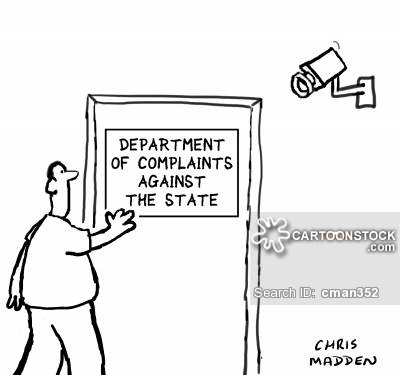
Department of Complaints Against the State.

Department of Complaints Against the State.


One of Human Services Minister Alan Tudge ‘s justifications for his aggressive media pursuit of writer, blogger and single mother Andie Fox, is that Centrelink made numerous attempts to get in touch with her by phone and letter, and many of these attempts were unanswered.

I have no idea of the validity of these details, however I do know that government agencies are not always accurate in their accounts of interactions with citizens. Despite this fact, the agencies present “their side of the story” as if it is indisputable fact, simply because they say so.

I know this because last year I had some bizarre difficulties with Medicare. I submitted a claim for specialist services, the same claim submitted regularly for the previous eighteen months. The item number is not claimable on the website and as I didn’t have the app on my phone, I’d been submitting via snail mail. There was one occasion on which Medicare said my claim had not arrived, which was resolved after I resubmitted. This was attributed by Medicare to the tardiness of Australia Post.

A few months later I received notice in the mail from Medicare that I had not properly filled out my claim, and they needed further details. I found this very odd, as the claim was exactly the same as the previous eighteen. I rang Medicare.

I was told my claim hadn’t been received. If my claim wasn’t received, how come I’ve just got a letter asking me for more details about it? I inquired. The staff member was excessively rude, aggressive and unhelpful, so I asked to speak to a supervisor. She demanded why I wanted to speak to her supervisor, then shouted that there was no need for me to do that and terminated the call.

When I next managed to contact a staff member I was more fortunate. The staff member was extremely helpful, and we discovered that there was no record of the previous day’s aggressive phone call. We also discovered that the letter I’d received requesting further information had a reference number which did not coincide with that of any Medicare employee.

As well, the staff member informed me that my claim forms, photocopied and returned to me with the demand for more details, had been incorrectly handled: they should have not been returned to me at all, and certainly not as photocopies.

Where are my original claim forms, I asked? We have no idea, I was apologetically told. My claim forms have been photocopied and the originals lost? Breach of my privacy? I suggested.

Who has accessed my claims for specialist services and who knows my history and who is able to access the Medicare system with a false reference number? I asked.

I have never received any answers to these questions. I did speak to another staff member who also could not connect the reference number on my letter with anyone working in the system. I have no idea who in Medicare photocopied my original claim forms, or why, or what happened to them.

I did eventually receive reimbursement and I haven’t had any trouble since.

This is one small example of what can go wrong in government agencies, and that because the Minister says something has been properly executed does not necessarily mean it is so.

It’s also an example of how vulnerable users of these agencies are, and how little control we have over the information we submit. Medicare claim forms reveal a lot about us we might not necessarily want anyone else to know. This is our right.

If a minister can release private data marked “for official use only” to the media, we can have no trust in these agencies. We are in an invidious position: we have no choice but to submit private information. We have now seen how our private data can be used to hold us hostage by agencies and ministers, who might decided to “correct the record” with it if we publicly complain.

I didn’t write about my Medicare experience at the time because I felt concerned that there might be some retaliation, particularly in view of the bizarre circumstances and the misappropriation of my claims by an unknown person. This is how governments silence citizens, and this is why the Fox case is so important.

We now know that Tudge has his staff monitor social media for complaints against DHS.

Well, Minister Tudge, monitor this. Or better still, find out what happened to my private medical data.


Tudge releases unauthorised documents, & where are the “leading” feminists?

2 Mar

alan-tudge-sponsorship-business-card-size-advert


Please feel free to email, phone or visit this man with your opinions.

The Guardian has this afternoon reported that Human Services Minister Alan Tudge “accidentally” authorised the sending of confidential internal briefings concerning Centrelink complainant Andie Fox and marked “official use only,” to Fairfax journalist Paul Malone for publication.

The documents included information about Ms Fox from the Australian Tax Office. It’s unclear whether or not DHS has notified the ATO of this data breach.

The Guardian became aware of the “mistake” when the same documents were sent to that publication after journalists requested further information from DHS on the Tudge debacle.

Tudge has assured parliament that he lawfully authorised the release of Fox’s information to Malone. However, given he now claims some of those documents were “accidentally” released, he could not also have authorised them unless he authorised an accident, which is entirely possible and if so, situates us in even more bizarre territory than we found ourselves in yesterday.

It was also revealed today that Alan Tudge requires regular updates from his staff, gleaned from social media, on which Centrelink users are complaining about their experiences with that department.

Centrelink is stalking customers who publicly complain about their services.

Any Centrelink employee who released documents marked “for official use only” to the media would be sacked and prosecuted. I expect the same treatment for Minister Tudge. Don’t you?

Andie Fox is a single mother, chosen by Tudge as a scapegoat to distract from his astronomical incompetency. As I’ve noted in earlier posts, the power imbalance between Alan Tudge, Paul Malone of Fairfax, and Andie Fox is incalculable. As I’ve also noted before, there are thousands of complainants Tudge could have chosen to attack, however, he chose a single mother, one woman because, I suggest, he imagined her to be an easy target, and we know how the LNP feel about single mothers.

And yet not one leading feminist has seen fit to speak out about Ms Fox’s plight. Not one feminist with a platform has chosen to use it to discuss this situation. Not one leading feminist has got Ms Fox’s back, not one has questioned Tudge’s persecution of a single mother, not one has questioned the injustice of Ms Fox being in this situation in the first place because of her ex partner’s actions. A woman is under unprecedented attack by the Australian LNP government, and not one public feminist has said a word about it. WHY NOT?

To be continued. 


No need for Centrelink to prove your comments are adverse: they only need to think so before exposing you to media.

1 Mar


Information Privacy on computer keyboard background

Further to yesterday’s post on the release to Fairfax media of private information by Human Services Minister Alan Tudge, the minister has justified his decision to take this action on the grounds that he is entitled by law to reveal personal details if the individual has made complaints in the media Centrelink considers false.

In other words, if you complain in the media about Centrelink, your private information can be released by that department in its own defence.

The Office of the Australian Information Commissioner’s Use or disclosure of personal information regulations address this situation thus:

6.22 Examples of where an individual may reasonably expect their personal information to be used or disclosed for a secondary purpose include where:

the individual makes adverse comments in the media about the way an APP [Australian Privacy Principles] entity has treated them. In these circumstances, it may be reasonable to expect that the entity may respond publicly to these comments in a way that reveals personal information specifically relevant to the issues that the individual has raised[8]

The APPs and the APP guidelines apply from 12 March 2014 and cover both Australian Government agencies and organisations covered by the Privacy Act. 

I would argue that it is never reasonable to expect that Centrelink will divulge your personal information to the media under any circumstances, and 6.22 needs to be scrapped. The paragraph makes no reference as to whether or not your adverse comments are justified. You only need to make comments Centrelink considers adverse for them to reveal your private information to the media. 

Criticism of a government agency can see you stripped of all privacy. Think about that.

This should make anyone who entrusts Centrelink and other government agencies with private information, very nervous.

At the same time, if you need Centrelink assistance you have no choice but to give them all the private information they require. This is a lose-lose situation for citizens, and it is entirely unacceptable.

Andie Fox, the subject of Tudge’s vengeful action, is a middle class professional woman, like millions of others who claim Family Tax Benefit, and the millions of older Australians who claim part pensions. Tudge, in this instance, has not gone after his stereotypical welfare recipient. So don’t feel you are safe in your demographic, because you aren’t. Should you get Centrelink offside, your private information can be given to the media whether your complaints are justified or not, without any consultation or warning.

There is a website titled “Not my debt” where you’ll find page after page of adverse commentary on Centrelink. There are thousands of critical tweets. There are hundreds of articles in mainstream media and the blogosphere dedicated to adverse commentary on Centrelink. Yet Alan Tudge went after one woman.

If you think your privacy is safe with government agencies as long as you keep your mouth shut, think about what kind of country you’re living in, and what kind of person you’re becoming because of it.

Centrelink is an apolitical body. An individual’s private information held by the agency must not employed as a silencing tool by the government of the day.


Fairfax and Centrelink unite in an unprecedented move to publicly persecute one woman.

28 Feb

censored2-747x250


Early in February, writer and blogger Andie Fox published an account of her interactions with Centrelink over a failure by her ex partner to submit tax returns that led to the department issuing her with a debt notice for over-payment of Family Tax Benefit.

It’s a harrowing account and it resonated with very many people who’ve endured the tortuous process of attempting to explain their situation to Centrelink, after being notified of debt they do not carry. As you may recall, Centrelink is responsible for the unprecedented failure of an automated system that has harassed, threatened, engaged debt collectors and otherwise hounded citizens who have no debt, or a good deal less debt than the department claims.

On Monday, Fairfax journalist Paul Malone published an article titled Centrelink is an easy target for complaints but there are two sides to every story. The article contains the private details of Ms Fox’s interactions with Centrelink, provided to him by the department with the authority of the Minister for Human Services,  Alan Tudge.

Tudge later triumphantly tweeted the article, which contains details Ms Fox contests.

Just to make it clear: Centrelink has released the private details of an individual citizen without her permission in order to present Alan Tudge’s “side of the story.” 

In case there might be any doubt about Tudge’s intentions, Paul Malone and Fairfax have confirmed in their headline that Tudge’s only goal is to use the personal information of a citizen to present his side of the story.

Let’s first consider that both Alan Tudge and Paul Malone are protected by the institutions that employ them. Ms Fox is protected by nobody. So we have the unprecedented situation of Centrelink and Fairfax media joining forces to expose a citizen’s private data in an attempt to claw back some face for Alan Tudge, after the outrageously incompetent debt debacle he oversaw earlier this year.

This is not a question of “both sides of the story.” The actors have no equal ground. It is a breathtaking and unprecedented attack by the LNP government and a compliant Fairfax media on an individual. And it should make everyone of us very afraid.

Family Tax Benefit is paid to millions of families. Not one family is safe from exposure by Alan Tudge, not one, should that family publicly complain about Centrelink. Your private data is fair game in Tudge’s desperate and doomed efforts to appear competent.

There is absolutely no other reason for Centrelink to release Ms Fox’s private data to Fairfax media. Absolutely none.

In other words, any private data held by any government department can now be used as a weapon against you, should you have the temerity to publicly describe your interactions with that department. It can be used to put that department’s “side of the story.” It will be supplied to the media by faceless bureaucrats who do not have to be named, and authorised by their minister. 

You write a piece about Medicare? Expect to see you health records appear in the Sydney Morning Herald.

Can there be any more effective way to silence citizens than to threaten them with media exposure of their most private and intimate information?

In Australia today, the LNP and Fairfax media have joined forces in persecuting one woman to save a lamentably incompetent  minister’s face. Think about that. 

The very fact that Tudge has chosen this course of action confirms his incompetence, and his unfitness to hold his position.

There’s a lot more to be unpacked from this situation, too much for one blog post.

To be continued.

There’s honour even amongst morality’s dregs? Milo & the alt-right

22 Feb

milo_yiannopoulos_c0-40-640-413_s885x516


Milo Yiannopoulos, Breitbart editor, intellectual featherweight and fascist star turn adored by the alternate right who till yesterday saw him as a warrior king in their battle against “political correctness” and perceived left-wing censorship, has finally come spectacularly undone.

To the point where his followers (amongst them the likes of Rita Pahini, Chris Kenny and Andrew Bolt in this country) who have thus far endorsed his foul outbursts against Muslims, Jews, women and transgender people as an exercise of the right to free speech, have found themselves in unlikely and uncomfortable moral confusion over Milo’s positive attitude towards pedophilia, and overt sympathy for perpetrating catholic priests.

Yiannopoulos was to have given the keynote address at the Conservative Political Action Conference later this month, and yesterday (a bad day for Milo) organisers felt compelled to withdraw their invitation.

Breitbart News, whose former editor-in-chief Steve Bannon is now President Donald Trump’s lead strategist, is reportedly considering dumping Milo. At least we now know the alt-right’s bottom line: slander anyone on grounds of race, ethnicity, sexual preference and gender, but don’t publicly advocate pedophilia. There’s honour even amongst morality’s dregs, apparently.

Publishing house Simon and Schuster yesterday dropped Milo, terminating their contract to publish his forthcoming book. They stood by him while he slandered Jews, Muslims, women and transgender people for money and spectacle, but apparently a line was crossed with his sympathetic stance towards pedophilia.

It’s gratifying to witness the extreme right writhe in unaccustomed moral anguish when confronted with speech even they cannot accept. Who knew there was such a thing?

Yiannopoulos attempted to defend himself: “My book has been canceled”  he wailed on Facebook (Twitter having banned him some time ago) in baffled outrage, getting the spelling wrong in his time of extremity as anyone might.

Wikileaks’ Julian Assange then rushed to Milo’s defence from his lounge room in the Ecuadorean Embassy, tweeting that poor Milo is the victim of “politics disguised as morality” and, god help us, he’s been censored!

Well, Assange is wrong: Milo hasn’t been censored. Any publisher can publish him, he can self-publish, and any organisation is free to extend him an invitation to keynote. If they choose to ignore him that is not censorship, you’d think Assange, of all people, would understand that.

What Milo is experiencing are the consequences of free speech. He remains free to say whatever he wants, in the US at least.  Others have equal freedom to decline to listen and disseminate his speech. Refusing to listen and disseminate is not censorship, it’s exercising the agency and the right to decline to listen and disseminate.

Many among us have experienced the refusal to listen, and to disseminate our points of view, not a few of us from the very groups Milo has singled out for discrimination and contempt. He’s had a good run. Now his masters are done with him. You can’t go round advocating the rape and molestation of young boys, even amongst the alt-right, it seems. Who knew they had standards?

Update: Milo resigns from Breitbart:

And this is just for fun: 

Fake threats, and democracy.

18 Feb


maxresdefault


Demands that we be kept “safe” by governments play into the hands of conservatives who simultaneously, and with an alarming degree of cognitive dissonance, express their distaste for a nanny state while instigating extreme measures they claim will fulfil both our expectations of safety, and their responsibility to fulfil those expectations.

All too often those measures are an opportunity for authorities to increase surveillance, harvest personal information and exert unnecessary control over citizens, resulting in an erosion of rights that does nothing to keep us safe but rather makes us increasingly vulnerable, not to terrorists but to the state.

As in the family, so in public life. The greatest threat to our safety is allegedly the stranger, in both the private and the public narrative. So we have President Trump’s seven country “Muslim” ban in the US, designed to make Americans safe. In Australia we have the secretive, punitive Department of Immigration and Border Protection, with their ring of steel around our borders and their concentration camps off-shore. Both governments justify extreme measures with repeated assurances that their only objective is to keep us safe.

However, in the case of both family and country, danger is far more likely to come from within the circle than from without: the family is potentially the most dangerous place for women and children, and terrorism is overwhelmingly perpetrated by citizens/permanent residents of the target country rather than refugees, or foreigners who enter the country with the specific aim of conducting attacks.

In a liberal democracy we are supposed to be participants. We have agency. The degree of safety we demand governments provide is incompatible with the freedoms we rightly expect. Governments are not our parents. While as children we are entitled to protection, as adults we have no such entitlements. Protection and safety must be a joint venture: we have to participate in ensuring our own welfare. Once we relinquish our responsibility, we’re on the road to totalitarianism.

Democracy isn’t just the right to vote. It’s a way of being.

Neither will government assurances of safety from external threat protect us from what is most pressingly dangerous: violence in homes and institutions.

Governments are most reluctant to commit resources to these obvious threats to safety and stability.  Instead, billions are wasted on the containment of fake threats, and we continue to face real threats grossly under-supported and largely unacknowledged. Our protection in this instance does not require state intrusion into personal life: it requires adequate money and front-line resources administered by competent and experienced citizens, not politicians.

This is an example of democracy working. Secretive bureaucracies are not democratic, and neither is taking money from those in difficult circumstances to fund tax benefits for corporations turning billion dollar profits.

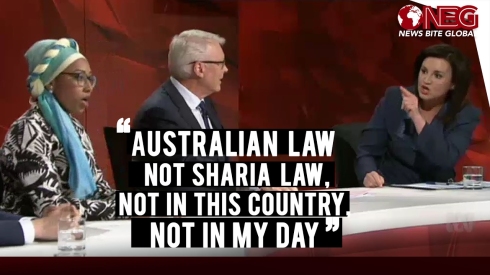
The robust exchange of views between Senator Jacqui Lambie and Islamic youth leader Yassmin Abdel-Magied, broadcast on ABC’s Q&A last week, is a complex example of the degree to which fake threats dominate our discourse. It also inadvertently provided a seminar in free speech, when a number of organisations petitioned the ABC to provide a “safe environment” in which Muslims may speak.

Senator Lambie has obviously swallowed the fake terrorism threat, as is evidenced in her noisy opposition to what she perceives as the imminent danger of Australia becoming subject to what she understands as Sharia law. At present, I’d argue, Australia is faced with the rather more urgent matter of dealing with the consequences of Catholic Canon law than with Islamic tenets, sad confirmation of the theory that the stranger is not our largest and most immediate danger.

I don’t like Lambie’s views on the matter of Sharia law, or her manner of expressing them, however, such views exist and attempting to silence them is not a useful option. Currently, the voices of prejudice, fear and hatred seem to have wrenched the mic from voices of reason and good will. We are under the governance of a conservative ideology that values combat and domination over citizens’ and community interests, while offering fake protection from outside forces in order to conceal that ideology’s very real threat to civil society.

Sharia law is not currently an issue for Australia: political negligence on matters of survival such as climate change and social inequality and injustice are.

I don’t yet know how we get the mic back. I don’t think anybody does. I don’t think forcible silencing of opposition is an option. It’s impossible to dictate the tone and language in which opposition is couched. Once again, personal responsibility stands side by side with freedoms. That there are people with platforms taking little or no responsibility for their speech and its possible consequences is truly awful, but it’s reality.

For mine, freedom of speech was exercised by all parties in the Q&A example, including the freedom of organisations to get up a petition protesting the event, and the freedom of their supporters to sign it.

This is how we contest fake threats. By embracing democracy as a way of being, not just something we perform at the ballot box every few years. It isn’t any government’s sole responsibility to keep us and democracy safe, and once we relinquish agency, we have truly lost all hope of safety, and returned to infantile dependence.


How it’s never Pell’s fault.

10 Feb
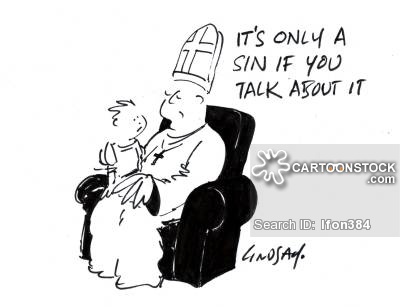
'It's only a sin if you talk about it...'

‘It’s only a sin if you talk about it…’


It really has come to something when politicians call on the Vatican Treasurer and Pope Francis’s right hand man to come out from his Vatican sanctuary, and face up in person to allegations of having sexually abused children.

On Wednesday, a Greens motion calling on Cardinal George Pell to return to Australia from Rome to assist police and prosecutors investigating allegations of criminal misconduct against him was supported by the Senate.

Predictably, Pell launched an attack on the Greens, calling them anti religious and characterising the motion as a political stunt, despite the motion being supported by parties other than the Greens.

Pell is well-known for his bellicose self-defence. In 2012 he threatened to sue comedian Catherine Deveny for a tweet she posted that the Cardinal considered defamatory. He also threatened to sue Twitter, but resiled from that threat.

Then there was the church’s prolonged legal battle against complainant John Ellis, who attempted to sue the Archdiocese of Sydney, at the time under the authority of then Archbishop Pell. Mr Ellis spent more than ten years seeking compensation for the five years of sexual abuse he suffered at the hands of Father Aiden Duggan. Pell later apologised for the “vigorous and strenuous”  battle he ordered the church’s legal team to conduct against Mr Ellis with the aim of discrediting him, thus protecting and vindicating the honour of the institution in which Pell was a rising star. During the apology, Pell refused to even look at the frail Mr Ellis, who was sitting across from him.

In 2013, human rights lawyer and commentator Father Frank Brennan commended Pell for “being man enough and priest enough” to publicly apologise for the torment Mr Ellis suffered at the hands of the church’s lawyers. Four years later, Brennan’s comment seems both naive and misplaced.

In 2014 Pell was transferred to Rome to sort out the Vatican’s complex finances, and, many speculated, to get him out of the sewer that is the church’s increasingly sordid and public history of sexual crimes against children.

We are still not done with Pell. He has consistently responded with belligerent denial to allegations of abuse and cover-ups, at one point claiming that the ABC and Victoria Police entered into a conspiracy against him, and furiously demanding an investigation.  Pell also claimed that Victoria Police leaked confidential information in order to denigrate him, when it was clear the information in question came from victims interviewed by media. Pell also blamed numerous priests and bishops who he alleged failed to inform him of the rampant sexual abuse of children occurring on his watch over decades.

It isn’t possible to judge Pell on the question of child sexual abuse allegedly perpetrated by him, and currently under consideration by the Victorian Office of Public Prosecutions. It is possible, however, to form an opinion of the man based on the manner in which he’s conducted himself throughout the years of the Royal Commission into allegations against catholic clergy, and the cover-ups by the church’s hierarchy that made abuses possible, and ongoing.

The Cardinal’s attitude is not encouraging. At every turn he’s resorted to accusation and blame, in an effort to exonerate himself from all responsibility. If we generously give him the most enormous benefit of the doubt, he must at least be held responsible for what can only have been wilful ignorance, innumerable turnings of a blind eye that resulted in horrific abuse of children over decades, abuse he could have taken steps to prevent.

Instead, Pell appears to have prioritised his own career, and the reputation of the institution that sheltered and promoted him, over the awful suffering of thousands of children. Every single act of sexual abuse affects untold numbers of people, as well as the victim: family, other kids who knew and had to hide their knowledge, friends, possible partners, possible children of victims. The scale of damage as a consequence of every act of sexual abuse is incalculable. George Pell is responsible not only for failing to intervene and protect individual children  when he had the opportunity, but for the consequences and aftermath of the individual child’s experiences.

Thus far Pell has been neither “man enough” nor “priest enough” to face what he has done and the magnitude of the intergenerational repercussions, instead continuing to enjoy the safety and security of the Vatican’s protection while attempting to obfuscate grievances against him by attributing them to anti religious sentiment and political stunts. The man is a scoundrel. That much is clear. The full extent of his scoundrelly has yet to be revealed.