Archive | Society RSS feed for this section

Gillard government guidelines say women don’t commit domestic violence: in On Line Opinion today.

5 Jul

In On Line Opinion this morning, I press on with my solitary mission to bring some reality into the Gillard government’s National Plan to reduce Violence against women and their children.
It’s a dark and lonely job but someone has to do it.

Every time I take this on, especially on the Drum, I’m called anti feminist (that’s an insult these days?) an apologist for rapists, a”man fondler” who is determined to attack feminism any way I can; of having a prick in my head and various other slings and arrows shot at me by women who call themselves feminists.

Yet I remain strangely unaffected.

Foreign ownership or boat arrivals – which is most likely to invade and conquer?

4 Jul

On the Watermelon Blog on Saturday, David Horton notes that when a recent Greens’ survey revealed that 83% of mining companies in Australian are owned overseas there was, in his words, “a swift and predictable response from one of the egregious right wing think tanks whose role is to protect corporations from criticism.” Foreign investment is good for Australia, they brayed, and we have plenty of land to sell. They then called up the spectre of xenophobia, more commonly hauled out in “don’t stop till blood is spilt and maybe not even then” arguments over asylum seekers arriving by boat.

Horton raises the crucial matter of where we should draw the line at foreign ownership, and what assets are we willing to relinquish to foreign control. “What happens,” he asks, “when push comes to shove in a financial crisis or a raw material crisis?” We would be naïve indeed to imagine that foreign corporations give a toss about our welfare and wellbeing. Heck, even our own corporations aren’t overly concerned about any of that soft stuff.

‘So how many asylum seekers do YOU think we should allow?” is the question frequently and usually aggressively hurled at supporters by the anti boat people faction, who express deep fears of being overtaken, of losing our culture and Australian way of life, and of losing control of our boundaries and sovereignty if we open the gates and let the refugees in.

The arguments used by corporate interests against those who oppose unbridled foreign ownership, and those used by the anti boat arrival faction against those who support their re-settlement, are ironically similar. In the absence of reliably specific demographic evidence, I’ll make an assumptive  leap that there may well be those amongst the anti boat arrival group who would regard expanding foreign ownership as good for our country, while simultaneously railing about the catastrophic dangers posed to us by a few thousand boat arrivals. I have no proof of this – it’s a good subject for a poll.

In essence, it’s the same argument employed for very different purposes and by very different interests.

Wealthy foreigners in suits arriving first class by plane and bearing papers won’t want to live next door, and they won’t be a drain on the welfare system. That they might well be in a process of asset stripping the country is such an intangible that it can’t be seriously be raised to the level of a threat. As is frequently the case, the danger lies not in the obvious, and one doesn’t see it coming.

Those who struggle to bring the hidden danger into collective awareness are usually dismissed as a bunch of Cassandras, after the mythical woman blessed with foresight then doomed by Appollo  to be mocked and disbelieved when she revealed her predictions.

The conflation of the topics of boat arrivals and foreign ownership usefully highlights where the danger to this country’s future really lies. It’s not in the few thousand foreign asylum seekers fetching up in boats on our shores. It’s a pretty safe bet that none of them are going to own the rights to our water in the future. We probably don’t need to worry that any of them are going to buy up our prime farming land for mining, leaving us more dependent on imported food supplies when we can’t produce our own. It’s not very likely that any re-settled boat person is going to end up owning our energy companies, our transport companies, our stock exchange, or any of the other assets Horton lists as at possible risk.

In spite of the Greens raising the issue of the dangers of foreign ownership for our future and ultimately our sovereignty there will not be, I predict, anything like the furore over foreign investment that there is over boat arrivals.

Other than what spews forth from the corporations who stand to benefit enormously, of course, and we can likely prepare ourselves for billion dollar advertising campaigns as soon as any serious rumbling starts up.

It’s undoubtedly in the interests of corporations and governments that xenophobic fears (apparently endemic in some human communities) of being invaded and conquered are channeled away from the issue of foreign ownership, and into something as petty as a couple of thousand boat arrivals.

Strauss Kahn rape case in doubt – who’s got the most credibility?

1 Jul

Excellent analysis of the issues here

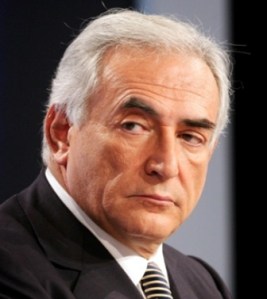
Prosecutors are re-considering their position in the case against former IMF Managing Director Dominique Strauss Kahn, accused of the sexual assault of a hotel housekeeper in New York.

According to the New York Times, investigators have discovered “major holes” in the credibility of the woman who alleged DSK forced her to perform a sexual act against her will.

The “major holes” are apparently issues involving her asylum application; the possibility of her links to criminal activities, and a phone conversation with her fiance in which they discussed the benefits of pursuing charges against DSK. Her fiance has drug convictions, and allegedly paid some $100,00 into her bank account.

As well, investigators discovered that the information on the woman’s asylum application was not consistent with what she told them.

Strauss Kahn’s lawyers have never denied that a sexual act took place, but claim it was consensual, and that they would discredit the housekeeper’s version of events. There has been no mention of DSK offering money for the woman’s sexual services.

None of the “major holes” in the woman’s account of herself prove that her version of events in DSK’s hotel room is wrong. The case has always been about a “he said-she said” situation. Since his arrest, several other women have come forward to give details of unpleasant encounters with DSK, and his private reputation as a sexual predator has been made public.

Yet this history doesn’t seem to affect his credibility when it comes to the events of that morning.

In a he said-she said situation, it all comes down to a battle for credibility.

The power dynamics are interesting: while at first blush one could see DSK as having all the power on his side even if the sex was consensual, the consequences have been catastrophic for him, as he lost his job, and quite possibly his future as a possible French president.

Against this, the housekeeper was possibly forced into a sexual act she did not seek or want, she may also have lost her job, and her application for asylum is under serious scrutiny. In the context of her life, the consequences for her are as catastrophic as for DSK.

But he’s still wealthy.

It looks as if no one will come out of this situation unscathed including the NYPD, who are now accused by some of rushing to premature judgement.

So the morals of this he said-she said story are? If you can’t be sure it’s safe do us all a favour and keep it in your pants, chaps.

And if you’re a woman with any history, you’ve likely got little or no credibility, no matter what the truth is.

In a little footnote to these events, Strauss-Kahn’s replacement at the IMF, Christine Lagarde, commented: “In my interview at the IMF with all the 24 administrators, there was not one single woman. So while I was being questioned for three hours by 24 men, I thought it’s good that things are changing a little.”

Become a school chaplain: no qualifications needed, just believe in God

28 Jun

Here is the description of the School Chaplaincy Program taken from website of the Department of Education,Employment and Workplace Relations:

This voluntary program assists schools and their communities to support the spiritual wellbeing of students. This may include support and guidance about ethics, values, relationships, spirituality and religious issues, the provision of pastoral care and enhanced engagement with the broader community.

School chaplains are not required to have any qualifications at all, in any field. Yet they are charged with the responsibility of “guiding” students through the minefields of relationships, ethics, values and spirituality.

It’s intolerably negligent of the government, and schools participating in this program,  to permit any one in a school community to “provide guidance” to school students in the complex and sensitive areas of ethics, values, relationships, and spirituality, without any training at all in these areas, or any other for that matter.

The provision of these unqualified “support” chaplains in our schools is costing us $165 million over three years.

Do we have unqualified nursing assistants in hospitals? Do we have unqualified teachers’ aides in schools?

The program overview continues:

While recognising that an individual chaplain will in good faith express his or her belief and articulate values consistent with his or her denomination or religious belief, a chaplain should not take advantage of his or her privileged position to proselytise for that denomination or religious belief.

I read this with utter incredulity. The chaplain is not required to have any qualifications, but the chaplain is permitted to articulate beliefs and values consistent with his or her denomination or religious beliefs.

As the school chaplains have no qualifications in the areas in which they are supposed to provide “guidance” for students,one can safely assume the the government doesn’t really expect them to do that. Or if the government does expect them to do that, this is a bigger scandal than that of the unqualified installers of pink batts.

Scripture Union of Queensland is a prominent supplier of school chaplains.From their website:

Working alongside other caring professionals, SU QLD Chaplains care for young people’s spiritual and emotional needs through pastoral care, activity programs, community outreach and adventure-based learning.

Most importantly, SU QLD Chaplains provide a personal point of Christian contact, care and support for students, teachers and their families within their schools.

And there we have it. School chaplains are in public schools to promote Christianity. That’s the only thing they are “qualified” to do. All the job requires is a belief in the Christian god.

It’s dangerously negligent for the government and schools to let  untrained chaplains loose in schools, giving them an entirely unearned privileged position advising students on relationships, ethics, values and spirituality. The only thing they can possibly do is advise students from a Christian perspective. In the wider world, we have a choice about who we go to for guidance and advice. Nobody forces us to go to the Christians or any other religious group. Yet in our public schools students have as their source of guidance the unqualified religious?

What happens to, say, a student struggling with their sexual identity who thinks they might be gay? Given the dominant Christian perspective on homosexuals as articulated by the Australian Christian Lobby’s Jim Wallace, which is to lovingly expel them.

The questions for Minister Peter Garrett are: why isn’t this money being used to provide more qualified counsellors in schools? Why is the government financially supporting religious activity in public schools? Why is the Minister putting children at risk by offering them guidance from people who are totally unqualified to give it?

This is a completely unacceptable situation from every perspective. Our students are entitled to qualified non-religious counselling when they’re in difficulties. To offer them religious proselytising instead is despicable.


Mentioning the war – on the Watermelon Blog

26 Jun
WikiWorld comic based on the articles "Go...

Image via Wikipedia

Have a read of Mentioning the war on the Watermelon Blog. David Horton reclaims THAT word from the climate change deniers who call Godwin’s Law!

Go back part three: Don’t call me a leftie!

24 Jun

Abbott you've been dickrolled. by David Jackmanson via flickr

Go back where you came from: Part Three

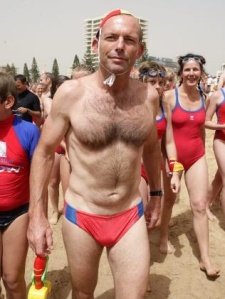
I was amused to see Roderick, vice president of  a branch of the Young Liberals, appear again in last night’s episode sporting the tee shirt with Tony Abbott in a lifeguard’s bonnet and budgie smugglers on the front. Unfortunately I couldn’t read the slogan.

Later he showed up in Congo wearing Julia Gillard as a lemon on his chest. Roderick is to be commended for his commitment to furthering his goal, stated at the beginning of the series, that he did not intend to allow anyone to cast him as a leftie. He simultaneously pushed domestic political propaganda for the home audience, and I’m certain he is to be watched as a future politician.

I’m struggling with on-going ambivalence about this show. On the one hand, it’s a remarkable achievement. I mean, imagine the logistics involved in pulling it all together. Give credit where it’s due, I say.

The fusion of documentary and reality TV genres was inspired: while I found the Big Brother style narration a little irritating it certainly allows the program to speak to a broader audience than a straight doco. It was a clever marketing decision, and also  allowed the participants an on-going and authentic emotional engagement that would not have been as easy in a doco.

However, I’m unable to shake a sense of voyeurism and exploitation. I think this could have easily been avoided by including footage of whatever negotiations took place between the producers and the asylum seekers and refugees who took part in the program. We get very little sense of their agency: they are portrayed as largely without any.

While they obviously have severely restricted agency in determining the course of their lives, I think it would have been respectful and humanizing to at least show the audience how they were invited to take part, and how they accepted the invitation.

Instead, we are left with an impression that they passively exist for our consumption, while the agency of the white participants is taken for granted. Raquel, for example, was given a choice about visiting Congo and she declined.

At the same time, the face to face interactions between the Australians and the refugees worked extremely well to humanize them, counteracting the Gillard government’s on-going efforts at dehumanization by isolation.

As the philosopher Emmanuel Levinas pointed out, when we are denied interaction with the face of the other, we are denied interaction with our humanity and theirs. Go back to where you came from achieved a great deal in this regard, and this is one of it’s most powerful strengths.

Two participants did have their beliefs about boat people reinforced. Having seen the camps in which refugees languish for years awaiting resettlement, the sense of unfairness that these people should be usurped by boat arrivals was strong.

It’s probably entirely unreasonable to demand that anybody fleeing death and persecution should first consider others who may be worse off than even them. Such moral considerations are easy for those of us who are safe. Put any one of us in a war zone and we might well discard all moral niceties, and bolt to anywhere in any way we can.

Hopefully, the show will have gone some way to exposing the constellation of false assumptions that underly Australian attitudes to asylum seekers. But I’m not holding my breath.

Changing the gender paradigm: it’s women’s work

24 Jun

Changing the gender paradigm, in On Line Opinion today.

An essay on women in the workplace, baby clothes, pitfalls in the social process of gendering, and Foucault’s analysis of hegemonic manipulation. Enjoy!!!

Raquel is a bogan? So what’s that make the rest of us?

23 Jun

Go back to where you came from: Part Two

I don’t know if it was the confusion of the raid, but it looked to me last night as if two of the Australian men taken along with Malaysian immigration officials for the ride, actually joined in ferreting out those miserable refugees from the rat’s nests they called home, and in sending them into a legal system where they’ll be subject to a variety of possible punishments including caning. I don’t want to believe that, but it’s what it looked like.


Caught up in the excitement of the chase, perhaps. Can happen to anybody.

Young Raquel, who I hear has been subjected to torrents of Twitter abuse on account of being considered a “bogan,” positively reveled in the rounding up of women, children and men, declaring that’s it’s what we should be doing in Australia because these people have done the wrong thing. (Apparently racism is a bogan characteristic.I thought it was much more widespread than that.)

Raquel was later questioned about herself by a UN official at a refugee camp in Kenya where she’ll spend the next few days of her life trying not to go to the toilet. In response to his questions Raquel replied that she does nothing, she doesn’t work, and she stays at home with the dogs. The UN official looked bemused. Life is odd in Western democracies.

I don’t really approve of the Twitter crowd’s attack on Raquel. I’m a subscriber to the opinion that the bogan is a construct created by the middle classes to give themselves something to feel superior to. This indicates terrific insecurity on the part of the middle class, if they need to trash somebody else in order to feel like worthwhile human beings.

It strikes me as ironic that a participant in a program that demonstrates extraordinarily well how comfortable Australians construct a refugee other in order to feel morally superior, is herself subjected to this othering by her countrymen and women. It confirms my suspicion that one of the most common ways human beings reassure ourselves about our worth is to measure it against someone we think is in some way less than us. Boganing is but one example of this, as is the moral condemnation of asylum seekers.

Then there’s those of us who morally condemn those who morally condemn asylum seekers and bogans.

In truth, there’s a bogan in all of us.

As for the program – I find myself wondering what the refugees think of having six privileged white people plus camera crew and gear plonked down in their midst, in the interests of producing a spectacle for everybody back home. The middle class hungers for spectacle, and the miseries of others temporarily satiate that craving. Is this morally repugnant exploitation? Whose interests does this program serve? What difference will it make to those refugees?

Or in the end, is it all about us?

Gillard government ideology silences victims

23 Jun

Having now published two articles on ABC’s The Drum on the topic of the Gillard government’s National Plan to prevent violence against women and their children, I’m convinced  that there are an awful lot of people who believe that there’s only one kind of family violence worth talking about, and that’s male violence against women.

The number of times I’ve been attacked for “distracting attention” from this form of violence because I’m pointing out that there are also female perpetrators of family violence against women and children, and this should not be ignored by  any National Plan. This gives a troubling insight into an established truth regime created and perpetuated by the  Plan through its own definition of domestic and family violence.

“Truth regime” is a term coined by French thinker and philosopher Michel Foucault. Foucault argued that we conduct our lives under the largely unacknowledged control of  “truth regimes.” A truth regime is a construct of political and economic forces that command majority power in society, with which we are obliged to conform to varying degrees, if we want to be accepted and stay out of prison.

Among other things, truth regimes circulate statements that are prescriptions for what populations should consider to be the “natural” order of things.  One of the ways this control is achieved is by ignoring and thus silencing any other perspective when designing and legislating public policy.

The National Plan is a brilliant example of a dominant ideology constructing a truth regime under which we must all labour, in this case, for the next 12 years. The truth they’ve consructed is: domestic and family violence is overwhelmingly perpetrated by men on women and “their” children. No matter how many voices are raised with stories of family abuse they’ve experienced at the hands of women, they don’t count. They’re invalid. They’re not in the Plan’s agenda.

Note the possessive, “their children.”According to the truth regime, children belong to women. Never mind that the UN Convention on the Rights of the Child, to which we are signatory, has set out a whole raft of children’s rights, including the right for children to have rights entirely separate from their parents. The National Plan says children belong to women.

Responses to my criticisms of the inadequacies of the Nation Plan, which are basically that it will achieve little until it addresses FAMILY violence and not just male violence in families, indicate that there are many subscribers to this truth regime who have a great deal invested in denying all other family violence. This is extraordinary when one considers how hard feminists and others have fought for decades to open the door on domestic violence and give victims a voice.

It seems that we are selective about which victims to whom we grant a voice. Victims of women are out of luck.

The reality is that we’ve been trying for forty years to address family violence from the position that it is all male perpetrated. We have achieved nothing in terms of preventing domestic violence, we’ve just become better at band-aiding the wounds. While one type of family violence never justifies another, it defies all logic that we focus our entire attention on one aspect of a complex situation and expect that we can change it.

Then there’s the common belief that if we acknowledge female family violence we’ll somehow detract from and minimize that perpetrated by men. Are we really so incapable of holding more than one form of violence in our consciousness at the same time? Are we obliged to live under a George Bush type ideology that states the truth as: women are always victims and men are always perpetrators?

The ideology on which the National Plan is based is silencing domestic violence victims and survivors who do not fit into it’s narrow definitions. The truth regime is firmly in place. There are sporadic protests against its dominance, and one can only hope that resistance to the ideology will increase over time, until a more realistic and holistic understanding of family violence takes its place.

Go back to where you came from

22 Jun

fuck-off-we-are-full


Go back to where you came from, aired on SBS last night,  is a three part series with a unique approach to educating it’s audience on the complex issues of boat arrivals and refugees in Australia.

In part one we’re introduced to the six participants, three men and three women, who have a diverse range of views on asylum seekers, from understanding and compassion, to angry rejection. There’s a young woman Raquel for example,who hates Africans, a position that presents something of a challenge for her when she’s sent to stay for three nights with a refugee family from Burandi and Congo.

Interestingly, while Raquel discovers herself capable of genuine empathy after listening to the sufferings endured by her hostess, she later declares that they were just one nice family, doesn’t mean she’s going to get friendly with Africans per se, whom she still doesn’t like.

The use of reality TV techniques, such as dramatic music and the friendly but authoritative manner of the program’s host, refugee researcher Dr David Corlett, are reminiscent of Big Brother and Survivor. I read this as ironic comment on reality TV shows that similarly challenge participants to take time out of their comfort zone to see what they can become, but unlike the SBS series, take no interest in anything other than the personal emotional journey.

In widening the focus the series becomes part reality TV, part documentary. This is a fascinating combination.

Already the participants have begun a psychological process of decompensation, as they’re thrust into situations entirely foreign to them, including embarking on a leaky boat for an unknown destination, bereft of passports, wallets, phones, money and ID. Just like real boat people. Tempers fray, harsh words are exchanged, and the experience may well have given Rae, a 63 year old retired social worker, pause for thought. At the beginning of the show Rae told us that when the boat was wrecked at Christmas Island last December she thought: “Serves you bastards right.”

While not agreeing with all of their views, nonetheless I very much admire this motley crew. They can never experience the life threatening dangers and torments boat people and refugees actually endure, but they are willing to go way outside of their physical, emotional and psychological comfort zones. This is brave, even if there is a camera crew and later, UN and US troops guarding them as they enter into dangerous territory. It’s a long way from Cronulla beaches, idyllic farmlets and safe lives with people who love you. All credit to them for volunteering to take themselves into something completely different.

The series promises intriguing insights into human behaviour under extraordinary stress, combined with profound insights into what asylum seekers and refugees are actually fleeing. As a social experiment it’s got to be unique. With the wide range of views represented by the participants, there’s someone for everyone to identify with, and this is smart. It wouldn’t have been nearly as useful if the group were like minded either way.

There seems to be little concern about the presence of cameras. I don’t think anyone is performing, though they may certainly be restraining themselves at times. It’s an unnatural situation in every way, and nobody’s going to behave as they do in their own homes without surveillance. Be that as it may, the participants seem to be honest in their expression of emotion and opinion, and this is one of the most powerful aspects of the program as they react, for example, to their initial visit to the Villawood Detention Centre where they talk to Iraqi detainees.

The program is a powerful argument for how people’s attitudes can shift when they are face to face with human suffering. All the propagandists from John Howard on have recognized the need to hide boat people away in desert camps and behind razor wire, to prevent their faces and their stories being known. Dehumanizing them by rendering them faceless continues to be a primary tool in the manipulation of Australian public opinion.

The first rule of propaganda is to stereotype your target.  Go back to where you came from challenges the propaganda head on, and for this alone, I’m glad to see it out there.