Archive | Society RSS feed for this section

Monogamy’s police

31 Jan


Wandering eyes


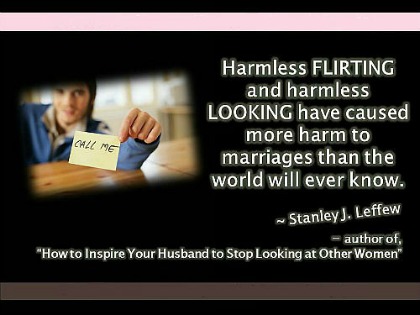
I saw an advertisement on television the other day in which a man, thinking himself unobserved,  is “caught” by his wife looking longingly at a young woman. The wife’s face assumes an expression of furious exasperation, of the kind that infers the intense frustration of one who knows they have little control over such situations, that is, the male randomly desiring gaze, yet will not, ever, give up seeking that control.

When the husband realises he’s been “caught” he cringes with guilt, averts his gaze, then attempts to placate his aggravated wife with a shrug intended to convey his both his apology, and his helplessness in the face of his nature.

What I immediately saw in this small scenario was a deeply embedded heterosexual cultural belief that it is wrong for men to look at women other than their partners with admiration or any form of desire, and it is the female partner’s job to police his gaze and wrangle him back under control.

Frankly, I’m sick to death of this infantilising by women of men. They are such children they must be micro managed and surveilled by their female partners to the point where looking at another woman is a cause for her anger and his guilt? Are even children subjected to such an intensity of repressive surveillance?

Haven’t we got anything better to do? I mean, really. Haven’t we? We must be mummy-wives for our entire lives?

According to the advertising industry, which one imagines has its finger on the majority pulse, yes we must.

I’m not sure about how this works in reverse. There is a prevalent myth that women are not as visually sexually stimulated as are men, so our gaze is not as inclined to wander. However, I would vigorously contest that myth. I think women are very capable of experiencing and enjoying visual stimulation, but we aren’t supposed to be. It’s another of those culturally imposed gendered beliefs that are attributed to biology, the “nature” of things, essentialism: men get turned on by looking, women don’t. It’s elephant shit. I speak with the authority of personal experience. So instead of watching who he’s watching, get some visual pleasure of your own.

Apart from all that, the idea of being constantly watched by a partner when we’re out and about, just to see who I’m looking at so I can be brought under control is, quite frankly, absolutely creepy.

We are rightly infuriated when women are blamed for being raped because of what we wear, where we go, whether we’re drunk or sober. Rape is the rapist’s responsibility, not ours. Yet at the same time, women are encouraged in monogamous heterosexual culture to believe we have sole responsibility for controlling the male gaze and what that gaze might lead to, because he can’t be trusted to do it himself. Apparently many of us accept this responsibility and in the acceptance, enable the man-child, not the man.

If heterosexual monogamy needs this much policing by women, it’s a failed project.  Struth, any relationship with policing at its core is a failed project, isn’t it?

I can’t remember what that ad I saw was for. I can only remember the ludicrous content. So epic fail in that project too,  advertisers.


Playing monogamy

30 Jan

monogamyWere I to write the thinking woman’s book of advice for potential lovers of the already committed I would firstly say, it isn’t thinking that gets us into such situations, and it usually isn’t thinking that gets us out. It will come as a confronting shock for many thinking women to discover that thinking only goes so far, and cannot by itself save you from yourself.

I would then say, it is extremely important for your own survival to remember there are always three people in your relationship, one of whom is quite likely unknown to you.

It is also important when everything goes pear-shaped (probably more important than anything else) to invest time in understanding why you decided to inflict this particular kind of torment on yourself in the first place.

I don’t want to gender my imaginary book: women take extra marital lovers as well as men, lesbians are unfaithful and so are gay guys, and I don’t know how gender and sexual orientation change the dynamics of betrayal, or if they only add variation to its expression.

Also, for the sake of convenience I’d use the term marriage in the largest sense, to include committed relationships without the State’s imprimatur.

In my case, I blundered into a marital minefield. Because of what I knew of my lover, and also because of what he said, such as “I am only doing this because you are irresistible, I don’t tell lies to my wife,”  I thought adultery was a rare event in his life.  As it turned out he’d been engaging in extra marital affairs since the 1970s, and they were, in fact, part of the established pattern of his long marriage. I was a rarity in the sense that, according to his wife, I was “the only one he’d done this with,” this meaning  fallen in love with, and so deeply threatened the marital equilibrium. The others had apparently been little more than co-operative receptacles for his ejaculatory fluids, and of minimum consequence, and she’d seen them off without too much trouble. Annoyingly, I have this sense of myself as an equal human being, and an unwillingness to crawl under a stone when someone decides I am no longer of use to them.

My lover’s wife had, she told me, become very cynical about men and their pathetic sexual desperation. I told her I couldn’t imagine becoming cynical about an entire gender, but, I added, perhaps that was my downfall. I don’t think sexual desperation is particularly gendered, women can and do yearn and desire. Woman can and do go looking for a zipless fuck, and feel ashamedly desperate both for wanting it and doing it. It is one of our culture’s epic fails, that human sexuality is looked upon with such severe moral judgement, and such complete lack of understanding.

As well, I felt sorry for my lover’s wife. After all those years she probably thought his adulteries were over, and then he’d gone and done the worst one of all.

These people were to all appearances living in a long-term monogamous marriage, the kind that is held up to us as a model, as a desirable peak of  human intimate achievement. They were “pillars of the community,” forgive the cliché, an outstanding example of a bourgeoisie that still exerts repressive control over public morality, and expectations of sexual behaviour. They do not, as she accused me of doing,  “write intimate things all over the Internet.” But they are pretenders. There is nothing in the least monogamous about their marriage and hasn’t been for decades. Indeed, the biggest threat I apparently represented to this couple was not the ending of their marriage, but the power I had to reveal them to their community and family as two-faced long-term fakes.

You always take enormous emotional risks when entering into affairs with married people. But when you walk into an already well-established pattern of infidelity it’s like walking into a spider’s web of lies, half-truths, games, dishonesties, and an accumulation of dysfunction, all of which cling to your face and heart with a nasty stickiness that is extremely difficult to remove.

They are practised at playing this game, you may not be, and believe me if you aren’t, you will not know what has hit you. You are a pawn. They will use you. You will be the means to their duplicitous end. You, and others before you, have served to keep together a marriage that otherwise might long ago have blown apart, had it been truly monogamous instead of only pretending to be. You are an outlet, dear. For a man’s or woman’s desire that cannot be contained and satisfied within the monogamy to which he or she has committed themselves, and lacks the courage to examine.

“I knew I should never have let him meet you that first time on his own!” his wife raged at me and I saw immediately that I was not dealing with an adult when I got involved with this man. I was dealing with a naughty child who couldn’t be let out without a wife to guard him from himself. But by then it was too late. I’d done it.

Personally, I don’t see the point of monogamy as a life goal, or as any measure of moral achievement. It may be an ideal situation for some people. I can see it has potential. It worked for me because I never found anybody else as interesting as my husband, which was simply great good luck, not to do with any strong moral sense about monogamy, or strong resistance to temptation. Of which I obviously have neither.

It isn’t the desire for another that is wrong, or even the acting on it. It’s the arrogant sense of entitlement that allows people to use and then dispose of other women or men as temporary sexual and emotional outlets, in order to help them maintain the treasured illusion of the perfection of monogamy, that in itself counts for so much in the assessment of what is a “successful” marriage.

When we are devastated by betrayal, and the profound hurt and jealousies it brings, it can seem to help, I suppose, to call up a moral framework from within which to hurl fury and pain at the perpetrator. Not only have they done you wrong, they are  wrong, in the terms of this moral framework. It might temporarily help with the pain, but in fact, it’s just another illusion.

I am a symptom of the troubles in your marriage, I told my lover’s wife. I am not the cause. To her credit, she agreed with me.

It is a mystery to me why people do not sort these things out. Come to some mutual arrangement about a partner’s ranging desires. Refuse to come to such an arrangement and leave. Live as single people free to love who they will. To play the same old game of betrayal and remorse and broken promises for decades, in the service of a constructed ideal of  family founded on monogamy, smacks of idiocy to me. I prefer the deeper intimacy that comes from acknowledging and sharing the truth of a situation, even if it means frightening change and sometimes endings.

What is  “family” if there isn’t truth at its foundations?

This all matters very much, because the monogamous relationship is held to be the cornerstone of our culture. It’s increasingly challenged, and that can only be good, because I doubt my experience is an isolated one. I suspect there are many more playing at monogamy, and I suspect that the cornerstone is neither strong nor true. Challenging its cultural stranglehold is likely one of the more significant tasks we face, and the ramifications are extensive.


Family Violence. Where’s THE MINISTER FOR WOMEN?

26 Jan

I can’t help wondering what Prime Minister Tony Abbott, also known as THE MINISTER FOR WOMEN, thought and felt when he announced as Australian of the Year the most outstanding advocate for women and children I’ve heard in a very long time, Rosie Batty.

Ms Batty’s son Luke was brutally murdered by his father, a man with history of serious violence towards his family. Their story is at the worst end of the family violence continuum, as are many others.

That we even have the phrase “family violence” in our lexicon, with the most appalling statistics to justify its existence, ought to be a matter of serious concern for THE MINISTER FOR WOMEN, whose responsibility it surely is to give political backup and practical support to people like Rosie Batty, who shouldn’t have to work as she has without a word of encouragement from the LEADER OF THIS GREAT NATION AND MINISTER FOR WOMEN, TONY ABBOTT.

Somehow, in the brief time since Luke was murdered by his father, Ms Batty has garnered the strength and courage to campaign with vigour and a resounding authenticity, against family violence. No voice could be more convincing than hers on this topic at this point in time.

While the “king hitting” of  a handful of young men brings out Abbott’s anger and righteous indignation, as does the threat of terrorism and the horrible, unspeakable, spine chilling crime of asylum seekers breaching the sovereignty of our borders; as the thrilling notion of going to war, some war, somewhere, anywhere, for whatever reason causes the bedraggled budgie in the Prime Minister’s rapidly fraying smugglers to sluggishly stir, the slaughter and suffering of women and children in our own backyard goes unaddressed  by THE MINISTER FOR WOMEN, in fact he NEVER EVEN MENTIONS IT! 

I can’t imagine any other minister NEVER EVEN MENTIONING the topic of his portfolio. Can you?

Rosie Batty. Woman of calibre. Salute.

Rosie and Luke

Rosie and Luke

Australia: a country of vengeful malcontents

24 Jan


wall-of-hate

In this piece titled “Manus Island: what will it take to shock us?” Julian Burnside, barrister and refugee advocate, gives a powerful synopsis of the cruelty the Australian public is prepared to tolerate its governments inflicting on asylum seekers, in the crazed collective desire to “stop the boats” and protect the country’s “sovereign borders.”

The answer to Mr Burnside’s question is, of course, that the only thing that will shock anyone at this point is a government that is prepared to cease and desist from using asylum seekers as human fodder in election campaigns. We have reached the stage in this matter where the only possibility for provoking shock is decent behaviour.

The contempt in which the Australian public holds asylum seekers who arrive here by boat is sickening. As has been noted on other occasions, we treat people who are far more threatening to us individually and collectively much better than we treat unarmed people seeking sanctuary who travel here by boat. The unexamined hatred, prejudice, loathing and contempt directed towards asylum seekers, chillingly orchestrated by political leaders of both major parties, is mind numbing, and it has numbed the minds of the Australian public in general to the degree that many believe we aren’t harsh enough. 60% of Australians, according to a poll conducted in September 2014, (see link) believe we are not treating waterborne asylum seekers badly enough.

From a psychological perspective, this leads me to believe that we are a nation of desperately unhappy, dissatisfied people who for many reasons, some of them undeniably sound, live with a sense of profound grievance that has to negatively express itself towards somebody and something. I draw this conclusion because people who are living lives in which they find satisfaction and enjoyment at least some of the time, are not inclined to desire the persecution of others, let alone bay for blood like rabid wolves because a few thousand stateless persons have turned up looking for sanctuary.

Regrettably, it would seem that these miserably vengeful Australians are in the majority, and one has to ask, why is this so? What has gone so awry in this lucky country that so many of us need to take out our apparently endemic discontent on the helpless and the vulnerable? Because it is not only asylum seekers towards whom this loathing is directed, although they are the extreme example of its concrete manifestation at this moment in time. In reality, any individual and group that can be defined as less than what the miserable majority  consider the “norm” are targeted for persecution in some way, and our politicians lead the ranting, bloodthirsty, vengeful pack.

“Fair go” is a principle inherent in the Australian “character?” My arse it is. My arse it ever has been. If it was, we would not have politicians who seek election and re-election on the backs of the most vulnerable in the first place, because it wouldn’t win them votes.

What will it take for us to be shocked? Common sense and decency in our political leaders. That’s what it will take to shock us. Don’t hold your breath. Neither of those things is coming to a marketplace near you anytime soon.

This blog on The Monthly on conditions on Manus as reported by workers there is well worth a read. Thanks to Robyn here for the link.


Revisiting the Streisand Effect

22 Jan

Silencing


During the Melinda Tankard Reist defamation threats against this blog (see category Defamation Threats if you’re interested) Legal Eagle wrote this excellent piece on what is known as The Streisand Effect, which she defines thus: The Streisand effect covers those situations where the threat of legal action has brought publicity to the information sought to be suppressed.

It’s arguable that much legal action intended to silence and suppress has the potential to blossom into the Streisand Effect, depending on the defendant’s attitude towards legal threats, and how much risk she or he is willing to take to protect their freedom of speech. Exactly this situation is currently unfolding once again on No Place for Sheep, where a complaint of harassment has been lodged against me, citing as an example the posts I’ve written on Infidelity and Adultery. I have, I’m informed, “Written intimate things all across the Internet” and this is harassment.

Well, I have written intimate things all over the Internet, erotic writing is a long-established genre and if it offends your sensibilities, don’t read it, has always been my position.

I use no names or any identifiers in any of these posts, neither are the people involved in the stories compelled in any way to read them, so it’s an interesting allegation. What is most interesting, however, is that in defending myself I’ve been obliged to supply my statement of events accompanied by umpteen extremely personal and intimate emails and messages sent to me, that obviously have to identify everyone involved, and will soon be on the public record. At the very least, they’re doing the rounds of various legal agencies, so already a whole swag of people know names they would never otherwise have known or probably even cared about.

On the blog, I tell the stories and it isn’t necessary to identify the actors in order to tell the stories. I actually can’t imagine me ever identifying the actors other than myself, because that would be done only out of malice. Identifying the actors in no way enriches the stories, and enrichment of the story would be the only reason to take that course.

In attempting to shut me up they’ve outed themselves, and didn’t this ever occur to anyone?

It’s also interesting from the point of view of the writer, and who owns story, and what we may and may not write about and how.

It’s also interesting from the perspective of what is defined as harassment. If it is indeed writing about events in one’s own life without naming any other participants, that’s going to silence a veritable multitude of voices.

As I did with Tankard Reist, I’ve made multiple offers to negotiate this situation with the complainants, to no avail. It has been and continues to be an emotionally charged situation for all involved, but one that could be resolved with some good will on everybody’s part, and a couple of admittedly difficult, but private conversations. What has been done cannot be undone, and the best must be made of the consequences of actions.

It seems the complainants want their very own Streisand moment. But you really do have to question the integrity of people who claim they are being harassed by being exposed, and attempt to redress this alleged offence by naming and outing themselves as a default position.

There is no way I could possibly bring them as much public attention as they will bring to themselves by this action, so one can only conclude it’s what they must want in some dark, and to my mind, twisted way.


herself.com, the image and the battle to contain desire

21 Jan

Herself.com


Female nudity continues to exercise the minds of media feminists, with the latest source of controversy being actor Caitlin Stasey’s new website herself.com The site features nude portraits of women of diverse shape, colour and size, along with interviews with the subjects. Caitlin’s aim is to reclaim the female body from the objectification of the male gaze, and the demands of the film and beauty industries for a particular female look that is unrealistic, and excludes the majority of us.

Reaction has been swift, analytical, condemnatory, celebratory.

What is most interesting in these responses is the ongoing battle to define, own, and control human desire through the analysis, condemnation and celebration of images of the female body.

There are feminists who experience female nudity as unnecessary and distracting, it’s our brains we should be flaunting, not our breasts, they maintain. There are feminists who defiantly expose their bodies with a big “fuck you” to the patriarchy. There are feminists who rightly point out that the problem is perhaps not the exposure of the female form, but the industries that exploit and commodify us. There is ample food for thought in all these perspectives, however, nobody seems to be tackling the tricky question of desire.

There is arguably no stronger force than desire, be it for sex, intimacy, power, money, control, freedom, equality.  There is no human activity that is not driven by desire. As feminists have argued since the seventies our desires are constructed, that is, we are taught what we should desire and how we should desire it. While the energy we know as desire is inherent in us, how we experience and express it, or indeed deny it, is learned from birth, and the learning is gendered.

So much of the public turmoil centred on images of the female body is driven by an unexamined  need to contain desire that simply will not be contained. Whether this need to control takes the form of a puritanism that is based on notions of immodesty and the ‘wrongness’ of nudity, or whether it takes the form of pole dancers paying their way through their PhD (look! I have brains as well as tits and a shapely arse!) the basic struggle is to own and control desire, and its expression.

Whether herself.com will do anything to reclaim our bodies from the desiring and objectifying gaze of males who want us, females who want us, and industries who want us, I can’t predict. It is fairly obvious that the one-dimensional photographic image of a desirable body is hardly going to encourage anyone to focus attention on any other aspect of that human being, and why should it? “I can’t stop looking at her tits,” moaned one woman when asked if she was interested in the narrative accompanying the image.

Perhaps the struggle to make an image of a human body anything more than an image is a waste of time. The whole project of making women “real” through images of us seems contradictory. An image might not make me a sexual object, but it will inevitably objectify me, because that is what images do, and it is all images can do. Perhaps what is needed is a more realistic understanding of the limitations of the image, rather than the likely pointless attempt to make the image “real.”

Apart from those quibbles, I quite like Caitlin’s herself.com I like the challenge it presents to repressed bourgeois prudes. If I met any of those women, I’d be very interested to talk to them about their participation in the project. I like the “fuck you” attitude to patriarchal objectification, though I concede there will still be patriarchal objectifiers who get on the website and ogle and wank. They will always be among us, no matter what we do.

Desire takes a billion forms. The battle to own and control desire will likely be unending, because it is the battle to control human beings. In the meantime, herself.com and like-minded women continue to give the finger to those who would own and control desire, and for taking this small step, they are to be commended.

The arbiters of taste: who will control society?

14 Jan

security-vs-liberty


In his blog for The Monthly on the Charlie Hebdo massacre, Mungo McCallum concludes his Readers’ Digest argument that laughter is the best medicine by observing that even those wielding automatic weapons can’t fire them if they’re doubled over with mirth.  “After all,” he writes, “even the most rabid fanatic would find it hard to aim a Kalashnikov while guffawing.”

McCallum’s piece is about the lines that are or should be drawn between satire, humour, and offence, but what he fails to address is who exactly is to determine those limits, and what criteria they are to employ in order to arrive at their judgement.

This is another aspect of the battle for societal control so relentlessly fought by groups such as Collective Shout and individuals such as Melinda Tankard Reist, with whom I have locked horns on more than one occasion. See the Category Defamation Threats on this blog if you want to know just how hard these people will go after you in an effort to shut you up and impose their views.

I know people who find Seinfeld cruel and unfunny. I know others who find The Simpsons offensive to their sacred notions of family. I’ve heard arguments that the HBO series Breaking Bad, in which a regular high school chemistry teacher morphs into a drug lord after learning he has terminal cancer, has led to an epidemic in the manufacturing of methamphetamines. I find McCallum’s line quoted above offensive in its casual dismissal of the profound seriousness of rabid fanaticism. I don’t find it satirical or humorous, and I suspect it could only have been written by someone who has little first-hand knowledge of any kind of terror.

The point is, something will always offend someone. There are those who are outraged because every cliff top in the country is not fenced off to protect us from falling over it and sustaining injury, or death. There are those who want to kill every shark in the ocean because now and then one of them eats someone. There are those who believe being hurt and offended is so great an injury laws can and should be passed to prevent their emotional distress.

There are those who take out their Kalashnikovs because they believe being insulted and offended are justifications for murder. There’s very little that can be done about someone with that particular mindset, and if all other provocations are denied them through censorship of potentially provocative commentary they will still kill, on the spurious grounds that an entire mode of existence is offensive to them and it’s their right to eradicate it.

The fight for the power to wield societal control is constant, and it takes a myriad of forms. In general, our liberal democracy is controlled by the values of the bourgeoisie who are, also in general, obsessed with issues of law and order, affronted by graffiti, entirely precious about their right not to be offended, insulted or otherwise emotionally ruffled, and consumed by notions of decency and what they determine to be appropriate. Look at our politicians if you don’t believe me.

There is no doubt that words can damage. Vilification of any kind causes hurt and damage and destruction. Rather than impose legislation that seeks to prevent and punish the utterance of damaging and destructive words, satirical commentary, unfair criticism, racial and religious abuse, I would prefer that we instead focus our attention and resources on education and remediation. I think this because largely legislation has no effect at all in everyday situations, and in many instances can make resentment against the other, whoever the other happens to be at any particular time, even worse.

In my opinion, legalisation that seeks to control who can say what, when and where is driven by bourgeois desires to exercise social control and create a perceived utopian culture in which proponents of bourgeois ideology feel most “comfortable.” While the bourgeoisie have not yet resorted to firearms with which to impose their vision of the world, they have instead demanded a level of surveillance and state control over language and how it may and may not be used that is astounding.

While I do not agree with Attorney-General George Brandis that everyone has the “right” (whatever “right” means in his context) to be a bigot, it seems to me that legislation attempting to prevent the expression of bigotry is doomed to fail, except in very rare high-profile situations.

The battle for societal control will not be won by silencing. It is a wrong-headed and prejudicial battle in the first place. We cannot, for example, silence the Murdoch press and even if Andrew Bolt came a cropper with his racist views what was gained in the larger sense by his stumble? He hasn’t shut up, he’s just as offensive, if not more so, and he gained an inordinate amount of support and sympathy. In general, his name is remembered as a consequence of those events, and not the names of those vilified and insulted, or the nature of the vilification and insult.

I know from my own experience of being threatened with legal action if I didn’t retract and shut up that it only made me more determined to express views I believed to be worthy of expression and that I had the right to express, because why shouldn’t I? My views were extremely offensive and insulting to some. So what? Theirs were equally offensive and insulting to me. Neither of us should have been silenced, and only one party (not me) had the financial wherewithal to threaten the other with silence or ruin.

What we need to do is think about is what can be done that will actually achieve fundamental change, instead of focusing on window dressing and  band aids that at best do nothing and at worst incite those who are silenced by legislation to even more devious expressions and behaviours.

McCallum is wrong, laughter is certainly not the best medicine when faced with a Kalashnikov, or being otherwise silenced by punitive measures employed by the state at the behest of the hegemonic bourgeoisie.

The best medicine is to resist and refuse efforts to silence, to be subversive, to transgress, to contest, to challenge, to protest, to be civilly disobedient, to refuse to be shut up by those who are “uncomfortable” with certain forms of expression. Your discomfort is not my problem, tell them. It’s yours. I’m sorry you feel it, but there are ways you can deal with it if you have the courage, and silencing me is not one of them.

I laughed my head off, said someone taken hostage by murderous ideologues never.


The point of love…

13 Jan


solitude


“The point of marriage  is not to create a quick commonality by tearing down all boundaries; on the contrary, a good  marriage is one in which each partner appoints the other to be the guardian of his [sic] solitude, and thus they show each other the greatest possible trust. A merging of two people is an impossibility, and where it seems to exist, it is a hemming-in, a mutual consent that robs one party or both parties of their fullest freedom and development. But once the realization is accepted that even between the closest people infinite distances exist, a marvelous living side-by-side can grow up for them, if they succeed in loving the expanse between them, which gives them the possibility of always seeing each other as a whole and before an immense sky.”
― Rainer Maria Rilke, Letters to a Young Poet

My husband often used to tell me that as well as looking into each other’s eyes, he liked us to stand side by side and look out together at the world, while experiencing it individually.

Where Rilke uses the term “marriage,” I would use the term love.


Freedom to speak. Section 18C and terrorism

13 Jan


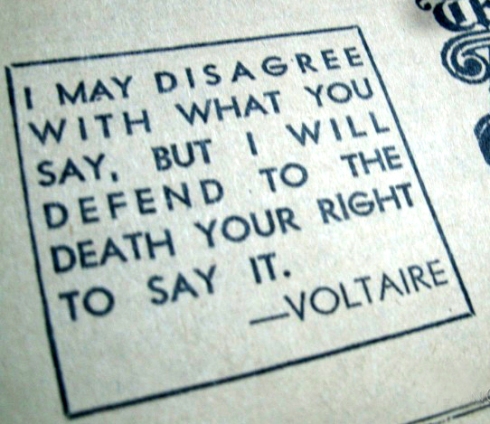
voltaire-quote1


I find myself in a familiar turmoil over the issue of free speech, raised again most recently by the Charlie Hebdo massacres. Those lives were not lost because of the exercise of freedom of speech. They were lost because violent, brutal ideologues murdered them. The lives lost in the 9/11 attacks had nothing to do with the exercise of free speech. Thousands upon thousands upon thousands  of civilian lives lost in wars waged by western powers were not lost because the victims were exercising freedom of speech.

While I abhor the dehumanising stereotyping that is at the heart of hate speech and racial vilification, murderers are responsible for murdering and those ideologues determined to murder will do so, and they will find any reason to justify their thirst for destruction. It is ludicrous to claim that offence and insult are provocation enough to incite them, and that attempting to restrict offence and insult will do anything at all to restrain their murderous impulses.

Race is a construct, used to justify ill-treatment and dehumanisation of those not in the dominant tribe. Religion is a construct, also used to justify ill-treatment and dehumanisation of those not of the dominant belief system. Race and religion are equally illusionary, that is, they are human constructs that have come to be reified as monolithic truths for which people are willing to kill and to die. Section 18c of The Racial Discrimination Act will not affect these monolithic truths, and the willingness of their adherents to murder and die for them.

The human species has not yet evolved out of its need to gather in tribes of one kind or another, and take arms against those they define as not of them. Restricting free speech does nothing to address these fundamental problems.  In many situations it serves to exacerbate division, for example in defamation legislation that inevitably favours those with wealth and power over those with none.

There have always been and will always be extremists and radicals. We can no more expect to live free of the threat of terrorism than we can expect to live without the air that we breathe.

In the end, nothing will be as effective against terrorism as the freedom to speak, even if that speech is offensive and insulting. Those of us who aren’t murderous extremists must learn to deal with speech that insults and offends us because the option, a mass silencing,a mass surveillance of thought, word and deed is far too horrific to contemplate. There is no human right not to be offended. A life without insult is a sheltered life indeed. It is a serious loss to Australian society that a magazine such as Charlie Hebdo could not be published in this country. If you don’t like it, don’t read it, but to make it illegal is unacceptable.

What is wrong with us is that we do not regularly mobilise as did the French in Paris yesterday, visibly united against terrorist attacks. What is wrong with us is that we have become too precious, too willing to allow governments to take responsibility for us in legislation that is and can be little more than a band-aid. Over-protection weakens and infantilises us, and causes us to give up our power to those who would control us, whether they are elected governments or murderous extremists.

Terrorism, and political and governmental reaction to it is spectacle, and it is the same, shared spectacle. It is bad theatre. It is full of sound and fury, signifying nothing and it will not save us from death and destruction, metaphorical and literal, by those who would silence us.


Update: This is the piece on Charlie Hebdo being published in Australia, to which I attempted to link in The Australian and was initially foiled. Suck it up, Rupert.


Being Charlie — with 18c in place, Australia says ‘non’


Charlie Hebdo from October 2014.

SATIRICAL French publication Charlie Hebdo could not be printed in Australia under existing restrictions on free speech, despite its cartoons being embraced across the world as a symbol of Western liberties after the massacre at its offices.

Human Rights Commissioner Tim Wilson told The Australian the restrictions contained in section 18c of the Racial Discrimin­ation Act would “ensure it would be shut down”; he was supported in this position by media law ­experts.

The carnage in Paris has also encouraged two Liberal MPs to publicly call for the debate about changes to section 18c to be re-opened after the government last year unceremoniously dropped its planned reforms following a fierce public backlash.

Mr Wilson, dubbed the “freedom commissioner”, has taken aim at opponents of the 18c changes who are now rhetorically embracing free speech, warning that words needed to be backed up with concrete action.

Failure to do so would be seen as hypocritical, he said.

“The Charlie Hebdo attack is a wake-up call for a lot of people who rhetorically support free speech but when it comes to the nub would choose political ­advantage over sensible reform,” he said.

“This is where they have an opportunity to rise to the challenge, like the leaders of Europe are now doing, rather than being held out as hypocrites.”

In The Australian today, the chairman of the parliamentary joint committee on human rights, West Australian senator Dean Smith, challenges Tony Abbott and Bill Shorten to support a private senator’s bill proposing a middle pathway forward on an 18c overhaul.

The Opposition Leader yesterday indicated he remained unmoved on 18c.

“You don’t give the green light to hate speech when in fact it’s hate which is what we’re all ­united against,” he said.

Mr Shorten said it was distasteful to turn the events in Paris into a domestic political issue. “It is an inappropriate stretch … to see government MPs trying to use what happened in Paris to justify divisive debates.”

The government has formally ruled out any changes to 18c, saying they are “off the table”.

While Mr Wilson argued that many of the religiously themed cartoons in Charlie Hebdo would not fall foul of the discrimination act, he said that racial stereo­typing of Jews and other ethnic groups would create too many legal issues for such a publication to continue in an Australian context.

“18c only covers issues of race and ethnic origin, which would cover some of the material but not all of it,” he said. “It would cover Jews and ethnic representations, but it wouldn’t cover Muslims and other bits. In the end, the legal problems would essentially ensure it would be shut down.

“I think there are lots of different avenues for reform, but I think there are more issues than just 18c that need to be considered.”

Senator Smith threw his support behind Mr Wilson, but urged for a renewed focus on 18c. He is urging both sides of politics to back a private senator’s bill he has co-sponsored with Family First senator Bob Day, Liberal Democrat David Leyonhjelm and Liberal colleague Cory Bernardi.

Senator Smith says the bill could form a “legislative monument to the human price paid by France” and would simply remove the words “offend” and “insult” in a finetuning of 18c.

“By agreeing (to the bill) … Tony Abbott and Bill Shorten will have kept the protections against ­‘humiliate’ and ‘intimidate’,” he writes. “Our leaders have read the mood with precision and Tony Abbott is right to remind us to be prepared to ‘speak up for our ­beliefs’ and ‘call things as we see them’. It is now time to crown our words of vigilance with a deed.”

Senator Bernardi said he absolutely supported the passage of the bill.

Simon Breheny, the director of the legal rights project at the Institute of Public Affairs, told The Australian that Charlie Hebdo’s cartoons certainly “would have been caught in Australia by section 18c of the Racial Discrimin­ation Act”.

“Even if it wasn’t caught by section 18c, there is no doubt they would have fallen foul of restrictive state racial and religious vilification laws. This is one of the possible explanations as to why we don’t have any kind of publi­cations in Australia quite like it, because our laws restricting freedom of speech are so severe.”

Legal experts also united to suggest that Charlie Hebdo would be unlikely to meet the existing tests enshrined in current Australian law, pointing out that satirical cartoons do not occupy the same status in Australian culture.

“You would have a complaint if those sorts of cartoons were to run here,” said Minter Ellison Partner and Fairfax media lawyer in Victoria Peter Bartlett.

“I think they would certainly, run up against 18c and we would receive complaints and we would then need to deal with those ­complaints.”

Mr Bartlett also warned that there was already “some evidence of self-censoring”, given the ­caution around the existing racial discrimination laws.

Justin Quill, a media lawyer used by The Australian, said the publication would have “serious difficulties” and would constantly need to justify its actions. “If someone took action against them — probably more than once — it ultimately would mean that it would be difficult to survive and it could mean it had to be shut down,” he said.

“I can easily say I think there would be occasions where it would lose an 18c argument.

“It’s easy for those who support 18c to say ‘I think they wouldn’t’. What is clear is that the publication would have to successfully bear the onus of proof in proving their defence.”

Charlie Hebdo cover depicting Jesus on the cross.


Lies

10 Jan

This was your heart
This swarm of flies
This was once your mouth
This bowl of lies… Leonard Cohen, “Nevermind”

For weeks now, months even, I’ve been thinking about lies.

My childhood was steeped in the lies of the adults closest to me, and I think this has left me with a visceral horror, even terror, of being lied to and/or about.

The worst lies are the ones intended to eradicate  your history, to rewrite events as you’ve known them, the lies that deny your experience and leave you shaken, uncertain of the trustworthiness of your own perceptions. These lies can be personal, and they can be political. They can be lies of omission and commission, they can be half-truths, or they can contain just enough of the truth to be almost incontestable. Perhaps these last lies are the worst of all.

I don’t know if lies, lying, and being lied to and about is as important in our culture as it once was, or if it has always been as unremarkable as it seems to be now. Was there ever really a time when a person’s word was all that was required, and if that word was broken the offender was ostracised? Or did such an idealised moral code of an individual’s responsibility to speak the truth exist only in romantic novels?

And when someone lies about you or about events you have shared, the sense of helplessness and rage at the injustice of such lying can mess with your head for quite a long time. Personally and politically, individually and collectively, lies are at the root of all injustice.

I would rather know the worst truth than be told a lie. Fighting my way out of a childhood that consisted almost entirely of lies has left me with a hunger for truth that is quite likely excessive. It’s made me forensic. But I do believe lies have the power to destroy the liar and the lied to, whether the lies are personal or political. Lies erode trust, and without trust we are nothing to one another, we live as empty shells, bereft of intimacy, lonely and alone.

I always thought the Rolling Stones song was about the loneliness and lovelessness of lies:

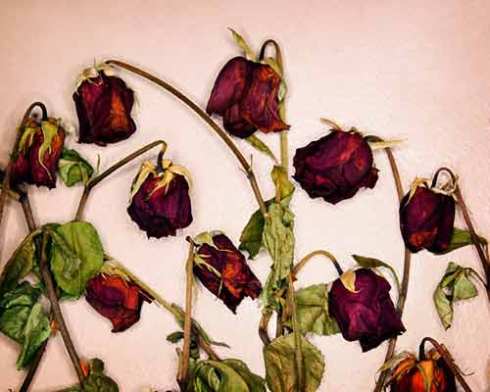
And you can send me dead flowers every morning
Send me dead flowers by the mail
Send me dead flowers to my wedding
And I won’t forget to put roses on your grave


dead flowers