Archive | Media RSS feed for this section

Water cannon. Free speech. The right not to listen.

22 Jan


A metal toggle switch with plate reading Listen and Ignore, symbolizing how we choose to pay attention to certain messages

The robust exchanges of the last few days on the subject of so-called “brokens” and the need to control or silence their allegedly “broken” speech reminded me of Human Rights Freedom Commissioner Tim Wilson’s unfortunate tweet, posted shortly before he was parachuted into a job created specifically for him by Attorney-General George Brandis. Wilson was apparently walking through a public space in Melbourne on his way to somewhere else, when he suffered considerable affront at the sight and sound of an Occupy Melbourne protest:

@timwilsoncomau Walked past Occupy Melbourne protest, all people who think freedom of speech = freedom 2 b heard, time wasters … send in the water cannons 

What Wilson overlooked in this tweet is that nobody was forcing him to hear the protesters, except momentarily: he could walk right by them, remove himself from earshot, get on his train or tram and continue with his journey, free from the sound of others enacting their right to speak.

But Wilson was not interested in taking responsibility for himself: instead he felt an entitlement to protection from momentary affront, and it was to the state that he turned for his preferred method of protection. People exercising their freedom to protest deserved to be injured and silenced by water cannon, because Tim Wilson was aggravated by noisy views he did not share.

Engagement in social media is going to bring most participants slap bang up against views they do not share, oftentimes expressed in a manner to which they are not accustomed, and do not necessarily like. This happens to me regularly. I can either take the Tim Wilson route and demand these voices be silenced by some authority because I have a right not to listen to them,  or I can use my mute button, my unfollow button, or even my block button, and take responsibility for creating my own online environment that doesn’t include people who, for whatever reason, bother me.

The right not to listen goes hand in hand with the responsibility to take your own measures to protect yourself against another exercising her freedom of speech, if the content or manner of her expression bothers you, rather than appealing to the state or some other authority to do it for you, or demanding that the bothersome voices somehow be silenced so you aren’t subjected to them.

There are laws already in place that deal with dangerous situations and threatening people, but they don’t deal with boring people, or repetitive people, or people who don’t want to stop arguing their case, or people you think are stupid, and neither should they. I have the right not to listen to people who aggravate me, and I have a responsibility to enact that right myself when I have the means to do so. I’m not entitled to demand that the environment I want be created for me by the silencing of others.

None of us is entitled to protection from momentary affront caused by someone else enacting their right to freedom of speech. None of us has to listen either. But my right not to listen doesn’t trump your right to speak, unless your speech is illegal, or you’re forcing me against my will to listen.

One person’s broken record is another person’s gutsy persistence, and there are countless examples of situations in which injustices of all kinds would have continued unchallenged if it wasn’t for one person’s gutsy persistence, that could well have been perceived by others as “broken record” behaviour. There are also countless examples of people who vainly thrust at windmills, and so what?

If you desire civil discourse you won’t call for the water cannon, either literally or metaphorically, to silence those who in some way fail to attain your standards of debate. You’ll engage with others who have the same goal, rather than complain and angst about what we have to do to get those “brokens” as evolved as we are, or is it better just to condemn them to the margins because they’re incorrigibly dumb and boring and not worth the energy.

If you’re so damn smart, how come you haven’t worked out that you don’t have to listen, it’s a choice, and you’re the master or mistress of your online domain, if you only take responsibility for it?




Language, and civil discourse

21 Jan

Civil Discourse


If you don’t use Twitter, you likely aren’t aware of the kerfuffle of the last few days over the use of the term “brokens.”

Really cool people spell it “broekens” or “broekns,” adding an inexplicable Afrikaans note.

In itself it’s not an exceptionally noteworthy kerfuffle, except that it does starkly demonstrate a current conservative attitude to those considered lacking in calibre, how they ought to be treated, and what should be done about them.

Briefly, exclusion is recommended as a method of dealing with Twitter “brokens.” This remedy will be familiar to everyone who has been following governmental human marginalisation projects since the LNP took office.

In the Twitter case the term brokens is used by one group to refer to another whose manner of engagement they consider to be detrimental to public discourse. It is explained here by commentator Mark Fletcher:

The term ‘Broken’ appears to have a few different accepted meanings. One interesting etymology is that it’s related to the phrase ‘Broken Records’. They are the people who endlessly repeat tiny fragments of argument, persistently and unceasingly. I tend to think of it in terms of Broken People: here are people who are fundamentally incapable of engaging with rational discourse… endlessly repeating tiny fragments of argument, persistently and unceasingly.

Fletcher has a point: there are people who attempt to engage in such a manner, and they’re usually referred to as “trolls.”

However, the term “Broken People” has far more levels of meaning than that of troll, a scary strange non-human who in fairy tales hides under a bridge, determined to prevent you from crossing. It’s disingenuous of Fletcher or anyone else to argue otherwise.

The term was interpreted by many people  as abusive, offensive, elitist and controlling, as well as labelling, and as stigmatising anyone with mental health issues.

Here is how Fletcher recommends we deal with Broken People:

Being able to label and exclude the Brokens is important as part of the creation of a quality public forum. We label and exclude trolls in the same way. Where trolls don’t want to contribute constructively to public discourse, Brokens are fundamentally incapable of doing so. We are not better off as a public by including these participants. What value is there in expending a large amount of effort trying to get the Brokens to a place where they can contribute constructively? It’s a better use of time to let them play on the fringes of debate rather than let them occupy the mainstream. 

What is striking is that Fletcher seems unaware of the wider implications of his remedy for silencing what he terms the “brokens.” This isn’t a term can that be stripped of its levels of meaning: there is no way it will be understood as referring solely to someone who mimics a broken record.

I decided to conduct a small experiment. I contacted Fletcher on Twitter and suggested that his attitude could be interpreted as advocating social eugenics. Did I really want to suggest that calling for a higher quality of public discourse was the same as the Holocaust, he replied.

I was astonished at the speed at which Fletcher’s argument collapsed into Godwin’s Law, as well as his apparent ignorance of the history of eugenics which predates Nazi Germany by some thousands of years. I responded along these lines and he immediately called me a “Broken.” All this took place in just four 140 character tweets, only two of them from me, so it’s hardly possible to accuse me of mimicking a broken record and justifying labelling me thus.

My experiment worked. I’d suspected all along that the term broken had little to do with broken records and everything to to do with contemptuous elitist abuse from those who claim to be primarily interested in establishing civil discourse by excluding those they claim are incapable of that level of engagement.

My message to Fletcher and his cohort is: if you desire civil discourse, first take note of your own use of language. If you aren’t capable of considering the connotations, subtle and otherwise, of the language you employ, you aren’t ready for civil discourse.


Why the Knox piece fails in every way.

10 Jan

Parody


It’s difficult to read respected Fairfax sports journalist Malcolm Knox’s “parody” piece criticising Chris Gayle’s sexist on-air comments to journalist Mel McLaughlin, as anything other than racist.

Dominated by Knox’s use of patois, a dialect infused with racist cultural and political history, its tone leans, for mine, rather more towards a taunt than a parody, and were I to hazard a guess at Knox’s state of mind during the composing of the piece I’d say, red- hot angry.

A keen follower of sport and Knox gave me some background on the relations between Gayle and other West Indian cricketers, and the largely white male media who are knowledgable insiders. It was suggested that there’s a general fed-upness at the perceived latitude enjoyed by Gayle and his colleagues in the matter of their public behaviours: words such as antics, and they can get away with anything because they’re charismatic, were used. Being completely ignorant of just about everything to do with cricket I can offer no opinion, but Knox’s piece does read as if he’s reacting to the straw that broke the camel’s back, rather than the singular McLaughlin incident.

If Knox wanted to make the point that sexist behaviour resembles racist behaviour in the capacity of both to dehumanise their targets, he surely could have achieved this in one sentence of patois. How do you feel, Chris Gayle, he might have asked, when someone speaks to you thus. Angry? Humiliated? Demeaned? Well, that’s exactly how women feel when you speak to them as you did to Mel. Or something along those lines.

A good parody will achieve its goal with the minimum and very subtle use of how do you like it when. Persist in the lesson for an entire article and you sound like an enraged bully.

For mine, I do not need white knights coming to my rescue by attacking misogynists on the basis of their race. The most awful experiences I’ve had with sexism have involved white males, and quite what race has to do with misogyny I don’t know. Privileged white males seem equally capable of behaving badly towards women as do males of any other skin colour.  Misogyny is about power, entitlement, ignorance and infantility, not the colour of a man’s skin.

The Knox article fails to meet any of its objectives. It doesn’t work at all as parody. It doesn’t address the issue of male sexism in sport. It doesn’t address the specific incident that inspired it. It reads like a great big dummy spit that benefits nobody, and in fact deflects attention from the issues onto itself. Like those advertisements that are so distracting the viewer can never remember the product the ads were pushing.

The piece also racialises misogyny, and suggests that black men ought to know how sexism feels because racism, so logically white women ought to know how racism feels because sexism. White men, on the other hand, don’t suffer either so don’t have to know anything except how to position themselves  as superior to both.


By a man for men: repeat after me, blokes

6 Jan

Harassment


Guest post by Dr Stewart Hase

There is a belief in the minds of too many men that it is somehow appropriate for males to force themselves sexually on women. It is borne from a sense of entitlement that men feel they have of women: that somehow she does not have the right to resist and that her vagina is his right.

We have had a disgusting reminder of this aspect of the minds of men in the recent episode (for those not living in Australia or asleep) where a minister of the government recently sexually harassed a staff member while they were both on a business trip to Hong Kong. There have been at least two brilliant exposes of this event from Kate Galloway and Jennifer Wilson on this blog, for those interested in reading the women’s view.

However, I am a bloke and I want to give my blokey point of view on this. One of the most shameful of the various dimensions to this saga is that at least one of the above mentioned female correspondents received a large number of abusive and extremely violent responses because she criticized the behavior of this minister, Jamie Briggs. The sense of entitlement over the bodies of women in the minds of some men is so strong that they think it essential to defend those who have been caught. You don’t need to be a shrink to realize that what they are doing is guiltily defending their own predilections in a phenomenon that psychologists call projection.

Not only has this abuse occurred on an industrial scale but yesterday one of the most senior members of the current government, Peter Dutton (I refuse to call him ‘The Honourable’) sent a text of support to Jamie Briggs telling him that a certain newspaper reporter, who had publicly chastised him, was a ‘..mad f*&^@ng witch’. So, there’s a wonderful role model for our citizens about how to treat women who ‘bell the cat’ from someone who should be calling for the head of Jamie Briggs and distancing himself as a matter of moral and ethical course.

Curiously enough, Dutton was part of a committee that sacked Briggs from the ministry when the event was publicized. So, in public Dutton is appalled by the sexual harassment of Briggs but in private he is supporting his gender buddy. Duplicity knows no bounds it seems and the message is clear that sexual harassment is just fine. The reason Dutton’s message was revealed was because he sent it to the newspaper reporter by mistake (his incompetence knows no bounds either). He then apologized publicly. Of course, if he had not made this mistake then he would have got away with revealing what he really thinks.

And, of course, there has been the usual round of victim blaming and excuses. He was drunk was the first and she shouldn’t have been there was a second. So, it is fine to sexually harass someone if you are drunk. ‘Your honour, the alcohol made me do it’. And worse, that she was somehow responsible for his behavior. It’s the old, ‘she asked for it’ routine. This is the Western equivalent of women wearing a a burka and chador so that they won’t cause men to become aroused. ‘She made my penis get out of control, your honour’. There was also the usual barrage of misinformation that one sees in these sorts of cases that attempted to obfuscate and blur the true story and focus on the victim not the perpetrator. The truth is lost in the fog of misdirection.

Let’s remember that this staff person is an employee of a government minister who is in an extremely powerful position. Briggs knew this and would have known too that his victim would have been more likely to succumb to his advances because of his power. Clearly he suffers from the delusions reinforced by too many movies and TV series about the ‘rights of men’. His victim knew it too and has been extremely brave to have reported the incident, which, incidentally, she attempted to deal with, in the first instance, without publicity by talking to a senior staff immediately.

The mechanisms behind this almost exclusively male belief about their rights to the bodies (and minds presumably) of women are not hard to find. The fact that he is a naughty boy for behaving badly and she is a slut for letting him are powerful messages reinforced by families, in the first instance, and by society in general. I travel a lot and I am astounded at how pervasive misogyny is among ‘normal’ men in every country and town that I have visited.

I’m a bloke. I understand impulses and sexual desire. As a psychologist I am aware of the biological drivers for these impulses and desires. I also understand being drunk. Been there and done that in spades. So, trust me my fellow-men, when I say that there are many men out there who can control their impulses, who can challenge this belief about entitlement, and their potential power. And that latter issue is the raw meaning behind all this. The need for power.

So, what’s so different about those who know where the boundaries are, who know what is right and what is wrong? It’s not all about education because perpetrators come from both the educated and uneducated. It’s not about race.

It has to do with self-awareness, respect for fellow travelers on this planet, about self-confidence and a healthy belief in self, and knowing how to use power well rather than for self-interest. It is about being civilized and raising ourselves up from the primal swamp where impulse and narcissistic behavior was a matter of survival.

Blokes, we are better than that. It’s time for all of us, including our leaders, to stand up and be counted. It is time to really take a stand against this scourge. We need to behave well and recognize when we have not done our best and be accountable. We need to support and listen to women who tell us about how they want to be treated rather than abuse and attempt to disempower them. Guys, we don’t need to be bullies to have fulfilling relationships. In fact the former will prevent the latter.

Repeat after me blokes. ‘ One: I need unambiguous permission to make sexual advances to a woman and if she makes it clear that advances are not welcome then I need to back off. And this means I need to raise my emotional intelligence beyond the age of three years of age and really listen to what women are telling me so that I can read them appropriately. Two: I should never make sexual advances towards women (or men for that matter) who are my staff. Three: I should not be getting drunk with my staff if I am their manager. Four: No means no. Five: I need to make it clear in words they understand to any male I know that their behavior is or was inappropriate if they have been guilty of sexual harassment (or bullying).’

 Dr Stewart Hase is a registered psychologist and has a doctorate in organisational behaviour as well as a BA, Diploma of Psychology, and a Master of Arts (Hons) in psychology. Stewart blogs at stewarthase.blogspot.com where this post was first published

Reist, porn and sexualisation.

11 Dec

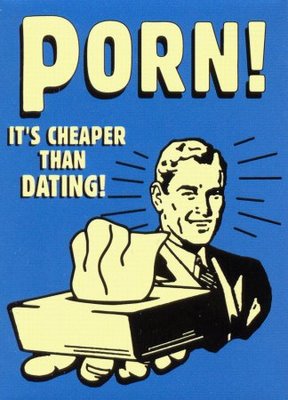
Porn-Its-Cheaper-than-dating


For a long time now, I’ve wondered how Melinda Tankard Reist is able to conduct her extensive and lengthy campaign against the “sexualisation” of girls, without addressing the sexual abuse of children.

I can think of no more powerfully destructive act of “sexualisation” than childhood sexual abuse, and yet Ms Reist goes nowhere near it, choosing instead to shame various outlets into withdrawing whatever product she currently believes is causing the “sexualisation” of children.

As the Royal Commission into CSA continues to demonstrate, the sexual abuse (and inevitable real sexualisation) of children was occurring long before there was an Internet, long before there was anything like the licentious climate Reist claims exists today, and long before the creation and availability of any of the clothing, toys, music clips and magazines that she currently holds responsible for “sexualisation.” What child victims wear had and has no bearing on a paedophile’s decision to molest her or him.

I continue to maintain that if an adult sees a child dressed in a “sexual” manner and assumes an invitation, there is something seriously awry with that adult’s perceptions. A dressed-up child is still a child, not a sexualised being, “sexualised” implying that the child’s purpose has become to provide sex by virtue of her appearance. Only a dangerously perverted thinker would make such an assumption.

Popular sexual culture is like the hydra: as soon as Ms Reist chops off one head another one grows. Which will, of course, guarantee her a career and an income. Popular sexual culture might be a symptom, but is never a cause, and sexuality is always a reliable source of fuel for moral indignation and the impulse to ideological control.

However, what has brought Tankard Reist to mind is her appearance on an ABC 2 program on pornography the other evening. In anticipation of the program, activist and academic Caroline Norma published a piece on ABC Ethics and Religion, castigating the ABC for giving a platform to the dirty business of pornography. You see the common motif: porn is dirty, and morally wrong like “sexualising” clothes and raunchy music videos, and shame on aunty for giving it airtime because we know how well repression, censorship and prohibition work for us.

One of the things that disturbs me about Reist’s opposition to porn is her definition of that genre. She and her followers are wont to wax eloquent about “true intimacy,” and “real loving relationships” etc, which to me suggests Reist considers she has somehow acquired the right to define what is “true” and “real” in sexual relations and is compelled to foist her definitions on the rest of us.

“True’ and “real” seem, in this context, to require marriage, or at the very least long-term commitment, with the qualifier that it only applies to heterosexuals.

Another aspect that disturbs me is Reist’s penchant for lumping together all kinds of porn, from snuff movies to amateur and everything in between, as being equally destructive and harmful to health, well-being, and intimate relationships. It’s like saying all food is harmful because Macca’s burgers don’t get the Heart Foundation tick of approval.

There must be no porn of any kind, and we must not have sex with anyone unless we are willing to commit our lives to them.

Personally, I would not enjoy being fucked to camera by some dude whose only asset worthy of note was a long schlong. The reasons why women engage in the manufacture of porn are many and varied, and how much choice or freedom is involved is as variable. I can’t for the life of me see how any of these variables can be addressed and redressed by forcing Coles to withdraw a Zoo magazine.

I have no doubt, however, that Ms Reist and her followers get a lovely warm glow when they do force the withdrawal or banning of one thing or another. While they are glowing, sex trafficking continues unabated. Child sexual abuse continues unabated. Sexual assault continues unabated. They are, as my first husband would say, pissing against the wind.

There are very real and very frightening and certainly criminal acts of sexual expression in which there is no consent, that no society ought to tolerate. If we are raising boys who believe they have the right to demand from girls sexual acts girls do not wish to perform, then we are raising misogynistic male supremacists, and Zoo magazine is an expression of that culture, not the cause. You can burn all the lads mags you want: it won’t stop those particular lads wanting to forcibly sexually subjugate girls.

“Sexualisation” and “pornification” take place within a context: the context of the inequalities of patriarchy, the demands of capitalism, and religious notions of what is and isn’t sexually moral. It’s only by tackling these impositions on humanity that we’ll ever make inroads into exploitative and non consensual sexual practices.

But hey, if it’s band aids you want, Reist’s website provides you with a long list of what not to buy for Christmas, and where not to buy it. But there are other ways to get a nice warm glow…


New Matilda furore dangerously misses the point

10 Dec

Victim blaming


The point of the Jack Kilbride article published in New Matilda earlier this week, is that women are responsible for adjusting our behaviours so that we do not incite male aggression and violence against us.

The website has since published three reactions to Kilbride’s piece, one supporting him, one attacking him, and one likening Clementine Ford’s experience to that of Adam Goodes.

Obviously nobody has read this Guardian piece, titled Victim-blaming rampant in Australians’ attitudes towards violence against women – study.

Read it. Read it and don’t even bother talking to me if you haven’t read it, because when you’ve read it you will see everything that is wrong with Kilbride’s piece, and any opinion that supports his position.

Overwhelmingly, according to the study, in Australia women and girls are blamed for male aggression and violence towards us. Our tone, our appearance, our failure to pay attention to a male, our attitude, our provocation: we must have done something or not done something to make him do it.

It is sickening to read the attitudes of apparently “ordinary normal” people to women who dare to report and protest violence against us. If you’ve experienced these attitudes you’ll know it’s like being violated all over again. The accusatory questions addressed to victims of violence: why did you/didn’t you? You should have/you shouldn’t have. All making the victim the focus of reprimand and disapproval, placing the onus on her, and not the perpetrator.

What these victim-blaming attitudes do is enable violence against women in all its forms. In shifting the responsibility from perpetrators to victims, the former are relieved of the necessity and the responsibility of owning their violence, instead taking comfort in the erroneous assumption that they were provoked in some way or other into acting aggressively towards us.

Until these attitudes change, there will be no lessening of violence against women. The depth to which these attitudes inform our society is painfully apparent in Kilbride’s piece. I have no doubt he is a nice, well-meaning bloke who wants a better world. Victim blamers aren’t necessarily overtly hostile. Indeed, women who complain about their frustration with victims complaining are engaging in yet another form of victim blaming.

The question that most urgently needs to be asked and answered is, why do we find it so necessary to blame a victim?


On what Clementine did

8 Dec

Online Abuse


I’ve read two opinion pieces today on how Clementine Ford handled the online aggression and threats against her by  naming and shaming the individual responsible, and publishing a compilation of the obscenities fired her way over a period of several months.

There’s this one by Helen Razer in the Daily Review, and this one by Jack Kilbride in New Matilda.

Razer argues that the significance of public commentary is lately at risk of being measured by the amount of hate the author is subjected to, rather than the work the author produces.

Kilbride argues that if women only handled it better the nasty trolls would stop trolling, which is roughly the linguistic equivalent of telling us not to dress provocatively because if we do we’re asking for it, and I can’t be bothered with the man just now.

Razer’s perspective on publicly revealing personal trauma is an interesting one. Her piece is titled, Why violent threats don’t make you an important commentator, so obviously she’s working from the premise that there’s an audience daft enough to measure the significance of one’s work by the amounts of threats one receives, and their degree of severity. This makes me absolutely negligible, as I receive practically no threats, and barely any abuse, except I did for a while cop a fair bit of upsetting reprimand, public and private, from Razer.

Razer writes:

The idea is not important. The trauma victim becomes important. The claim that “Clementine Ford is important for women” should be made about the growing body of this writer’s work and not about the threats she has received. The violent attention of barely literate misogynists has become the register of a good thinker. 

Good thinkers have always been the targets of abuse, and injury, and not infrequently death, since long before there were internet trolls. Online attacks are merely the most recent manifestation of hatred for good thinking: with the Internet haters have discovered an opportunity they’ve never had before to globally spew their bile, and so of course there are more visible victims.

Being the target of abuse doesn’t make anyone an important commentator or a good thinker: Andrew Bolt and Miranda Devine cop their fair share of threats and abuse and nobody capable of thinking straight could call either of them good, or important, or even really thinkers, to be honest.

Razer links to this interview with Yasmin Nair, titled The Ideal Neoliberal Subject is the Subject of Trauma, in which Nair makes the claim that everyone must identify as a trauma victim to be considered a legitimate subject:

It just seems like trauma has become a requirement. I’ve been writing recently about how I am sick of being on panels where everybody starts to confess to their rape, or to their sexual trauma, and I just want to walk out on them! I just want to say “if you cannot think about critiquing policies and the state without having to assert how and why you have been a victim, then let’s end this conversation. Does everybody have to be a victim in order to gain sympathy, first of all? And what does it mean to have to constantly reconstitute yourself as a subject of trauma? What happens to people who don’t do it? Are they to be seen as traitors?

There’s this weird kind of culture of confession which is also something I write about: this constant imperative to confess, and this imperative to reveal oneself as the wounded subject, that I find very disturbing…There’s a kind of demand for authenticity in all of this that I find particularly vexing. And I know for a fact that many people who have a critique of trauma and of violence and of the state may well have been sexually abused, but just don’t talk about it. And does that make them less authentic?

Is the narrative of personal trauma obfuscating the bigger discussion of context, policies, and the state? Or are the two narratives  more compatible than Nair (and Razer) argue?  And after thousands of years of silence on the subject of our trauma, who, after a mere couple of decades of public discussion, has the right to suggest that the traumatised are silencing another, more important conversation? Hasn’t this always been said to women?

Does revealing personal trauma make one more authentic? Or does keeping silent about personal trauma add to one’s authenticity? Does revealing personal trauma detract from the value of one’s work? Or add to it because experience complements abstract knowledge?

I am more interested in the fact of those questions than I am in any answers. In speaking and writing about my own traumatic experiences, I’ve never once thought to ask myself, will I seem more authentic if I say this, or if I don’t say it? This could well be a grievous oversight on my part, however, I’m not in the habit of wondering whether or not I seem authentic, and it seems to me a tortuous thing to have to ask oneself before writing and speaking, the kind of core self-doubt that can do little other than reduce me to quivering silence.

Why should a woman have to ask herself before she writes, will writing this make me more or less authentic?

In her piece on Ford, Razer links to this earlier post, written in 2014, in which she writes at length about her own experiences of being stalked, threatened, and extremely frightened, and the long-term effects these experiences have had on her life. It hurt me, I think irreparably, she writes. I don’t think any the less of Razer’s body of work because she reveals this about herself.

Indeed, she has apparently written a book on the subject, and I don’t think any less of her intellect because she’s written a book on her personal trauma. I am, however, more than a little irritated by the apparent double standard at work here. Razer has confessed her suffering and revealed herself as a wounded subject, yet seems to be arguing that others should not.

Thinkers are at times simultaneously wounded subjects. It seems to me an admirable goal to enable us wounded subjects to contextualise our experiences of wounding in terms of the systems and regimes that govern our lives. If we do not speak about our trauma in the first place, we have no hope of contextualising it for ourselves and others.

If you are exasperated by the sheer number of victims using their voices, perhaps it is wiser not to blame them for your exasperation, but rather go to the source, and hold the source accountable. As I noted earlier, women have been silenced for thousands of years, and it is only in the last three decades we have begun to speak. It would seem a little early for exasperation.

As far as I’m aware, there is no guide-book for how a woman should react to trauma. Each of us does it in our own way and nobody has the authority to police that. Ford does it her way, as does Razer, as do I.

Each one of us who confesses herself as a wounded subject does it in a way that can have significance for somebody else, because there is no one way, and there is no right way, and there is no time limit.

The idea is important. The trauma victim is important. It isn’t either or.

This is authenticity.


Naming and shaming

3 Dec

Naming and shaming


I don’t always agree with feminist writer and activist Clementine Ford. I disliked her “Fuck Abbott” t-shirts and wouldn’t be caught dead in one. I disliked even more her “I hate men” hashtag on Twitter.

But Clem Ford has taken on men who are abusive and threatening to women online, and one Michael Nolan has lost his job because the company he works for won’t have its employees publicly abusing women.

Of course Ford has received bucket loads of abuse for complaining about Nolan to his employer because, as she notes, the worst thing you can possibly do is make a man accountable for his actions.

In other words, a male who is so inclined may visit all kinds of abuse upon a woman, but this is secondary to the offence she commits by insisting that he be held accountable for his actions.

Well, fuck that for a joke.

When a man abuses a woman he loses his right to privacy. If he has a family, he also destroys their right to privacy.

Give me one good reason why any woman abused by a man is obliged to remain silent about that abuse in order to protect him, his reputation, his job or his family. He should have thought about all those aspects of his life before he perpetrated the abuse. Maybe if he does think about all those aspects of his life, he will think twice about perpetrating the abuse. And if he doesn’t respect his own life and others in it, why on earth should a woman he’s abused be expected to do it for him?

Actions have consequences. Suck it up, dudes. The shame’s going where it belongs.

If women stay silent about the abuses visited upon us because we’ll be perceived as vengeful bitches if we speak out and the perpetrator loses his reputation, his job, his family, then women are saying to men, abuse me, I won’t say anything because your job, reputation, family are more important than me. It’s ok, abuse me, and I’ll sacrifice my well-being for yours.

Well, fuck that for a joke as well.

I don’t know what else we can do about violence against women, no matter what form it takes. Name the bastards. If that’s what it’s going to take to make them think about what they’re doing, name the bastards, because the consequences of that naming and shaming are down to them, not the women they abuse.

The days of male entitlement are, albeit at a glacial rate, coming to a close. Men who abuse and exploit women are accountable for their actions, and the choices and decisions they make and the risks they take in the making.

It’s not our shame that we name them. It’s their shame that they have to be named.

And for the women in their lives who are collateral damage: take a step back and a good look at the kind of man you’re spending your life with and ask yourself, do I really have to set the bar this low?

We don’t have to stay silent so abusive and exploitative men can stay comfortable.

Fuck that for a joke.


Why Waleed is both right and wrong

23 Nov

This passionate plea from television personality and academic Waleed Ali, made in response to the recent terrorist attacks in Paris, begins with the statement: ISIL is weak.

This is true. ISIL, like any other organisation, institution and individual that resorts to violence, intimidation and slaughter, is weak. There is no strength in terror. There is only moral, intellectual, psychological and emotional weakness. To use violence is to admit defeat on all levels, though rarely will any organisation, institution or individual recognise and acknowledge that psychological truth.

The problem is, however, that weakness does not equate to harmlessness. The morally, intellectually, psychologically and emotionally weak have been responsible for the worst atrocities this world has witnessed and endured, and they have come from the east and the west, from most religions you can name, and from the secular.

It’s counter-intuitive to correlate weakness with terrorists. Terrorists terrorise, causing unfathomable anguish and disruption, disabling cities, bringing down aircraft, destroying families, creating bloodied havoc, leaving in their wake a sense of powerlessness, helplessness, rage and grief that have little possibility of resolution: why would we imagine these people as weak?

Waleed Ali is correct to call them weak in the moral, intellectual, psychological and emotional sense. But they are dangerous, and they remain dangerous, because weak does not equal harmless.

Today the city of Brussels is in lockdown in fear of a terrorist attack. ISIL are weak, but they can lock down cities. Imagine the fear and apprehension felt by residents of that city today, yesterday and tomorrow, as they wait for the next attack. And if it doesn’t come, they won’t easily stop fearing. ISIL are weak, but they are also controlling a city, manipulating its citizens through terror, and the threat of terror.

The weak are the most dangerous people on earth, because their weakness is so often expressed as brutality. To describe ISIL as weak is both true and misleading, the latter because the term “weak” is synonymous with harmless, pathetic, contemptible,vulnerable, but never with dangerous, murderous and brutal.

We can think of ISIL as weak, as Ali urges, but only in the understanding of what weakness means in this context. They are weak and they are dangerous. This danger can’t be underestimated because they are weak.


Solidarity

16 Nov
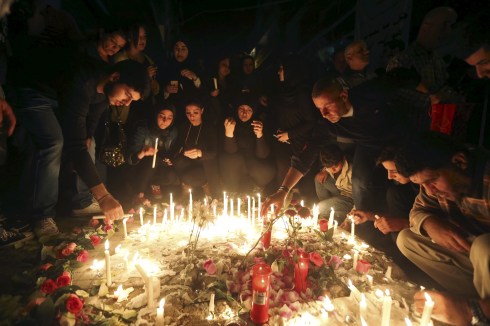
People light candles during a vigil at the site of the two explosions that occurred on Thursday in the southern suburbs of the Lebanese capital Beirut, November 13, 2015. REUTERS/Hasan Shaaban - RTS6U96

People light candles during a vigil at the site of the two explosions that occurred on Thursday in the southern suburbs of the Lebanese capital Beirut, November 13, 2015. REUTERS/Hasan Shaaban – RTS6U96


I’ve read all I can read for now from genuine experts, armchair experts, bigots, racists, xenophobes, politicians, atheists, religious persons, and trouble mongers, on the Paris terrorist attacks.

I don’t have the knowledge, the expertise, the wisdom to add to the thousands of words already written.

This woman, journalist Ruby Hamad, born to a Lebanese father and a Syrian mother, says, for mine, the most important things that need to be said. In her article titled Paris attacks: Is solidarity for white terror victims only ? Ms Hamad, without hatred, rancour or the desire for vengeance, says what needs to be said about who is and who is not considered fully human, what it feels like to not make the grade, and who gets to decide.

Please read her piece.