Archive | February, 2015

Playing monogamy Two.

3 Feb


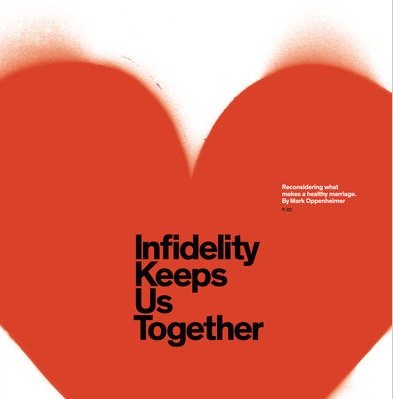
infidelity


Fourteen months into my first (and last) relationship with a married man, I knew I’d gone as far as I could go with it.

I’d been feeling that way for some time. Since the beginning really, it had never seemed like something that was going to work for me. I liken it to learning to smoke when I was a teenager. That made me feel horrible but I persisted, enjoyed it, became dependent, and then went through agonies of withdrawal when I realised for the sake of my health I couldn’t do it anymore.

There were many reasons why the situation wasn’t good for me, but the one that’s most relevant here is the precedence his marriage, and his professed desire to maintain it, took over everything else. I say professed because he swung wildly between his desire for “us,” and his desire not to lose everything else.  From the beginning I agreed to give his situation precedence, and then gave him the gift of absolute trust in me that I wouldn’t do anything to disturb that situation. And I didn’t.

But this agreement demanded that I put my own life and well-being second to his marriage, and this gradually caused me to feel more and more worthless. Why, I wondered, was my life and the effects the relationship was having on it, any less significant than his, or his wife’s? His children are well into adulthood, so there was no question of disturbing young ones or adolescents. I wrote:

All the time we have been conducting this so as not to destroy your life, and your wife’s, and all the time mine has been destructing. I can’t live like this anymore.

You believed, and I went along with it, that the fact of your marriage was what needed most consideration and protection. Because I no longer live in my marriage we assumed it would be easier for me. As if the fact of a marriage is the only possible reason for a life to explode in these circumstances. As if the destruction of a life that does not involve a marriage is not quite so much of a destruction. But that is wrong. The effect this is having on my life is as significant as it is for anybody else, marriage or not. This affair has damaged me in ways I haven’t yet begun to unravel, and I can’t do it anymore.

(He ignored this by the way, and begged me to get on a plane and come and see him “in the flesh.” He couldn’t get on a plane and come and see me because he didn’t have any money except what his wife doled out to him. But that’s another story).

The privileging of pretend monogamy is fundamental to an affair. The levels of dishonesty required with self and others are equivalent to the density of the earth’s layers. At the core is the demand for the protection of the central lie: while outwardly the married person lives monogamously (currently the most highly valued, highly respected and highly protected relational arrangement in western culture) he or she is secretly non-monogamous. The deceits multiply outward from that central point.

The recognition that monogamy can be extremely difficult for some people has spawned a movement led by American columnist Dan Savage. Advocating “honest infidelity” Savage recommends that partners “go outside the bounds of marriage if that’s what it takes to make the marriage work,” with the permission of their spouse. Honesty with one another is Savage’s core principle, and he is insistent that any potential infidelity must first be discussed and agreed upon.

The problem with Savage’s thesis is that it privileges marriage absolutely, at the expense of any other person. For example, what of the individual one uses as the sexual and/or emotional outlet required in order to maintain the marriage? Is this practice not using another as a means to an end, in the service of the couple, and doesn’t using another as a means to an end dehumanise him or her?

How and why has marriage become so important, that the intimate use of another human being to maintain it can be justified?

Or does Savage simply assumed the world is littered with available, selfless women and men just waiting to help couples maintain their marriages with a spot of sexual and emotional infidelity? People who will happily set aside their own needs in the service of the institution of marriage, so rich in generosity they will agree to begin and end an intimate relationship entirely in accordance with the couple’s timetable, and always in the knowledge that whatever happens, the relationship they undertake has as its only purpose  making someone else’s marriage work?

Savage refers us back to a time when “men had concubines, mistresses, access to prostitutes” and were not considered disloyal to their wives in doing this. Sex with concubines, mistresses and “prostitutes” was not regarded as breaking the vow of monogamy, because these women were perceived as of less value than their wives. These “lesser” women served the purpose of keeping the  marriage intact, and had no value outside of the services they provided. They were, at least, paid or kept; Savage seems to be expecting his imagined sexual servants to be doing it for free.

From a woman’s perspective, attitudes such as Savage’s, and that of any man playing at monogamy who wants a secret lover on the side, are continuing a very long history of perceiving and using women as a means to an end. Society is largely silent on the predicament of a woman who is discarded when a spouse discovers an affair. Society is not silent or backward in denigrating her, describing her in the most appalling terms, and expressing general views that she deserved what she got for trying to take another woman’s man, and probably breaking up a marriage.

This latter charge surely ought to be levelled at the faithless spouse.

With Savage’s “honest infidelity” the female lover is less likely to incur such abusive wrath, unless of course it all goes south and the marriage breaks up despite the honest fidelity. However, she is still being used. Anyone, I would argue, who engages in an intimate relationship with another human being in the full knowledge that they will never consider that human being as anything more than secondary to their primary relationship, is using her. Or him.

It was this knowledge, initially inchoate and held at bay by passion, that caused my discomfort from the very beginning of my relationship with a married man. I knew on a very deep level that I was letting myself be used, no matter how many declarations of love he made. I just couldn’t let the knowledge in. He knew it better than anyone, having used women for decades, including, some might argue, his wife.

The legitimising of the ideal of monogamy as the best option for relationship is one of the great deceits of our culture. Not only does it cause us to fail at monogamy, it also causes us to fail at non-monogamy: it is a lose-lose situation.  Society needs to stop lying about this, and solutions such as Savage’s are not as progressive as he seems to think. From this woman’s perspective they take us backwards, or at the very least keep us trapped in a binary of good woman /bad woman, wife/mistress, worthy/unworthy.

There are people for whom monogamy works well, and it should never be abandoned as an option. But it is just that, an option, and nothing more. It’s not sacred. It’s man-made.

There are also people for whom being a lover works well. I acknowledge that just because I’m not one of them doesn’t mean it can’t happen.


 

Stephen Fry to the Christian god: How dare you?

3 Feb


Divine Vengeance

Divine Vengeance


Abbott at the Press Club

2 Feb

Drink!


There were so many slogans, I was drunk by 1.15.

We cut the carbon tax! Drink!

We stopped the boats! Drink!

We’re building the roads! Drink!

Margie and the girls! Drink!

Tony Abbott’s National Press Club speech had as its not so subtle leitmotif  blaming Labor for everything. In other words the man still hasn’t got out of electioneering mode and into governing mode. Someone had obviously instructed him to get a poke in at Labor at every opportunity, and that is just the kind of instruction he can follow.

How long can a government blame a previous government for the difficulties of governing? Is there a time limit? Please, somebody, make one, because this long since became ridiculous.

One of the many things I find intolerably offensive about the Prime Minister is his insensitive and egotistical penchant for co-opting awful tragedy into his autobiographical narrative. So we had his self-described  “brave” captain’s call about the shooting down of MH17 over the Ukraine brought in as evidence of why he can’t undertake never to make another captain’s pick. He subjected us to a little homily about the nasty rebels and the stricken families, as an example of why a captain must always be allowed to have a pick. He’d actually been asked about the knights and danes, as Senator Jacquie Lambie likes to call them. Great Danes. Danish people. Who knows. Abbott can confer an honour on anything with a pulse.

We had the role he’d played in the release of journalist Peter Greste from his Egyptian prison, and how the PM had been so warmly thanked by the relieved Greste family on the phone this morning.  Abbott had high praise for Egyptian President Abdel-Fattah el-Sissi, with whom he and his foreign minister Julie Bishop negotiated Greste’s release. He said.

There were the usual promises not to lead us into chaos, as did the ALP Drink! with party unrest and leadership changes. We are on a journey together, said the PM, leaning earnestly into the lectern. This is a new year that will be very different from last year with more consultation Drink! and more collegiality Drink! he promised.

I don’t recall the journo who went to the trouble of adding up the number of times since the election that Abbott has promised more consultation and collegiality, but it was something like fifteen or sixteen. Why should the backbenchers start believing him now, asked the journo, quite reasonably. Ah, well, look, lip smacking, Drink!

Abbott then contemptuously wrote off the entire Queensland election result by saying voters had favoured the ALP over the LNP in “a fit of absent-mindedness.” That should endear him to them come the federal election.

Oh, look, fuckit, if you want to know all the details there’ll be a transcript somewhere.

Abbott’s energy levels were high until the last ten minutes, when he began to visibly tire and I wondered if the drugs were wearing off. Much of his message was directed at his own party, reminding them of the dangers of division and visible unrest. The Australian people had elected both the government and the Prime Minister, he claimed, which is codswallop, we don’t elect the PM in the Westminster system, the party elects its leader. If voters had control of electing the PM, Abbott would never have got the job. He did, however, make the rather convoluted argument that once a government has been elected the voters have elected the PM. Drink!

Oh, and the PPL is in cold storage. Drink!


Beyond Monogamy: exploring the possibilities of the human heart

1 Feb


monogamy not amrried to the idea


Like many of our abstract sacred moral concepts, the cult of monogamy is reified to the degree that it’s considered “natural” for humans to live within its framework. Never mind that people break out all the time, and that the entirely monogamous relationship exists more in the theory than in the practice, still the monogamous ideal dominates our culture’s sexual and loving relationships.

However, “it just is” has never been a persuasive argument for me, and the reification fallacy of misplaced concreteness always comes in useful when thinking about morality.

I’ve wondered often if one of the unacknowledged goals of monogamy is to protect us from experiencing difficult emotions such as jealousy, insecurity, a sense of abandonment, of being displaced by another. Of loss, of insignificance, and so on. These are emotions we first experience in childhood, for some of us when we acquire siblings, and for all of us when we realise that no matter what we do we will never be able to enjoy an equal relationship with any of our primary carers. As children, we will always be excluded from their adult mysteries. The parental figures upon whom we are entirely dependent will never be exclusively ours. They are our centre, but we are never entirely theirs.

The only chance we ever get to heal this insulting psychic wound is in an adult monogamous relationship of our own. In this, we believe, we will be loved to the exclusion of all others, and we will love exclusively in return. In this way we will at last achieve what we have so long yearned for: the exclusive gaze of the beloved lover.

There is an enormous industry dedicated to the maintenance of monogamy, and the healing of sexual and emotional betrayal. One of it’s more bizarre branches is the one that claims infidelity can save and enrich your marriage, and none of its proponents seem at all aware of the irony of recommending breaking out of monogamy in order to make it easier to stay in it.

The idea of using the aftermath of infidelity to strengthen a marriage has spawned a million books and papers. In privileging the relationship of marriage, however, any other relationship and any individual other than the married couple is perceived as little more than a means to an end. The morality of that use and manipulation of a third-party is rarely examined, so strong is the stranglehold monogamy has on our culture.

But what if the desire for exclusivity is based on a deep need to avoid the difficult emotions we struggled with and never managed to resolve in childhood? And what if learning to negotiate those difficult emotions could enrich our lives and deepen our intimacies? And what if intimately loving more than one person is not “wrong,” but struggling not to love more than one person is our biggest relational mistake?

Which brings me to polyamory, defined as:

The practice, state or ability of having more than one sexual loving relationship at the same time, with the full knowledge and consent of all partners involved. Polyamory, often abbreviated as poly, is often described as “consensual, ethical, and responsible non-monogamy” An emphasis on ethics, honesty, and transparency all around is widely regarded as the crucial defining characteristic.

Overcoming difficult emotions that close the heart rather than open it is the goal of polyamorists. Challenging the inevitably tribal nature of family founded on monogamy, and replacing it with family founded on an acceptance of the remarkable ability of humans to love more than one person deeply and intimately at the same time, is their daunting task. Imagine a society in which intimate love is not exclusive but inclusive, and the emotions that prevent such open-heartedness are viewed as emotions to be grown out of, rather than avoided through confinement and threat of punishment.

According to polyamorists, it isn’t a betrayal of one person to love another as well, it’s a skill that can be decently acquired. The heart can learn to be open instead of closed. This makes so much more sense than a monogamous ideal in which we are rewarded for confining ourselves in a closed system, in which we must be everything to one other person, and that person must be everything to us.

Because monogamy is a closed system. Not only are many married people forbidden to intimately love anyone else, they are frequently urged to avoid close friendships with others, or to engage in any kind of affection that might be threatening to the primary relationship. The monogamy industry produces another million books and papers on how friendship can threaten the marriage, how work relationships can threaten the marriage, how emotional attachment to others can threaten the marriage, even how other family members can threaten the marriage. Just about anything, it seems, can threaten monogamous marriage, and it is privileged to the degree that every other relationship is by default subservient to it.

This admitted fragility of the monogamous marriage, it’s susceptibility to threat, ought to be telling us there’s something seriously awry in the arrangement.

We have to learn to manage and overcome all kinds of difficult emotions in the process of maturing. We can’t give anger and aggression the physical expression we did when we were two, unless we want to end up incarcerated and friendless, for example. Is it really so outlandish to imagine mastering jealousy and insecurity in much the same way, so that we can allow ourselves and others the freedom to love and express that love? People do fall deeply in love with more than one person, and usually have to make a choice. The experience is fraught with secrecy, guilt, and shame, and powerful distress all round. But does it have to be? Who says it has to be?

I’m not suggesting it would be an easy way to live, because it demands a generosity of heart and spirit of which our dominant culture currently has no recognition, and thus permits no expression. As things stand we privilege exclusivity, and all the undesirable ramifications that can lead to, inside and outside of the monogamous relationship. Polyamory requires a new way of thinking about love, and about being human. It requires a level of honesty and ethical interaction that is quite foreign to monogamy. In monogamy, loving another is treachery and betrayal, usually done in guilty secrecy and fear. In polyamory, loving another is done openly, in transparency and in willing negotiation through inevitably difficult emotions and tensions.

I am hard-pressed to see much moral virtue in closing the heart, as opposed to opening it. If I love you, and I see that another’s love enhances and enriches your life, am I “right” to demand that you forego it? And if I do, what do I gain?

Love whoever you please


Are conservatives irrelevant in the 21st century?

1 Feb

irrelevantThe extraordinary Queensland election result saw former LNP Premier Campbell Newman lose his seat, and the ALP chuck an unprecedented Lazarus and rise, as gobsmacked as was anybody looking on, from its cold political grave. Newman’s government lasted just one term, after the largest win in political history by his party left the Queensland ALP with just seven seats. Now the voters have seriously turned. You could not make this stuff up.

In November, Victorians threw out their LNP government, also after only one term, and returned the ALP to power.

In NSW we have an election in March, and LNP Premier Mike Baird is likely apprehensive.

It’s early days, but what seems apparent at first blush is that increasingly, Australians don’t care for the conservative method of governance. In general, we don’t take to entitled, privileged bullies fattening themselves and their besties at the taxpayer trough while simultaneously stripping us of public assets, and grinding into the dirt those who can least afford any further grinding. Unrestrained self-interest does not go down well with the Australian public, it would seem.

Neither do we take to blatant liars in our governments, nor to arrogant, dismissive leaders who think power means they never have to explain, and account for their actions.

As all of the above traits are endemic in the current conservative personality, and as the voters aren’t willing to tolerate them for longer than one term, the LNP state and federal may well be looking at some time in the wilderness of opposition, having had a brief and turbulent taste of their utter lack of relevance to 21st century Australians.

The ALP ought not to become over-confident. All too often the party has shown an alarming tendency to go along with what are essentially conservative ideas, to the point where many of us have fallen prey to  a chronic despair that has expressed itself in the phrase “There’s no bloody difference between the two major parties.” There’d better be a bloody difference, and if ALP politicians state and federal have any sense, they will be taking a good look at resurrecting the party’s core values, and listening hard to what voters are telling them.

Increasingly, voters appear to be willing to give governments only one chance. Till very recently, our attitude was to give them a second go in a second term. We seem to be on the cusp of a significant change in that attitude. This may well have to do with retribution. If our major parties don’t give so many of us a fair go, why the bloody hell should we extend that generosity to them?

For mine, it would be a great advancement if politicians were as a first principle capable of remembering their job is to serve the people, and not the other way round. I don’t know how many arses need to get hit by the door on the way out before they grasp that fundamental article of their job description.