Archive | November, 2014

Desire, and good men

17 Nov

wings-of-desire-title


My lover writes to me: So, we discover another everyday thing that we charge with sexuality. I would love to soap you all over in the shower. Your back, your legs, your arse, your cunt, your belly, and linger long over your breasts…

There is an erotic book by Cameron S. Redfern titled “Landscape with Animals,” that tells of her affair with a married man. Redfern is the pseudonym of Sonya Hartnett, author of novels classified quite wrongly in my opinion as young adult fiction.

The affair is initiated by the single woman who is described as unashamedly predatory, and utterly determined to have him. This is both a subversion of the heterosexual dance of infidelity in which the woman is pursued by the married man, and a repetition of the myth of woman as sexual temptress who, like Eve in the garden, brings the man to ruin by offering him knowledge neither of them, according to the rules of the culture in which they live, ought to have.

The married lover in the book is portrayed as a good, gentle, honourable man, who loves his wife and children. He succumbs, but not before he announces to his mistress and to himself, “I am doomed.”

When I read those words I remembered how my married lover (who pursued me, then accused me of the crime of “irresistibility” thereby having it both ways) told me, “I am ruined,” referring to the effects of our affair. And yet, torn, he writes:

Being with you gives me pleasure, gratitude, happiness, amazement, delight, wonder, excitement. It gives me succour and strength and a new lease on life. I need to see you. I need to be in bed with you on a Sunday morning…

The doom and ruin are offset by the extraordinary knowledge found in the discovery and exploration of sexuality and sensuality that at the same time seriously threaten the established order of marriage and family life. Freud was onto this in his “Civilisation and its Discontents” in which he explores the conflict between what he calls the pleasure principle and the reality principle. It is necessary, he argues, for the desire for pleasure, especially sexual pleasure, to be repressed in order for civilisation as we have constructed it to survive. Desire realised for anyone other than the partner will cause destruction to varying degrees, threatening the foundations of monogamous relationship on which our culture rests.

Is it morally wrong for an individual to desire the expression of sexual and sensual aspects of him or herself that have been repressed and unrealised?

I’ve long held a theory that the rule of monogamy, as with many other societal restrictions, is enacted in an effort to bypass difficult emotions, in this case jealousy and deep hurt. Morality is merely the sign language of the emotions, Nietzsche argued. That is, we construct our moral codes not from our rational mind but from our feelings, reactively. I do not like the way this makes me feel therefore it is morally wrong. Infidelity may bring pain, discord and even destruction, but why do we declare all of these uncomfortable experiences to be morally wrong?

He writes before we meet: I want to fuck you physically so badly it hurts…

The fear of doom and ruin expressed by both men is complex. Goodness, gentleness and honour are qualities both identify and value in themselves. The deceit and betrayal of an extra marital affair will make it difficult to maintain that self-image. “I was a good person,” my lover told me, “I want to go back to being that good person.” But of course it was much too late, and one can never go back to the person one was before significant events. The whole point of significant events, it could be argued, is to move one along and if one stays stuck, the universe has done its best.

Both men fear the doom and ruin of their marriages and their families, as well as of themselves, as if their personal ruin must terminally ruin the lives of those who are close to them. Yet none of this prevents them pursuing their goal, so powerful is their desire to experience themselves, to discover who they are in the bed of the other woman.

We are so deep in such complexities, he writes. I could (and do) desire you an infinite amount but still be mentally ravaged by guilt feelings about my wife and family. You are my second wife. That sums it up. I so loved hearing your voice. Don’t have any idea how to deal with this terrible tangle we are in…

Whenever my lover spoke to me of his distress at having ceased to be a good man as a consequence of his love for me, I would tell him that none of us is entirely good or bad, that we find a temporary point on a continuum, move further towards one end or the other, then back again, and again, and this is how we live out our lives on earth. I had no interest or belief in his self-described goodness. If we are indeed “good,” we will never deny the capacity for “badness” that resides within every one of us and may emerge at any time, given the right circumstances. To define myself as “good” limits my human potential. Inside me, there is the possibility of everything.

I would rather you were real than good, I told him.

Then I thought of Freud. Sexuality unconfined by monogamy is bad because it risks the destruction of civilisation. Reality, which demands repression and denial, is good and will enable civilisation as we have constructed it to continue. I don’t think Freud was necessarily in agreement with the way society is constructed, given how he laboured to uncover and defang repression, but I think his observations are accurate. Desire is the most powerful of all the transgressors. It will not be denied without inflicting terrible individual and collective suffering, and it may not be expressed in our monogamous culture without risking the infliction of terrible suffering. I was his second wife, he said, but there is no place for a second wife in a monogamous society.

Do you love me? I ask

Oh, Lordy, yes, I love you. You know I do. I told you.
DCF 1.0


Domestic violence is torture and the UN Convention must be changed

12 Nov

On Monday night, representatives from the Australian government appeared before the UN Committee Against Torture (CAT) as part of a current review into Australia’s obligations under its treaty. In their submission, our government argued, “As a matter of international law, domestic violence does not fall within the scope of the Convention … as it is not conduct that is committed by or at the instigation of, or with the consent or acquiescence of a public official or other person acting in an official capacity.”

In other words, violence against women does not constitute ‘torture’. Clementine Ford, Daily Life

Unfortunately, the Convention against Torture reads as follows:

1. For the purposes of this Convention, the term “torture” means any act by which severe pain or suffering, whether physical or mental, is intentionally inflicted on a person for such purposes as obtaining from him or a third person information or a confession, punishing him for an act he or a third person has committed or is suspected of having committed, or intimidating or coercing him or a third person, or for any reason based on discrimination of any kind, when such pain or suffering is inflicted by or at the instigation of or with the consent or acquiescence of a public official or other person acting in an official capacity. It does not include pain or suffering arising only from, inherent in or incidental to lawful sanctions.

Domestic violence does not constitute torture according to the UN Convention, so the Australian government representatives are correct.

What is tragic is that the Australian government is not arguing for an amendment to the Convention that will include domestic violence in the definition of torture.

Given that the Minister for Women, Tony Abbott, has shown no interest at all in the horrific abuses against women in this country, I doubt there will be any initiatives from Australia along the lines of amending the Convention.


Asylum Seekers: what it costs Australian governments to persecute stateless persons

12 Nov

 Asylum Seeker Three


The foreigner is the political precondition of the nation state… Costas Douzinas.

Australia, while remaining a signatory to the United Nations Convention relating to the status of refugees, long since gave up any pretence of observance of international human rights in favour of a nationalistic observance of state sovereign rights. State sovereignty permits governments the right to exclude persons the state deems unworthy of inclusion.

The power of the state to exclude is perhaps the fundamental state power.

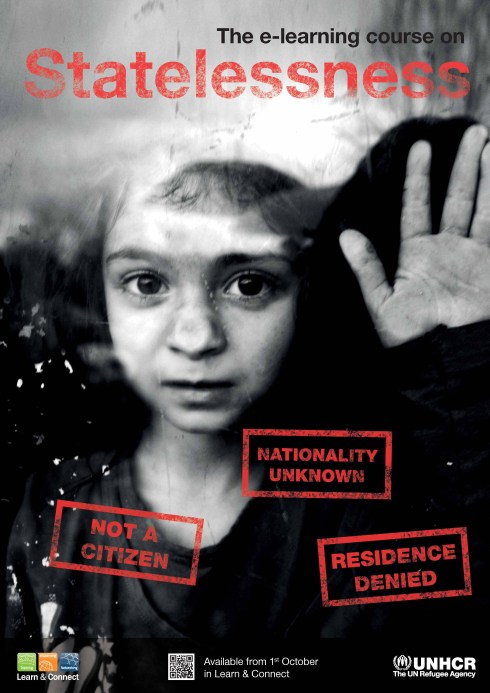
Ideological, racial, economic and political factors are the criteria for deciding who is and is not included in the nation-state. As Hannah Arendt noted, statelessness is not a problem of geographical space, but of political space.

The stateless person has as their only descriptor the fact that they are human. Ironically, this strips them of their right to human rights, rights which are only available to them if they are citizens of a state. It is not enough to be human. One must also belong to a state in order to claim human rights. Arendt suggest that the only fundamental human right is the right to have rights. Asylum seekers who have a legitimate right to arrive by boat in Australia are stripped of the right to have rights once their vessel is intercepted by Australian authorities.


Stateless Persons UNHCR

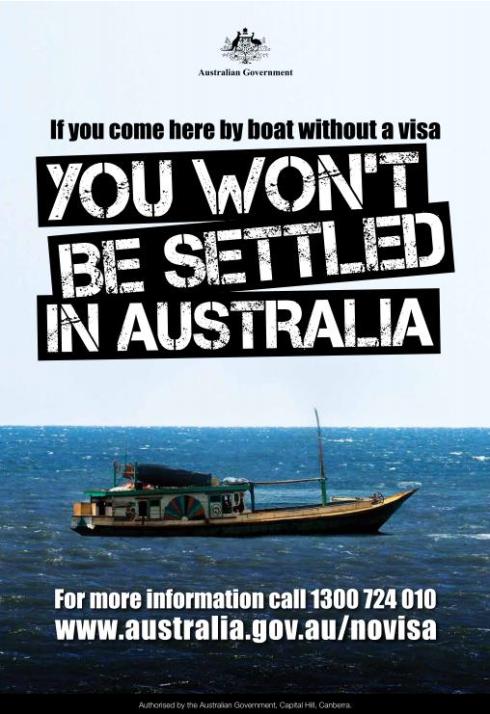
Persons seeking asylum from persecution who attempt to access Australia by boat are singled out for exclusion, and though their method of arrival is perfectly legitimate under the Convention, they are criminalised and detained in off-shore camps. Detention camps on Nauru and Manus Island are all that is offered to de facto stateless persons, that is, refugees unable to claim the human rights afforded by citizenship. Persons detained in these camps are exempted from “normal” laws. The methods of addressing their plight are containment and repatriation, or resettlement in another country, rather than granting asylum and legal integration into the Australian nation.

This action against asylum seekers is justified as being in the “national interest,” an abstract concept in which the mystical “nation”  is prioritised over the interests of singular human beings who are dispossessed non-nationals, and therefore considered rightless.  The state is committed to protecting only legitimate members of the nation, the rights of asylum being in conflict with the rights of the state. There is in Australia no concept of offering sanctuary and refuge to those fleeing persecution who arrive by sea. Their loss of place in the world, their loss of belonging, has the effect of reducing them to physical objects, bereft of human dignity, because without rights one is not a person, one is not an agent in the public realm.

In reaction to this deliberate and systematic dehumanisation, asylum seekers held in detention camps on Manus and Nauru behave as did those held in mainland camps such Woomera and Baxter. They sew up their lips in a symbolic protest against the silencing of their voices. They harm their own bodies. They suffer depression and anxiety, and hopelessness. Their suffer the abjection of those who have ceased to belong to any state.

Asylum Seekers Two SMH photo


Sovereignty, like religion, is a constructed knowledge imbued with faux mysticism. The Abbott government’s “Operation Sovereign Borders” appeals to this pseudo-mysticism, offering citizens the opportunity to come together in unity, led by a concerned, fatherly government to protect our nation against the breaching of its borders by the unwanted, stateless foreigner. As Douzinas points out, there can be no nation state without the foreigner; one must have someone to protect oneself from in order to maintain the perceived power of sovereignty.

The asylum seeker is equally imbued with mysticism, of the most negative kind as the assumption is peddled that merely due to the fact of her search for asylum she is morally corrupt and corrupting. Her crime is breaching sovereign borders. She is used as a scapegoat to unite citizens and strengthen boundaries, ultimately supporting the ideology of sovereignty.

What we are doing in this country is wrong. The idea that we must treat people horrifically in order to discourage others from attempting sea journeys is morally corrupt. Action the state is legitimised to take against one group can be and will be extrapolated to other groups, when the state deems it in the national interest. When the fate of human lives is secondary to the rights of the state, we are all at risk.

Is it really in the interests of the citizens of this country that so many billions of taxpayer dollars are eaten up in the pursuit and detention of a relatively few people who arrive here by boat, in the pursuit of the maintenance of our sovereign borders? No, it isn’t. It is, however, in the political interests of both major parties. The cost to the taxpayer of pursuing these political interests is obscene, and it is rising, as this graph from The Conversation shows:


The Conversation


The major parties continue to persecute stateless persons seeking asylum and refuge, solely because of their method of arrival. Australia moves further and further away from the undertakings we made when we signed and later ratified the Refugee Convention. Human beings suffer appallingly in concentration camps, out of sight and out of mind. The matter of the future of stateless persons is a massive global problem, and one that will continue to increase. Australian governments have long thought it is a problem that they can continue to outsource to countries far less capable than are we of providing the possibility of a decent life to those who by no fault of their own, are dispossessed of the lives they once had. This cannot go on. In all conscience, it cannot go on.

All the dead horses

5 Nov

What a vile species we are. Not satisfied with mistreating and murdering one another, we let other species die in our pursuit of entertainment and spectacle.

The overworked term tragic is used to cover all contingencies, the slaughter of civilians, the rape of children, and the  untimely deaths of two magnificent animals, Admire Rakti and Araldo,  after yesterday’s Melbourne Cup. Or as the Guardian reporter puts it, “the race was soured” by these deaths.

What is sour as a barrel of lemons is the sight of animals enslaved for human gratification. I loathe bloody horse racing, and I especially loathe the Melbourne Cup. I was unfortunate enough to be passing a television when a close up of Admire Rakti’s last collapse appeared on the screen. The horse was clearly distressed in his stall, then slowly his poor legs buckled, and I watched, sickened, as he sank to the ground for the last time.  It was fucking awful.

There’s something badly wrong with us. Sadly, this isn’t news, and on the continuum of bloody awful things people do, a dead horse isn’t at the high-end.

You look at the Melbourne Cup spectacle and you think, Christ, these humans, their stupid little “fascinators,” their ugly, ill-fitting clothes, their spine-destroying  heels, red-faced men squeezed into suits and tight cravats, drooling and drunk, all of them screaming at  horses running round in a circle, what the fuck?

All that was missing was Gerry Harvey ranting about how many horses in the Melbourne Cup aren’t Australian anymore, and damn me if we didn’t get that as well.

My friend included me in a sweep. My horse? Unchain my heart. Fucking bloody Jesus, I said. Kill me now.