Archive | November, 2011

Pornography, the Internet and class

8 Nov

On the Drum today, I’ve got a piece on anti porn activists and the internet filter. Thanks, Jonathan Green for publishing another point of view.

It seems reasonable when faced with strident action against a social more to require those opposing it to put forward their preferred alternative. In the case of anti pornography activists, it’s apparently impossible to persuade them to offer a framework of how they think sexuality ought to be expressed. Like Opposition Leader Tony Abbott they just say no, without proffering any other policies.

Viewed in the best light, anti porn activism is a cri de couer for the protection of women who some activists believe are exploited and degraded by the very existence of pornography; for the protection of children who may access internet content they are emotionally ill-equipped to process, and for the prevention of possible individual psycho-sexual harm that might interpolate itself into the fabric of society.

At its worst anti-porn activism is an attempt to control and shape the culture to fit particular religious, ideological and/or moral agendas. The moral entrepreneurs who are at the vanguard of the anti porn movement are overwhelmingly middle class, and it is from a middle class platform that they launch campaigns that express the horror, disgust and outrage evoked in them by pornography, as well as what they believe to be its ruinous effects on sexual relations.

All pornography is positioned by activists as deviant, regardless of the content. It’s extremely difficult to ascertain just what their range of “normal” sexuality includes. One activist, Professor Clive Hamilton, refuses to use the word “vagina” when attempting to describe close ups of “well, I don’t know what” in early editions of Playboy, for example. Many would find this male squeamishness towards female genitalia offensive. Are we to regress to such euphemisms as “down there?”

Those who produce, create and consume pornography are perceived as deviants who must be rescued, punished when appropriate, and hopefully redeemed to participate in non-pornographic sex. Global eradication of anything other than “normal” is the goal, without ever stating just what that “normal” might be.

Accounts written by activists of what they have seen in their forays into the netherworld of porn are like dispatches from Dante’s second circle of Hell:

The new porn zeitgeist is hard-core sadism. Hard-core porn turns misogyny into sexual fascism and sells it as freedom. There are countless “18 and abused” sites showing young girls being gang-banged while crying, drunk, vomiting, with guns and knives to their heads. Incest porn with girls being bashed about sexually by fathers, grandfathers, uncles, brothers. There is bestiality porn with dogs, horses, with eels. Torture porn, where young women are tied up and strangled, defecated on. There is Nazi fetish porn, lots of racist porn.

Feminised gay men being beaten and anally raped by hyper-macho gangs. Granny porn where older women are subjected to the now compulsory triple penetration and spat on for being old. There is even “retarded asian porn”, “retarded and horny”, “full on retard porn . . . legless sluts being triple penetrated”, amputee porn, dwarf porn, anorexia porn.” 

In this account of internet porn by academic Dr Abigail Bray the porn world is entirely comprised of victims. Young girls, women, grandmothers, feminised men, and animals are subjected to horrific violence, and all of it done to them by men.

I haven’t viewed any of these sites. Taking Dr Bray’s descriptions at face value and imagining myself part of such a world feels unspeakably awful, but that’s my personal reaction, not a universal absolute. Pornography is an expression of the vast and sometimes very frightening range of human sexuality, whether I like it or not.

It isn’t made clear if the victims (other than children and animals) have been forced to participate in these acts, but it is an assumption with which the reader initially co-operates. The description asserts “countless sites” depicting such pornography, so there must be correspondingly “countless” numbers of adult human beings engaging in its production, either by choice or under severe duress.

Who are these human beings and how did they arrive in the Second Circle? As yet there’s no comprehensive answers to those questions. Women who work in hardcore porn are, unsurprisingly, resistant to inquiries by outsiders

Women who have consented to interviews disassociate themselves from the kind of porn Dr Bray describes. They also express considerable aggravation with anti porn activists, who they feel are insulting and patronizing. They accuse anti porn activists of making life more difficult for them by portraying them as psychologically sick, morally bad, victimized, and in need of rescue. In so doing, the women claim, activists are in fact supporting porn producers in their opinion of the women they hire as disturbed, and highly exploitable. They also feel unfairly lumped in with women who endure more extreme hardcore violations. In the pecking order of the porn world, some women are proud of the choices they make and resentful of those who see them as part of an homogenous victimized mass.

Activists put forward hypotheticals in an effort to explain why women participate in violent and degrading porn. For example, they claim they are frequently women who were sexually abused as children. They are women who have developed high levels of tolerance for abuse, and have “abnormal” attitudes that permit them to accept degradation and violence others would find abhorrent. They are women who can’t or believe they can’t obtain employment in any other field. They are poor women, uneducated women, ignorant women. They are women who have sustained such damage that the question of choice doesn’t even arise: they don’t know that they are suffering because they have lost or never had the ability to recognize abuse.

There is little research available to confirm or deny these assumptions. The hypotheticals originate from middle class sexual morality and values, and/or religious beliefs about women and sexuality. There is often little attention paid to the social and political contexts in which the alleged early life abuses take place, or the economic systems that cause female poverty. This lack of analysis could lead to accusations of attempting to treat the symptoms while ignoring the cause, always an exercise in futility.

Assumptions about women who perform in porn need to be investigated through empirical research before they can be evaluated, rather than accepting classist, moralistic and religious prejudices as a basis for public policy. As things stand, a deviant underclass is constructed by anti porn activists, against which the moral values of middle classes voices raised in protestations of “isn’t it awful” and “what about our children” can be reassuringly measured. This is not helpful.

Very little hardcore porn is currently produced in Australia. There is not much homegrown activists can do to rescue women in sovereign nations that do produce it, and many of those countries already have legislation against some if not all the violence that is acted out.

However, activists are concerned that hardcore porn is easily accessed on the internet and is inserting itself into everyday Australian life. It’s claimed that a degradation of sexual values inevitably occurs, particularly amongst young people, many of whom are allegedly taking their sexual education from sites such as those described by Dr Bray, and enacting loveless, violent and genital-focused sex that uses women as objects for male gratification, and not as equal participants in a mutually satisfying act.

Anti porn activist and academic Gail Dines claims that 11 year-old boys are viewing violent porn that “deforms their minds,” though she offers no research to substantiate this claim. If 11 year-old boys are accessing hardcore internet porn, the responsibility for that must rest with their parents, who also bear the responsibility for offering their children intelligent sex education. Presumably middle class parents are considered more likely to do this, so are Dines and her followers referring to lower status families who apparently can’t be trusted to do the right thing? Where do Dines’ porn-consuming 11 year-olds come from? She doesn’t reveal the demographic.

Many activists such as Clive Hamilton see the problems presented by the internet as a matter for the state. They want internet censorship. In other words, the state must assume the role of disseminator of middle class religious and ideological sexual values, by imposing a ban on anything that class considers deviant and polluting. The activists apparently do not trust parents, or at least parents of a lower socio economic class to monitor their children’s internet adventures, for example with software that will filter content on the home computer. They argue that this responsibility belongs with government, and they seem to be entirely oblivious to the dangers of giving any government control over what its citizens may and may not view in the privacy of their own homes.

An Australian internet filter will do nothing to assist women who are unwillingly enslaved by pornography producers. It quite likely will exclude innocent sites, or be easily bypassed. The proposed list of banned sites is itself banned from public scrutiny, and that restriction alone should give us serious cause for alarm. As the link also reveals, there are already strict if somewhat mysterious classification laws in place in Australia.

But activists need to justify their existence, to show effectiveness, and to win respect from their peers. In this situation, the only possible measure of their “success” will be an internet filter. Their message is: you can have a sexual life like ours if you follow our sexual rules, (though we have yet to be told what they are) and our government will help you do that by forbidding you access to anything else. This places the government’s authority above God’s: at least God apparently permits free will, and the right to go to hell any way one chooses.

As the late Susan Sontag, American author, feminist, literary theorist and political activist, put it in her 1967 essay “The Pornographic Imagination”: If so many are teetering on the verge of murder, dehumanization, sexual deformity and despair, and we were to act on that thought, then censorship much more radical than the indignant foes of pornography ever envisage seems in order. For if that’s the case, not only pornography but all forms of serious art and knowledge–in other words, all forms of truth–are suspect and dangerous.


The right to harm ourselves: advice for anti porn activists

7 Nov

It was John Stuart Mill who considered that the law should intervene only in other-regarding actions, but never in what we do to ourselves:

That principle is, that the sole end for which mankind are warranted, individually or collectively, in interfering with the liberty of action of any of their number, is self-protection. That the only purpose for which power can be rightfully exercised over any member of a civilised community, against his [sic] will, is to prevent harm to others. His own good, either physical or moral, is not a sufficient warrant. He cannot rightfully be compelled to do or forbear because it will be better for him to do so, because it will make him happier, because, in the opinions of others, to do so would be wise, or even right. These are good reasons for remonstrating with him, or reasoning with him, or persuading him, or entreating him, but not for compelling him, or visiting him with any evil in case he do otherwise. To justify that, the conduct from which it is desired to deter him must be calculated to produce evil to some one else. The only part of the conduct of anyone, for which he is amenable to society, is that which concerns others. In the part which merely concerns himself, his independence is, of right, absolute. Over himself, over his own body and mind, the individual is sovereign. (My emphases).

Mill acknowledged that what we do to ourselves can seriously affect others. However, with the exception of something that can be clinically proven to cause harm such as passive smoking, establishing how and how much harm comes to others as a result of self-harming actions is a tricky business, and likely impossible to legislate.  Mill recommends that society and public opinion take responsibility for the control of self-harming actions that offend others, not the law, and that this be achieved primarily through education.

The question of pornography 

If adult performers choose for whatever reason to participate in the production of pornography, does the state have the right to stop them? Even if someone else believes them to be brainwashed, suffering from Stockholm Syndrome, or so badly damaged by life that the question of choice doesn’t really come into it, nevertheless, unless they are under age or of diminished mental capacity do they, like everyone else, have the right to choose what they will do?

Then there’s the definition of harm. While viewing pornography may cause a variety of reactions, not all of them pleasant, is experiencing an unpleasant reaction the same thing as suffering harm? How does porn actually hurt us? What damage do we sustain? Is it realistic to demand a world in which adults must be protected from the possibility of suffering harm, and what would we have to lose to gain such a world?

The consumption of pornography by adults is generally a private affair conducted within a private space. The law cannot invade these private spaces. We are unable to prevent domestic, child and sexual abuse within the private space of home, even with laws in place against all three. In the case of pornography, who will be the complainant?

A great deal of internet porn is amateur, uploaded from the privacy of bedrooms by people who want to share their sexual experiences. Does the state have the right to censor this with, for example, the introduction of an internet filter?

Kidnapping, sexual assault, false imprisonment, inflicting bodily harm, etc are already criminal offences in Australia and if they are perpetrated in the production of pornography they are criminal acts, just as if they are perpetrated in any other circumstances. To this degree adults participating in porn production are already protected by the law. Whether or not adults complain about abuses is another matter, and likely beyond legislation. How is it possible to force a woman to make a complaint? We don’t currently attempt to do this to rape victims. Are we to make exceptions when sexual assaults occur in the production of pornography?

The production of porn films is already restricted or illegal in Australia, with varying laws depending on the state. We also have a strict classification system, albeit at times confusing and mysterious. It’s worth remembering that the government’s proposed list of banned internet sites is itself banned. That is, we have no idea and will not be told just which sites the government intends to prevent adults accessing once the filter is in place. If this isn’t an attack on liberty, I don’t know what is.

What I understand Mill to be saying is that human beings, regardless of the apparently self-harming choices they might make, are entitled to respect by virtue of their humanity. If you want people to stop engaging in self-harming behaviour you don’t go about it by first shaming and marginalizing them. You first acknowledge their inalienable right to their subjective experience, however vastly it may differ from your own.

It’s a matter of respecting the human being without having to endorse her choices, and respecting her right to make those choices on the basis of  her life’s experiences. Anti porn activists totally fail to appreciate this. Instead they frame women in porn as a deviant underclass exploited by other members of that same class. They make them “other,” outside of what is considered mainstream “normality.” They construct women in porn as victims, brutalized, and incapable of choice and they seek to appeal to them as such. In this they are completely misguided. It doesn’t matter how damaged one might be, human beings still desire and need recognition of our inalienable right to totally fuck ourselves up, and unless we get it, we’re unlikely to hear anything else.

So my message to anti porn activists is, read your JS Mill. Learn a bit of respect for women who are different from you. Lose your morality and your ideology, gain some humanity and humility. Your middle class moral outrage only serves to alienate just about everyone, particularly those you claim you want to “help.”

There endeth the lesson for today.

Why the Gillard government was stuffed from the start

4 Nov

On the surface of it, it’s inexplicable that a government pushing through as many pieces of legislation as this one, some 200 plus, could be regarded as incompetent and its leader treated with an almost universal lack of respect. There was a good piece on the Political Sword a few weeks ago detailing some of the Gillard government’s achievements and questioning why the media is so ready to prophesy Gillard’s demise.
If you’ve seen any of Gillard’s more recent press conferences maybe you’ve noticed her demeanour. The PM is grim-faced, tight-lipped, and exudes an air of defensive hostility towards the press pack. Even in one to one interviews she appears braced for attack, aware that she is not liked. In a recent interview with Leigh Sales on the 7.30 Report, Sales ended the interview with “Thank you Julia Gillard.” There were voices raised in annoyance: why did Sales not say “Prime Minister?”

Then there’s the mean tweets that appear now and again from journos you’d think would know better than to express personal sentiments against the PM on Twitter and I’m not talking about the Tele’s Joe Hildebrand, from whom one expects little else.

So what is this about?

The engineers of the coup against Kevin Rudd did Julia Gillard no favours. As Deputy PM , Ms Gillard appeared a steadying and common sense influence beside the sometimes overly exuberant Rudd. Her comments were restrained and measured, and for some reason, at that time her voice caused no offense. She appeared loyal, and capable of giving as good as she got in Parliament. I liked her a lot in that role. I thought she’d probably be a very good PM one day.

Then suddenly there she was announcing that the government had lost its way and she was going to get it back on track. This was news to everyone including the media, who I suspect have not yet forgiven the ALP for catching them so totally unawares. They’re now reactively trumpeting leadership challenges every second minute in order to avoid another embarrassment, and to pay the government back for so totally shutting them out.

In a sense the media are right to feel such indignation. The most stupid thing the so-called “faceless men” could have done was to conduct their coup in total secrecy. What they should have done was let it be known there were difficulties with Rudd’s leadership. They should have done more to confront their leader. It has never made sense to me that apparently nobody seriously confronted him, they just let him bully them. If they had the numbers to chuck him out, they had the numbers to take him to task, so why didn’t they do that? It’s not as if they feared execution for dissent.

They should also have conducted at least some of their business in public, thus preparing us for what was to come and demonstrating that Rudd was impossible, if indeed he was.

Instead literally overnight we lost one PM and gained another, without anybody, even the media, knowing there was anything seriously wrong. This led to a sense of disempowerment in the electorate, who’d given the ALP a mandate based largely on a Rudd-focused  campaign, even though only those in his electorate got to vote for him. It was a presidentially conducted election campaign in a Westminster system that led to an illusionary sense of public ownership of the PM. Then before he even sees out his first term, they’ve taken him away without so much as a whisper of what was to come, and the political landscape takes on the hue of a banana republic in the throes of a profound political uncertainty, about which nobody outside a very small and exclusive circle had the faintest idea. Australians don’t like that. We don’t like that kind of conspiratorial elitism. We won’t take it lying down, and we haven’t.

Out of this alarming turmoil there emerges our first female PM. In retrospect, who would have wanted the job? If ever there was a poisoned chalice this was it, and as is the way in politics, they gave it to a woman who was suitably grateful and over-awed to get it.

There was an outraged, resentful and suddenly very insecure electorate trying to deal with immense shock at the turn events had taken. There was a knifed former PM weeping on the telly with his wife holding his hand and rubbing his back, and his stricken kids in the background. The new PM immediately offered us absolute chaos in terms of asylum seeker policy, not to mention the ETS she’d apparently persuaded Rudd to drop, the carbon tax she would never introduce, and her increasingly strident claims that she would get the country back on a track we didn’t even know we’d fallen off.

Gillard appeared to have lost overnight her calm and sensible persona, and morphed into a power-drunk leader making stupid statements about detention centres in East Timor and how she’d never allow gay marriage. There was and continues to be far too much “I” and not nearly enough “we” in the PM’s public conversations. It’s hard for a man to get away with this much ego, but for a woman it’s a death sentence.

It’s always difficult for women to convey authority in public life. Gillard did it extremely well when she was deputy to a man. Unfortunately in our culture what is seen as authority in a man morphs into a perception of mere bossiness in a woman, and it takes an exceptionally strong woman to find an authoritative voice that isn’t going to be  condemned as bullying and hectoring. This isn’t Gillard’s fault, it’s the fault of the culture, however Gillard hasn’t found a way to negotiate this. It’s unfair that she or any woman should have to negotiate such prejudices, however the reality is, we do, and there are women who manage it. Gillard isn’t one of them.

Instead, she has become increasingly strident, increasingly hostile and increasingly defensive. In her interviews these days Gillard fairly bristles, ready to jump down the throat of any one who casts the faintest whiff of doubt on her policies and actions. She’s become trapped in  a vicious cycle of mutual hostility with the media, and there’s no way out.

Gillard got a rotten job in completely unacceptable circumstances. She wasn’t experienced enough or psychologically savvy enough to read the mood swings of a very upset electorate, and a very hostile media who don’t take well to big stuff happening behind their backs. Perhaps nobody could have found a productive way to deal with those circumstances, but I’d argue it’s twice as hard for a woman, particularly if she’s touting around a burden of guilt about how she got the job in the first place. There’s nothing makes one defensive as quickly as guilt.

The state the government finds itself in isn’t wholly Gillard’s fault. It’s largely the fault of the so-called “faceless men” who brought this situation about, and thrust her into premature leadership in chaotic and urgent circumstances. Gillard needed more time to learn and mature. She was in the ideal position to do this as Deputy PM. She may or may not have developed into an excellent PM, but now we will never know.

Instead she’s become the face of a party that didn’t even get a mandate in the last election and had to cobble together a government by, among other negotiations, apparently back-flipping on the carbon tax. This left them open to accusations that they did this not out of conviction, but because they needed the Greens onside. This, more than any other issue, has inflamed electoral hostility against them, on top of the aggro already in place.

All of this is gold for an opposition led by a feral fighter such as Tony Abbott. He knows the government stands on very shaky foundations after the Rudd debacle. He knows he’s got the media on side, if only because that media is so reactively hostile to Gillard. He hardly has to try.

It is really unspeakably sad. Casting my mind back to that night in 2007 when Rudd got the ALP so spectacularly over the line and we realised we’d been mercifully spared anymore of the Howard government, I shake my head at how it has all played out. All that squandered political capital. All that trashed good will and hope. Facing a future in the wilderness while an Abbott-led coalition government sets about undoing every good thing the government’s managed to accomplish.

It’s enough to make a strong woman cry. But I can’t help thinking in one tiny part of my mind that much as I don’t want the almost inevitable outcome, the government bloody deserves it, because they didn’t have the courage, the intelligence, the political savvy and the commonsense to deal with a recalcitrant Rudd in any other way.

As David Horton points out in this piece,  it may yet not be too late. If they can find the bottle they can at least go down in a blaze of glory, and maybe rescue themselves from the mire of disrespect and outright contempt into which their stupidity has led them. If only.

Email from Alan Joyce

2 Nov

Dear Dr Wilson

Now that Qantas has resumed normal operations I would like to
update you on what the recent decision by Fair Work Australia
means for you.

I apologise sincerely for any inconvenience that you or your
family experienced during the grounding of the Qantas fleet
between Saturday evening and Monday afternoon.

The decision to lock out some of our employees was an immensely
difficult one and one that I did not want to have to make. But
it was a decision that we were driven to by the industrial
action of three unions, together representing less than 20
percent of Qantas employees.

As of last Friday, industrial action by those unions had forced
the cancellation of hundreds of flights, disrupted 70,000
passengers and cost Qantas $68 million. Two union leaders had
warned that industrial action could continue into next year.

This would have had a devastating effect on our customers, on
all Qantas employees and on the businesses which depend on
Qantas services.

On Saturday, I came to the conclusion that this crisis had to
end. I made the decision to proceed with a lock-out, the only
form of protected industrial action available to Qantas under
the Fair Work Act, so that agreement could be reached quickly.

Unfortunately, it was necessary as a precautionary measure to
ground the fleet immediately after the announcement that
a lock-out would take place. While I deeply regret the
short-term impact of the fleet being grounded, following the
Fair Work Australia decision we now have absolute certainty
for our customers. No further industrial action can take place.
No more aircraft will be grounded and no services cancelled as
a result of industrial action.

You can now book Qantas flights with complete confidence. This
is an immeasurably better situation than last Friday, when
Qantas faced the prospect of ongoing disruptions, perhaps for
another 12 months.

We have now moved into 21 days of negotiations with each of
the unions with the assistance of Fair Work Australia. All
parties will be treated equally in order to reach reasonable
agreements. If this cannot happen, binding arbitration will take
place to secure an outcome. We will respect whatever decisions
are reached.

Regardless of how and when the agreements are reached, the
period of uncertainty and instability for Qantas is over. We
are moving forward and putting this dispute behind us.

Our focus now is on our customers. We want to restore your faith
by returning our on-time performance to its normal high levels,
continuing to invest in new aircraft and lounges and ensuring
the best possible in-flight experience.

The end of industrial action means we can concentrate on what
matters – getting you to your destination on time and in comfort,
offering the best network and frequency of any Australian airline
and rewarding your loyalty as a Qantas Frequent Flyer.

Thank you for your patience and for your continued support
of Qantas.

Alan Joyce
CEO Qantas Airways

by Adam Tinworth via flickr

Warning: this piece contains profanities and is not for the squeamish.

2 Nov

Just to let you know, in a remarkable coincidence I just this minute heard that “coarse language” is the discussion on ABC’s Radio National Interest program this evening at 6pm. Finger on the pulse, Sheep. Finger on the pulse.

Whenever I hear a man called a cunt I experience a disturbing frisson of indignation, as if my territory has been encroached upon by colonisers lacking any pretence to gender sensibility.

Please take note. A man cannot be a cunt. A man can be a prick or a dickhead but he cannot be a cunt. This is common sense. Nobody should have to be taught that only a woman can be a cunt.

On the other hand, women can’t be pricks and dickheads. This is the natural fucking order of things, people.

Now, if you have a situation in which an individual has undergone sexual reassignment you can then have a man who is a cunt, but a late-onset cunt. Likewise you can have a woman who is a late onset prick and dickhead. Simple.

In the case of non gendered people they can be cuntpricks, or prickcunts, and they can choose for themselves which sex they’ll accord priority at any given time.

Anybody can be a motherfucker provided they have a little imagination.

Why we don’t have fatherfuckers I don’t know, but it’s about time we did.

Then there’s no restrictions on cocksucker, that belongs to everybody.

I’m aware that the word cunt is regarded as more insulting than prick when applied to a man, suggesting as it does that as well as being a fucking dickhead bastard motherfucker, he has qualities society genders as female that are not considered honourable when they manifest in a human male. This is sexist bullshit and everybody needs to get over it. If we have to use our genitals to abuse one another, and it seems that we do, let’s be accurate about it.

As a woman, I think it is a little sad that men haven’t come up with an obscenity of their own to convey ultimate contempt, and have had to resort to co-opting female genitalia to do the job for them. It really doesn’t work, because everybody knows it’s stupid, and  biologically impossible. I’m not generally a fan of biological essentialism but in this specific instance it fucking well matters.

Personally, I’m rather fond of the term rat fucker and I learned that from Kevin Rudd when he said at Copenhagen that the Chinese were rat fucking him on climate change. Men could take that for their own and leave cunt where it belongs. I mean, how much lower can you go than fucking rats?

The Iron Leprechaun grounds the Flying Kangaroo

1 Nov

I realise I’m probably in the minority but I can’t dredge up any over-heated feelings about Alan Joyce the person, of the kind that arise in me unbidden about the likes of, say, Tony Abbott, Christopher Pyne, Alan Jones, Julia Gillard, Julie Bishop, et al. The man seems like such a merry little fellow with his guile-less schoolboy eyes wide  behind glasses that look a little too small, and as if they were chosen for him by his mother.

Then there’s his enchanting Irish lilt in which he can announce events set to cause serious upheaval and deep offense to thousands and thousands of human beings who are just trying to live their lives, and make the offenses sound quite benign. No, the fellow does not provoke strong feelings in me, rather I’m bemused by the dissonance between Joyce’s immense power, and his inoffensive persona. If I was to accuse him of anything it would be a mild capacity for mischief. Just like the leprechaun who makes his mischief for the delight of watching what happens next. Of course, one can underestimate the intentions behind gleeful disruption. It is one of the many guises used by the devil to sow doubt and misery amongst humans.

I’ve had my fair share of minor disruption as a Qantas passenger. Last November returning from LA we didn’t have enough fuel to reach Brisbane and diverted to Noumea to top up. I found that interesting. They don’t know how much fuel they need to get from LA to Brisbane? Oh, it was the headwinds. OK. Then, finally on our way again after hours on the tarmac bitching and moaning we ran out of food, and most of us got no breakfast.

Then there was the time en route to Mexico when a couple of hours into the flight we ran out of water, forcing us to retain our intimate wastes if we possibly could as they had to be flushed away by bottles of water if we didn’t, an inefficient system to say the least. We didn’t get any breakfast then either, on the grounds that if they didn’t feed us we wouldn’t produce as many intimate wastes. I arrived in Mexico dehydrated, hungry and, well, I won’t spell it out for you.

At least I never got stranded in Los Angeles, which is probably the last place on earth anyone would choose to get stranded outside of Bangkok, where they have the coldest terminal in the world, furnished entirely with metal chairs that freeze your arse after five minutes and leave deep impressions in the flesh of your upper thighs. I once slept on the floor of that terminal waiting for a flight to somewhere that would eventually get me to Vientiane. It was unspeakably horrible but I can’t blame Qantas for that.

As things stand today the Iron Leprechaun has temporarily triumphed, both parties have been forced to suspend industrial action and enter into couple counseling. Many times have I sworn that I will never fly Qantas again. They have me in their power because of my frequent flyer points. But I plan to use them all up. I plan never to acquire anymore. I plan to switch my allegiances because enough is enough.

I loved Qantas, as much as one can love a commercial concept. The idea the Qantas brand successfully marketed for a long time was the idea of home. I will always remember once boarding a Qantas flight in Tokyo when the steward at the door said with a kind smile and a thrillingly familiar accent: “Welcome home, Dr Wilson.” Tired and emotional after many upheavals and weeks of  unrelenting travel, I found my seat and had a little cry. Now I was safe. Now I was home.

This is what I mean about mischief. It might not look too bad on the surface of it but it can carry a terrible punch.

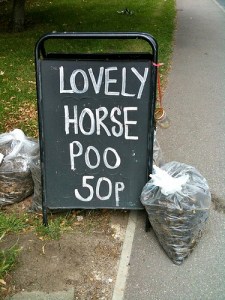
PS I am not talking about horses today. No horses. However, if you choose to make an imaginative link between the picture below and the individual mentioned in this post, knock yourself out.