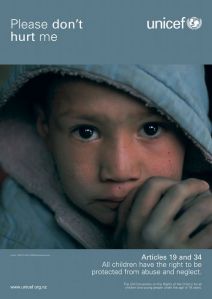
 Come forward to childhood, and do not despise it because it is small and it is little
As American philosopher and academic Judith Butler puts it in her book, Precarious Life: the Powers of Mourning and Violence, the condition of childhood is “a condition of being laid bare from the start.” In childhood, she continues, we inhabit “the condition of primary vulnerability…a primary helplessness and need, one to which any society must attend.”
The face of the child makes a powerful moral claim on us, none more so than the face of the suffering child. Children have no capacity to represent themselves. If we are unable to represent ourselves, as children or in adulthood, we “run a greater risk of being treated as less than human” Butler observes.
Vulnerability is an inescapable fact of existence, particularly in childhood, and a child alone, without country, home, family and protectors, is in a state of extreme vulnerability. That vulnerability can be respected, exploited, or denied by adults. In situations where it is exploited and/or denied the child is radically objectified, and constructed as less than human.
The child seeking asylum is a child who is stateless and without rights. As Hannah Arendt observed, rightlessness follows from statelessness. Our human rights are dependent upon being part of a community that enacts these rights on our behalf, and offers a framework in which these rights can be realised. Refugee children have lost their place in the world: they do not belong to a political community from which they are able to claim the right to human rights. UN Conventions such as The Rights of the Child supposedly offer avenues for the protection of such children. But for these to have any meaning, signatory countries must be trustworthy enough to abide by our undertakings.
When signatory countries like Australia do not honour the rights the Conventions bestow on a stateless child, when we disregard our serious obligations, refugee children remain stateless, rightless, lost and utterly vulnerable.
As long as we do not grant the child’s dignity and sovereignty by honouring our commitment to the Convention, we continue to perceive and treat refugee children as objects.
We are defined by where we belong, who cares about us, and our fundamental rights as human beings. The profound sense of violation reported by survivors of childhood abuse is often described as soul damage. Perhaps it’s also realistic to think of that profound damage as the destruction and or denial of the rights that help to construct us as human, in the eyes of others, and of ourselves.
As survivors will agree, the journey back from that rightless position to the point where one can come to believe that one has even the right to have rights, is a journey of hardship, and struggle. Many do not make it through. In sending unaccompanied refugee children to a country that does not honour the UN Convention on the Rights of the Child we are condemning them to a rightless life, and denying them an opportunity that could be provided in this country for healing, and a productive adulthood.
Yesterday I heard a talking head comment that if the government allows any children to stay here, rather than send all of them to Malaysia, people smugglers will seize this opportunity to load their boats with children. Yes, that’s probably true. But, he went on, if there should be another Christmas Island tragedy, and a boatload of children are drowned, this will be a political catastrophe. Can’t argue with that.
But what struck me about his observations was that it’s perfectly acceptable in Australian public discourse for anything to do with unaccompanied child asylum seekers, or adults, to be framed in purely political terms. Not in human terms, involving compassion, understanding, desire to assist, responsibility or even concern for the welfare of kids. The only thing that counts is how events affect politicians and their party’s future.
We need no more proof that Australian politicians, echoing the sentiments of many in their electorates, do not see refugee children as human beings. They are objects, to be palmed off to another country as quickly as possible in an effort to minimize political fall out.
The moral dilemma any politicians with integrity face is that to demand that these children be treated as human as the rest of us means going against the tide, and possibly losing their jobs. There’s no room for respecting refugee children’s humanity, human rights, and human vulnerability, in Australia today. Our society is not one that, as Butler puts it, will attend to the child’s primary helplessness and need.
Better to be a cow.
Tags: Australia, Christmas Island, Convention on the Rights of the Child, Hannah Arendt, Human rights, Judith Butler, Malaysia, Refugee, unaccompanied minors
 Does anybody know where the Gillard government plans to put 4,000 refugees when they arrive from Malaysia?
 The opposition is quite within its rights to call for marching in the streets as a reaction to the Gillard government’s deal in progress with Malaysia to send boat arrivals to camps in that country.






 No Place For Sheep
Recent Comments