Tag Archives: Feminism

WEL, you did ask about Julia

14 Sep

In response to this Women’s Electoral Lobby invitation:

 Julia Gillard has been receiving criticism from all sides and her popularity is at an all time low. Although it is certainly arguable that our Prime Minister does deserve some of the criticism it is worth looking at the nature of the criticism and the impact of the recent satire “At Home with Julia”.

 Check out these articles and let us know what you think:  

Unsettling home truths,  Julia undeserving of At Home with …and so are we

I’m about to make observations that could be attacked as gender biased if you were on the lookout for that kind of transgression.

It’s particularly shocking to me that Prime Minister Julia Gillard is determined to amend the Migration Act to enable the expulsion of women, men and children to Malaysia, because I don’t expect this of a female politician. After years of being highly educated in theories on the construction and performance of gender, it seems that deep down I still cling to the atavistic expectation that a female politician will care about the fate of asylum seekers, and I still feel shocked when she doesn’t. Hope over experience. Now there’s a trap to watch out for.

It isn’t yet clear to me if Gillard also intends to expel unaccompanied minors to Malaysia but if that is her intention, I’m gob smacked and quite frankly, tearful. I expect a woman to care about the fate of female and male children. I can’t bear it that she doesn’t. It’s like she’s betraying a core female principle. The shame of it.

This is as irrational as complaining that Gillard knifed an elected PM: I know we don’t elect our PMs, and I know the Westminster system allows political parties to replace their leaders without going to the polls over it. Nevertheless, I was and remain aggrieved that she did it. I was not among the feminists who rejoiced at the ascension of our first female PM. I found it alarming that those feminists decided to ignore the means in favour of the end. Things have only gone down hill since then.

There have been from time to time outbreaks of feminist indignation that the criticism, abuse and disrespect directed towards the PM are gendered. I’m going to add to the allegedly gendered criticisms by saying up front that I am horrified that a woman is acting without any care at all for other human beings solely for political gain. I’m not as shocked when male politicians do it: although it is just as despicable it isn’t very surprising. I am still not entirely en-cultured to the concept of men in politics being interested in caring in the way I’ve taken it as given for women.

I need to examine these gendered beliefs because it’s increasingly apparent that female politicians can be as care-less as men, and likely even more so if they perceive it to be politically expedient. I need to adjust my expectations to the reality that when the political chips are down, nobody much in politics cares about the fate of asylum seekers, regardless of their gender.

The women are up there with the men in the “don’t give a damn” stakes, and in this I include those Labor women who are saying nothing. I cannot bring myself to believe they have entirely abandoned the Labor principles currently being espoused by Doug Cameron. Yet their cowardly silence on their leader’s conspicuous lack of care indicates that if they haven’t yet thrown all ethical considerations to the winds, they don’t have the guts to come out and support the very few blokes who are attempting to restore some human decency to the discussions.

This morning, to my great relief, I read that my own federal Labor MP, Janelle Saffin, has bravely broken ranks to support onshore processing. Now let’s see how many others step up to support her. I’m ready and eager to eat my words. Congratulations, Janelle, you’ve got guts, girl.

This is an aspect of gender equality I for one did not anticipate. I would have liked to see the capacity for caring among male politicians raised to equal that which I was educated to believe is possible for women. Instead the country’s most powerful political woman has decided to lower our female caring standards to the point where she cares less than do many of her male colleagues. I didn’t think anyone could go lower in the uncaring stakes than John Howard and Philip Ruddock, let alone a woman.

This isn’t what was supposed to happen. This isn’t the kind of influence women were supposedly going to bring to government. We weren’t supposed to get up there and model care-less-ness to our girls. Our first female PM wasn’t supposed to make caring about other human beings (even if they aren’t exactly “like us”) a naff concept for our girls, or our boys for that matter.

So uninterested in giving a damn has the ALP become that the concept of caring about boat arrivals has absolutely no place at all in their asylum seeker discourse. Anyone who attempts to introduce it is thrashed, and then abused for bleeding out.

And I’m not fooled by the politically expedient and hypocritical concern for sinking boats. Treating people very badly to deter other people is a profoundly morally dubious proposition. Let’s not forget asylum seekers have committed no offence, and arrive here at our invitation. We aren’t attempting to prevent criminal behaviour with our harsh punishments and indefinite detention, because there’s no criminal behaviour in the first place.

I know I will be scoffed at for espousing a form of biological essentialism about the “caring nature” of women. Nobody can scoff at me as much as I’ve scoffed at myself. Nevertheless, is it such a bad thing to hope for a dimension of care in this dreadful debacle? Is it such a bad thing to hope that this dimension might be introduced and upheld by the women we’ve elected?

Of course I know both personally and professionally that women can be terrifyingly uncaring. Cruelty and ignorance are un-gendered. Has the struggle for gender equality revealed another unpalatable truth: that to expect and hope for caring women in politics is as naïve and sexist as to expect and hope for caring men?

On television the other Sunday evening I watched three young women prepare themselves for a Saturday night out. It was their right, they told the reporter, to go out and get as fall down drunk as the boys. The boys have always thought that was their prerogative, but those days are over we’re equal now.

The young women dressed up in pelmet skirts and very high heels, drank down more shots than I’ve ever had in my life before they even left the house, and the last we saw of them that night was in Accident and Emergency where one of their number was vomiting her guts up while the others milled round drunkenly, trying to stay upright and hold her hand at the same time.

Asked a few days later if they thought it was worth it, they claimed they did. Girls can do this now, they said proudly. In other words, girls don’t have to care anymore than boys do about their own welfare or anybody else’s.

And there you have it. Women have become equal in our right to abandon care, from the top down. Perhaps it was always thus and our liberation has merely exposed another fantasy.

And yet, and yet, and yet…


The Daughter

5 Aug

Warning: disturbing content 

The daughter is back with her photographs. Searching, as she has through the winter and into the wet heat of summer, and still she hasn’t found what she’s looking for.

She wants to remember the man. She has only one image. It’s a photograph of him and her mother on their wedding day. When she thinks of taking the photograph out of its envelope, or even approaching the box in the cupboard under the stairs where it is stored, she feels an unpleasant churning in her belly. A vertiginous sensation, as if she’s not turning in time with world and could easily fall right off it.

She takes the brown envelope from where it lies separated from the other pictures. Then the photograph is in front of her. She’s taken it from its cover without any awareness of what she’s doing, and she’s placed it on the cream carpet in her cool, safe room where she sits in the lotus position, planning first to discover and then to tell herself the story of her life.

She stares at the ceiling. Her heart is too loud. She doesn’t want to look at the photo but she knows she has to. She feels like she felt the day she found a snake on its way out of the upstairs bathroom. The snake and she froze in place. After a few moments just staring, she crept backwards down to the kitchen where she found the metal dish cover they used to keep flies off food. She tiptoed back to where the snake had held its position, halfway across the threshold between the bathroom and the hallway. Slowly she lowered the cover and then, when it was in place, she leapt away as the snake understood it had been confined and began to thrash and spit.

She fetched her glasses, the better to observe and identify. She stared, with that fearful fascination typical of the enthralled. It was a long thin snake, its brown scales flecked with blue, and as it raised itself to strike at her she saw it had a pale yellow belly.

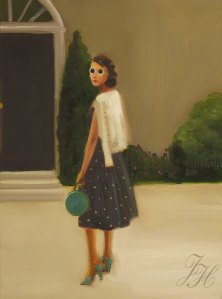
When finally she looks at the photograph she can’t see him. Instead she sees her mother. Her mother wears shoes with high thin heels, a wool coat that comes to the middle of her calves. There’s a small hat perched on the top of her head, over hair the daughter knows is very dark. She’s smiling, though it looks like a forced smile. Her handbag is over her arm and in the same hand she holds a pair of gloves. Her other arm is linked through her husband’s. I don’t know where my blonde hair came from, is what the daughter thinks about next. She thinks that thought for a long time.

Still the daughter doesn’t look deeply, instead skimming over the surface of the image like a dragonfly hovering nervously over a still pool. Maybe some murderous fish will leap out at any moment and take its small life, regardless of its future plans. The daughter has no desire to draw the man out into her present world but she does feel compelled to describe him, as if description is the first step towards making him real. This is a paradox: she knows she’s holding off the reality of him every day and night. It isn’t lost to her, far from it. She’s simply become adept at shutting it out.
If she can let him be real will she become real? Is this the price she has to pay to uncover her own authenticity? Can they still be so linked, after death and time and memory and forgetting have done their work?

The daughter is dizzy from shallow breathing. She looks towards the door that she’s left open in case she has to run. The Dog has draped himself across this threshold like a guardian at the gate. The sight of him reminds her of where and who she is. She whispers his name. His tail thumps on the floor but his gaze remains fixed beyond this room. A small growl escapes his throat. Who is he warning?

It’s very hot and still this January morning and she’s sweating in a light sarong and cotton blouse. She untangles her legs and lies flat on her back. She watches the daddy-long-legs drop from their threads in the corner of the ceiling and hang suspended in midair. There’s not the slightest breeze to disturb them. The photograph lies beside her and she’s careful not to look at it, or to let her hand touch its flat shiny surface.

After she’d trapped the snake she was at a loss as to what to do next. Alone in the house, she thought she’d better wait till Jane came home, as Jane is much more knowledgeable in these matters. Nevertheless, she felt compelled to go back to the scene every few minutes. Once there, she’d get down on her knees and put her face close to the spitting snake and stare at its small head and forked black tongue. Perhaps the power of her gaze might help her to incorporate the animal into the familiar, might rob it of its alterity, that disturbing aura of the utterly other, of being out of reach of any human appeal. She knew though, that what they had in common was life, and a blind impulse to live it, and she felt bad for imprisoning the animal, even though letting it roam the house was out of the question.

The daughter sits up and puts on her glasses. She leans over the photograph. She sees the man beside her mother is in his early thirties, tall and substantial, with thin, brown hair that falls across his forehead. She knows that when he is anxious or needs to connect himself again with his body, he runs his fingers through these strands of hair that lie across his forehead close to his eyebrows, and sweeps them away with a slight backward movement of his head. He has grey eyes. His face is well-fleshed and broad, and pleasant for those who look without knowledge. His teeth are discoloured from the unfiltered cigarettes he smokes. This habit has left his fingers stained. His nails are bitten to the quick. They are thick, stubby fingers stained brown. They are big fingers on big hands. He is a doctor and well liked in the small community in which he lives with his wife, and the child of his wife and another man. The child is ten. Her name is Angel. Her mother and this man call her by another name, but Angel is the name given to her by the grandmother the child loves most out of all the grown-up people in her world. When she is most lost and most afraid she whispers Angel to herself, and calls up the image of her grandmother.

Angel accepts the fiction that the fair man is her father though she is aware of some mystery surrounding her origins. She calls him “father” to herself and everybody else, until she is thirteen and he tells her otherwise.

Angel hears things in the night. The unforgettable sound of feet running down the hallway of the house, pursued by a heavier tread.
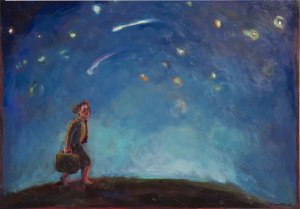
You lie in your bed, in your bed and your heart beats so loud you’re certain he’ll hear it. Your breath is so noisy, and you try not to breathe it. You slow down your heart and your breathing like a hibernating creature in a long dark winter. That, you believe, is the only way to stay alive in the circumstances in which you currently find yourself.

But will you ever learn to open up again? To let the heart beat to its own desires and the breath whistle carelessly through your body?

The day comes when he decides to do something he’s been contemplating for some time. The child is pretty, though not exceptionally so. More than that she is full of life, bright and intelligent with a wide smile and the skin that is the privilege of all young children, the skin one longs to stroke, like satin under the tips of the fingers. He likes the idea of having two females in his house available to him.  He chews on his fingernails as he sits in his chair drinking beer out of a pewter tankard and looking at his roses through the sitting room window. He brushes the hair out of his eyes and tosses his head. Then he chews his nails again till he draws blood. He isn’t contemplating doing anything wrong, he decides, giving fleeting attention to the morality of the situation. It has to be secret because other people will put their own interpretation on it. He gets angry just thinking about other people’s opinions on the matter. He gets defensive just thinking about someone else’s disapproval of him.

If he knows in his heart that he shouldn’t carry out this plan he stifles that knowledge. This is easy to do as his desire is great and outweighs every consideration his better nature might put forward. He has a better nature. He is a doctor, well liked in the town, he has healing hands. He has a better nature.

But his dark desire puts him beyond the reach of the ameliorating qualities of human love that would have him first consider the child. He pours another drink out of the bottle on the small table at the side of his chair, and lights another cigarette. He is not a man to deny himself his desires. He is a man with a sense of entitlement.

The phone rings. His wife calls him. He grinds out his cigarette and stands up, pushing the hair off his brow, adjusting his clothes. As he strides down the hall to the surgery at the side of the house, he puts his fantasies aside. By the time he’s reached the phone on his desk he’s become the doctor. He listens quietly to a patient’s concerns. He reassures, and says he will be there in ten minutes. He hangs up the phone. He gathers his bag, his stethoscope, the miniature torch he uses to look down sore throats. He strides out to the garage, gets into his car and takes out the packet of mints he keeps in the glove box. He puts two in his mouth and sucks on them. He’s thinking of the patient, what might be the cause of the sudden onset of high fever. He enjoys the regard in which his patients hold him. He won’t allow anybody to spoil that.

Sometimes while she was observing the snake, the daughter imagined fetching the shovel and decapitating it. But she was confounded by the logistics. How was she to keep the snake in place while she lifted the cage, put it down again on the floor, picked up the shovel and made ready to strike? How could she be sure the snake wouldn’t leap at her and sink its fangs into her cheek as she bent over and lifted off the metal cover? She paced the kitchen, thinking things through. She couldn’t settle to anything, knowing that snake was in the house.

She even thought she could let it bite her. She could take that irrevocable step into the unknown. She could alter the course of her life forever, in one instant. She could give in to the “unnameable lust.” She could. The decision was hers.

There’s a barrier between those who’ve known violence and those who haven’t. Behind this barrier Angel is, she fears, forever an outsider.

Her secret sets her apart. Dark knowledge taints her. She’s sullied. How will she ever make herself clean again? Once she sought to bridge this distance by confiding her experiences, only to see reflected back in her listener’s eyes her own confusion. Confessing something can sometimes make you feel worse than keeping it to yourself. Whatever is most difficult to tell. That is what counts.

If Angel reveals to you what she knows will she taint you in some way? Will she force into your life knowledge that can’t help but change the way you look at the world? Against your will, angering you, causing you to avoid her next time you pass in the street? Will she make you afraid of her because of what she knows?

The daughter experiences this barrier as a dense membrane, impenetrable, a thick sac in which she is enclosed and from which she attempts to look out at the world. The world seen through these membranous layers is always distorted, as if she’s looking through wet plastic, material that ought to be tangible, that she ought to be able to grasp in her hands, but can’t. If she could, it would be slick, like a foetal sac she must break through, kicking and tearing, in order to get out into the earth’s atmosphere and breathe for herself.

She sees the world coloured by her own experiences, as does everyone, but she doesn’t know that. For example, she looks at her friends and thinks that their fathers must do the same things. All girls must know what she knows, and part of what they know is that the knowledge must never be shared. They are all enclosed in their separate, thick worlds from which they gaze at one another with dull eyes. They will stay this way as long as they are in their fathers’ houses.

There is no clarity of vision from inside a membranous sac. The edges of things are always blurred, and boundaries are uncertain. You can’t touch anyone and nobody can touch you. Only the father can tear through and the layers separate for him and he enters and when he withdraws, the layers close over again, skin growing back, leaving no visible scar.
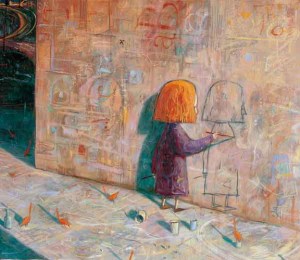
In referring to herself in the third person, Angel believes that she not only puts a distance between herself and her experiences, she creates herself as well. She brings herself into being. When she’s accomplished this, when she’s managed to construct herself, she’ll step into this borrowed figure, much as the hermit crab crawls into an empty shell and makes it her own by virtue of occupancy. Much as a bird settles into an elaborately woven nest and is then identified by the type of home she’s built, the materials she’s chosen, the way she’s arranged them.

When she speaks of herself in the third person she does it to ward off a certain pain that is always threatening to overtake her. Only in the third person can she find the courage to allow voice to the truths that sit on her shoulder, chattering and salivating like cast-out demons wanting back in.

She has no desire to think of herself as victim for the rest of her life. There must be a way she can stand with dignity in the midst of the sum total of her life’s experiences, denying none of them their due, resisting any attempt at domination by a single horror, granting equal value to all.

Though the January day is dripping with humidity, the daughter feels cold on the carpet in her room. Chilled to her very bones. She puts the photograph back in its envelope. She doesn’t know what she’s achieved by this exercise. She doesn’t feel any closer to having a real past than she did before, her head is aching and she feels sick. She whistles the Dog, he comes to her and rests his head in her lap. She buries her face in the thick white fur around his neck and inhales his dog smell.

After a while she thinks perhaps she might have put a tiny piece of her heart back where it belongs. That’s what it is, this painstaking process of singing in all the voices languishing on the outer edges. It’s the delicate job of putting a heart back together so it can die whole. She dare not die as she’s lived, bits of her scattered all over the place, forgotten, repressed, and denied.

Angel hears Jane’s footsteps as she enters through the upstairs door and sets her parcels down in the kitchen. The Dog sits up and makes ready to go to her, angling for a treat. If Angel follows him Jane will smile at her, and they will drink tea under the mango tree and watch the sun fall into the river, and pray for a thunderstorm to clear the stifling air. This is her ordinary life. This is the precious and ordinary life, given to her by Jane, that she never expected to have.
Eventually, on the day of the snake, she realised she couldn’t stay in the house any longer. Carefully, she printed on a piece of cardboard: Beware of the Snake. She propped this warning on the top of the stairs. Then she went out to buy chocolate.

When she got back, Jane was home, pulling on her gumboots and gardening gloves. She’d found a large sack. Together they went upstairs. Angel slowly lifted the wire cage and the snake wriggled out into the bag Jane held in front of it. Jane tied up the bag and they transported the thrashing snake to the bush at the end of their street. There they let it go.

‘Did you want me to kill it?’  Jane asked later as they drank tea and ate the chocolate, their reward for bravery and endurance

‘Nope. I just didn’t want it in the house. That bloody dog was useless you know. Didn’t even notice it.’

As a child the daughter’s nature was ebullient. It was hard for her to learn to disappear herself. It was hard for her to learn to think of herself in the third person.

Ellis and Nietzsche: let them sniff chairs

6 Jul

That ageing provocateur Bob Ellis, pictured here showing what Coke can really do to you, wrote a truly awful piece on the Drum yesterday to which on principle I will not link, basically arguing that feminism is responsible for the downfall by sex of many famous men from Oscar Wilde (???) to Dominique Strauss Kahn.
Heck, I have to link, it isn’t fair to talk about it otherwise.

The piece was almost universally howled down, and the ABC shut off the comments option at around three hundred and something, only the day after it was published.

What Ellis’s pleas for a more understanding and forgiving attitude to male desire did make me ponder, is how easily male public figures are brought down by their sexual activities, whether they’re caught playing away, sniffing chairs, exiting gay bars or cavorting in their underpants when one would wish them to be fully dressed. Though for Ellis to claim this has much to do with feminism is contestable, as there weren’t a lot of feminists braying for Oscar Wilde’s scalp, for example.

Usually these public figures are brought down by their male enemies who might very well employ some appropriate feminist rhetoric to make them look good and properly concerned about the women allegedly injured in the blokes’ peccadilloes (except in the case of Oscar Wilde and any other man brought undone by participation in gay sex or rumours of gay sex.)

What this says is that as a society we are apparently very uptight about the morals of influential men, or more likely there are forces at work who want us to think we are.

If a man is unfaithful to his wife, how does this affect his professional performance? The answer is we don’t know. Nobody’s done the studies. We make an assumption, based on current moral values about sex, fidelity and monogamy that if he’s deceiving his wife, he’s likely deceiving everybody else. This seems to me to be a slightly insane deduction. We all know how human beings can and do categorize, especially when sexual desire is at work in them.

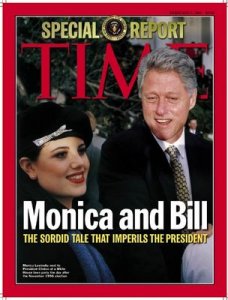
Was Bill Clinton’s presidential performance changed for the worse as a consequence of letting Monica puff on his cigar, for example? (No, she didn’t inhale. They found the smoke on her frock.) Do we have the  right to judge a man’s whole life (or a woman’s for that matter, but sexual disgrace doesn’t seem to befall influential women to anything like the same extent) on the strength of his sexual behaviour?
Of course I’m only talking about non criminal situations. If  an influential man is found to have acted criminally in sexual matters, then that needs to be viewed as would any other criminal behaviour.

Ellis claims that a lot of good men are cut off at the balls because feminist wowsers can’t deal with their expression of their sexuality. Men have always been at the mercy of their desires, he claims, and everybody needs to cut them some slack if they Fall. High levels of testosterone go hand in hand with high levels of achievement, so there’s bound to be trouble.

There isn’t much to take away form Bob’s rave, except that it does remind me that the society in which we live seems to have a dominant moral view of sex as at best naughty, and at worst, really scary and requiring all kinds of societal controls, including marriage and monogamy. Repression is the price we pay for civilization. Give adolescents condoms and they’ll be at it in the aisles at school.

Any public figure who transgresses the dominant sexual morality runs the risk of being terminally banished, not because they’re particularly evil, or even a little bit bad, but because they’ve given their opponents a brilliant excuse to run them out of the game, under the guise of upholding society’s moral values.

While straying from one’s chosen partner is going to cause a lot of grief, does that make it immoral? If a man in a powerful position engages in a consensual sexual encounter with a woman with less power, is that an immoral act? Who is determining our moral values at this point in our history, how are they determining them, and to what purpose?

Or is there truth in Nietzsche’s claim that:

There are systems of morals which are meant to justify their author in the eyes of other people; other systems of morals are meant to tranquilize him, and make him self-satisfied; with other systems he wants to crucify and humble himself, with others he wishes to take revenge, with others to conceal himself, with others to glorify himself and gain superiority and distinction,–this system of morals helps its author to forget, that system makes him, or something of him, forgotten, many a moralist would like to exercise power and creative arbitrariness over mankind, many another, perhaps, Kant especially, gives us to understand by his morals that “what is estimable in me, is that I know how to obey–and with you it SHALL not be otherwise than with me!” In short, systems of morals are only a sign language of the emotions.”

Whatever the answer, it’s a pretty safe bet that it’s got very little to do with feminism, or even wowser feminism. Sorry, Bob. You blokes are on your own with this one.

Changing the gender paradigm: it’s women’s work

24 Jun

Changing the gender paradigm, in On Line Opinion today.

An essay on women in the workplace, baby clothes, pitfalls in the social process of gendering, and Foucault’s analysis of hegemonic manipulation. Enjoy!!!

Don’t mention the mothers

14 Apr

First posted on ABC’s The Drum

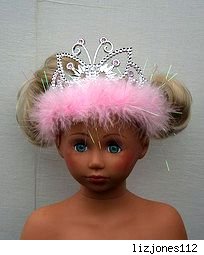
Tiara Kid

Peter Garrett, Federal Minister for Early Childhood and Youth, is about to receive a petition requesting his support for a plan to boycott the introduction of American style child beauty pageants into Australia, organised by the “anti-sexploitation” group Collective Shout

Averse as I am to censorship and banning as methods of effecting cultural change, in this case I’m in partial agreement with the zealots.

Watch the video here and you’ll be left in little doubt that subjecting young girls to the intensive and brutal grooming demanded by the organisers of these affairs is abusive of the little child’s body, mind and spirit. Think hot eyebrow wax ripping off a screaming three-year-old’s tender skin, as well as indiscriminate amounts of chemicals from fake tans, bleached teeth and hair; Botox injections, and after that the make up.

Together with the sexy moves the little girls are taught to use and the glittering costumes they are required to wear, reminiscent in their extravagance of Las Vegas showgirls, you’re looking at a violating form of child abuse that is normalised in certain sections of wealthy Western democracies as highly profitable entertainment for adults.

Some mothers argue that it’s nothing more than a game of dress ups, a disingenuous justification that allows them to convince themselves that their little girls are having fun. But dress ups in your mother’s bedroom don’t entail painful beauty treatments or have as their goal the attainment of physical perfection, and the adults you parade before accept you no matter how you look.

Little girls tarted up like caricatures of adult beauty queens put one in mind of the excesses of drag queens, and indeed the little ones look just like infant drag queens, sans the irony, humour and agency the adults bring to their displays. If an infant beauty queen is a tragic sight, an infant drag queen is even more so, especially if she’s scared, forgets what she’s supposed to do, or falls over her own little feet when she’s parading across the stage while her momma shrieks “Shake it like I told ya, baby!” from the front row.

It’s the patriarchy again

On the website to which I’ve linked there’s some comments criticising the mothers who get themselves and their little girls into this Mardi Gras and Sleeze Ball for tiny tots pageant scene. The disapproving commentary is critiqued by others who claim that it isn’t the mothers’ fault, we must be careful not to start a false good mother/bad mother dichotomy in this debate, and that the mothers are themselves products of a culture in which how a woman looks is all that matters.

While I agree that starting a bad mother/good mother binary oppositional is less than useless, I take issue with the justification that the mothers involved are victims of a sexist hegemony promoting the belief that “…women and girls aren’t human – we are all apparently male’s disposable sexual service stations,” to quote one of the comments.

How then, do we account for the millions of women just as subjected to cultural pressures (the majority, I venture to claim) who are appalled by the pageant scene and wouldn’t dream of letting their little ones anywhere near it?

We can’t account for their escape, but what the victim justification does do is allow those mothers who exploit their little ones in pageants to be relieved of responsibility for their choices.

That’s responsibility, not blame, the difference between the two is a big one, and perhaps the failure to understand this difference is what is preventing some of us from fully acknowledging the mother’s pivotal role in child pageantry.

This victim justification inevitably leaves faceless corporations primarily responsible for the “porno-sexuality” allegedly propagated by the beauty industry, and apparently wholly and indiscriminately internalised by pageant mothers. Women and girls, this argument goes, are nothing but “fodder” for “sexist, classist and racist corporate machinery.”

Where have I heard this disavowal of agency and individual responsibility before? Oh yes, the KanYe West and Brian McFadden sagas; the Victoria’s Secret knickers saga, and most recently in the games rating debate article on the Drum.

Wherever you find those who seek to censor you will find the corresponding denial of agency and individual responsibility. According to the censor and ban brigade, a majority of people but especially women, are bereft of all ability to discriminate, soak up cultural influences as if we have Wettex in our craniums rather than brains, and have to be protected from ourselves because we are undoubtedly our own worst enemies.

In other words, women are even less capable of discrimination and choice than children, and women are a priori patriarchy’s victims.

Never underestimate the power of the mother

My argument for having a close look at these pageants isn’t because the mothers are victims. It’s because their children are, and children don’t have a lot of agency in any situation that is controlled, driven and dominated by the mother’s extreme desires. However much a child protests and some of them do, she is bullied, manipulated and cajoled into accepting the cosmetic violation of her body, and into dressing and performing as her mother demands.

The pageant mother’s perception that her child is inadequate and requires physical enhancements is a damaging one, and we should not be accepting it as part of the “normal” range of maternal attitudes. The completely normal little girl is taught by her mother that she is physically lacking, that this is a handicap, and that if she works hard to perfect herself she will receive love, affection and admiration from her mother, and her wider audience.

This is a message the child will carry with her into adult life, introjected as parental messages frequently are so that we come to think they’re our own beliefs, and it’s a big task to free ourselves of the more negative of them.

The intense maternal focus on perfecting the child’s body should alert anyone to the real possibility of creating an obsessive preoccupation in the little girl that will likely be carried into her adolescence and adulthood.

Never underestimate the emotional power of a mother over her little child, even if that mother is herself a victim.

The Twinkie defence

If mothers are relieved of responsibility in the matter of child beauty pageants, the myth that all that is required to protect children is for us to prevent through censorship and boycotts the patriarchal cultural brainwashing of women, is once more perpetuated.

Faceless corporations will be held solely responsible, and the consumer’s Twinkie defence of diminished capacity on account of having been unwittingly appropriated as fodder for the beauty industry, will serve to deny personal agency and responsibility.

I can think of little that is more unrealistic than ignoring or glossing over (so to speak) the mother’s role in beauty pageants, as is advocated by those who are protesting these events. Their undertaking to instead focus on pageant culture (minus the mother’s agency in it) and what it represents sounds doomed to failure, in terms of productively deconstructing these abusive events.

The “woman as victim” ideology

As are all efforts to control through censorship and prohibition alone, this one is at best superficial. We might succeed in preventing the pageant culture taking hold in Australia to the extent that it has in the US, but we won’t have done anything to ascertain what drives a woman to subject her infant to these ordeals, or what she may be doing instead if they aren’t available as an outlet.

Yet again we baulk at acknowledging women’s capacity for violence whatever form it takes, and instead seek to place responsibility elsewhere.

Yet again we are proffered the view of women as without agency, victims of a patriarchal consumer culture that blinds us to our own and our children’s best interests.

Once again some of us are denying women an opportunity to claim agency and own responsibility for our actions, and in so doing become proactive participants, rather than the perceived passive victim recipients of the culture in which we live.

And, as is all too often the case, the biggest losers are the little girls denied the ordinary enjoyment and acceptance of their normal children’s bodies, paraded instead in grotesque finery in front of adults like primped, beribboned and ruffled toy dogs in a very bad circus.

And again, the question must be asked: what is it with some women that makes them apparently incapable of acknowledging and addressing blatant maternal abuse, even “for the sake of the children?”


Government’s brand new 12 year plan to end domestic violence is already out of date

20 Mar

by Laurent Fintoni via flickr


Kate Ellis, Minister for the Status of Women, launched a 12-year national plan last month that is designed to reduce violence against women and children.

The plan is based on research that indicates as many as one in three Australian women will experience physical, sexual and emotional abuse by men during their lifetimes.

The plan expresses the intention to address social norms and practices, rigid beliefs about gender role expectations and cultural values, all of which contribute to a society in which violence against women and children is endemic.

Currently, there are more reported assaults on women by men.

However, what the plan completely neglects to address is that there is also a great deal of anecdotal evidence that women are the primary perpetrators of the emotional abuse of children, with disastrous and long-lasting effects.

Any 12-year national plan to prevent violence against children should include proper and full investigation into this type of child abuse. Why doesn’t this one?

Paucity of empirical research

While there are studies on female violence against male partners, it’s difficult to find current research on the occurrence and effects of maternal emotional abuse on children, and on the adults they become. Research has lagged behind clinical experience, notes the author of this 2007 study and there is a relative paucity of empirical data.

Yet there is a plethora of anecdotal evidence to be found on the long-term effects of maternal emotional abuse on the development of children, and on their adult lives.

There are thousands of personal stories of emotional abuse – maternal bullying, attacks on the young child’s self esteem, the long-term consequences of being raised by a narcissistic mother for whom one is little more than an accessory in public, and an emotional whipping post in private. This clinical term has been colloquially adopted as shorthand for maternal emotional abuse.

There are 10 Google pages dedicated to the term, and a further 10 pages dedicated to maternal emotional abuse.

The term “narcissistic mothers” sits comfortably with increased societal concerns about the “sexualisation” of young children, specifically when young girls are dressed and made up as if they were adult women.

Campaigners such as the Australian Christian Lobby and Melinda Tankard Reist express profound and I believe legitimate concerns about this increasing practise.

However, the elephant in the room is that mothers and female caregivers overwhelmingly purchase and dress young girls in this manner. Reist, the ACL, and many other campaigners apparently find it easier to lay all blame at the door of various media and advertising outlets.

They neglect to mention the responsibility mothers and female caregivers must bear for purchasing these products, and choosing to dress their little girls like adult women.

It’s reasonable to investigate the possibility that such mothers and caregivers are indeed abusively acting out their own narcissistic and unrealised desires through their little girls.

The stories of maternal abuse are out there

The long-term consequences of maternal abuse

Maternal abuse is a broad predictor of adult dysfunction in the areas of relatedness, identity, affect regulation, abandonment concerns, and borderline and anti-social features. Briere and Rickards found that “high paternal support did not appear to reduce the negative effects of maternal abuse”.

On the matter of childhood sexual abuse the authors note: For example, the current results suggest that childhood sexual abuse, although significantly related to impaired self-capacities, is second to the effects of childhood maternal abuse. (emphasis mine.) Such data does not mean that sexual abuse is less than psychologically toxic, but rather that another form of child maltreatment—one less addressed in the literaturemay be even more traumagenic. Additional study is clearly indicated to determine the reasons (whether biological, attachment-related, or sociocultural) for this specific effect.

The area is almost a professional and wider societal no-go zone – so thoroughly has feminism succeeded in creating the belief that the perpetration of intra-familial abuse is a primarily male phenomenon. Yet there are many, many women and men who experientially know this is not so. Why don’t feminists who are in a position to do so, validate this experiential knowledge, and clamour for empirical research?

W Kierski addresses professional reluctance in his paper ‘Female violence: can we therapists face up to it?” This link appears to come and go, but Google “female violence” and you’ll find this paper, and 11 further pages with both scholarly and anecdotal material on the topic.

The reality many feminists resist

Together with society’s reluctance to consider that mothers are anything but good, as well as the difficulties of identifying what can seem, compared to physical injuries, a nebulous concept of emotional maltreatment, this area of abuse receives far less attention than others. It is described by some mental health professionals as the “hidden” form of maltreatment.

Unpopular as this notion might be, it’s my opinion that feminism has created a simplistic but powerful binary narrative in which men are perpetrators and women are victims. This has now hardened into a rigid gender role expectation.

There is very little room in this story for the reality of female violence against male partners, against other women, and against children, unless a woman murders them or otherwise physically abuses them in a manner worthy of media attention. These women are then cast in the role of the extremely bad mother, and frequently subjected to vitriolic public attacks.

Yet victims can also be perpetrators, regardless of their gender. This is the reality many feminists resist, to the detriment of all of us, and in particular, our children.

The halcyon days of brilliant feminist scholarship and subsequent ground breaking cultural change are over. The once inspirational ideology has degenerated into little more than housework and lipstick cat fights.

The first feminist clique to address the issue of maternal emotional abuse, and lobby for urgent and comprehensive research into its occurrences and effects, will receive my support. Feminists have always led the way in addressing domestic violence perpetrated by men – now it’s time  for women to address intimate partner violence and child abuse by women.

This is not something women would accept being addressed by men. It can only be seriously addressed by women ourselves.

What we know so far is that there is very good reason to investigate. If further study bears out the 2007 Briere and Rickards’ data, we are looking at a profoundly significant determiner of adult well being, one at least equal in its probabilities of long-term damage to male perpetrated domestic violence, and the sexual assault of children.

Facing up to and addressing maternal emotional abuse is quite possibly feminism’s next frontier, and if the sisters baulk at it and stay with the trivia, then what is feminism really good for in 2011?

WHAT THE NATIONAL PLAN SAYS

The definition of domestic violence used in the new 12 year National Plan announced by Minister for the Status of Women, Kate Ellis, last month, does not acknowledge any familial abuse other than that perpetrated by men:

Domestic violence refers to acts of violence that occur between people who have, or have had, an intimate relationship. While there is no single definition, the central element of domestic violence is an ongoing pattern of behaviour aimed at controlling a partner through fear, for example by using behaviour which is violent and threatening. In most cases, the violent behaviour is part of a range of tactics to exercise power and control over women and their children, and can be both criminal and non-criminal.

Read: “in most cases the central element of domestic violence is violent male behaviour” towards women and “their children.”

Female violence against intimate male partners, well researched for quite some years now, and alleged by some researchers to be as common as male violence, and often differently expressed, is inexplicably omitted.

Maternal violence of any kind against children is omitted, though paternal or male violent behaviours against “women’s” children are included in the definition.

Further in the document we find this:

It [the Plan] will look at building positive attitudes and beliefs, social norms and ways for organisations to confront controlling, macho, aggressive and ultimately violent behaviour.

Read: “Violent male behaviour, because with “macho” in there, what else could it be?

The vision of the National Plan is that: ‘Australian women and their children live free from violence in safe communities.’

Read: “free from male violence” as female violence is not acknowledged in the definition.

And then: Values and Principles are: Responses to children exposed to violence prioritise the safety and long term well-being of children.

Read: “Responses to children exposed to male violence’, as female violence is not acknowledged in the definition.

And then: Protecting Children: Physical abuse, emotional maltreatment, neglect, sexual abuse and witnessing family violence are now all recognised as forms of child abuse and neglect. In April 2009, COAG endorsed Protecting Children is Everyone’s Business—National Framework for Protecting Australia’s Children 2009–2020. This framework is aimed at reducing child abuse and neglect in Australia over time. The National Plan and the National Framework are designed to work in tandem to bring about positive change for women and children experiencing violence.

Read “ experiencing male violence.”

The linking of the two plans suggests the National Framework might also be based on an interpretation of domestic violence as male violence. I haven’t checked. I hope I’m wrong.

And: The primary objective of perpetrator interventions is to ensure the safety of women and their children.

Read: “Male perpetrator interventions”

The examples are numerous. See:

http://www.fahcsia.gov.au/sa/women/progserv/violence/nationalplan/Pages/default.aspx

We need a plan that addresses violence perpetrated on children by both women and men that includes physical abuse, emotional maltreatment, neglect, sexual abuse and witnessing family violence.

We need research into maternal emotional abuse of children. We need research into female intimate violence. We need a plan that acknowledges the realities of domestic violence, not one based entirely on out-dated stereotypes of gendered violence.

After forty years of treating domestic violence as a male only phenomenon, there has been no significant decrease in violence and child abuse statistics. This indicates that there is something we are not investigating, and female violence against intimate partners and children is very likely it.

Becoming woman

8 Mar

by Alex Dram via flickr


On International Women’s Day it seems appropriate to reflect on feminism.

I never imagined I would find myself in agreement with anything with that terrifying Janet Albrechtson said, but last night on ABC’s qanda she declared that feminism must be a broad church, the rhetoric of the sixties and seventies means nothing to young women now, and we must move on. Or words to that effect.

She also took Western feminism to task for ignoring all others, and mother of god, I agree with everything she said.

I’ve lately fought off allegations of being anti feminist, a victim blaming apologist for rapists, an exploiter of sexually assaulted women (because I once worked in clinical practice as a psychotherapist) not to mention being a “man fondler,”  a term of abuse I’m not familiar with, but don’t hold back, girls.

All this as a consequence of having had the temerity to suggest women have to take responsibility for our safety and well being, because nobody else is going to do it for us.

Anybody who bases their identity on an ideology is asking for trouble, in my opinion. Having held that opinion for some time now, I wasn’t unduly upset when some women started telling me I was anti feminist, pro male, and had a prick in my head. But what this torrent of female abuse did cause me to do was reflect on what it is women can do to other women in the name of feminism, and what a scary thing that can be.

There is no such animal as  universal feminism. Like it or not, it it’s already a broad church and always has been, even if there’s been a dominating voice from time to time.

Like any ideology, cliques and factions within feminism stake out claims and marginalize those who don’t comply. Feminism is as cruel, prejudiced and contemptuous of difference as any ideology. It always has been.

As ferocious as it can be to men, it is capable of equal ferocity to women who do not comply with the factional rules. That’s the nature of ideology. If you add an imaginary transcendental exteriority, you’ve got religion.

I know young women who are vibrant feminists, contemptuously dismissed by some older women as “fashionistas”  who shouldn’t be referring to themselves as “chicks” and “babes.” “Is the word woman too fat for them?” somebody’s asked. But young feminists have to do it their way. From this fresh perspective and energy, something new will emerge for women, even if as yet it is unformed.

Those of us who are their female mentors need first of all to respect their ascendency. Enough already with the moralistic prescriptives!

Get out of the new way if you can’t lend a hand, for the times they are….

There are young women who want to take responsibility for themselves, they see it as a badge of honour. Not for them the jaded diatribes of victimology.

This morning I heard a story of three generations of women together in a house with a man who was husband, father and grandfather to them. For years it had been his practice to drink, come home, and beat up his wife. On this occasion his forty year old daughter hid away as she always had, When the beating was over, the fourteen year old granddaughter took her grandmother aside and told her she didn’t have to live like this any longer. She took her grandmother to a refuge. They got help for her and eventually a place to live.

The young woman had learned about domestic violence and knew what to do. She’d been educated. She took charge, and her grandmother’s life was changed.

Who cares if she also likes to wear lacy panties and short skirts?

So  I’m giving the finger this International Women’s Day to any woman who tells me or anybody else how to be a proper feminist, after telling us that we’re not.

Rotate, honey. I like me just the way I am.

KanYe West, Melinda Tankard Reist, and the control of the representation of desire.

26 Feb

by Lucero Design via flickr

At Melinda Tankard Reist’s website underwear manufacturer Victoria’s Secret is under attack, two hapless tools from the Gold Coast trying to sell real estate using a woman in her undies are copping it, and oh no! Not that, still! Yes, the KanYe West Monster video clip, months after we all got into that epic tussle at the Drum, is still absorbing the Tank’s attention.

Last week MTR was described by Stephen Harrington at the Punch as “Australia’s Helen Lovejoy,” for her complaints about this video clip, as well as the “what about the children” rhetoric she invokes as an argument against just about everything.

(For those not familiar with the Simpsons, Helen Lovejoy is the ultra conservative wife of the local Christian minister whose catchcry is “But what about the children!”)

Melinda pours retributory scorn on Harrington here. The West video is, she claims, a “significant watershed in the de-humanisation of women.”

That’s a bit hyperbolic, in my opinion, given the on going, grave, and global abuses of women’s human rights that certainly do de-humanise those groups subjected to them.

The psychotherapists’ interpretations

At New Matilda, psychotherapist Zoe Krupke interprets the video clip from her professional perspective, and explains that violence such as is portrayed therein can be a consequence of “denial of personal weakness and fragility,” resulting in projection of these qualities onto others, in this case the strung-up, zombiefied and helpless women.

In other words, controlling others through violence allows the perpetrator to bury feelings of inadequacy and vulnerability, and replace them with an illusion of power.

All of which is true enough, but if you read the lyrics it’s clear that they are about nothing but West’s feelings of personal weakness and fragility; rage at perceived exploitation by the music industry, and women, rage at his admitted inability to behave in any way other than monstrous; identification with other monster figures, and a pathetic plea for someone to love him.

by Maximillian Dinslage via flickr

None of which are expressed in ways that are likely to get him any of the things he seeks, but rather are an explosion of fury, frustration, and self-mockery.

I’m a monster
no good blood-sucker
everybody know I’m a
muthaf*cking monster
None of you n*ggas know the carnage I’ve seen
I still hear fiends scream in my dream…

And so on. The thoughts and feelings of a disturbed being, a rapper having a laugh, or both, depending on your perspective.

Feminists aren’t the only ones with opinions

You've Been Dickrolled. by David Jackmanson via flickr


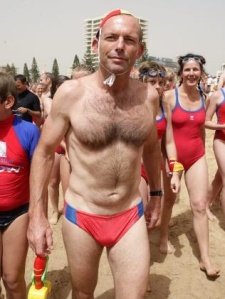
What is certain (I’m sorry, at this point I can’t help myself, the only certainty is the certainty of uncertainty, thank you so much for the philosophical insight, Tony the Tool, another of the known unknown unknowns littering the political landscape, and pictured here damn near naked) is that while a feminist analysis of the work is worthwhile, it’s far from being the only possible analysis. The video and lyrics are complex, with racial references as well as those mentioned above, and to attempt to have it censored because it “dehumanises” women is, in my opinion, the kind of sadly unimaginative reaction we’ve come to expect from some media feminists these days.

What the video clip certainly is: the concretisation of one rapper’s subjective vision of his world. If it weren’t as popular as it is, there would be no need for further discussion. But it is tremendously popular, (listed in Rolling Stone’s best 30 albums of 2010) and has received critical acclaim from that magazine’s  informed commentators

These accolades suggest West’s Beautiful Dark Twisted Fantasies strike a chord, so to speak with millions of others. It may not be the kind of chord MTR wants struck, whatever that is, and I can’t figure that out. What do these women want? Nevertheless, it’s popularity alone makes it culturally significant, and worthy of examination.

Not that I’m suggesting popularity is the only criterium for cultural significance because clearly it isn’t. The bizarre and complex vision represented in this piece lifts it out of the mundane.

It isn’t everybody’s vision of the world. Then again, neither is a man nailed to a cross, blood seeping out of his wounds and a hole pierced in his side everybody’s vision of a healthy religious experience. John the Baptist’s bloody head on a silver platter doesn’t cut it as inspiring religious commentary for all of us either.

I have a strong visceral response against most moves to censor. No matter what you think of the aesthetic quality or otherwise of the KanYe West video, it is the expression of an artist’s vision.  Are we to live in a world bereft of all dark and difficult imagery? Are we to censor all representations of emotions and passions because they make some people uncomfortable?

Cindy and that sexy thong. by Dave Lee via flickr


When women choose to earn their living from their bodies

Women who model for Victoria’s Secret do so of their own free will, and are well paid for their work. Likewise the women who appeared in the West clip as simulated corpses and zombies.

The luscious woman in the Gold Coast real estate agents’ ad was also, presumably, paid for her work. Many women with lovely bodies enjoy using them as a source of income. Many other women and men enjoy looking at those bodies. Is this really “objectifying” women? Or is it merely admiring, and maybe sometimes envying their beauty?

I’m not likely to meet any of them. They are likely to remain only one-dimensional images to me. So why do I have any responsibility at all to see them as anything else? Why is it wrong for me to take pleasure their beauty? How am I offending them?

If I were to treat the women and men around me as one dimensional, then I would be objectifying and insulting them. But like most people, I know the difference between an image and a fully fleshed human being.

There are some who try to make the people in their lives more closely resemble a one-dimensional image they’ve seen on screen or in a magazine. Their problems, and the problems of their partners, won’t be solved by banning the images. I’d suggest their difficulties are deep, and if no images are available they’ll manifest in some other equally unfortunate way.

The desire to be desired

The desire to be desired is a normal human need. Practically everyone at some time wants, indeed needs, to bathe in the glow of somebody’s desiring gaze. But desire and its expression and representation are intensely personal matters. Lacy panties or cottontails, stilettos or bare feet, cleavage or buttoned up modesty – there’s a place for everything, but not in the world of Melinda Tankard Reist. In that world there’s only one possibility for the expression and representation of desire, and that’s hers.

Baffled by her negativity, I’m as yet entirely unable to ascertain what her vision actually consists of. Though she unrelentingly castigates us for our unhealthily fetishistic and voyeuristic gaze, I’ve never once heard MTR give an example of how she thinks female sexuality ought to be represented and expressed.

We should pretend we aren’t sexual beings, and deny that we love to look at each other, even though much of the time society requires us to do that with a furtive gaze?

We should pretend that erotic zones are not of intense interest to us, starting when we emerge from the latency period laughing ourselves silly at jokes about underpants?

If every publicly revealed body is an exploited and objectified body, are we all to cover up to protect ourselves from a gaze that MTR would have us believe can only be interpreted as exploitative and objectifying?

The battle for the control of the representation of desire

by Breezer, via flickr


MTR is fighting a two fronted battle for  the right to determine not only what we should look at, but how we should look at it. She wants to be inside our heads, telling us how to see things. Where she see exploitation, so must we.

She wants to control the representation and expression of human desire. She wants to control the interpretation of the gaze.

MTR seeks to superimpose her moral vision upon everyone else, a vision that cannot allow the possibility of a benign desiring gaze, a vision that insists the desiring gaze is always dangerous, unless it is confined to encounters between to consenting adults (preferably married) in the privacy of their own homes. Once desire is provoked outside of the marriage bed, her thinking goes, it must inevitably result in damage of some kind. I have long suspected this to be at the heart of MTR’s crusades. Now she’s proved it, by taking on Victoria’s Secret.

In her vision, the free flow of desire in the world, far from being a driving creative force, is miserably reduced to a threat to women.

This is why MTR does not offer her vision of an acceptable public representation of female sexuality. There isn’t one in her moral framework.

In this, she’s a bit like the followers of Sharia law.

But feminists fought for freedom

MTR and her followers justify their desire to impose their desire, by dressing their arguments up as feminist rhetoric, and indeed there are some conjunctions.

But feminists fought for freedom. If a woman chooses to use her body to earn her living then it’s nobody’s business but hers. Melinda Tankard Reist makes an unfortunate conflation between free choice and exploitation. That exploitation and abuse of women exists is not at issue. However, it does nobody any good to confuse the two, and in the process attempt to shame women who are making a free choice, and attempt to deprive them of that right. That’s an anti feminist move, in my book.

The argument that we’re brainwashed to think we must do our best to look like underwear models or we’re inadequate, holds some water. There’s a great deal to critique in fashion magazines that manipulate insecurities in order to get us to go out and buy something to address those perceived failings.

On the other hand, one of MTR’s fellow campaigners, journalist and researcher Nina Funnell, whose tirade against the KanYe West video can be read here recently took part in a Cosmopolitan (October 2010) competition to find the year’s most influential woman. All the competitors were young, and had the Cosmo look, including killer heels, and sexy masks. There were obviously initial selection criteria that had everything to do with the contestant’s physical appearance. Only after those requirements were met, were the women’s career and personal achievements considered.

There were no older women in the contest, baffling, given that older women are often excellent mentors and influential figures.

In my book, an outrageous and insidious abuse and objectification of women right on our doorstep, sending the message that how you look matters much more than what you do and are, from a magazine read by thousands of young Australian women. Yet not a  murmur was raised in the MTR camp.

To wrap it up…

The Gold Coast tools are pretty funny, I thought when I watched their video clip on Melinda’s website. Their ad is so over the top as to be bordering on a spoof of using sex to sell. It wouldn’t make me want to buy their penthouse, so in that sense it’s an advertising failure.

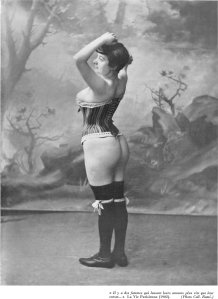
Corset, Paris 1902. Unknown via Wikimedia

Corset, Paris 1902. Unknown, via Wikimedia

As for Victoria’s Secret well, good luck with that one. While the sight of stunning women in lacy thongs and balconette bras might not be everyone’s idea of beautiful or sexy, it is currently a dominant cultural expression of those qualities. Once the sight of an ankle did it for us, and who can forget the practically (in my opinion) only good bit in Jane Campion’s The Piano, when Harvey Keitel caressed Holly Hunter’s leg through a hole in her stocking? Aaaargh, the recollection can make me shiver with delight even now.

The “adultification” of childhood: the questions some feminists will not ask

3 Feb

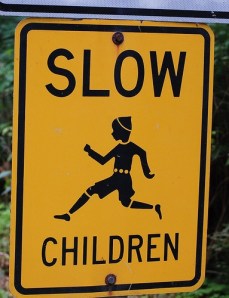
Slow Down, Children. By Steve Voght via flickr

Being a Disney princess doesn’t cut it anymore for some little girls and their mothers. Being “hot” does. This means mini adult clothes, high-heeled slippers, the raunchy swing of the infant bum, bras long before there’s the least need for them, lip gloss and worse, and the emulation of adult sexual behaviour in the pursuit of being “cute.”

All of this is currently known as the “adultification” of children.

It’s horrible. Anybody who’s seen footage of the two year old girl toddling down the catwalk in full make-up and wearing a mini sized version of Madonna’s iconic cone shaped bra, can judge for themselves how horrible it really is.

You’ll find this and other nasty images on Melinda Tankard Reist’s website, where there are examples of “adultification” that make wet hair stand on end.

I do have serious disagreements with some of MTR’s positions, but there’s no denying she is certainly doing a thorough job of raising awareness of this particular cultural development, and somebody must. I acknowledge her vigilance in this.

The weaknesses in the arguments.

I don’t agree with her analysis, however. Reist and other feminist commentators hold the media, and the apparently perverted sexual appetites of adult men, responsible for this situation.

They take a swipe at men in general in the mistaken belief that “the patriarchy” is a term applicable to anyone with a penis, plus their collaborators, that is, women with a pr*ck in their heads. Or “pro male women,” as the Reist people prefer to put it.

As sociology Professor Raewyn Connell described it in her book, Masculinities, (1995, Allen & Unwin) hegemonic patriarchal masculinity is but one expression of the masculine in Western culture. Men who do not identify with that dominant expression are frequently vilified or ignored by the mainstream group. Connell’s work exposes the weakness of any argument that depends on male stereotypes.

Tarring all men with one brush is as offensive as stereotyping women. I wish the feminists engaged in this process would stop it, because it isn’t helping anyone and it doesn’t add anything to the debate. Indeed, it puts so many people off side the debate is at risk of losing what would otherwise be a sympathetic audience.

Let’s go deeper than claiming all men are the same. We’re capable of that.

Capitalism, the market and the media

Hegemonic masculinity is a category generally well represented in the pursuit of profit. Captains of industry, masters of the universe, dominant alpha males, and their female cohorts, tend to set the tone in popular culture when they perceive that there is money to be made from it.

I would go so far as to argue that the entire “adultification of childhood” process is driven by a market in search of more and more ways to increase profits, as fashions and fads quickly fall by the wayside and offer less returns.

Then there’s the media. The media has a complex role to play in the game. They simultaneously promote and critique cultural trends, sometimes in the same couple of pages. The media bears its fair share of responsibility for the creation of our desires, and the fact that those desires are so frequently deliberately contradictory and unattainable.

Even MTR throws up unacceptable contradictions. How many more people have seen the appalling French Vogue photo shoot featuring five and six year olds in adult clothes, and blatantly sexually posed, since she put those very same photos up on her website, complete with sharing facilities?

Not, however, with a link to French Vogue so we could dash off a condemnatory email.

I’ll never understand that move. Protest, by all means but perpetuate the children’s abuse? Non, merci.

The elephant in the room

In the frantic outpouring of blame for the sexualization and adultification of little children, and the tortuous self-questioning about “how did this happen?” one thing seems to be consistently overlooked. Perhaps the most important thing of all, and that is the market.

The market is mothers. It is overwhelmingly mothers who buy this merchandise for their little girls. It is mothers who dress their little girls in these inappropriate ways. It is mothers who train these little girls to pout, and strut, and wiggle. It is mothers who paint the little faces, highlight the infant hair, and whiten the baby teeth.

Mothers are the market. If they weren’t interested, if they didn’t buy the merchandise, if no mothers thought it was good for their little ones to look “hot,” there would be no market. Last time I looked infants weren’t out there in droves buying make up and tiny sexy clothes. And neither were blokes, patriarchal or not.

Some women, an increasing number it would seem from the unease that’s around, are acting out their own fantasies and desires through their little girls. The market has sussed out this development and pounced, because that’s its job. Once making kids look like little big girls was confined to those crazy American moms and their children’s beauty pageants. Now, apparently, it’s pre-schoolers all over the place.

The sexualization of children is becoming normalised at an earlier and earlier age. Little boys come home from kindergarten and tell their sisters they’ve got “sexy butts.”  Where does that come from?

The mother in that instance explained that “sexy” wasn’t an appropriate descriptor for a little girl, or for a little boy to use about a little girl. It was adult language, she said.

Children start to apply pressure as more of their peers show up to school in inappropriate clothes, and nobody wants to stand out as different. The market rubs its hands, and sees only profit. It’s a vicious cycle.

Almost everyone thought French Vogue went way too far. But it can’t be denied that the magazine operates within a general climate in which it is increasingly acceptable for little girls to be sexualised.

Don’t blame the mothers

Because that won’t help anyone. Rather, we need to look at what is driving more women to sexualise and “adultify” their very young daughters.

How has the concept of “beautiful little girl” become transmogrified into “hot little girl” in some women’s minds?

Who do they believe these tarted-up little girls really appeal to?

Without any evidence to substantiate my gut feeling, I strongly suspect it is the mothers themselves. I have enough faith left in humanity in general to recoil from the notion that these women are actually thinking of their little ones as sexual fodder and sexual eye candy for adult males.

I suspect there is considerable dissonance between how some feminists perceive this tragic form of theatre, and how the women involved perceive it.

The exploitation of these little girls, intentional or otherwise, is perpetrated primarily by the mothers. The market both caters to, and promotes this exploitation.

And I’m really at a loss to see how railing against the stereotyped and supposedly perverted sexual appetites of adult males, and railing against the media, will on its own do anything much to address the situation.

As long as there is a profit to be made from it, all forms of the commodification of childhood, including the sexualisation and “adultification” of young children will continue, and the media will not take a stand against it. If there is no market, interest will very quickly fade away.

Mothers are the key. Go to the source. Don’t blame, but do hold responsible.

Adult women can be held responsible for our choices, and we should be. Nothing will deeply change for us until we accept that.

One of my lasting memories of my grandmother is her scolding me for turning cartwheels without my knickers on. I don’t know what she would make of the way some of the little girls I’ve seen out and about lately are dressed.

There are so many years when we have to be grown up, and so few years to be a happily grotty kid.

Feminist’s theatrical posturing in Wikileak’s founder’s sex case

8 Jan
Author Naomi Wolf speaking at an event hosted ...

Naomi Wolf. Image via Wikipedia


In the Guardian January 5 2011, American feminist Naomi Wolf calls for the two women at the centre of the allegations of sexual misconduct against Wikileaks founder Julian Assange, to be publicly named. Thus far, the women have been referred to only as Ms A and Ms W in UK and Swedish legal proceedings. Wolf argues that this is demeaning to the alleged victims. She demands that the women be treated as “moral adults” and named as the complainants. She points out that it is usually only children whose names are withheld in criminal cases, and that to treat women in the same way is to infantalise them. Wolf writes: The shielding of sex-crimes accusers is a Victorian relic. Women are moral adults and should be treated as such.

Is Wolf’s call entirely gratuitous?

There is a certain disingenuous aspect to Wolf’s demands. The women’s names are easily found on the Internet, and have been published in at least one Australian newspaper. (As this writer doesn’t agree with the outing of complainants, you’ll have to go find the sources for yourself.) In the comments section of the Guardian article, a poster alleges that Wolf herself re-tweeted the names when she became aware of them. In her terms, that puts the alleged victims on an apparently level playing field with the accused Assange.

However, Wolf is sidestepping the reality that it is against the law in the UK to name accusers in sex crime allegations, even though she acknowledges this in her article. The current law makes her demands in this specific situation little more than theatrical posturing.

Does Wolf want all victims of sexual crimes to be named? Or just Ms A and Ms W?

It is very difficult to believe that a feminist such as Wolf is indeed launching a campaign for all victims of sexual assault to be outed when they make a complaint. For a person who wished to remain anonymous, and very many do, compulsory outing would be rather like another form of emotional and psychological rape.

Keeping the complainants’ identities secret seems like a sensible move. There is a great risk that women and men who’ve been sexually assaulted will be even less inclined to report their attackers if they themselves are publicly identified. The ordeal of reporting, examination, and facing your attacker in court is a great one, adding to this the risk of seeing your name blazoned across the media for weeks and months is not likely to encourage victims to complain.

Wolf and “the world’s dating police”

In the Assange case, the women have been vilified and harassed by his supporters across the blogosphere and in the mainstream press, which is a good argument for maintaining anonymity as much as is possible. Wolf has also done her best to discredit them prior to calling for them to be outed. In the article Julian Asssange captured by the world’s dating police Wolf accuses the women of using feminist rhetoric and the law to assuage their injured personal feelings over minimal offences. This may or may not be the case, and that is exactly the point. As yet, we don’t know. Equally, the women may have genuine grounds for complaint. Until the matter is heard, all is speculation and assumption.

When someone is wrongfully accused

There can be dire consequences for the man or woman who’s been publicly identified as standing accused of sexual assault, if he or she is subsequently found to be innocent of the charge. Mud sticks, sexual mud perhaps more than many other types. For the period leading up to the legal processes, the accused remains in an unenviable limbo, during which anything can be and is said about him or her in the media. We have seen this in Australia when, for example, footballers have experienced this process, and the media is seemingly willing to report just about anybody’s opinions on whether or not the man in question is guilty as accused, or innocent, well before the matter ever is heard in the courtroom. (Again, not wishing to perpetuate those issues about which I am complaining, you’ll have to look it up for yourself.) Trial by media is now an unfortunate commonplace.

There are murky circumstances surrounding the Assange allegations, not least of which is that they have already been dismissed by one prosecutor, only to be revived after the Wikileaks cable dump began in earnest. The allegations received new life when the case was taken up again by a right-wing Swedish politician, allegedly close to the US and facing an election, in spite of there being no new evidence against Assange.

Payback time?

It is difficult to escape the conclusion that Wolf is conducting a personal vendetta against the two women. To many feminists, it makes no sense at all that the identities of alleged victims of sexual misconduct should be revealed to the world. Wolf’s demands sound at this stage very much like tit for tat  – the women’s complaints have caused Assange great difficulties, and so they should suffer difficulties as well. This ignores the reality that the women have already been subjected to considerable vilification world wide, and that no matter what one’s personal opinion of their actions, they have made a complaint that is now subject to due legal process.

Taking up arms for feminism

As well as the apparently personal aspect, Wolf has also taken up arms in the cause of feminism. She claims that in their pursuit of Assange, Interpol, the British and the Swedish governments have engaged in a form of political theatre, ostensibly pursuing a man on sex charges, in reality fuelled in their pursuit by entirely political agendas. These claims do make sense: as Wolf points out, when did anyone last hear of an alleged sex offender being pursued as relentlessly as Assange, put in solitary confinement, and denied bail while awaiting extradition? (With the relatively rare exception of child sexual abusers.) Governments and law enforcement agencies rarely if ever go to such trouble and expense.

This, Wolf claims, makes a mockery of all the women (and men, though she does not mention them) who’ve never seen justice in similar matters, and worse. In a December 13 2010 article in the Huffington Post, (titled J’accuse, in itself an interesting reference) Wolf claims that the extraordinarily disproportionate pursuit of Assange is not an example of the State embracing feminist concerns about the violation of women, rather it is an example of the State “pimping” feminism. One is tempted to observe that the States’ pursuit of Assange had nothing at all to do with feminism, either embracing or pimping, much as feminists would like to believe the philosophy had an influence in the proceedings. It is far more likely to be entirely politically motivated, perhaps in a futile attempt to silence Wikileaks by incarcerating Assange, or as a means of extraditing him to the USA, via Sweden.

To any fair-minded person, the argument ought be that no identities are revealed in such cases, neither the alleged perpetrator nor the victim. The most sensible solution all round might be to withhold the names of the complainants and the accused in alleged sexual crimes. On the downside, such a move would give the media less to prattle about, and would curb the tongues of many commentators, but it would offer protection to both parties. It should never be forgotten that a person is innocent until proven guilty, and that is sometimes the case with accusers as well.