Politics, Melancholia & Vulva Vulva Vulva.

23 Aug

I don’t know if it’s a consequence of my recent encounter with melancholia, but I can’t recall a time when I’ve been less engaged with politics around an election period.

The word melancholia reminds me of the 2011 Lars von Trier movie of the same name, an apocalyptic tale of planetary collision, inspired by the director’s post-depression insight that those of us stricken with this disorder behave with far more calm than do others when subjected to stress.

Why this is a surprise to anyone is beyond me.  We aren’t calm. We just don’t care enough to get excited. I don’t know how von Trier missed that difference.

When I consider the current political scene I do so with low levels of enthusiasm, and a good deal of despondency. David Horton articulates some of my ennui here, in describing our choices as between the lesser of two evils, that is,  an ideological extremist on the one hand, and a man lacking all belief (other than in himself) on the other.  In this faux presidential race, we have little to compare beyond the personalities of two white middle-aged men, both of whom, to me anyway, have all the appeal of a three-day-old boarfish.

I have no idea where they got the notion that repeating a word three times imbues that word with magical magical magical qualities qualities qualities.

I feel some sympathy for those obliged to earn their living autopsying  seemingly off-the-cuff comments made by one candidate or the other, in a desperate effort to manufacture meaning. At the same time I am fed up to the back teeth with the hours of “analysis” of one sentence, usually Tony Abbott’s. I am of the belief that everything he says is determined by the focus group du jour and that there are no “gaffes.” If he is sexist, that is because he is dog whistling sexists. Which is not to say it should not be remarked upon, of course it should. It is a sad situation, when in order to win an election a candidate must resort to sexism and xenophobia, but what is even more alarming is the willingness of potential leaders to capitulate to what is least desirable in the human.

Fed up with it all, my interest was briefly aroused by a kerfuffle at Sydney University over featuring female genitalia on the cover of Honi Soit.  Just because I can,  I’m going to link you to the Mamamia  account of how university educated women don’t know their vulvas from their vaginas. As will be clear to anyone who looks at the uncensored collection, these are vulvas on display, not vaginas, though the women involved set up a Twitter hashtag to deal with the fall out that read: #vaginasoit.

They’re following on from our globally acclaimed Convoy of Cleavage, I thought, momentarily emerging from my lugubrious state  mildly pleased to have been an inspiration to women.

It is alarming, though, that so many among us do not know the correct names for the female genitalia, adding weight to the women’s claims that we need to be more upfront about our bits. Who would ever call a penis testicles, or vice versa? Add to that the opinion of the university’s vice-chancellor that the cover of vulvas is “demeaning to women” and we have, in one  fleeting moment, been granted a view into the abyss to which female sexuality is cast by, erm, the patriarchy. An abyss of ignorance, contempt and desperate desire.

In their defence, the women cited an occasion on which Honi Soit featured a flaccid penis on its cover and nobody gave a toss. So to speak. Fair enough. Radical women must not be subdued by social conventions that insist a flaccid penis makes a more acceptable magazine cover than a series of resting vulvas.

Lars von Trier used Wagner’s (much-loved by Hitler) Tristan und Isolde prelude as the soundtrack for Melancholia. In his post screening interview in Cannes, von Trier lost his head and claimed to be a Nazi as a joke, he later protested, a joke that saw him banned from screenings for a period and roundly castigated for his sense of humour. Like the Honi Soit women, he crossed a line.

In politics, the masters and mistresses of spin have co-opted the innocent (if at times stupid) crossing of lines, and turned it into strategy. When Abbott is sexist, when either man is xenophobic, they are crossing lines and offending many of us, just as many were offended by von Trier’s Nazi references, and the sight of vulvas.  However, politicians cross the lines because research has told them that below those lines dwell the voters for whom there are no lines beyond their own self-interest. There is no innocence or even stupidity left in such border crossings. It is cold and it is calculated. It cares not what havoc it might wreak. It wants only power.

Politics. Melancholia. And, vulva vulva vulva. It’s magic.
Black dog

10 Aug

She feels as if she’s walking through treacle, that is, she feels the effort of pushing her body through a thick, sticky substance whenever she wants to move from one place to another. This isn’t anything like she usually feels. Usually she moves effortlessly, through friendly light air, like a dancer, with grace, as she was taught, a being responsive to music even when it’s only in her head, a being on good terms with the element that supports her life.

In the mornings, she wakes to find she’s crying. She’s detached from this crying. Nothing of her is involved in it. There’s no sobs. There are no physical convulsions. There’s just tears down her cheeks, an overflow. She wipes her face on her sheet. She gets out of bed. She goes into her bathroom. She avoids looking at herself in the mirror. She sits on the toilet. She pees, her elbows on her knees, her head in her hands. She feels like really crying but she won’t. This is her goal for the day, the same goal as yesterday and the day before and the day before that. She will not cry.

She puts on pyjama pants, socks and the dressing gown hanging on a hook in the bathroom. It’s chilly, in what passes for winter in northern NSW. She looks in the mirror. Her hair is wild from the night. She pushes it off her face, behind her ears. She looks into her eyes. I don’t even know who you are, she thinks, without emotion.

She goes into the room where the dogs sleep. There are two dogs since she inherited Little White Dog from her son. Her own dog, called Big Dog now, is old and can’t accompany her on the long walks she likes to take on the beaches and through the forest. Little Dog, though, has proved fearless and inexhaustible and follows her over all kinds of difficult terrain, and though she has never been drawn to fluffy white dogs, she is fond of this one.

She goes into their room and they greet her joyously, as if they’ve been separated from her for months, not one night. She strokes them, tells them they are beautiful, and urges them out into the garden. Then she goes upstairs, into the kitchen, puts on the kettle, finds the teapot, puts bread in the toaster, by which time the dogs have peed and are lined up at the kitchen door waiting for breakfast.

She has learned that things will remain fairly manageable if she takes one small task at a time. If she attempts too much, she’ll be overcome by despair and a crippling sense of incompetence. She’s usually very good at doing a lot of things but since the air turned to treacle and since she’s had to spend so much time making sure she’s not crying, her energies and her attention span have diminished. If she gets this toast and tea made and served up to Mrs Chook and feeds the dogs, that’s a good early morning.

She makes an extra piece of toast for the dogs. She used to share the crusts from her own, but with two of them she doesn’t get any. She hears Mrs Chook waking up. She takes the tea and toast into the upstairs bedroom where Mrs Chook is struggling to fight her way out of sleep and the mountain of doonas, books, scarves, papers, socks, pillows and various other detritus littering her bed. She sets the tea and toast on a minute space on the cluttered bedside table, mutters good morning and quickly leaves, because talking just now is way beyond her capabilities and besides, she can’t think of one single thing to say.  Language is leaving her, at least in its spoken form. It’s still present in her head, her own words, the words of others, poems, lyrics, conversations. But the effort of getting it from her mind to her mouth is beyond her and anyway, she thinks, what’s the point? Talking was always over-rated, wasn’t it? I would like, she thinks, to sit with someone, with him perhaps, in absolute silence. I would like, she thinks, with him perhaps, to simply gaze and be gazed upon. Then I would like, with him perhaps, to touch, just fingertips. I would like, she thinks, with him perhaps, to let the bodies and the hearts have their moment, released from the obligations of the spoken word. I am, she thinks, too tired for speech. Too tired for the enunciation. Too tired.

She takes her tea back downstairs to her domain, and turns on her computer. There’s mail. Stuff in which she has no interest, and a video from her daughter-in-law of her toddler grandson laughing. Mrs Chook says Archie laughs like his grandmother. If you look at photos of grandmother, son and grandson you can see they share the same full-faced grin, showing their teeth, joyful beings engaged with life, the three of them. She’s always loved it, that they share her laugh.

Archie, in the video, is beside himself with laughter. It seems to be inspired by a game his dad is playing with him. The child laughs with his whole body. He shivers, and prances with delight. He holds up his little hands and shrieks. He doubles over, clutching his belly and his hair flies out around his head, electrified with joy.  She watches the video over and over again. She isn’t crying, but the tears are running down her cheeks again quite without any input from her. She wipes them away with the sleeve of her dressing gown, and wipes her nose while she’s at it.  She turns up the sound. Archie’s laughter fills her study. She wants to be with him. She wants to hold his squirming body, catch his small hands in her own. Last time she saw him he was sick with a cold. He languished for long periods in her arms, and let her love him. He hadn’t been so long in her arms since he was a tiny infant, when she never wanted to put him to sleep in his cot where he ought to have been, even though his parents told her not to spoil him.

It’s all right, she thinks. Hold on. You can still want, so it’s not too bad. The worst time is when she can’t want. When all desire slips away, out of reach, and she can’t even remember how desire feels.

She turns off the video. She makes a plan. Shower. Dress. Take the dogs for a small walk, one that won’t exhaust Big Dog. Come home. Domestic tasks. One at a time. Then write. She must write. She must not give up writing.

Go out again, this time for a long walk with Little Dog. Take music. Stay out all morning. That way she won’t have to talk to anyone. That way she can concentrate on getting through this day the best she can.

It occurs to her that the only thing she knows how to do is to keep on keeping on.

She loads the dogs into the truck. The sun is shining. It’s warm now.

She can only write about herself in the third person. It’s better than nothing, she thinks.

Let’s talk about trust.

9 Aug

Faith-Trust-Pixie-Dust_6E9B819CFor reasons that escape me, this election is,  I’m told every time I listen to analyses, being fought on the issue of trust.

It isn’t being argued on the grounds of which party the voter ought to trust, but which man. And so we find ourselves with our feet in two incompatible electoral systems: on the one hand Westminster, bequeathed to us by the colonisers, and on the other, a Presidential system that we have voluntarily adopted from the US. Our election is to be fought presidentially between Tony Abbot and Kevin Rudd and more specifically, on the trustworthiness or otherwise of these two men. However, we are governed by the Westminster system, in which either party can replace its leader without recourse to the opinions of voters.

It’s difficult to imagine a more advanced state of political lunacy.

Leaving aside the matter of which man is more worthy of our trust, or perhaps not entirely leaving it aside, because I can’t help but observe that there’s a bee’s dick of difference between them, and neither of them ought to be trusted as far as I can spit, but be that as it may, what is this thing called trust that will determine who will govern the country for the next three years?

The dominant paradigm for trust is generally accepted as the relation held between two morally mature people, although the trust of a child is the exception to this. For our purposes, I’ll stick to the morally mature. It’s almost impossible to will oneself to trust: a cause is required, in other words, what is the justification for trusting this person?

Trust inherently involves risk, and there are arguments made for trust as the very basis of morality. Moral integrity is required for all trust relationships: when I trust you I make myself vulnerable to betrayal so I want to know before I embark on that hazardous course that you have integrity, and that the risk I’m taking, while never entirely absent because human beings fall and stumble, is minimal.

There’s a great deal of difference in the distress one feels when betrayed by a politician, and that felt when betrayed by a lover, or friend, or someone in close relationship. I hope there is, anyway. If not, that gives a whole new meaning to the term political tragic. Indeed, I wonder if the term trust is  even appropriate when it comes to our relations with politicians. Perhaps there’s an argument for replacing it with reliability. When I only rely on someone, as opposed to trusting him or her, I’m not going to feel betrayed when he or she lets me down, I’m only going to feel disappointed. Trust and betrayal. Reliability and disappointment. Yes, trust does sound entirely too intimate to be applied to the political relationship.

However, trust is a powerful word, evoking powerful emotions, compared to which mere reliability carries little emotional weight and appeal. The very fact that  politicians choose the word trust is evidence of their desire to emotionally manipulate, and therefore good reason to be wary of trusting them.

If we were asked to judge and compare Rudd and Abbott on their reliability most of us would laugh like drains and that would be the end of the campaign. When we’re asked to trust them that’s a whole other ball game, and because of the emotional power of the concept, a far more serious one.

When I Googled “trust” I encountered such gems as “Loving someone is giving them the power to break your heart, but trusting them not to.”  And “Trust starts with truth and ends with truth.” And my personal favourite from Twitter: “Truly falling in love with you is not one of the greatest mistakes of my life but trusting you madly is one of the biggest mistakes of my life ever.” Trust, then is generally perceived as belonging in the private, not the political domain. The betrayal of trust is rather a serious matter, and has consequences, most of which are very unpleasant. Once lost, it’s hard to recover.

It seems to me that fighting this election on which of two politicians is the most trustworthy is a sign of our escalating political insanity. The records of both men demonstrate their lack of integrity, and their wavering moralities. There is no justification at all for placing trust in either of them.

How much better to focus on the policies espoused by both major parties and ignore their leaders.  I need a good deal more than the faith, trust and a little pixie dust offered by Rudd and Abbott in their presidential race to win government. Gentlemen, neither of you cut the mustard in the trust stakes and you aren’t that reliable either. And if I consider a final Google gem: “To be trusted is a greater compliment than to be loved”, well, chaps, forget it.

Abbott Rudd


When politicians create scapegoats.

26 Jul

Humanity is therefore a graded and ranked status with many shades and tiers between ‘superhuman’ Western, white, heterosexual male at the one end and the non-human, the concentration camp inmates or the fleeing refugee at the other. Costa Douzinas

It began in 2001 when John Howard introduced into our politics the language of border control, illegals and queue jumpers with which to define asylum seekers arriving by boat. In the context of the terrorist attacks of 9/11, Howard seized the opportunity to exploit a xenophobia unleashed by Pauline Hanson, and sought to create a bond amongst Australian voters by uniting us in fear of invasion by the boat-borne, allegedly diseased, allegedly potentially terrorist refugees from Afghanistan, Iraq and Iran.

The fabricated threat of invasion, together with Howard’s promise to protect the electorate from imagined perils, won him an election he looked set to lose.

What was absolutely necessary for Howard’s success, and what continues to be necessary to the present day, is the successful dehumanisation of boat borne asylum seekers by politicians. The humanity of asylum seekers must be negated so that their suffering appears both inauthentic and uninteresting to sections of the electorate perceived to control the re-election of governments. Primarily, they must be constructed as threats to the well-being of Australians, their lives stripped of experience and meaning. The implication of such treatment is that asylum seekers are less than human, and that seeking asylum is a criminal offence.

The theoretical underpinning of Howard’s political moves is explained by Douzinas thus:

The refugee is a representative of total otherness…This is the reason why the refugee is seen as such a threat…the terrifying absolute, total Other, the symbol of contamination that otherness may bring upon community and identity.

The asylum seeker, the ultimate foreign other, is employed as a scapegoat to strengthen the boundaries of the nation-state by uniting its citizens in a common rejection of the foreigner’s humanity in favour of maintaining the ideology of sovereignty. In raw terms, the suffering of boat borne asylum seekers is as nothing compared to Australia’s sovereignty which, it is claimed, is dangerously threatened by their arrival and their requests for sanctuary. Once this principle is established, the dehumanising process has begun.

It is hardly surprising that when such a principle is promoted by the country’s leaders, mistreatment of asylum seekers in detention centres occurs. Permission has been granted from the highest political level to act towards them as if they are less human than us, and less entitled to fundamental considerations Australians may take for granted, such as the human right to access to legal assistance, for example.  In other words, boat borne asylum seekers are denied the right to rights. There is not much more that can be done to dehumanise an individual than to deny her or him the right to rights.

They have been cast as an underclass, displaced persons without citizenship, stateless, belonging nowhere, anonymous. Indeed, to the state and its supporters, the stranger seeking asylum is assumed to be corrupt because of her very circumstances, regardless of how far out of her control those circumstances are.

It can be difficult to understand the situations that have caused asylum seekers to undertake life-threatening boat journeys rather than stay where they are. With no experience of prolonged terror, daily fear of death or torture, or the crushing despair of indefinite uncertainty, it’s not unusual for people to imagine they would do much better than asylum seekers, and show greater resilience and courage  in similar circumstances. This is an attitude politicians exploit, encouraging the electorate to position itself on the high moral ground that casts asylum seekers as inferior and weak. In reality, there are likely few among us who would voluntarily embark on those boat journeys that in themselves speak to us of courage, tenacity, a will to live and a determination many of us never have to seek and find in ourselves.

Politicians carry an enormous burden of responsibility for the mistreatment of asylum seekers by others. They have given permission, indeed they have actively encouraged a perception of asylum seekers that casts them as less worthy of care and concern than anyone else in our community. They have deliberately created a scapegoat. It is inevitable that the scapegoat will be treated horribly. They are now holding the scapegoat hostage as an act of “deterrence” to others desperate enough to risk their lives at sea.

It means nothing that most of the 47,000 boat arrivals assessed in the last five years have been found to be refugees. Australian politicians are happy to take people whose lives are already in trauma and turmoil, and exploit them even further to achieve their own dubious ends. PM Rudd and LOTO Abbott are upping the stakes. Their increasingly hard-line policies will result in asylum seekers being treated more badly than they have been to date, as the message filters through to the Australian public that these people do not matter. Their lives and their experiences are as nothing compared to the country’s allegedly precarious sovereignty, and the winning of government. They are nothing more,  in the constructed reality of Rudd and Abbott, than scapegoats, and a means to a political end.

In our post-moral politics, something “works” when it gets politicians elected

22 Jul

There’s much discussion about whether or not Kevin Rudd’s “PNG solution” will “work,” discussion that has led me to speculate on what the definition of “work” is in these circumstances.

One way in which it may not “work” is for the well-being and peace of the citizens of PNG. The potential problems of resettling refugees in that country are clearly articulated in this piece. I recommend it to anyone interested in the complex realities of Rudd’s grand plan.

Of course, it could be that Rudd is depending on asylum seekers deciding that the persecution, torture and death many of them face in the countries they are fleeing are, on balance, a whole lot better than being resettled in PNG, and therefore they will change their minds about getting on boats in the first place. The contempt this implies for Australia’s former colony is breathtaking. We are transporting “illegals” to that now independent country, as if we are still its colonial masters.

The plan might “work” in the sense of reducing or preventing asylum seeker attempts to escape their circumstances by boat. Work for the government, that is, and for those among us who apparently live in fear of invasion, the imposition of Sharia law, and people from other cultures who look different and don’t speak English properly and will not queue. It won’t “work” for the asylum seekers, who will still be stuck with lives that are so tenuous they are willing to risk them on dangerous journeys rather than stay where they are.

That we have contributed to the turmoil in some of the source countries is incontestable. Our slavish capitulation to US invasion and subsequent destruction of source countries leaves us bearing certain responsibilities to their citizens. In the same way, our colonisation and exploitation of PNG (see this piece in the Guardian on our vulture capitalist practices in that country) ought to cause us to think carefully before using PNG once more for our own gain, with a cavalier disregard for the effects that will have on its population.

I can attest to some of the ruination inflicted on that country, having spent several years living on Bougainville Island watching the myriad consequences of copper mining there.

The plan might “work” to get the ALP re-elected, much as John Howard’s infamous exploitation of the Tampa and the tragedy of 9/11 “worked” to return government to the LNP when everyone thought they were done for. Howard cleverly whipped up the nation’s fears of terrorists, conflating asylum seekers with those who wrought havoc in the US. Rudd’s narrative of evil is ostensibly aimed at people smugglers, however those who will be most severely affected by his PNG solution are the human cargo, whom Rudd will traffic to PNG in exchange for aid to that country. Rudd’s narrative is also one of invasion by importunate undesirables, implying that we are under such acute threat from asylum seekers we must abandon all moral principles and do whatever it takes to keep them out. Or else, catastrophe.

Quite what form that catastrophe might take is unclear. I am waiting for a politician to spell out the actual dangers with which refugees threaten us, because I can’t think of any. The existential whine about losing our national identity leaves me baffled, as does the irrational fear of a ruptured sovereignty. Both are constructs, reified for political gain.

The xenophobic panic is arrant nonsense, but Rudd is not an arrant fool. He has, however, re-calibrated his moral compass since the days he lectured us on the necessity to behave with kindness towards the stranger at our gate, and espoused in essays his love for Dietrich Bonhoeffer. It would be an interesting entertainment, if one had the inclination, to chart Rudd’s moral decline in the last six or so years.

Apparently in our post moral politics something “works” when it gets politicians re-elected. There is no place in the narrative for moral and ethical considerations.Our political and media elite have attempted to fill this gaping moral abyss with faux concern  for those who drown on the boat journey, especially babies. I say “faux” concern because they have no concern at all for the lives of these people before or after their perilous journeys. If they survive they will be locked up in indefinite detention, some of them even if they are found to be refugees. Babies, children and women are subjected to this treatment, with well-documented evidence of the psychological disasters this inhumane incarceration causes, particularly in the young. The refugees released into the community come to us not only traumatised by their experiences in the source country, but additionally and entirely unnecessarily traumatised by the treatment afforded them by Australian governments. Yet these same politicians will apparently move heaven and earth to prevent the drowning death of a baby. It is, I suppose,  sheer coincidence that this will likely persuade many people to vote for them.

There are times in the lives of nations and individuals when circumstances are so dire, moral and ethical considerations become a luxury that cannot be afforded in the desperate effort to survive. This is likely the situation of many boat-borne asylum seekers later found to be refugees. The concept of waiting in line for one’s turn can be a luxury only the comfortable can observe. Terror, desperation and the impulse to survive will override manners, and if you don’t understand that you’ve never been very afraid, and you suffer from a failure of imagination.

In no sense can Australians claim to be in such a state of terror and desperation at the prospect of asylum seekers arriving by boat, yet our politicians and those who support them have utterly abandoned moral and ethical considerations, just as if we are fighting for our survival.

Whether or not a solution is “workable” is not measured by how it best serves the needs of all stakeholders. It is not measured in terms of human suffering, in terms of decency, in terms of our obligation as human beings to treat our most vulnerable fellows with compassion and care.  It “works” if it is politically successful. That is all.

Love. That is all.

20 Jul

A few months ago I wrote here about spending time with my seriously ill husband, and my experience of coming to terms with the end of a love that had been everything to me.

It took years to accept that love was over, and what I eventually took from that lonely, arid time was painful instruction on the power of human attachment.

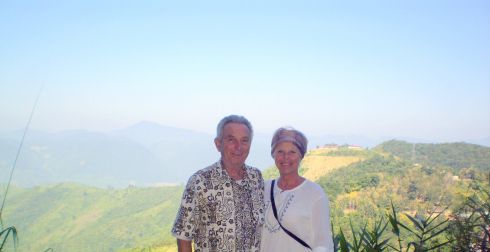
When I visited A last year,  desperately ill after a massive stroke, unable to speak coherently and only intermittently recognising me, our life together did indeed parade itself before my eyes, and I laid many things to rest as I sat for weeks beside his bed, holding his hands while he struggled to tell me he loved me and always would.

The miracle was, that after everything that went wrong we did still love each other. I wasn’t altogether surprised to find that in me, because I am very bad at endings. The life may no longer be a shared one, but something in me, deep in my belly, refuses to entirely let go of the love. I don’t know if this is a good or a bad thing, it just is. So I can look at someone I loved years ago and think  oh, yes, I loved you and oh yes, the ending was hard and I hated you for a while, and oh yes, though I don’t want to do anything about it and my life has changed, still there is tenderness, and gratitude for what we knew together.

Grief is an altered state. It can take you by surprise, long after you think you’ve done with it. It becomes less wild, less consuming as time passes. It can take on a sorrowful tenderness that for all its softness, still wrenches the heart. Grief can be triggered unexpectedly, long after you think you’re done with it, and you find yourself needing to hide away while you work out what has suddenly gone wrong with your breathing, and why out of nowhere you badly want to cry.

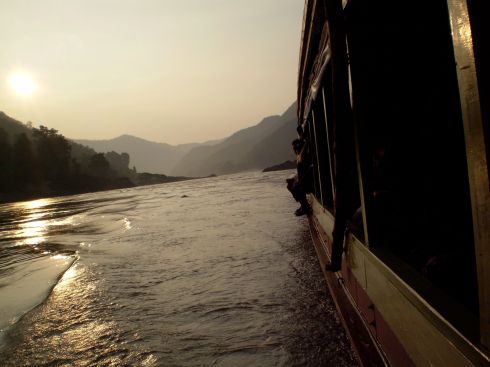
For example, I walked into a room today where someone was playing Mendelssohn’s Sonata for Cello and Piano, #2 in D Major. I listened to this Sonata, along with the Brahms #1 in F, during a very rough period in my marriage, during the last of many journeys A and I made together, down the Mekong, through Laos. I’ve heard both many times since, of course, but never without some emotion, the power of which has lessened over time. Yet today, for reasons I can’t explain, I heard the familiar first movement as if I was back on that long boat, sitting on my backpack beside A, both of us silenced by the misery of knowing it was too late for this journey or any other journey together, and neither of us able to end it.

OLYMPUS DIGITAL CAMERA

I don’t have a list of things I want to do before I die. At times I think, vaguely, of travelling to places I’ve never been because it would be excellent to leave the earth having seen as much of it as possible. At times I think I want to go back to the place where I was born one more time, because every time I return to that North Yorkshire country I feel a primitive and powerful sense of belonging that I have never felt anywhere else.

But lately I’ve been thinking that these things come a poor second to love, in all its frequently unexpected and varied manifestations, and it’s likely love that tops my bucket list.

Today my friend said, there’s no such thing as a perfect relationship is there?  There is, I said, after a while. The perfect relationship is the one where you care enough to bother struggling through the shitty bits and find you still want to stay in it. The perfect relationship is the one where you don’t want to struggle through the shit, and you have the decency and the courage to leave before you cause anymore damage to yourself and the other. Love is required for both. Isn’t it?

OLYMPUS DIGITAL CAMERA

Today I re-learned that nothing ends when you think it has. This annoys me, because I don’t live easily with loose ends. Somewhere along the way I’ve got it into my head that one must have “closure,” resolution, well-defined endings in order to move onto anything new. But actually, I’m coming to think that’s crap. My life is a chaos of ongoing love of varying kinds and depths, and I can’t think how to tidy up any of it. Perhaps I don’t have to? Perhaps instead I must learn to live with the disorder of a functioning human heart? Perhaps for years to come I will unexpectedly feel grief for my husband, for my dead mother, for my friend, for everyone I’ve  loved and will love, with various degrees of complexity and difficulty, success and failure.

There is a human being. There is love. That is all.


Why we want bad people to have horns like the devil

19 Jul

Well, I haven’t been here much lately, owing to family responsibilities, ill health, & various other matters like writer’s block and such.

This Rolling Stone cover of alleged Boston bomber Tsarnaev and the outrage it provoked in some quarters captured my attention. Some readers claimed the image was “glamourising terrorism,” “making martyrs out of terrorists,” and portraying Tsarnaev as a rock star, and they cancelled their subscriptions in protest.

One of the shocking realities about those among us who commit horrendous acts, is that they usually look much like everybody else and sometimes, like Tsarnaev, are prettier than average. This seems to arouse a frightened indignation in many people: how dare these offenders exist in the world without some visible sign of their dark hearts and black intentions? The serial killer who looks just like the bloke next door ruptures the imagined and desired order of things. There’s a sense of unfairness, of being duped: how can someone who looks so good turn out to be so bad?

It wouldn’t be easy to transform Tsarnaev, for example, into a physical representation of his thoughts and deeds without resorting to caricature. His alleged deeds are thought of as “monstrous,” implying that they do not belong in the human but in a biological aberration, physically malformed and psychologically hideous. As author of his deeds, Tsarnaev is accorded the descriptor “monster” without possessing any physically monstrous attributes. Judging by the offence taken by some Rolling Stones readers, there is a strong need in the human population for a book to look exactly like its cover, in spite of all our experience to the contrary.

Representing Tsarnaev in caricature as monstrous and evil would resolve the dissonance between appearance and action, but in so doing, would in fact deflect from the appalling nature of his alleged actions. It would satisfy the childlike demand for congruence: the baddy must look the part. But it would obfuscate the complexities of human evil: it is not monsters who perform these acts. It is human beings. Evil doesn’t come from outside the human: it is securely embedded within.

The need to portray Tsarnaev as monstrous, the need to deny his prettiness, his human-ness, springs from the desire to distance ourselves from his alleged acts: if he is human, and has done such things, what does that mean for the rest of us? Can we comfortably admit to belonging to the same species as a mass murderer? It would seem not. We have to differentiate between our selves and unimaginable evil: to acknowledge that evil as part of humanity is far too confronting.

Yet in creating that distance, we reduce the magnitude of the horror, which is not that these acts were perpetrated by a monster, but that they were perpetrated by a human being. We are a dangerous, deadly species. Look around you. How much more proof of that do we need?


Why Julia Gillard is my sister

3 Jul

I’m not the type of essentialist gender feminist who believes every woman is my sister simply because we share biological characteristics, unlike leading public figure Anne Summers, who in this article  expresses outrage against certain female MPs who did not resign “in solidarity” with Ms Gillard when she lost the ALP leadership to Kevin Rudd last week.

I don’t usually follow the line that a high achieving woman is making things better for all of those who share her sex. That to me is a romantic idea that has little basis in reality, indeed there are women among us considerably worse off after Ms Gillard’s prime ministership, for example the sole parents shifted to Newstart, and women seeking asylum.

Summers’ test of faith I find entirely self-defeating. What would it serve Australian society if every time a woman in public office was badly treated, her female colleagues resigned? In a nano second, there would be none of us left anywhere. It’s the sort of demand a comfortable middle class feminist can make from her armchair without pausing to consider the ramifications, for individuals and the greater good of our society.

That being said, these last few days I’ve noticed a sense of relief in myself and people around me. What is this about? The cessation of sexist abuse against Ms Gillard, that’s what it’s about.

It’s only since Ms Gillard left the leadership that it’s become painfully clear just how bad and how constant the gender-based abuse was. It’s like the relief you feel when you stop hitting yourself on the head with a hammer, if you are given to that form of self-abuse.  We no longer have to witness the daily public denigration of a woman, because she is a woman. We no longer have to witness the gender war in all its frightening darkness, as fought between Ms Gillard and the sexists from all walks of life, whose first complaint against the Prime Minister was that she is female, and who viewed every other dissatisfaction through that gender prism.

We have never seen such a terrifying display of anti woman feeling in our politics, because we have never had a female leader. We couldn’t see how bad it was until it stopped. We couldn’t see how the sexist abuse distracted from the most important  task of keeping our society functioning, which Ms Gillard’s government achieved better than almost any other Western government.

There is a great deal on which I vehemently disagreed with Ms Gillard. I did not personally take to her, though as Deputy PM I thought she would one day be an excellent leader. That day came too soon, and under fraught circumstances that could not have been worse for our first female PM. That the ALP chose to depose then leader Kevin Rudd in his first term was a questionable decision. That they should seize the opportunity to install the country’s first female leader, who as well as everything else was forced to become the blood-soaked symbol of the fallen man’s “knifing” beggars belief. One can only assume that as usual, the blokes brought a woman in to clean up their mess.

Though I am wary of joining anything, let alone a sisterhood (you will not find a woman less interested in or less capable of belonging than me) every time Ms Gillard was abused because of her sex, I was also abused. The unrelenting sexist and misogynist commentary directed towards her was directed at all women, though the perpetrators would no doubt strenuously deny that. It cannot be any other way, anymore than racism can only be aimed at one individual, leaving everyone else untouched.

We should be outraged at the contempt and insult daily enacted towards Ms Gillard. At any moment it can be and is turned against any woman who falls foul of those men and  women who are so conflicted in their attitudes towards us they can only fear and hate, solely because of our sex. One of Ms Gillard’s achievements, though it is not one any sane person could have anticipated or desired, is that she has shown us, through her personal endurance, the degree to which hatred of women still flourishes in Australian society and the awful toll it takes on that society.

In sexism and misogyny, Ms Gillard is my sister.

Knitted fruit makes more sense than politics

27 Jun

The only political event in the last twenty-four hours to provoke in me a smidgen of fleeting sadness, was the resignation of the two most admirable federal politicians in recent memory, Independents Rob Oakeshott and Tony Windsor.

While many around them succumbed (with little or no thought for the well-being of the country they were elected to serve) to bitterness, envy, misogyny,narcissistic rage  and rampant idiocy, Windsor and Oakeshott stood firm, emanating decency, integrity, and, yes, that rarest of all virtues in our 21st century parliament, common sense,  while all around them busied themselves with their daily obsequious capitulation to the demands of their lower, reptilian-brained selves.

On a personal level, I dislike Kevin Rudd and Julia Gillard almost equally. But this should not matter. Ms Gillard undoubtedly achieved much while simultaneously behaving despicably towards asylum seekers and single parents. We have no idea what Mr Rudd might have achieved, since he was dumped without warning in his first term. We have now come full circle, a political ouroboros, its head devouring its body in obsessive self-absorption.

When Ms Gillard took over from Kevin Rudd after the coup, she drank from a poisoned chalice, as women in politics frequently do, brought in, as we are, to clear up the messes made by blokes. As well, we are a distraction from said messes, and make the party involved look progressive.  Oh look! We’ll make a woman PM, for the first time evah, and that will take everyone’s mind off our chaos!

The repercussions of the coup were bound to be many, and like uranium rods, they have a lengthy half-life. How much better to install a woman to suffer the fall-out than to put a man at risk!

Now patriarchal order has been restored, the woman has gone, the blokes can get back to their business, fighting an election. Mr Rudd proved himself to be exceptionally adept in 2007, let’s hope none of his gloss has faded in the intervening and humiliating years. That he can lead the ALP to victory seems as likely as me learning how to sew, but if he can save a few seats, that will be better than nothing.

I am now returning to my blog break. I’m knitting fruit, in an attempt to dissuade the  creatures that visit my kitchen every night from chewing on the real fruit in my full fruit bowl. Yes. A real woman keeps a full fruit bowl. When considering our political options, we should never forget that fact.

UPDATE ON CONVOY OF CLEAVAGE: WE ARE NOW IN THE NEW STATESMAN

Knitted fruit

Housekeeping

24 Jun

Hi, everyone,

I’m taking a blog break.

Please continue to chat with each other if you want to.

Be well, be safe, be happy.

Jennifer.